Connect with us

Business

Elon Musk retains title as the highest-paid CEO in history with $26 billion pay package—and the only thing he has to do is show up for two years

Published

on


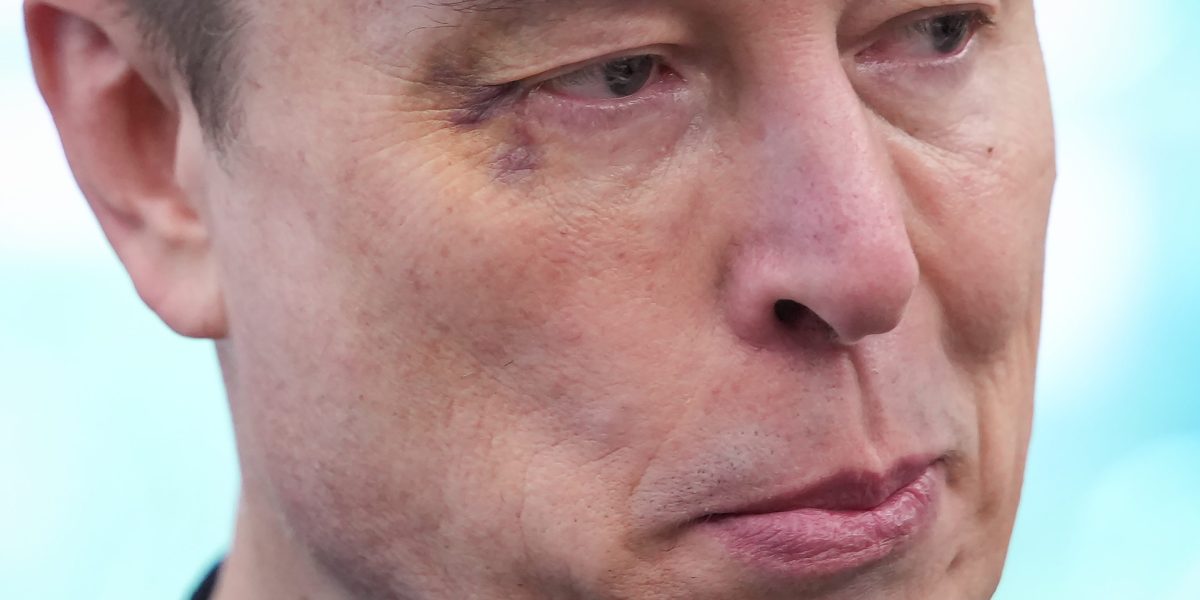
The Tesla board has reinstated CEO Elon Musk as the highest-paid in history with a staggering new $29 billion pay package. His new deal with the $970 billion electric-vehicle maker comes after a Delaware judge twice rescinded Musk’s previous moonshot megagrant. Musk’s pay has been held up in litigation for the past seven years. 

“It is imperative to retain and motivate our extraordinary talent, beginning with Elon,” Tesla board chair Robyn Denholm and fellow director Kathleen Wilson-Thompson wrote in a letter to shareholders. “The war for AI talent is intensifying, with recent months including multi-billion-dollar acquisitions of companies and nine-figure cash compensation packages for non-founder, individual AI engineers.”

Even in that select group, “no one matches” Musk, the board members wrote. Thus, the nearly $30 billion award is essential to keeping Musk focused on Tesla—and getting him to recruit new talent to keep the EV manufacturer competitive in AI, robotics, and robotaxis, according to the board. Unlike Musk’s previous pay plan, which included significant shareholder value hurdles he had to overcome, all Musk has to do to collect the new award is remain with Tesla as CEO or in a senior executive role for the next two years. He also has to hold the stock until 2030, according to the terms of the award, which will boost his ownership stake from around 13% to 15%.

Brian Dunn, a 40-year compensation practitioner and director of the Institute for Compensation Studies at Cornell University told Fortune Musk’s new award resembles what some experts have referred to as “fog-the-mirror grants.”

“If you’re around and have enough breath left in you to fog the mirror, you get them,” said Dunn. “These don’t have performance targets.”

Technically, the award will be made in restricted shares, but Musk has to pay $23.34 per share to own the stock—the same strike price as his 2018 options. With Tesla’s stock trading at more than $300 a share, the arrangement gives Musk about $280 per share of built-in value, which some comp experts have referred to as “discounted options.”

Larry Cunningham, director of the University of Delaware’s Weinberg Center for Corporate Governance, said that regardless of how the award could be classified for accounting or tax purposes, there’s a simple and accurate description for it. 

“A deep-in-the-money stock option grant, awarded solely for retention,” Cunningham told Fortune in a statement. 

Musk’s pay package has a $26 billion floor

The new package creates what Farient Advisors’ Eric Hoffmann described as a “floor-and-ceiling” arrangement tied directly to the outcome of the ongoing litigation in Delaware, which Tesla has appealed. If courts again wipe out his original 2018 award of 303 million stock options, Musk gets to keep the new 96 million shares, worth about $29 billion at the current stock price. But if any part of the original grant gets reinstated, the new award will shrink accordingly, said Hoffmann. 

“There’s a clause that says ‘no double dipping,’” he said. “But this 96 million share award could be used to make up any of the original grant if he loses in the course of the legal action.” 

Hoffmann said the territory the Tesla board is treading is “unprecedented” in executive compensation. 

“There’s no playbook for this,” said Hoffmann, who analyzed the terms of the award. “They made the first grant, it got overturned by a judge, they made another grant, got it approved by shareholders and then that got held up.”

To level set, a shareholder challenge over Musk’s 2018 pay package led to a landmark opinion in which Musk’s pay was rescinded. The Tesla board then sent the pay plan back to shareholders in 2024 for a say-on-pay vote approval, and shareholders voted in favor of giving Musk the comp. Last December, the same judge—Delaware Court Chancellor Kathaleen McCormick—declined to reverse her previous decision, which Tesla has since appealed.  

In their letter to investors, the board wrote there’s no telling when the court will rule again and described this award as a “first step, ‘good faith’ payment to Elon.”

However, Tesla’s performance in 2025 is a far cry from 2018, when the board first awarded Musk his daring moonshot grant. He followed the award up by multiplying Tesla’s value 12-fold. Its market cap surpassed $1 trillion in October 2021 and again in May 2025. But recently Tesla has struggled. Year-to-date, its share price is down more than 18% and Musk has been active politically, supporting President Donald Trump despite the affiliation turning off Tesla’s climate-focused consumer base, particularly in California

And this time, the board has left little to chance. Tesla erected a significant legal barrier in May that makes a challenge to this award a lot more difficult to mete out. 

After McCormick’s ruling, Tesla shareholders approved a move from being incorporated in Delaware to Texas. In May, Texas amended its business code and Tesla modified its bylaws accordingly a day later. The bylaw amendment created a new threshold so any shareholder who wants to challenge Musk’s pay in court has to hold at least 3% of Tesla’s stock. The value is worth more than $3 billion. 

“The central theme here is that Tesla has moved its jurisdiction of incorporation from Delaware to Texas and as a result the propriety of Tesla’s actions and Musk’s compensation will have to be judged under Texas law, which is more permissive,” wrote Columbia law professor John Coffee in a statement to Fortune. “Tesla may get sued but the odds are more in its favor in Texas.”

Texas followed Tesla’s move by undertaking a campaign to make it a business first state. At this point, it’s unclear how Texas courts would approach a challenge.

“It will be interesting to see whether a Texas court chooses to follow Delaware’s analytical framework—or instead declines to engage in similar judicial scrutiny,” said Cunningham. “The outcome could influence how other companies weigh the relative merits of Delaware versus Texas as a corporate home.”

Investors React to Musk’s comp

Tesla has a veritable army of engaged individual retail investors, and many support Musk and have voted in favor of his comp plan twice now, getting it over the line with more than majority support. 

However, some pension fund leaders who oversee retirees assets invested in Tesla stock have been less than thrilled about Musk’s new award.

“A $29 billion compensation package for any CEO, let alone one who has been largely absent from their daily responsibilities as sales and stock value continue to fall short of investor expectations, is obscene,” said New York City Comptroller Brad Lander in a statement. 

Lander said Tesla’s board is enriching Musk at investors’ expense, “once again.”

Illinois State Treasurer Michael Frerichs told Fortune a $29 billion comp package is “egregious on its face.”

“But in light of Elon Musk’s inattention to the day to day needs of Tesla, and the company’s worse than expected stock value, the package suggests a board out of step with their responsibilities to investors,” Frerichs wrote in a statement. “With revenues falling short of expectations, the board should be less concerned with paying fealty to a greedy CEO than with long-term planning for the success of the company. Shareholders should demand better corporate governance.”

 SOC Investment Group, which represented a group of investors with nearly 8 million shares invested in Tesla, told Fortune in a statement that today’s announcement included a striking admission from the board. “Even an additional $24B in equity might not motivate Elon Musk to stay for two more years, let alone ensure that he devote sufficient time and attention to turn around the currently slumping sales,” SOC wrote. 


Source link

Continue Reading

Business

SpaceX to offer insider shares at record-setting valuation

Published

on


SpaceX is preparing to sell insider shares in a transaction that would value Elon Musk’s rocket and satellite maker at a valuation higher than OpenAI’s record-setting $500 billion, people familiar with the matter said.

One of the people briefed on the deal said that the share price under discussion is higher than $400 apiece, which would value SpaceX at between $750 billion and $800 billion, though the details could change. 

The company’s latest tender offer was discussed by its board of directors on Thursday at SpaceX’s Starbase hub in Texas. If confirmed, it would make SpaceX once again the world’s most valuable closely held company, vaulting past the previous record of $500 billion that ChatGPT owner OpenAI set in October. Play Video

Preliminary scenarios included per-share prices that would have pushed SpaceX’s value at roughly $560 billion or higher, the people said. The details of the deal could change before it closes, a third person said. 

A representative for SpaceX didn’t immediately respond to a request for comment. 

The latest figure would be a substantial increase from the $212 a share set in July, when the company raised money and sold shares at a valuation of $400 billion.

The Wall Street Journal and Financial Times, citing unnamed people familiar with the matter, earlier reported that a deal would value SpaceX at $800 billion.

News of SpaceX’s valuation sent shares of EchoStar Corp., a satellite TV and wireless company, up as much as 18%. Last month, Echostar had agreed to sell spectrum licenses to SpaceX for $2.6 billion, adding to an earlier agreement to sell about $17 billion in wireless spectrum to Musk’s company.

Subscribe Now: The Business of Space newsletter covers NASA, key industry events and trends.

The world’s most prolific rocket launcher, SpaceX dominates the space industry with its Falcon 9 rocket that launches satellites and people to orbit.

SpaceX is also the industry leader in providing internet services from low-Earth orbit through Starlink, a system of more than 9,000 satellites that is far ahead of competitors including Amazon.com Inc.’s Amazon Leo.

SpaceX executives have repeatedly floated the idea of spinning off SpaceX’s Starlink business into a separate, publicly traded company — a concept President Gwynne Shotwell first suggested in 2020. 

However, Musk cast doubt on the prospect publicly over the years and Chief Financial Officer Bret Johnsen said in 2024 that a Starlink IPO would be something that would take place more likely “in the years to come.”

The Information, citing people familiar with the discussions, separately reported on Friday that SpaceX has told investors and financial institution representatives that it is aiming for an initial public offering for the entire company in the second half of next year.

A so-called tender or secondary offering, through which employees and some early shareholders can sell shares, provides investors in closely held companies such as SpaceX a way to generate liquidity.

SpaceX is working to develop its new Starship vehicle, advertised as the most powerful rocket ever developed to loft huge numbers of Starlink satellites as well as carry cargo and people to moon and, eventually, Mars.


Source link

Continue Reading

Business

U.S. consumers are so strained they put more than $1B on BNPL during Black Friday and Cyber Monday

Published

on


Financially strained and cautious customers leaned heavily on buy now, pay later (BNPL) services over the holiday weekend.

Cyber Monday alone generated $1.03 billion (a 4.2% increase YoY) in online BNPL sales with most transactions happening on mobile devices, per Adobe Analytics. Overall, consumers spent $14.25 billion online on Cyber Monday. To put that into perspective, BNPL made up for more than 7.2% of total online sales on that day.

As for Black Friday, eMarketer reported $747.5 million in online sales using BNPL services with platforms like PayPal finding a 23% uptick in BNPL transactions.

Likewise, digital financial services company Zip reported 1.6 million transactions throughout 280,000 of its locations over the Black Friday and Cyber Monday weekend. Millennials (51%) accounted for a chunk of the sizable BNPL purchases, followed by Gen Z, Gen X, and baby boomers, per Zip.

The Adobe data showed that people using BNPL were most likely to spend on categories such as electronics, apparel, toys, and furniture, which is consistent with previous years. This trend also tracks with Zip’s findings that shoppers were primarily investing in tech, electronics, and fashion when using its services.

And while some may be surprised that shoppers are taking on more debt via BNPL (in this economy?!), analysts had already projected a strong shopping weekend. A Deloitte survey forecast that consumers would spend about $650 million over the Black Friday–Cyber Monday stretch—a 15% jump from 2023.

“US retailers leaned heavily on discounts this holiday season to drive online demand,” Vivek Pandya, lead analyst at Adobe Digital Insights, said in a statement. “Competitive and persistent deals throughout Cyber Week pushed consumers to shop earlier, creating an environment where Black Friday now challenges the dominance of Cyber Monday.”

This report was originally published by Retail Brew.


Source link

Continue Reading

Business

AI labs like Meta, Deepseek, and Xai earned worst grades possible on an existential safety index

Published

on


A recent report card from an AI safety watchdog isn’t one that tech companies will want to stick on the fridge.

The Future of Life Institute’s latest AI safety index found that major AI labs fell short on most measures of AI responsibility, with few letter grades rising above a C. The org graded eight companies across categories like safety frameworks, risk assessment, and current harms.

Perhaps most glaring was the “existential safety” line, where companies scored Ds and Fs across the board. While many of these companies are explicitly chasing superintelligence, they lack a plan for safely managing it, according to Max Tegmark, MIT professor and president of the Future of Life Institute.

“Reviewers found this kind of jarring,” Tegmark told us.

The reviewers in question were a panel of AI academics and governance experts who examined publicly available material as well as survey responses submitted by five of the eight companies.

Anthropic, OpenAI, and GoogleDeepMind took the top three spots with an overall grade of C+ or C. Then came, in order, Elon Musk’s Xai, Z.ai, Meta, DeepSeek, and Alibaba, all of which got Ds or a D-.

Tegmark blames a lack of regulation that has meant the cutthroat competition of the AI race trumps safety precautions. California recently passed the first law that requires frontier AI companies to disclose safety information around catastrophic risks, and New York is currently within spitting distance as well. Hopes for federal legislation are dim, however.

“Companies have an incentive, even if they have the best intentions, to always rush out new products before the competitor does, as opposed to necessarily putting in a lot of time to make it safe,” Tegmark said.

In lieu of government-mandated standards, Tegmark said the industry has begun to take the group’s regularly released safety indexes more seriously; four of the five American companies now respond to its survey (Meta is the only holdout.) And companies have made some improvements over time, Tegmark said, mentioning Google’s transparency around its whistleblower policy as an example.

But real-life harms reported around issues like teen suicides that chatbots allegedly encouraged, inappropriate interactions with minors, and major cyberattacks have also raised the stakes of the discussion, he said.

“[They] have really made a lot of people realize that this isn’t the future we’re talking about—it’s now,” Tegmark said.

The Future of Life Institute recently enlisted public figures as diverse as Prince Harry and Meghan Markle, former Trump aide Steve Bannon, Apple co-founder Steve Wozniak, and rapper Will.i.am to sign a statement opposing work that could lead to superintelligence.

Tegmark said he would like to see something like “an FDA for AI where companies first have to convince experts that their models are safe before they can sell them.

“The AI industry is quite unique in that it’s the only industry in the US making powerful technology that’s less regulated than sandwiches—basically not regulated at all,” Tegmark said. “If someone says, ‘I want to open a new sandwich shop near Times Square,’ before you can sell the first sandwich, you need a health inspector to check your kitchen and make sure it’s not full of rats…If you instead say, ‘Oh no, I’m not going to sell any sandwiches. I’m just going to release superintelligence.’ OK! No need for any inspectors, no need to get any approvals for anything.”

“So the solution to this is very obvious,” Tegmark added. “You just stop this corporate welfare of giving AI companies exemptions that no other companies get.”

This report was originally published by Tech Brew.


Source link

Continue Reading

Trending

Copyright © Miami Select.