Connect with us

Politics

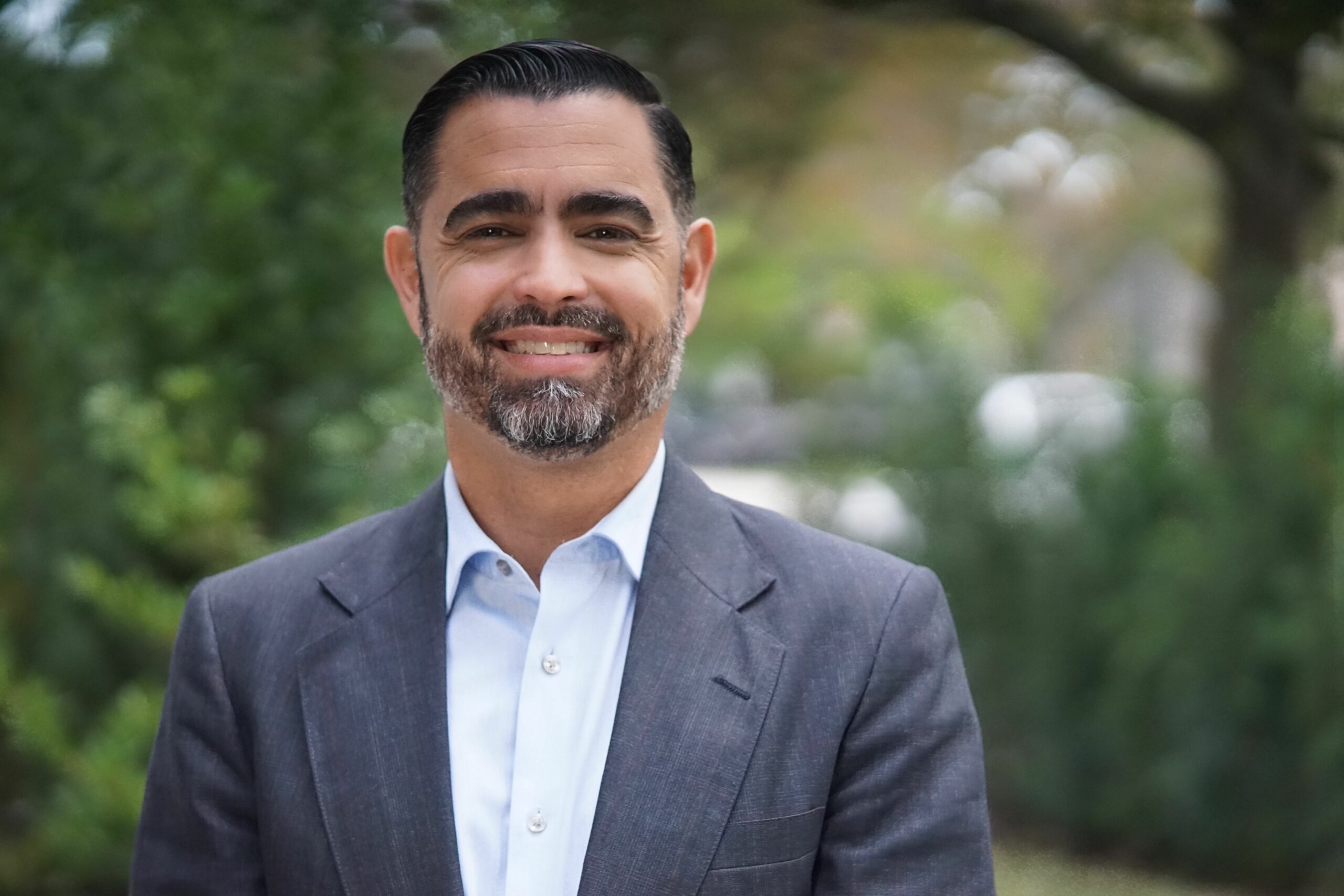
Eileen Higgins taps former Sheriff candidate, county Public Safety Chief James Reyes for Miami City Manager

Published

on


Miami Mayor Eileen Higgins has chosen a man familiar to Miami-Dade County voters to run the city’s day-to-day operations.

She’s tapping Miami-Dade Chief of Public Safety James Reyes to serve as Miami’s City Manager.

If confirmed to the post — a decision Higgins is asking the City Commission to make Jan. 8 — it would mark Reyes’ fourth, and arguably loftiest, job title in as many years.

Higgins said in a statement Monday that Reyes is more than up to the task, citing Reyes’ swift work — within just 11 months — bringing the Miami-Dade Corrections and Rehabilitation Department under federal compliance for the first time in more than a decade.

“James Reyes brings the executive leadership skills essential to municipal management: fiscal accountability, process improvement, strategic planning, and the ability to develop high-performing teams,” she said.

“His servant leadership approach emphasizes transparency and empowering others to succeed. He shares my commitment to serving all Miami residents with respect and dignity.”

Reyes said he is “honored” and “grateful for the trust” Higgins is giving him.

“My career in public service has been guided by a commitment to listening to our community, leading with integrity, and delivering results that make a real difference in people’s daily lives,” he said. “I look forward to working with the City Commission through the confirmation process and helping deliver results for residents while restoring trust in City Hall through transparent, accountable leadership.”

Miami Herald reporter Tess Riski was first to report on Reyes’ pending appointment Monday morning. The outlet’s County Hall reporter, Doug Hanks, first flagged Higgins’ memo shortly thereafter.

A longtime jail warden in Broward County, Reyes — whose legal first name is Jems — joined Miami-Dade Mayor Daniella Levine Cava’s administration in January 2022 as Director of the county’s Corrections and Rehabilitation Department. He previously spent 22 years with the Broward County Sheriff’s Office, where he rose to the rank of colonel and joint posts as Executive Director of the Department of Administration and Department of Detention.

In November 2023, less than two months after then-Police Director Freddy Ramirez dropped out of the Miami-Dade Sheriff’s race following a failed suicide attempt, Levine Cava — who supported Ramirez — promoted Reyes to a newly created Chief of Public Safety position. In that role, Reyes oversaw the county’s Police, Fire Rescue and Corrections Departments.

Two and a half months later, Reyes entered the county Sheriff’s race and notched a Levine Cava endorsement the month after.

Higgins, Levine Cava and Reyes are all Democrats. All have long enlisted the services of influential political consultant Christian Ulvert and his Miami-based firm, EDGE Communications.

Reyes ultimately placed second in the Sheriff’s contest behind Donald Trump-endorsed Rosie Cordero-Stutz.

He has since kept his Chief of Public Safety title, which pays nearly $358,000 per year. But Miami-Dade’s law enforcement responsibilities are no longer under his purview, and each of the six Departments that still are — Fire Rescue, Corrections, Emergency Management, Animal Services, Community Services and the Medical Examiner’s Office — have their own Directors who earn six-figure salaries.

“Chief Reyes is also the County’s liaison to the Sheriff’s office given the ongoing close coordination between County departments and the Sheriff on public safety initiatives,” a spokesperson from Levine Cava’s administration told Florida Politics in October.

“He also worked hand in hand with Corrections leadership to spearhead the department’s transformative work to come into full compliance with federal standards — resulting in the termination of the federal consent decree in November 2024 after 13 years, a major milestone in the County’s long-term reform efforts to improve jail conditions.”

Levine Cava’s Office added that Reyes’ salary “was reduced by 3%” in the county’s Fiscal Year 2025-26 budget, “like others in executive leadership in the Mayor’s office.” Reyes’ reported 2023 salary, per his candidate qualifying paperwork, was $331,301.

In a Monday memo to City Commissioners, Higgins touted the executive management abilities Reyes has honed in top Broward and Miami-Dade posts, including most recently overseeing operations of Departments that jointly serve nearly 3 million residents and a budget exceeding $1.2 billion.

“Our residents have made clear what they expect: faster permitting to help homeowners and businesses, streamlined processes that put customer services first, and a city government that works efficiently for everyone,” she wrote. “James Reyes has proven he can modernize operations, accelerate service delivery, and build cultures of excellence. His track record directly aligns with our vision for responsive, efficient city services.”

Levine Cava said in a memo that Reyes has tentatively accepted the City Manager job. She wished him well and congratulated Miami, which she said is “gaining a proven leader whose executive experience continued to develop at Miami-Dade County.”

Reyes, a Hialeah High School graduate who joined the Broward Sheriff’s Office as a detention deputy cadet in November 2000, earned a master’s degree in criminal justice from the University of Cincinnati and a bachelor’s degree in criminology from Barry University.

He also completed an executive leadership program at Nova Southeastern University and an officer’s development course at the University of Louisville.

Reyes, if confirmed, will replace City Manager Art Noriega.


Source link

Continue Reading

Politics

Michael Owen proposal draws lines between treatment providers and recovery housing

Published

on


Apollo Beach Republican Rep. Michael Owen is pushing legislation that would more clearly separate treatment providers from recovery housing in Florida, limiting when mental health providers can use certified recovery residences to house patients and changing how those facilities are licensed and inspected.

HB 923 would update state laws governing recovery residences and licensed mental health and substance abuse providers, with changes affecting housing rules, licensing, inspections and record-keeping.

The bill aims to separate treatment from housing, spelling out when providers can use recovery residences, also known as sober living homes, to house patients and when they must operate fully licensed facilities instead. It also seeks to make it easier for existing providers to expand services or change ownership.

Under the proposal, most licensed mental health treatment providers would no longer be allowed to house their patients in recovery residences. Those patients would instead have to live in housing licensed specifically as a mental health facility.

An exception would allow certain higher-level providers to use certified recovery residences to house people receiving outpatient mental health treatment, as long as residents are separated based on their primary diagnosis.

The bill, filed Monday, would also change how licenses are handled, allowing both probationary and regular licenses to be transferred to new owners and narrowing what qualifies as a license transfer.

HB 923 would require the Department of Children and Families to issue a regular license within 30 days to an existing provider seeking to add services or expand to new locations, as long as the provider remains in good standing.

The measure would also tie treatment room size and group occupancy limits to statewide building and fire codes, rather than separate agency rules.

Other provisions allow credentialing entities to conduct inspections of recovery residences but limit their access to clinical and medical records when considering disciplinary action. The bill would also adjust notification timelines for certain personnel issues, remove a requirement that some executives be immediately removed following an arrest, and make certain recovery residence records confidential.

HB 923 has not yet been referred to committee. If approved, it would take effect July 1.


Source link

Continue Reading

Politics

Jane Castor highlights economic growth, public works as Tampa heads into 2026

Published

on


As 2025 comes to a close, Tampa Mayor Jane Castor says the city is entering the new year with momentum built on economic growth, major infrastructure investments and continued recovery from last year’s hurricanes.

Castor outlined the city’s progress in her year-end remarks, pointing to national recognition for Tampa’s economy and a slate of public works projects completed or launched over the past year.

Tampa ranked second among mid-sized U.S. cities for economic growth, with the local economy expanding 43% and paychecks rising 38%, according to a national study. The city also earned the top ranking for U.S. Cities for Foreign Businesses by the Financial Times, climbing from No. 26 in just one year.

“As we close out 2025, I am raising a toast to a year full of big wins and even bigger plans for our city in the year ahead,” Castor wrote in her newsletter.

Castor highlighted several projects as examples of the city’s success, including the October groundbreaking of the $57 million West Riverwalk expansion. Once completed, the project will create 12.2 miles of continuous waterfront trail connecting West Tampa, Tampa Heights, downtown and surrounding areas.

The city also completed a $17 million upgrade to the Bayshore Wastewater Pumping Station through its PIPES program, part of an ongoing effort to strengthen long-term infrastructure.

Tampa’s Mobility Department resurfaced 76 miles of roadways in 2025 with the addition of a second paving machine and crew. City officials reported a record 21 miles paved in November.

Castor also pointed to continued rebuilding efforts following last year’s hurricanes, including the reopening of community centers and the restoration of parks across the city.

Castor’s newsletter also highlights end-of-year events that continue this week, with the ReliaQuest Bowl Parade returning to Ybor City on Tuesday ahead of the Dec. 31 college football matchup between the University of Iowa and Vanderbilt University at Raymond James Stadium.

To promote safe travel during New Year’s Eve, the Farah & Farah law firm is offering $50 Uber credits through its 10th annual Safe Ride Home Program. Credits are available from 6 p.m. Dec. 31 through 6 a.m. Jan. 1.

City offices will be closed Thursday, Jan. 1, in observance of New Year’s Day. Free Christmas tree collection begins Jan. 2. Residents are asked to remove all decorations, cut limbs to 4 feet or less and place trees at the curb on their regular yard waste collection day. Plain paper, cardboard and paper cards can be recycled in green carts, while foil paper, ribbons, bows and string lights should be placed in the trash and sent to the McKay Bay Waste-to-Energy Facility.

Additional seasonal events include the city’s fourth annual Three Kings Day Celebration on Jan. 3 at Al Lopez Park and Winter Village at Curtis Hixon Waterfront Park, which runs through Jan. 4. The Sulphur Springs Neighborhood Action Plan survey remains open through Jan. 5, and residents can register for free composting workshops through the city.

Upcoming community opportunities also include a Saturday Session focused on neighborhood trees on Jan. 17 and the annual Point-in-Time Homeless Count on Feb. 26.

“The City of Tampa is heading into 2026 with big plans and even bigger gratitude for this community,” Castor said. “Here is to a happy, healthy, and peaceful new year.”


Source link

Continue Reading

Politics

John Guard says he’s willing to withdraw from consideration as federal Judge to serve on Florida Supreme Court

Published

on


Former acting Attorney General John Guard’s bid to serve on the Florida Supreme Court is moving ahead without questions about his role in money moving from a Medicaid settlement to the Hope Florida Foundation.

But that doesn’t mean the issue isn’t affecting his path forward.

Guard interviewed with the Florida Supreme Court Judicial Nominating Commission as one of several candidates to potentially replace Justice Charles T. Canady.

Guard, who is the chief deputy AG for the state, had faced questions over the optics of the unorthodox $10 million appropriation that ultimately was used for political advertising in 2024 before being selected for a U.S. District Court judgeship by President Donald Trump.

The White House reportedly didn’t want a “nasty confirmation fight” while the issue was in suspense, sources said in October while explaining a pause in the nomination moving forward since June.

While Guard said he doesn’t know why his bid has been slow-walked, he is willing to walk away if that helps assure the Florida Supreme Court Judicial Nominating Commission that he wants this job.

“I don’t know why it has not gone through confirmation. It’s not something other than to tell me that they still fully support me and await my confirmation. I don’t have any details of when that will occur,” Guard said.

“My understanding is that the Governor’s Office is going to consider whatever list this Commission produces first, and then proceed to the 2nd DCA (Second District Court of Appeals) list. And so, I have presumed from the beginning that if I’m selected for any of these spots where if my confirmation all of a sudden goes warp speed, whichever occurs first is where I’m going to end up and likely be. If that means that I need to call the White House Counsel’s Office and tell them that I would request the President to withdraw my nomination, that’s what I will do.”

Guard was among those subpoenaed over his role in the Hope Florida scandal. He signed the controversial settlement with Medicaid insurer Centene, but not before privately raising concerns, according to the Miami Herald/Tampa Bay Times, which obtained emails documenting the conversations.

The emails show Guard removed references to his office in drafts of the settlement in a series of back-and-forth conversations over the course of 22 days. 

Guard said there was nothing in his background that could embarrass the Gov. Ron DeSantis administration should he ultimately be appointed to replace Canady, who left the court to become a director and a tenured professor at the University of Florida’s Hamilton School for Classical and Civic Education.

Guard also said his first choice was the one he interviewed for Monday.

“I think the best legal job is probably to serve on the Florida Supreme Court. And I say that because you’re the head of the judicial branch. You’re kind of responsible for helping with the legitimacy of our core system and maintaining the rule of law,” Guard said.

“If I were to rank them … I would say Supreme Court Justice, District Court Judge, and District Court of Appeals Judge. But I think between the District Court and the District Court of Appeals, there’s not that much difference,” he added.

Guard also said irate citizens were the biggest problem the judiciary faces, though he said the Florida Supreme Court itself does a “pretty good job” of mitigating the threat.

“I’ve heard from the Chief Justice that threats are up at the Florida Supreme Court. I’ve heard that there are threats at courthouses around the state, and so I think that is probably the biggest kind of threat, which is a threat to the legitimacy and the role of courts,” he said.

Much of the interview focused on Guard’s admiration for the late SCOTUS Justice Antonin Scalia, though Guard did break with the conservative icon on certain First Amendment cases, in which Scalia sided with “more liberal” colleagues.

___

Janelle Irwin Taylor of Florida Politics contributed to this report.


Source link

Continue Reading

Trending

Copyright © Miami Select.