Connect with us

Business

Drummer cancels Christmas Eve ‘Jazz Jams’ at Kennedy Center after name change, ending 20-year tradition

Published

on


A planned Christmas Eve jazz concert at the Kennedy Center, a holiday tradition dating back more than 20 years, has been canceled. The show’s host, musician Chuck Redd, says that he called off the performance in the wake of the White House announcing last week that President Donald Trump’s name would be added to the facility.

As of last Friday, the building’s facade reads The Donald J. Trump and The John F. Kennedy Memorial Center for the Performing Arts. According to the White House, the president’s handpicked board approved the decision, which scholars have said violates the law. Trump had been suggesting for months he was open to changing the center’s name.

“When I saw the name change on the Kennedy Center website and then hours later on the building, I chose to cancel our concert,” Redd told The Associated Press in an email Wednesday. Redd, a drummer and vibraphone player who has toured with everyone from Dizzy Gillespie to Ray Brown, has been presiding over holiday “Jazz Jams” at the Kennedy Center since 2006, succeeding bassist William “Keter” Betts.

The Kennedy Center did not immediately respond to email seeking comment. The center’s website lists the show as canceled.

President Kennedy was assassinated in 1963, and Congress passed a law the following year naming the center as a living memorial to him. Kennedy niece Kerry Kennedy has vowed to remove Trump’s name from the building once he leaves office and former House historian Ray Smock is among those who say any changes would have to be approved by Congress.

The law explicitly prohibits the board of trustees from making the center into a memorial to anyone else, and from putting another person’s name on the building’s exterior.

Trump, a Republican, has been deeply involved with the center named for an iconic Democrat after mostly ignoring it during his first term. He has forced out its leadership, overhauled the board while arranging for himself to head it, and personally hosted this year’s Kennedy Center honors, breaking a long tradition of presidents mostly serving as spectators. The changes at the Kennedy Center are part of the president’s larger mission to fight “woke” culture at federal cultural institutions.

Numerous artists have called off Kennedy Center performances since Trump returned to office, including Issa Rae and Peter Wolf. Lin-Manuel Miranda canceled a planned production of “Hamilton.”

This story was originally featured on Fortune.com


Source link

Continue Reading

Business

Gen Z founder on ‘AI anxiety’ and being pigeonholed as generation shortcut: that’s the ‘biggest misconception’

Published

on


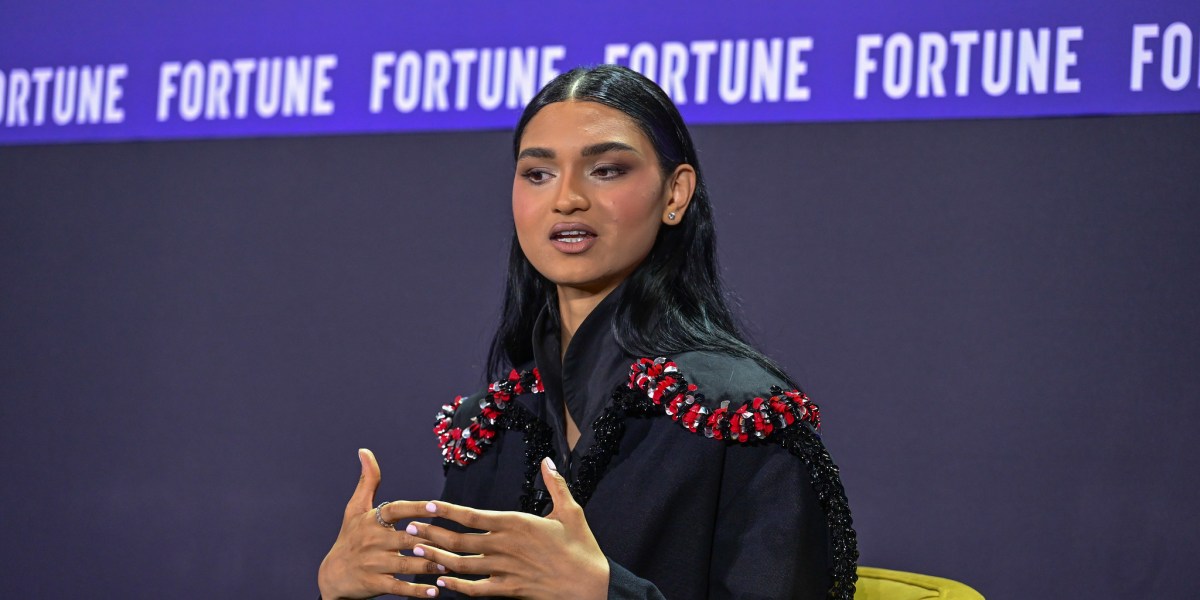
For Kiara Nirghin, the 24-year-old co-founder and chief technology officer of the applied AI lab Chima, the narrative that her generation uses artificial intelligence as a cheat code is not just wrong—it ignores a fundamental shift in human cognition.

The Stanford computer science alum and Peter Thiel fellow argued that while older generations view AI as a tool to be adopted, Gen Z views it as a native language. However, this fluency comes with a unique burden: the “AI anxiety” of keeping pace with technology that is currently the “worst” it will ever be.

Speaking at Fortune Brainstorm AI in San Francisco, Nirghin addressed the tension between the perception of Gen Z and their reality as builders. “The truth is the younger generation isn’t adopting AI,” she said. “We’re growing up fluent in AI.” This distinction is critical in the workplace. While a manager might see an employee using an AI agent as cutting corners, Nirghin said she sees a shift in the architecture of work itself.

“We aren’t thinking about coding from scratch,” she explained. “We’re thinking about coding with a coding agent side by side.” Far from being generation shortcut, Gen Z are trailblazers, she argued.

“That fundamentally changes how you write, how you take tests, how you apply to jobs or different applications, because it’s not from the ground up,” Nirghin said about working side by side with an agent. “I think what that really means is that this broad level of use cases and applications we’re seeing is really being pioneered by the younger generation.”

The ‘lazy’ myth vs. deep thinking

One of the most pervasive criticisms of the digital native generation is that reliance on large language models (LLMs) erodes critical thinking skills. Nirghin firmly rejects this. “I think that the biggest misconception is that young people are using AI to not think things through,” she said, that they’re using it “as a shortcut.”

Instead, Nirghin said that intelligent users are leveraging these tools to offload cognitive labor so they can probe complex subjects with greater intensity. She said it’s not as simple as handing off the “cognitive load” to an AI model, it’s about thinking “differently … even “deeper” on a specific subject, because the agent is taking hours of menial work off your hands.

As an example, she pointed to running deep research reports on financial markets that might take hours to generate manually. By automating that work, she said the user is free to analyze the implications rather than just gathering the data. “What does that unlock for you?” she asked the audience, urging them to consider just how much more they can do with these tools at their “fingertips.”

The anxiety of infinite improvement

Nirghin said her generation does face a daunting reality that people don’t appreciate: the relentless speed of obsolescence, and their own awareness of that fact. She said fears over AI have some similarities to “climate anxiety.” Noting that some of her earliest research was about climate change, she explained climate anxiety as the idea that “there’s this movement of climate change coming up and we don’t really know what to do but we know it’s coming and nobody is moving as fast to solve the problem.”

It’s tied to the realization that current technology, as impressive as it seems, is primitive compared to what is coming next. “The models right now are as dumb as they are ever going to be,” Nirghin warned. “It is only going to get faster, more advanced and more intelligent, each and every model from from here on out.”

For Gen Z workers, she said, this creates a pressure environment where staying ahead is a daily requirement. Nirghin noted that recent model releases have “engulfed the benchmarks in such an enormous way” that previous capabilities can now be “10xed” overnight—imagine coming to work tomorrow, able to produce 10 times as much since yesterday. If a worker isn’t consistently on top of these updates, “you’re kind of left behind.” The fear isn’t about taking too many shortcuts, but not figuring out every pathway and every update to hit that 10x.

Taste as the new IQ

If intelligence is being commoditized by models that improve exponentially, what becomes the new metric for human value? According to Nirghin, it is “taste.”

Nirghin, whose background includes work at Stanford’s Human-Centered AI labs, argued that benchmarks around accuracy no longer capture what makes a product successful. She cited the example of coding agents that, without human guidance, might uncontrollably add “sparkle emojis” to a front-end UI because they “love” certain design tropes.

“You know something is vibe coded if you’ve ever sort of worked with a coding agent,” she joked. The differentiator for the future workforce will not be the ability to generate code or text, but the human-centered judgment to determine what users actually want to see. “As models and use cases and efficiencies change,” Nirghin said, “the key differentiator is taste.”

Nirghin’s advice extends beyond her peers to the older generations currently managing them. She stressed that “AI fluency is just as important for people that are already in the workforce,” urging them to arm themselves with tools like ChatGPT or Gemini as daily “co-pilots.”

Ultimately, Nirghin said she views the rapid evolution of AI not as a threat to employment, but as a challenge to adaptation. Whether automating back-office processes or launching “deep research agents,” the economic “unlock” provided by these models is already incredible, even if they never improved again. But the anxiety of keeping up is the new price of admission for the future of work.

This story was originally featured on Fortune.com


Source link

Continue Reading

Business

Meet the millionaires living ‘underconsumption’ life: Groceries from Aldi and Goodwill clothes

Published

on


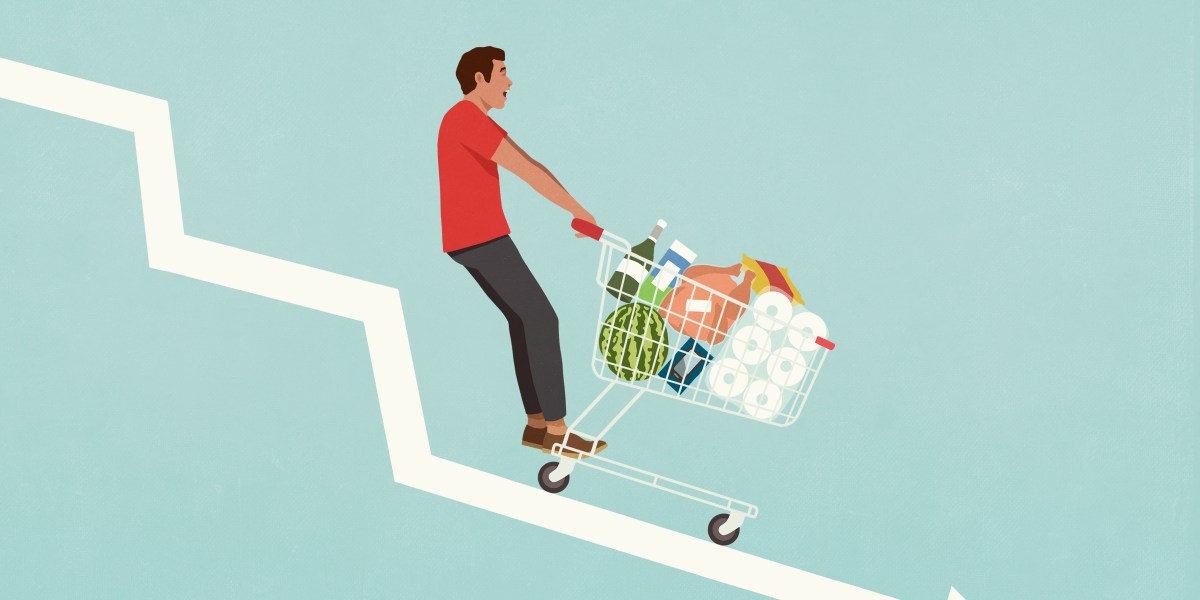
Despite having billions to their name, some of the wealthiest people on the planet don’t splurge on the material items that others shoppers might be tempted by.

Berkshire Hathaway CEO Warren Buffett, for example, is famous for driving a 2014 Cadillac, which is covered in damage from a hail storm. Microsoft cofounder Bill Gates drives an electric Fiat500 gifted to him by Bono, while YouTube star MrBeast sleeps in his office and had to borrow money from his mom to pay for his wedding.

So how do the rich stay rich? Apparently, by acting like they’re not. High net worth individuals and $100,000+ earners Fortune spoke to said they try and keep their discretionary spending as minimal as possible, preferring the impact it has on their finances.

While their friends might enjoy eating out a couple of times a week, they choose to cook for themselves—in fact, they even buy frozen groceries because they’re cheaper than fresh.

Some choose not to own cars, mend their own “capsule” wardrobes and find some of their children’s toys on Facebook marketplace.

These individuals—in some cases unconsciously—are living an “under-consumption” or “low consumption” lifestyle.

The phrase began to spread on social media sites like TikTok after individuals started sharing their weekly grocery shop or make-up cabinet to counter the infinite shopping hauls or wishlists often found on the app.

The advice from the “underconsumption core” community included setting no-buy challenges or decluttering spaces packed with items you’re not using.

For the individuals Fortune spoke to, these habits are already second nature. And having lived the underconsumption life for most of their adult years, their bank balance is reaping the rewards.

Grocery shopping in the frozen section

Author and entrepreneur Shang Saavedra and her husband didn’t build a multi-million dollar net worth overnight. In fact, it was in their respective childhoods that they learned the value of frugal living.

Renting a four-bed home in the suburbs of Los Angeles, the pair share a 17-year-old secondhand vehicle and do their grocery shop at Aldi—predominantly in the frozen section.

Saavedra’s sons—aged six and three—often wear hand-me-down clothes, play with toys found on Facebook marketplace and enjoy free activities instead of the Disneyland trips their Californian peers often take.

While multi-millionaire Saavedra’s life has some hallmarks of a high-income household—her children attend private school, and she owns property in New York—these expenditures fit with her financial ethos: investing in education and assets that support her philanthropic endeavors.

Contrary to the majority of Americans—58% of which told a Harris Poll survey in 2023 they worry about their finances during the festive period—Saavedra says her day-to-day expenses during Thanksgiving and Christmas predominantly increase because of philanthropic gifting.

The 40-year-old’s ability to share her wealth is courtesy of shrewd money decisions in her early career—when she held a director position at CVS, and analyst and consultancy roles at the likes of Victoria’s Secret.

Before marriage, Saavedra lived with roommates and then moved into a rent-controlled apartment with her husband in New York (a building where the plumbing often cut out), often using meal vouchers handed out by working late in their corporate roles.

They aimed to reduce their expenditures to a single income and save the rest, in preparation for having children.

Saavedra, now an entrepreneur helping hundreds of clients achieve their financial goals, told Fortune in an interview that the best way for people to try an underconsumption lifestyle is to “start with why.”

“What is the end goal of underconsumption? If you just do underconsumption for underconsumption’s sake you’ll burn out and get unhappy very quickly,” Saavedra explained. “Because my husband and I oriented our consumption towards financial freedom and family it’s made it so worth it.

“Of course I still am tempted to go for luxury items and experiences, and every now and then we have a nice date night at a very nice restaurant—but understanding the reason why you want something … comes from a pain for an unfulfilled part of your life and oftentimes is a psychological need.”

Thrifting clothes

What it takes to run a household is only getting more expensive. According to the U.S. Bureau of Labor Statistics, the average monthly household expenditure in 2023 was $6,440.

This is a steep increase compared to only a year prior—up 8.3%—and up 15.5% from 2021, when monthly expenditures sat at $5,577 a month.

Yet despite the fact Annie Cole owns assets totaling more than a million dollars—and is earning six figures—she has trimmed her spending down to a little under $4,000 a month.

Cole sold her Prius a couple of years ago, batch cooks meals for her and her husband, cuts her own hair and clothes shops three times a year at her local Goodwill—Cole last purchased new clothes a year ago, and with a gift card.

The couple travel using air miles and points accrued when Cole, 36, was traveling for a corporate role, spending their vacations enjoying free activities like hiking and swimming.

The approach has not only changed Cole’s outlook on how long she will work—retirement is pencilled in for her early 40s—but the nature of work itself.

“I’m so curious if I will actually want to retire,” Cole—who works as a contracted researcher and personal finance expert—tells Fortune. “Now that I’m working part-time I think about it differently. When I was working full-time I thought ‘I can’t wait to be work-optional’ but I almost feel like I’m living it now.

“I’m doing all the things I want to do and knowing that I could retire feels like a nice financial cushion of ‘Hey, you’re taken care of as you get older and in the meantime you have the flexibility to live and work differently.’ That’s a blessing in itself.”

Packed lunches and shared commutes

Dentist Robert Chin and his partner Jessica Pharar own a practice in Las Vegas. They commute the short drive from their home together to cut down on fuel, with their packed lunches in tow.

The couple transitioned into a lower-consumption lifestyle courtesy of rising costs and a firmer idea of what they wanted their finances to look like—despite the pair earning comfortable six figures.

Chin tells Fortune he now eats out one or two times a month instead of a few times a week, and shops at Costco to avoid inflationary grocery prices as best he can.

Unlike the other sources Fortune spoke to, Chin isn’t against buying new clothes but maintains that they must have a lifetime guarantee (from the likes of Patagonia) or that they will last for years.

The pair own a condo which they let out, but rent their current property to have the flexibility to purchase when the market begins to move again.

Their goal is simple: Flexibility—whether that means taking more time off together or potentially retiring earlier.

“In five years we’d like to have an associate or another practitioner both because the office has grown enough to support that and also because it affords us the flexibility to take time off more readily. It’s proabably the biggest challenge of us being leaders in the business, our ability to take time off is really difficult because if we’re not here the practice doesn’t make money.”

More on personal finance:

An initial version of this article was published on December 28, 2024.

Join us at the Fortune Workplace Innovation Summit May 19–20, 2026, in Atlanta. The next era of workplace innovation is here—and the old playbook is being rewritten. At this exclusive, high-energy event, the world’s most innovative leaders will convene to explore how AI, humanity, and strategy converge to redefine, again, the future of work. Register now.


Source link

Continue Reading

Business

Mark Zuckerberg gifted noise-canceling headphones to his Palo Alto neighbors because of the non-stop construction around his 11 homes

Published

on


  • Billionaire Mark Zuckerberg has been rankling his neighbors in Palo Alto as he works on expanding and modifying the 11 homes that he has purchased in the area. To smooth over tensions, The New York Times says Zuckerberg gifted his next-door neighbors noise-canceling headphones as a peace offering.

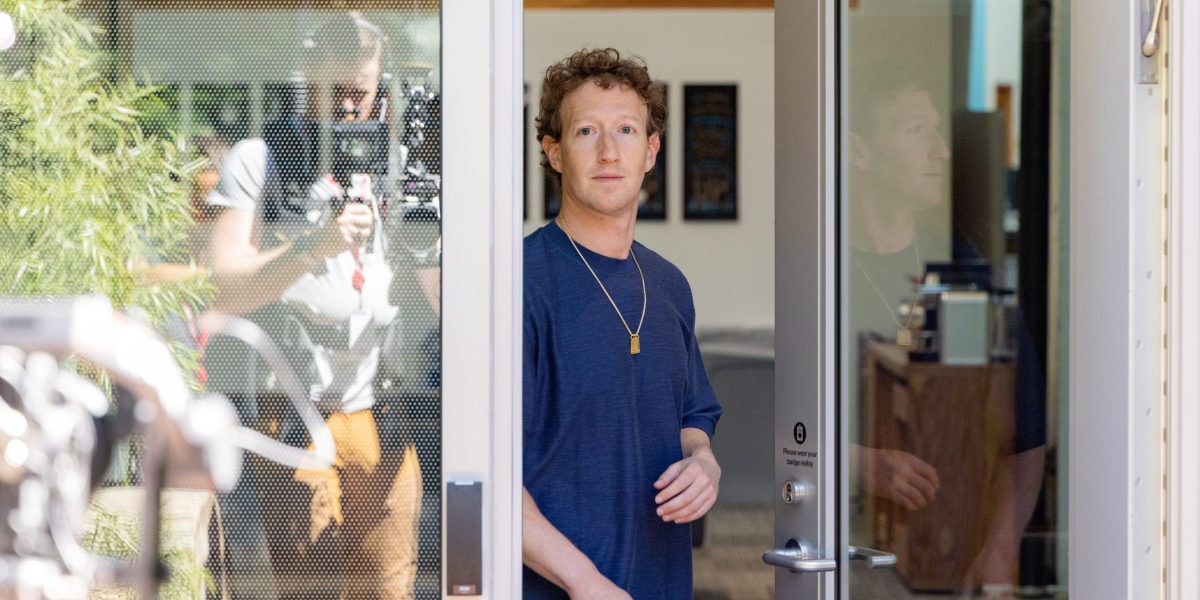
Mark Zuckerberg, the billionaire cofounder of Facebook and CEO of Meta, reportedly gave noise-canceling headphones to his neighbors in the Crescent Park neighborhood of Palo Alto in an effort to address years of frustration over ongoing construction and disruption surrounding his expanding residential compound, according to The New York Times.

Zuckerberg has spent more than $110 million purchasing at least 11 homes on Edgewood Drive and Hamilton Avenue over the past 14 years, transforming this once-idyllic neighborhood of lawyers, business executives, and Stanford University professors into a zone dominated by construction equipment, surveillance, and frequent lavish parties.

Some of these properties that were recently purchased sit unoccupied, despite being in a region known for its acute housing shortage, while others have been converted into guest homes, lush gardens, a pickleball court, a pool with a hydrofloor, and—at least for a time—a private school for Zuckerberg’s children and several others (a use that appears not to comply with local zoning ordinances).

Underneath the compound, Zuckerberg added 7,000 square feet of space described as “basements,” which to area residents are more akin to “bunkers” or a “billionaire’s bat cave.” Zuckerberg similarly added a 5,000-square-foot underground structure to his compound in Hawaii, which he insists is not a “doomsday bunker.”

Much of the discontent centers on the nearly eight years of continual construction. Several neighbors cited street blockages, debris, and relentless noise as ongoing issues.

A spokesperson for Mark Zuckerberg provided the following statement to Fortune:

“Mark, Priscilla and their children have made Palo Alto their home for more than a decade. They value being members of the community and have taken a number of steps above and beyond any local requirements to avoid disruption in the neighborhood.”

Not Zuckerberg’s first property controversy

The noise-canceling headphones were among several gifts extended by Zuckerberg’s staff to appease neighbors during particularly loud periods, along with bottles of sparkling wine and boxes of Krispy Kreme doughnuts. These gestures, however, have not always been effective. Some of his neighbors say their community has been transformed—and not in a good way—by absentee ownership, strict privacy barriers, and heavy security presence, including cameras overlooking adjacent properties and frequent patrols by private security guards.

Meta didn’t immediately respond to a request for comment.

This is not Zuckerberg’s first clash with neighbors over real estate projects. In 2016, Palo Alto officials rejected a proposal to demolish four homes and replace them with smaller houses and large basements as part of a wider compound. While the city denied the specific application, Zuckerberg ultimately proceeded gradually, undertaking similar work in a piecemeal fashion to avoid further regulatory hurdles. The Palo Alto City Council and some residents have since criticized what they describe as the exploitation of zoning loopholes and the city’s regulatory inaction.

Zuckerberg’s residential portfolio extends far beyond Palo Alto. He owns a 2,300-acre estate in Kauai, Hawaii, where his land acquisitions and building plans have at times provoked local controversy as well. He also owns homes at Lake Tahoe and a mansion in Washington, D.C.

A version of this story was published at Fortune.com on Aug. 26, 2025.

More on Mark Zuckerberg:

Join us at the Fortune Workplace Innovation Summit May 19–20, 2026, in Atlanta. The next era of workplace innovation is here—and the old playbook is being rewritten. At this exclusive, high-energy event, the world’s most innovative leaders will convene to explore how AI, humanity, and strategy converge to redefine, again, the future of work. Register now.


Source link

Continue Reading

Trending

Copyright © Miami Select.