
Politics
Dr. Martin Luther King’s warnings seem more prescient than ever

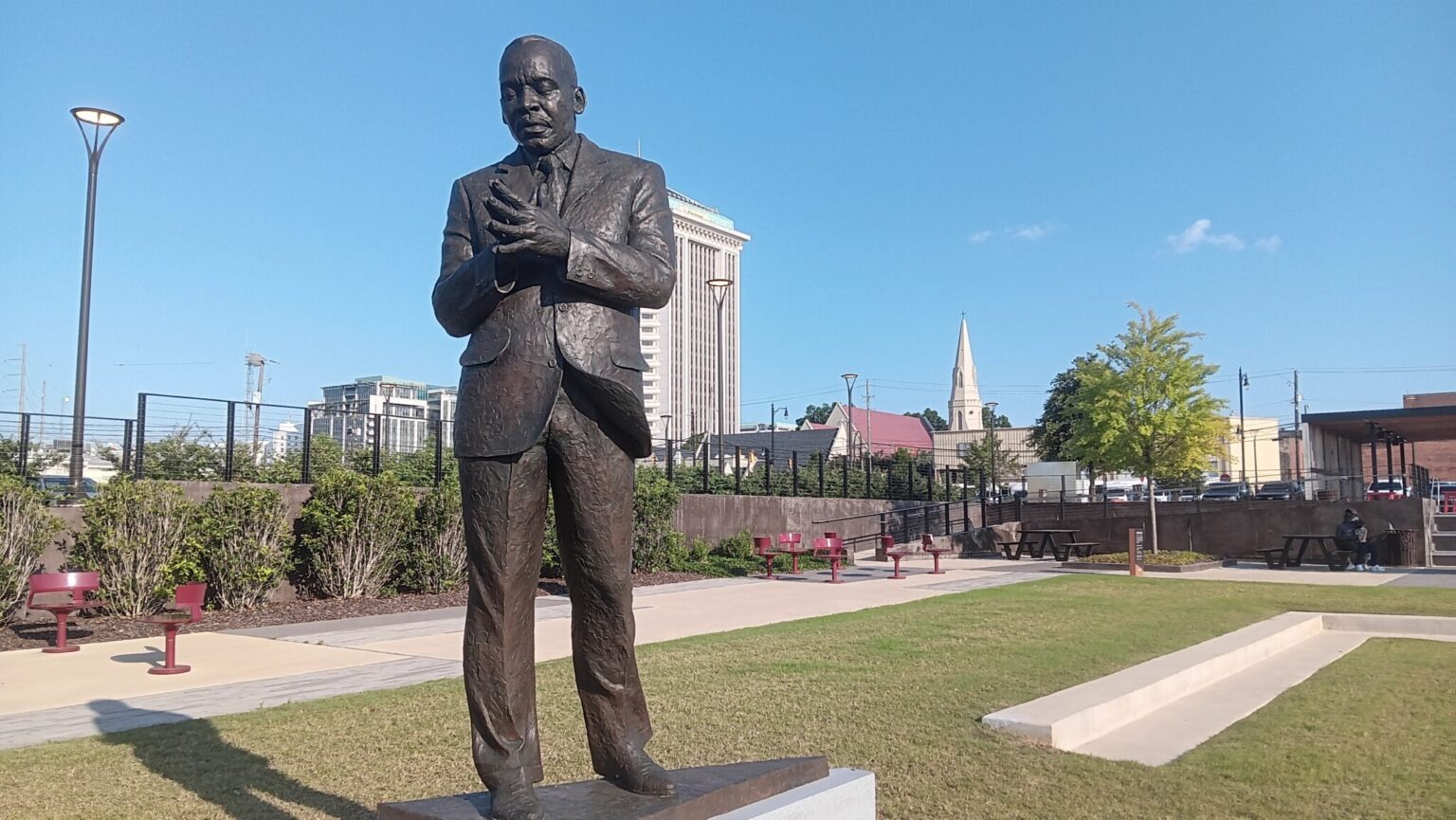
Dr. Martin Luther King Jr.’s words from his “Beyond Vietnam” speech still ring true.
“When machines and computers, profit motives, and property rights are considered more important than people,” he warned, “the giant triplets of racism, extreme materialism, and militarism are incapable of being conquered.”
Those words, delivered in 1967, still summarize today’s political moment. Instead of putting the lives of working Americans first, our leaders in Congress and the White House have prioritized advancing corporate profits and wealth concentration, slashing government programs meant to advance upward mobility, and deploying military forces across the country, increasing distrust and tension.
This historic regression corresponds with a recessionary environment for Black America in particular. That’s what my organization, the Joint Center, found in our report, “State of the Dream 2026: From Regression to Signs of a Black Recession.”
The economic landscape for Black Americans in 2026 is troubling, with unemployment rates signaling a potential recession. By December 2025, Black unemployment had reached 7.5% — a stark contrast to the national rate of 4.4%. This disparity highlights the persistent economic inequalities faced by Black communities, which have only been exacerbated by policy shifts that have weakened the labor market. The volatility in Black youth unemployment, which fluctuated dramatically in the latter months of 2025, underscores the precariousness of the situation.
The Donald Trump administration’s executive orders have systematically dismantled structures aimed at promoting racial equality. By targeting programs such as Lyndon Johnson’s 1965 Equal Employment Opportunity executive order and defunding agencies like the Minority Business Development Agency, the administration has shifted federal support away from disadvantaged businesses.
As a result, Black-owned firms risk losing contracts and resources tied to federal programs, potentially resulting in job losses and reduced economic growth. These changes threaten billions in federal revenue for Black-owned firms and undermine efforts to move beyond racial inequality in the workforce.
The GOP’s so-called “Big Beautiful Bill,” passed in 2025, further entrenches inequality by providing tax cuts that disproportionately benefit high-income households and corporations — while simultaneously slashing investments in programs like Medicaid and SNAP, limiting access to essential services for low-income households.
The technology sector, a critical component of the American economy, is also affected by this disregard for civil rights. Executive orders like “Removing Barriers to American Leadership in Artificial Intelligence” have stripped away protections that could advance inclusion in this rapidly growing field. As a result, the future of the American economy risks reinforcing past inequalities.
Dr. King’s call for strong, aggressive federal leadership in addressing racial inequality remains highly relevant. However, instead of eradicating structures of inequality, our current leadership is implementing policies that destroy government jobs and dismantle agencies responsible for preventing predatory economic practices. These choices undermine longstanding efforts to combat racial and economic disparities — and exemplify the regressive economic policies that coincide with rising Black unemployment.

As Dr. King stated, “we refuse to believe that the bank of justice is bankrupt.” But urgent action is required. Unless we act deliberately, economic and racial inequalities will become entrenched, resulting in generational loss. The core question is whether we will move beyond our nation’s history of racism, materialism, and militarism, and — as Dr. King urged — embrace “the fierce urgency now” to advance equity.
___
This article is republished from OtherWords, a free editorial service published by the Institute for Policy Studies. Reposted by the Florida Phoenix. Florida Phoenix is part of States Newsroom, a nonprofit news network supported by grants and a coalition of donors as a 501c(3) public charity. Florida Phoenix maintains editorial independence. Contact Editor Michael Moline for questions: [email protected].
Politics
Christina Pushaw’s ‘delete everything’ text to James Fishback triggers public records concerns
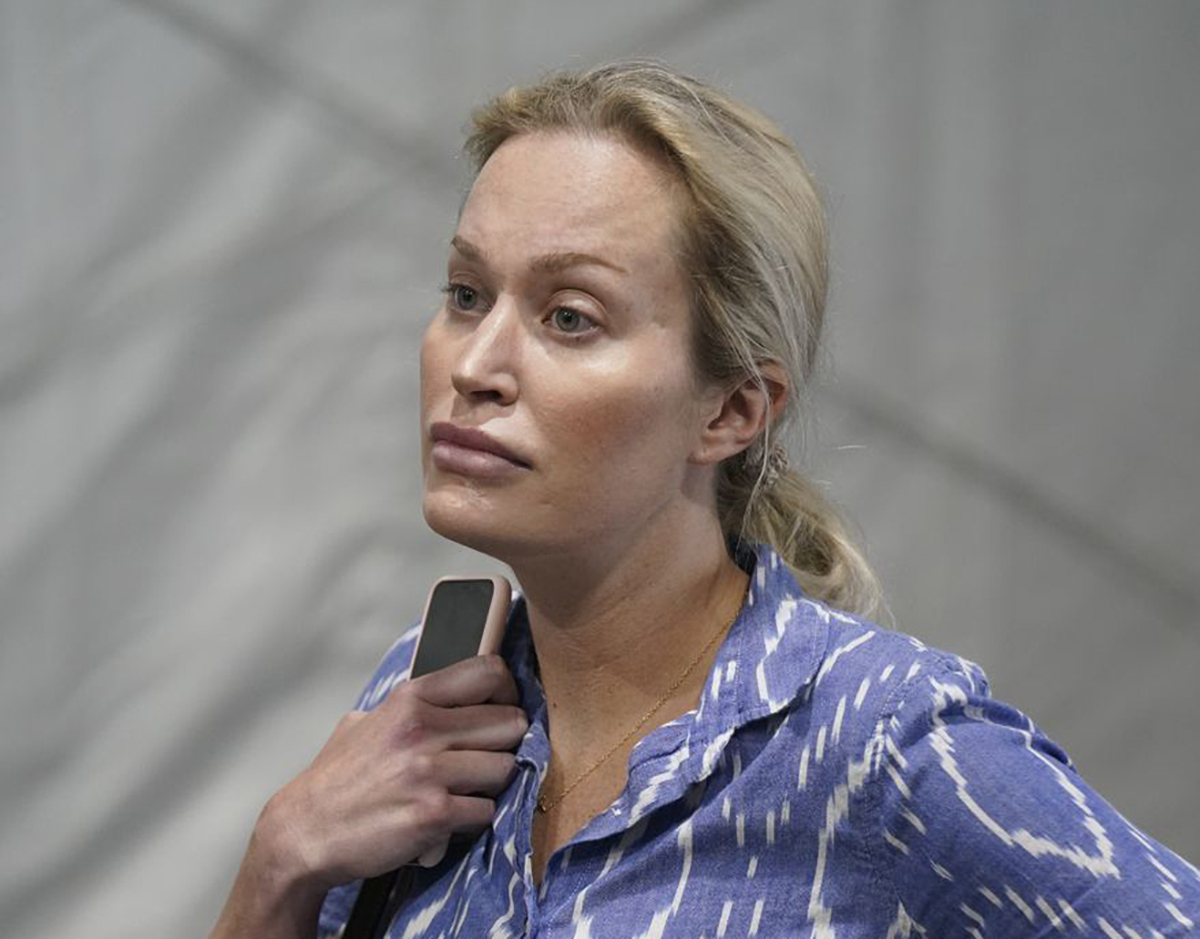
Did Christina Pushaw break the law by asking gubernatorial candidate James Fishback to delete text messages the two exchanged in recent months?
Maybe.
Pushaw, who earns a $179,000 tax-funded salary as a senior management analyst for Gov. Ron DeSantis, all but confirmed the authenticity of texts between her and Fishback in which she appears to have written, “I need you to confirm that you deleted everything with my name on it.”
The exchange has raised questions about whether she solicited the destruction of public records, which would be illegal if the messages involved her government duties, but likely not if they were strictly campaign-related, as she says.
What happened
Fishback posted a screenshot of the exchange following a public blowup between the two after they, according to Pushaw, spoke “frequently” since October about Fishback’s campaign.
On X, Pushaw accused Fishback of deception, writing: “Thanks for proving my point that you have no qualms about lying and revealing private messages. I truly believed that we were friends, and I feel sickened and violated by this betrayal.”
Pushaw, who has worked for DeSantis as both a campaign and government staffer, says she was never paid for advising Fishback and never told the Governor about her communications with Fishback.
In a brief phone interview Monday, she said none of her messages with Fishback touched her state job.
“I never talked to him about government business,” she said. She declined to explicitly confirm the authenticity of Fishback’s screenshots, one of which referenced her government position.
What the law says
Under Florida law, public records include any physical or digital communication made or received “in connection with the transaction of official business by an agency,” a definition courts have applied to texts, emails and other modern forms of correspondence.

Destroying public records is a third-degree felony for a government employee or official, punishable by up to five years in prison and a an up-to-$5,000 fine. Soliciting someone else to do so — a form of conspiracy — is typically punished one level below, making it a first-degree misdemeanor carrying up to one year in jail and up to a $1,000 fine.
Does this apply here?
It depends on what was in the messages Pushaw asked Fishback to delete.
If they contained only “advice on his gubernatorial campaign,” as Pushaw claims, and nothing related to her official duties, then they likely were not public records. Campaign-only communications — including strategy, fundraising and political messaging — generally fall outside the Sunshine Law.
If, however, the texts included discussion of government business, policy, the scheduling of public meetings or actions Pushaw took in her official capacity, they would likely qualify as public records. In that case, if Fishback deleted material at Pushaw’s request, he could also face a first-degree misdemeanor charge.
It’s impossible to determine whether any law was broken without seeing more of the messages. Florida Politics has requested texts and other communications between Pushaw and Fishback from the Governor’s Office.
Still, it is notable that Pushaw asked Fishback to delete “everything with my name on it,” a phrasing that suggests she believed some of the material might be subject to Sunshine Law requirements.
Political fallout
Pensacola Republican Rep. Alex Andrade, a lawyer who previously led a House inquiry into First Lady Casey DeSantis’ Hope Florida charity that has since sprouted a grand jury probe, flagged the issue in a widely viewed X post Monday morning, calling Fishback a “weird little creep.”
Kyle Lamb, a longtime state employee now with the Department of Commerce who briefly worked on DeSantis’ presidential campaign, also weighed in.
“Absolutely nowhere in state laws are state employees expected to maintain private conversations with people who are not state officials discussing things that are not state business, especially who we support in political elections,” he wrote.
Lamb later asked Fishback, “So you didn’t delete everything like you told her? And you posted it here?”
Andrade pointed out that in at least one screenshot Fishback posted, Pushaw mentioned resigning from her job — a reference to her official position that would fall under public records rules.
He told Florida Politics that he views the episode as incompetence rather than malice.
“We have a state employee getting paid $180,000 a year thinking she can just demand that some private individual she’s been texting with for months delete texts and get another state employee to pressure that same person to delete those texts,” he said.
“I have no idea what the content is, but no one is stopping to think, ‘Should these be destroyed? Is it appropriate for us to tell a private citizen that they should be deleting public records?’”

Several local and state-level Democratic leaders are pushing Disney to investigate allegations being raised about how workers are being treated at Patina Group’s independently-operated restaurants at Disney Springs and Epcot.
“We are sure you would agree that subcontracting should not be an excuse for lower standards or inadequate treatment of workers,” said a letter signed by Sens. LaVon Bracy Davis and Carlos Guillermo Smith, as well as Reps. Jose Alvarez, Anna Eskamani, Rita Harris and Johanna López.
“We wouldn’t allow a company operating on our property, representing our legacy, to violate our own standards — and we would expect to be held accountable. We call on Disney to investigate these issues that may have occurred on your property operating under your name. We know with your high level of excellence, that sets the standard for Central Florida, we are right to have a high level of expectation for what happens on your property.”
Even though Patina workers are not employed by Disney, the state lawmakers asked The Mouse to investigate whether Patina broke the law by surveilling employees’ union activity and threatening employees if they supported the union. The lawmakers also asked to make sure sexual harassment is not happening in Patina’s restaurants.
Orange County Commissioners Kelly Martinez Semrad and Nicole Wilson held a community forum last week at the Orange County Commission building where advocates publicly released the letters signed by the elected officials in Summer and Fall of 2025.
“We encourage transparency in this process and ask that you publicly share the steps being taken to ensure accountability and compliance,” Semrad wrote in her letter to Disney Government Relations.
Patina leases space at Disney World for its Space 220 restaurant in Epcot, as well as Enzo’s Hideaway, Morimoto Asia, the Edison in Disney Springs and others.
Three of Patina’s restaurants, Tutto Italia, Via Napoli and Tutto Gusto in Epcot’s Italy Pavilion, unionized last year and are now represented by Unite Here 737. United Here, which represents Disney restaurant and beverage employees, is fighting to get them better working conditions.
For years, Patina employees have complained they are paid less than other Disney employees and are stuck in part-time status so they miss out on benefits and paid time off, even as they work up to six days a week.
“I was astounded by what they were encountering in the workplace,” Wilson said in a statement. “In District 1, we are in absolute reliance on the success of our hospitality workers. … They are the smiles that make a family vacation meaningful.”

Unite Here has filed several unfair labor practices complaints against Patina which are still pending at the National Labor Relations Board.
During labor talks, Patina union employees were considering going on strike last year until Disney intervened. An independent arbitrator then shut down what would’ve been a historic strike on Disney property, the Orlando Weekly reported.
Disney and Patina did not respond to a request for comment for this story.
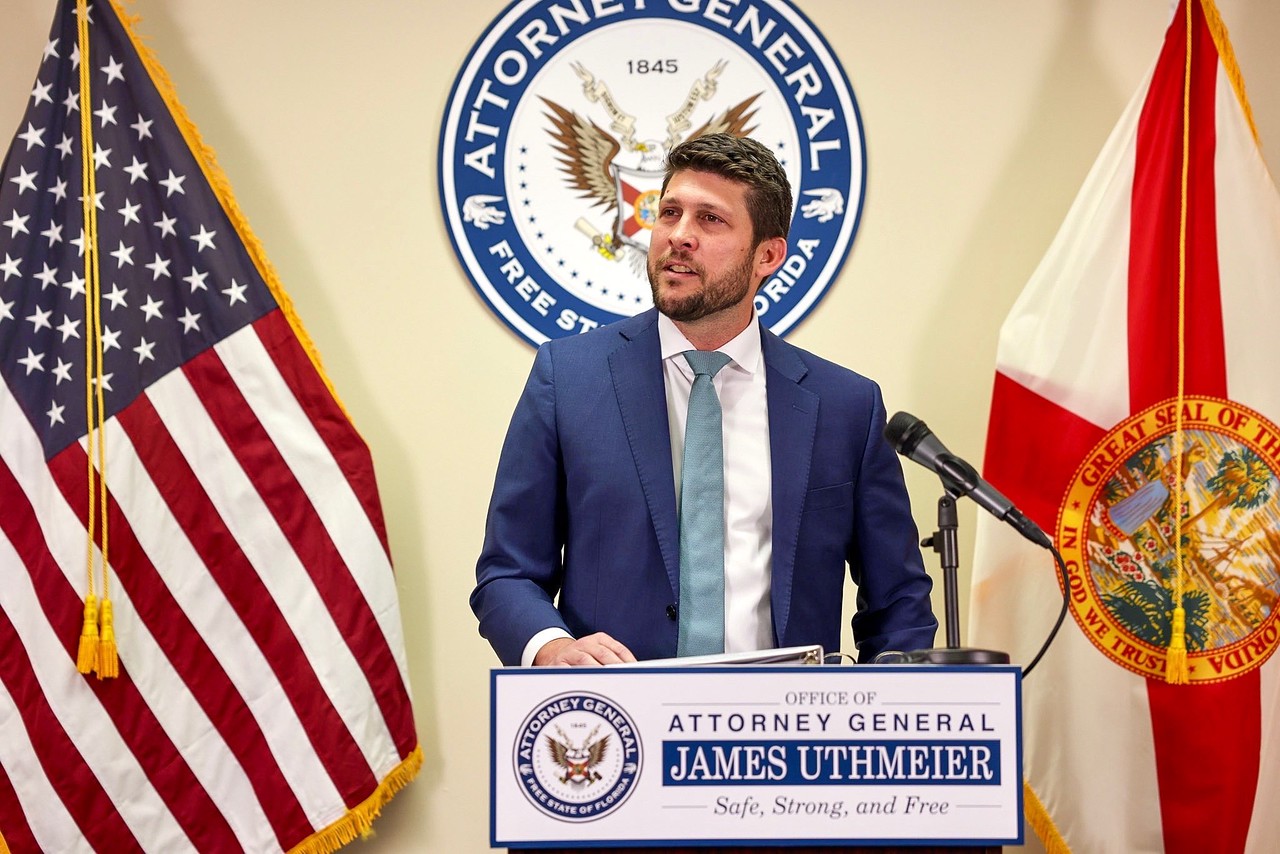
Attorney General James Uthmeier has published an opinion stating that Florida laws requiring state institutions to engage in affirmative action measures while hiring are unconstitutional.
Uthmeier issued his opinion that the state is violating the 14th Amendment of the U.S. Constitution and elements of Florida’s Constitution. “Florida maintains several laws on its books that promote and require discrimination on its face,” Uthmeier’s opinion says.
The 14th Amendment of the U.S. Constitution stipulates, “(N)o state shall… deny to any person within its jurisdiction the equal protection of the laws.” He added that Article 1, Section 2, of the Florida Constitution states: “No person shall be deprived of any right because of race, religion, national origin, or physical disability.”
Uthmeier specifically cited an “egregious” Florida statute that mandates statewide participation in “programs of affirmative and positive action” and stipulates that every executive agency “develop and implement an affirmative action plan” that includes goals for race-based hires.
“Because enforcing and obeying these discriminatory laws would violate those bedrock legal guarantees, those laws are unconstitutional,” Uthmeier said in his conclusion. “My office, therefore, will not defend or enforce any of these discriminatory provisions.”
He also said his opinion covers “race-based preferences in government contracting.”
“Florida’s discriminatory contracting provisions earmark certain opportunities for minority contractors without providing any ‘strong basis in evidence’ to support this race-based action,” Uthmeier said.
The 14-page opinion also criticizes race-based quotas in Florida hiring practices and stipulations for minority representation on different boards, councils and other panels.
“The (U.S.) Supreme Court has addressed race-based quotas in the past and held that such quotas cannot satisfy strict scrutiny review,” Uthmeier said.
Uthmeier’s opinion is only a stated position from the Attorney General and is not binding on any other office in the state of Florida.

It’s the second opinion issued from Uthmeier’s Office in the past week. On Wednesday, Uthmeier published an opinion saying Nassau County can’t hike impact fees beyond Florida limits just because its population growth has increased substantially in the past half decade.
Uthmeier issued the opinion at the behest of Rep. Richard Gentry, a DeBary Republican, who worried Nassau County’s interpretation of impact fee increases approved in December would undermine the authority of the Legislature, which sets impact fee laws.


Polynesian Football HOF names Puka Nacua Player of Year

Pinterest CEO: the Napster phase of AI needs to end

Glambot Director Defends Jennifer Lopez, She Wasn’t ‘Rude’ on Red Carpet
-

 Politics8 years ago
Congress rolls out ‘Better Deal,’ new economic agenda
-
Entertainment9 years ago
New Season 8 Walking Dead trailer flashes forward in time
-
Politics9 years ago
Poll: Virginia governor’s race in dead heat
-
Politics8 years ago
Illinois’ financial crisis could bring the state to a halt
-
Entertainment8 years ago
The final 6 ‘Game of Thrones’ episodes might feel like a full season
-
Entertainment9 years ago
Meet Superman’s grandfather in new trailer for Krypton
-
Business9 years ago
6 Stunning new co-working spaces around the globe
-
Tech8 years ago
Hulu hires Google marketing veteran Kelly Campbell as CMO