
Politics
Dr. Martin Luther King’s warnings seem more prescient than ever

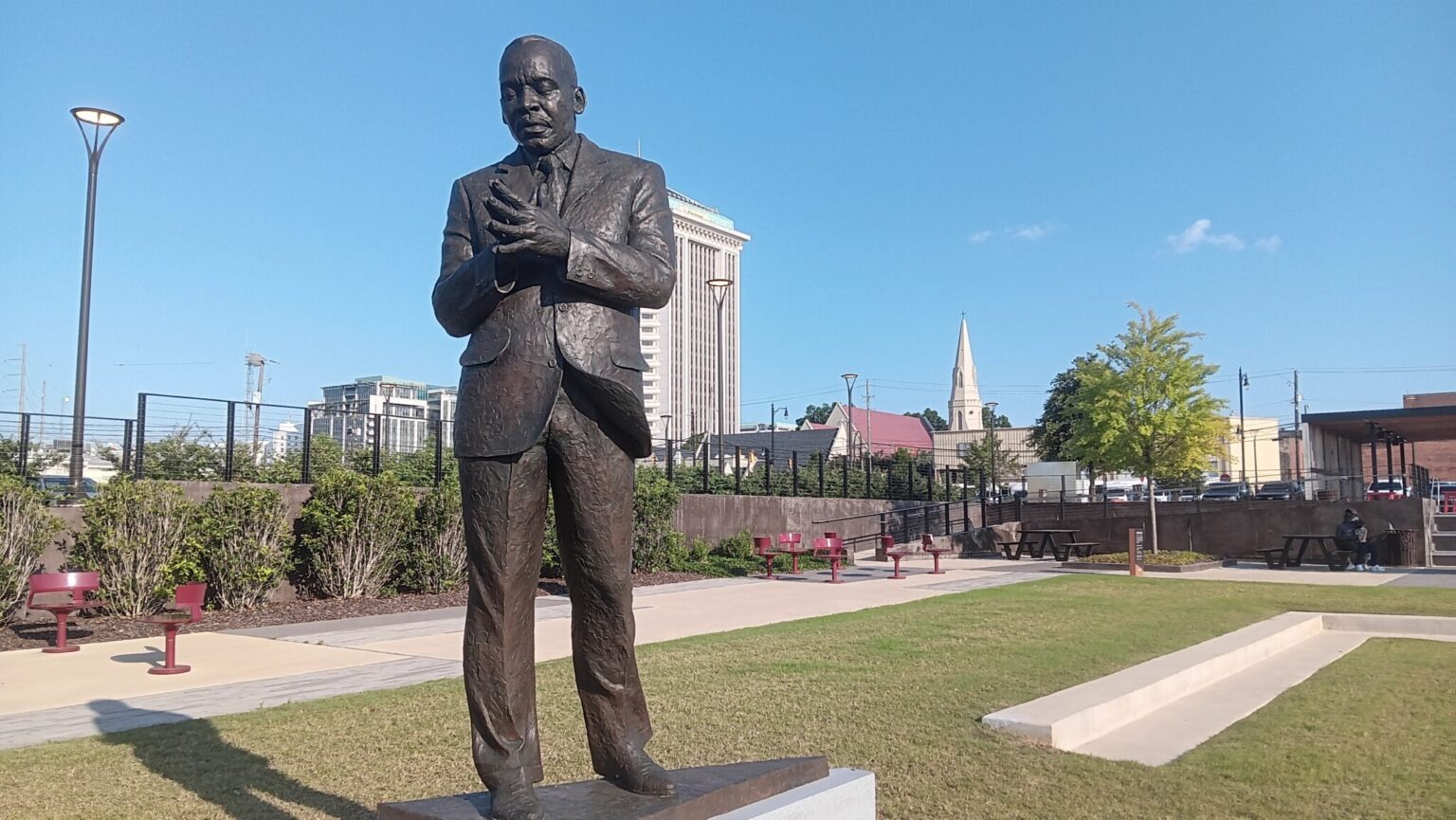
Dr. Martin Luther King Jr.’s words from his “Beyond Vietnam” speech still ring true.
“When machines and computers, profit motives, and property rights are considered more important than people,” he warned, “the giant triplets of racism, extreme materialism, and militarism are incapable of being conquered.”
Those words, delivered in 1967, still summarize today’s political moment. Instead of putting the lives of working Americans first, our leaders in Congress and the White House have prioritized advancing corporate profits and wealth concentration, slashing government programs meant to advance upward mobility, and deploying military forces across the country, increasing distrust and tension.
This historic regression corresponds with a recessionary environment for Black America in particular. That’s what my organization, the Joint Center, found in our report, “State of the Dream 2026: From Regression to Signs of a Black Recession.”
The economic landscape for Black Americans in 2026 is troubling, with unemployment rates signaling a potential recession. By December 2025, Black unemployment had reached 7.5% — a stark contrast to the national rate of 4.4%. This disparity highlights the persistent economic inequalities faced by Black communities, which have only been exacerbated by policy shifts that have weakened the labor market. The volatility in Black youth unemployment, which fluctuated dramatically in the latter months of 2025, underscores the precariousness of the situation.
The Donald Trump administration’s executive orders have systematically dismantled structures aimed at promoting racial equality. By targeting programs such as Lyndon Johnson’s 1965 Equal Employment Opportunity executive order and defunding agencies like the Minority Business Development Agency, the administration has shifted federal support away from disadvantaged businesses.
As a result, Black-owned firms risk losing contracts and resources tied to federal programs, potentially resulting in job losses and reduced economic growth. These changes threaten billions in federal revenue for Black-owned firms and undermine efforts to move beyond racial inequality in the workforce.
The GOP’s so-called “Big Beautiful Bill,” passed in 2025, further entrenches inequality by providing tax cuts that disproportionately benefit high-income households and corporations — while simultaneously slashing investments in programs like Medicaid and SNAP, limiting access to essential services for low-income households.
The technology sector, a critical component of the American economy, is also affected by this disregard for civil rights. Executive orders like “Removing Barriers to American Leadership in Artificial Intelligence” have stripped away protections that could advance inclusion in this rapidly growing field. As a result, the future of the American economy risks reinforcing past inequalities.
Dr. King’s call for strong, aggressive federal leadership in addressing racial inequality remains highly relevant. However, instead of eradicating structures of inequality, our current leadership is implementing policies that destroy government jobs and dismantle agencies responsible for preventing predatory economic practices. These choices undermine longstanding efforts to combat racial and economic disparities — and exemplify the regressive economic policies that coincide with rising Black unemployment.

As Dr. King stated, “we refuse to believe that the bank of justice is bankrupt.” But urgent action is required. Unless we act deliberately, economic and racial inequalities will become entrenched, resulting in generational loss. The core question is whether we will move beyond our nation’s history of racism, materialism, and militarism, and — as Dr. King urged — embrace “the fierce urgency now” to advance equity.
___
This article is republished from OtherWords, a free editorial service published by the Institute for Policy Studies. Reposted by the Florida Phoenix. Florida Phoenix is part of States Newsroom, a nonprofit news network supported by grants and a coalition of donors as a 501c(3) public charity. Florida Phoenix maintains editorial independence. Contact Editor Michael Moline for questions: [email protected].
Florida enters 2026 with momentum most states would trade for in a heartbeat. The economy is growing. In-migration is cooling to a sustainable pace. State debt has been reduced dramatically. The property insurance market is finally showing signs of stability.
That is precisely when Florida tends to get sloppy.
When things are going well, Tallahassee has a habit of governing by headline instead of homework. Victory gets declared early. The hard work gets deferred. And a few years later, we are back in crisis mode wondering how it happened.
Before offering six ideas, there is one principle Florida should keep firmly in mind in 2026: Do no harm. Sweeping proposals, particularly around property taxes, can feel attractive in the abstract while quietly shifting costs onto renters, small businesses, and local services. Reform should be careful, modeled, and honest about tradeoffs. Florida does not need a fiscal sugar high followed by a hangover.
With that guardrail in place, here are six ideas the Legislature should take seriously if it wants this period of stability to last.

1. Build the housing Florida actually needs.
Florida’s housing problem is not mysterious. We have made it illegal in much of the state to build the kind of housing working families can afford. Minimum lot sizes, single-use zoning, discretionary approvals, and outdated parking requirements have turned land scarcity into official policy.
There is no silver bullet for housing. This is not a problem solvable with money alone. No single program, tax break, or mandate fixes a supply problem created over decades. It takes bold policy built on best practices. The fix is not more subsidies or press conferences. It is legalizing modest density the right way: duplexes, triplexes, accessory dwelling units, smaller minimum lot sizes, and lot splits in urbanized areas. Smaller homes on smaller lots reduce land costs, shorten commutes, and help retain the workforce on which Florida depends.
Distance should not be Florida’s primary housing subsidy.
In response to this growing crisis, the Florida Policy Project convened more than 30 organizations to form the Sunshine State Housing Alliance. The Alliance provides data, benchmark research, and policy solutions. For more than a year, the Alliance has delivered actionable, best practice recommendations to decision-makers. To date, leaders in the Florida Senate, including Sens. Stan McClain and Don
2. Future-proof Florida’s insurance solutions.
Florida’s insurance market is stabilizing because capital is returning and litigation reform is working. That progress is real, but it will not last on autopilot. Global disasters that drive reinsurance prices come and go, while the lawsuit industry never sleeps.

Citizens was designed as a temporary shock absorber, not a permanent warehouse for risk. The long-term goal should be clear: A shrinking Citizens portfolio that moves steadily toward zero policies, except where risk is truly uninsurable. Citizens has taken meaningful steps to depopulate, and the Legislature should ensure it does not grow by default.
To avoid that drift, Florida should require regular, independent studies examining which policies persist in Citizens and why and identifying creative pathways to move additional policies into the private market. That analysis should explicitly evaluate tools such as quota share arrangements, reverse auctions of bundled policies, and other risk-transfer mechanisms that attract private capital at scale. Are remaining policies mispriced, trapped by regulation, or genuinely beyond market capacity? Without that feedback loop, Citizens risks becoming permanent by inertia rather than necessity.
At the same time, the Florida Hurricane Catastrophe Fund should be operated at peak efficiency. Properly structured, the Cat Fund is the single most powerful tool the state has today to reduce insurance rates. By providing predictable, well-priced layers of risk transfer, it strengthens insurers’ negotiating position with global reinsurance markets and lowers the cost of capital flowing into Florida. Used correctly, the Cat Fund does not crowd out private capital, it attracts it. Optimizing the Cat Fund alongside a shrinking Citizens portfolio ensures Florida’s insurance risk ultimately rests with diversified global markets, not the state balance sheet.
Florida lowers insurance costs not by denying risk, but by managing it better than anyone else.
3. Fix the condo market with transparency, not just mandates.
Post-Surfside reforms were necessary, but they were not sufficient. Inspections alone do not restore confidence if buyers, lenders, and insurers cannot clearly see an association’s financial health and governance practices.
To stabilize and grow the condominium market, Florida needs a transparent framework for buyers, sellers, seniors, realtors, board members, vendors, and lenders. The state should move toward standardized financial disclosures, reserve adequacy metrics, and independent certification frameworks that reward responsible boards and expose those kicking the can. Well-run associations should benefit from lower borrowing and insurance costs, while poorly governed ones face clear market signals to improve.
Transparency reduces uncertainty. Reduced uncertainty lowers risk. And lower risk ultimately lowers costs. Markets heal faster when good behavior is visible and rewarded.
4. Treat roads like safety systems, not just asphalt.
Florida loses thousands of lives each year to traffic fatalities, yet transportation is still managed as if technology stopped evolving decades ago. That needs to change.
In collaboration with the Tampa-Hillsborough Expressway Authority (THEA) and the Center for Urban Transportation Research (CUTR) at the University of South Florida, the Florida Policy Project released a best-practice report outlining safety challenges and data-driven solutions. Sen. Nick DiCeglie and Rep. Fiona McFarland deserve recognition for filing legislation to modernize Florida’s traffic signalization and improve safety for residents and visitors alike.
AI-enabled traffic signals, sensors, and connected corridors are already reducing crashes and congestion in pilot programs across the country. This is not about chasing buzzwords or futuristic hype. It is about acknowledging that roads are data systems as much as physical ones.
Smart roads save lives, move people more efficiently, and prepare Florida’s infrastructure for what comes next.
5. Create real accountability in Florida’s corrections system.
Chronic understaffing in Florida’s prisons is not a surprise. It is the predictable result of ignoring workforce policy, facilities, and governance year after year. Mandatory overtime and burnout are not a staffing strategy, and crisis budgeting is not oversight.
Florida should establish an independent Corrections Oversight Commission, paired with competitive pay, a long term facilities plan, and technology that reduces staffing pressure. Professionalizing the system costs less and protects public safety far better than perpetual emergency fixes.
Accountability is not optional in a system entrusted with lives and liberty. Sen. Darryl Rouson has filed legislation to create such a best practice Commission.
6. Put Florida’s universities to work before laws are passed.
Florida has world-class universities, yet too many major policy decisions are made after the research window has already closed. That is backward.
Major housing, insurance, transportation, and public safety proposals should be stress-tested by Florida’s public universities before votes are cast. Time-limited Centers of Excellence focused on applied research, not theory, can provide Florida-specific modeling, pilot programs, and transparent data to lawmakers. Governing by evidence consistently beats governing by instinct. Homework should come before headlines.
Florida should establish a two-year John Thrasher Economic Fellowship, placing Florida university economists directly inside the Florida House and Senate at the senior staff level. These embedded analysts would model fiscal impacts, stress-test major proposals, and surface unintended consequences before votes are cast.
For lawmakers, the value is immediate: Independent analysis and better information when decisions matter most. For professors, the benefit is lasting: A deep, practical understanding of how Tallahassee works, how ideas become law, and how policy is shaped in the real world. It would honor John Thrasher’s legacy not with a plaque, but with better policymaking, something he valued deeply.
Florida’s recent success was not accidental. It came from hard choices, market discipline, and a willingness to challenge bad assumptions. The danger now is not decline, but complacency.
Florida’s momentum is not self-sustaining. The state’s most underutilized advantage remains the depth of expertise inside its universities, and 2026 should be the year that changes.
___
Jeff Brandes is a former Florida Senator, founder and President of The Florida Policy Project. a non-profit, non-partisan research institute dedicated to improving policy outcomes across Florida’s most pressing challenges, including housing affordability, insurance reform, criminal justice, and transportation. Guided by evidence-based research and best practices from other states and contexts, FPP strives to equip policymakers and the public with rigorous analysis that leads to better decisions and measurable results. https://floridapolicyproject.
Politics
3 Hillsborough County Commissioners didn’t sign annual MLK Day leadership breakfast proclamation
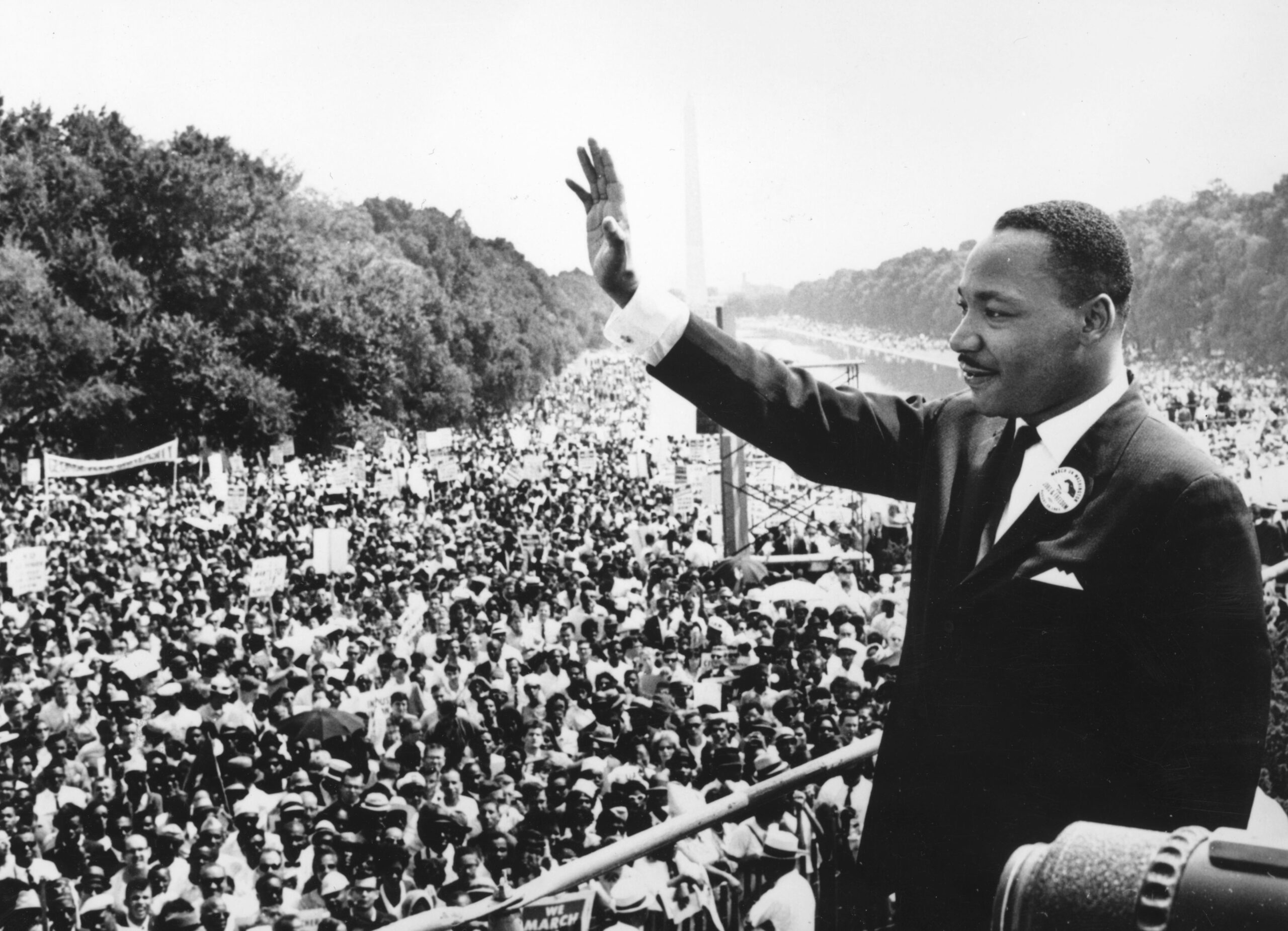
Each year, Hillsborough County Commissioners offer a proclamation recognizing the Tampa Organization of Black Affairs (TOBA) on Martin Luther King Jr. Day, including the group’s annual Dr. Martin Luther King Jr. Day Leadership Breakfast.
The proclamation is usually, though not always, a formality, with all Commissioners signing off in support.
Not this year.
Three Commissioners — Donna Cameron Cepeda, Christine Miller and Joshua Wostal, all Republicans — did not sign the proclamation. The other four Commissioners — Chris Boles, Harry Cohen, Ken Hagan and Gwen Myers — are the only signatories listed. Boles and Hagan are also Republicans, while Cohen and Myers are Democrats.
Asked why he didn’t sign, Wostal blamed division.
“Two years ago at an MLK event sponsored by the property tax payers of Hillsborough County they brought out multiple speakers to imply Governor DeSantis was racist, even stooping so low to bring out a 9-year-old to give a similar implication. They were promoting division, not the unity MLK demanded, while being subsidized with our residents’ property taxes,” Wostal responded by text message.
He said he couldn’t recall whether he signed a similar proclamation last year. While local government supports the event, including Hillsborough County, it is also funded through sponsorship opportunities.
Cepeda and Miller did not respond to requests for comment by deadline, sent via email to their aides and text messages to their personal cellphones. This post will be updated if they respond.
Still, the proclamation language offers some clues as to why they might have declined to sign.
The document recognizes TOBA “for its long-standing dedication to promoting equality, equity, and inclusion in the Tampa Bay area.”

All three of the Commissioners whose names were not added to the proclamation are Republicans. The Republican Party, broadly, has been opposed in recent years to diversity, equity and inclusion (DEI) programs. The Trump administration has opposed DEI programs and the administration removed MLK Day and Juneteenth, a day celebrated as the end of slavery in the U.S., from its free national park entry days, replacing the days instead with Flag Day on June 14, which is also President Donald Trump’s birthday.
In Florida, lawmakers passed, and Gov. Ron DeSantis signed, legislation (SB 266) banning public colleges and universities from spending money on such programs. More recently, DeSantis in his final State of the State speech touted his administration’s opposition to DEI.
Now, DeSantis is encouraging lawmakers to pass a bill that would eliminate DEI funding in local governments. Sen. Clay Yarborough and Rep. Dean Black, both Republicans, have filed legislation (SB 1134, HB 1001) that would do just that. Neither of the bills have yet been heard by lawmakers. If passed, the legislation would also make “certain ordinances, resolutions, rules, regulations, programs, and policies” related to DEI programs or concepts void.
TOBA did not immediately respond to a request for comment. But Aileen Rodriguez, who is challenging Wostal’s re-election this year and attended the breakfast, said she was disappointed her opponent “did not see fit to respect this organization’s’ multiple decades of community service or to honor the legacy of Dr. Martin Luther King Jr.“
“I know that Hillsborough County is at its best when we come together to work together, not when we allow prejudice and racism to keep us apart,” Rodriguez added.
The proclamation recognizes TOBA’s work, and that of King.
“Since 1979, TOBA has been steadfast in its work to advance the opportunities and rights of people of color,” the proclamation says, adding that the nonprofit, nonpartisan organization is “dedicated to political education, economic development, and youth development, and has been at the forefront of building a better Tampa.”
“For 46 years, TOBA has thought of and stood up for the people in the community,” the proclamation reads after quoting King asking, “What are you doing for others?”


Kiton ends 2025 with €230 million in revenue, debuts on Milan’s Via Montenapoleone

6 ideas Legislature can’t afford to ignore in 2026

Transfer center: highest values for expiring contract players
-

 Politics8 years ago
Congress rolls out ‘Better Deal,’ new economic agenda
-
Entertainment9 years ago
New Season 8 Walking Dead trailer flashes forward in time
-
Politics9 years ago
Poll: Virginia governor’s race in dead heat
-
Politics8 years ago
Illinois’ financial crisis could bring the state to a halt
-
Entertainment8 years ago
The final 6 ‘Game of Thrones’ episodes might feel like a full season
-
Entertainment9 years ago
Meet Superman’s grandfather in new trailer for Krypton
-
Business9 years ago
6 Stunning new co-working spaces around the globe
-
Tech8 years ago
Hulu hires Google marketing veteran Kelly Campbell as CMO