Connect with us

Business

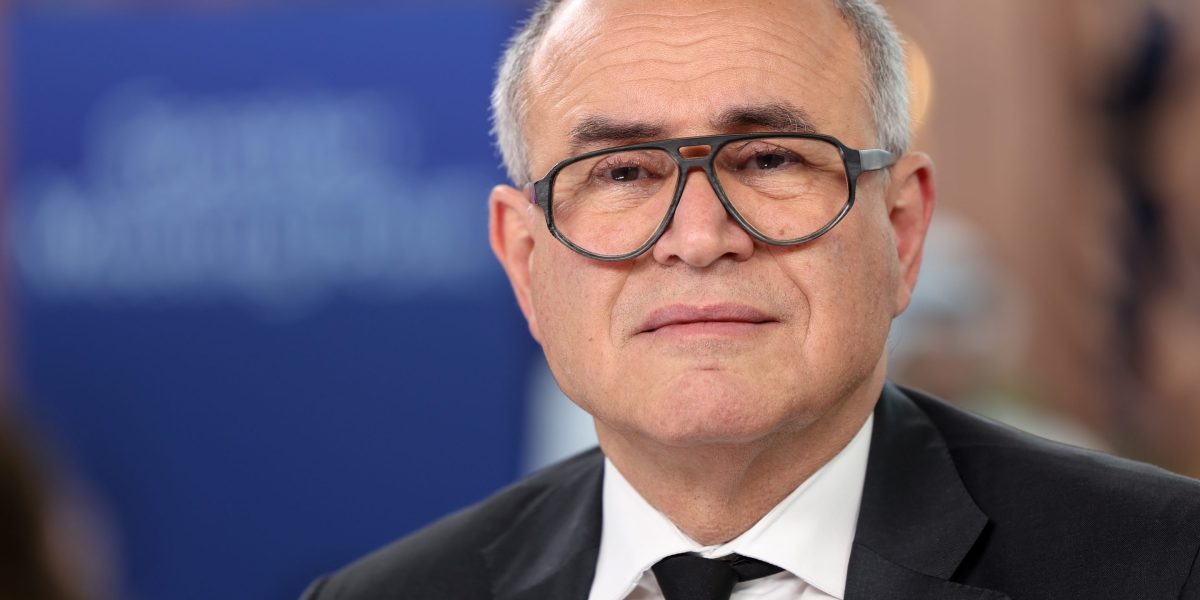
‘Dr. Doom’ Nouriel Roubini breaks with the crowd on the AI bubble, saying the U.S. is headed for a ‘growth recession’ and not a market crash

Published

on


For nearly two decades, esteemed economist Nouriel Roubini has worn the nickname “Dr. Doom” with honor. He earned it in the mid-2000s for warning of a housing crash that Wall Street dismissed, until he was proven catastrophically right. 

Since then, the NYU Stern School of Business professor emeritus has become one of the most recognizable bears in global finance, regularly sounding alarms about debt spirals, geopolitical shocks, pandemics, AI disruptions, and what he once called “the mother of all crises.”

So it’s perhaps surprising, even disorienting, that in the midst of investors teetering on the edge of a bear market, Roubini is breaking with his cohort — including fellow 2008-financial-crisis-prophet Michael Burry — to dismiss their pessimism about the U.S. economy as misplaced.

In a new essay for the Financial Times, the economist argues that the conventional view – that America’s “Liberation Day” tariffs would trigger stagflation, tank the stock market, kneecap the dollar, and end U.S. exceptionalism — is simply wrong. Instead, he sees something close to the opposite: a short period of cooling growth, followed by a powerful rebound led by technology and capital spending that keeps the U.S. firmly in the top spot.

“The now common view that the U.S. stock market is in a massive bubble and bound to crash is incorrect over the medium term,” he wrote. On the other hand, what he predicted isn’t necessarily the rosiest. The near-term picture looks like a “growth recession,’ he said, meaning slower, below-potential GDP. It’s not the hard landing or 1970s-style stagflation many have predicted, and it isn’t a bubble popping, but it’s a lopsided economy, as many Wall Street analysts have also noticed.

Tariffs won’t topple the recovery

Roubini, who once warned of a “mega-threatened age” – the era where AI, aging populations and global instability threatened our prosperity — now argues the most extreme fears about tariffs and policy missteps haven’t materialized. That’s partly because, he says, this administration is responsive to market reactions. When asset prices slumped immediately after the tariff announcement, the administration “blinked,” softening policy and opening the door to more conventional trade negotiations.

By next year, he says, growth will reaccelerate. The Fed is undergoing a period of monetary easing, fiscal stimulus is still flowing, and—critically—AI-related capital expenditure continues to surge.

Roubini’s arguments align closely with two of Wall Street’s top analysts: Torsten Slok from Apollo Global Management and Mike Wilson from Morgan Stanley. Slok, known for his “Daily Spark,” combining insightful charts with brevity, argued on November 20 that the economy is “likely to reaccelerate in 2026.” Just days earlier, he had warned of inequality, saying “it is a K-shaped economy for U.S. consumers.” He has also flagged extreme concentration and valuations in the stock market, with the Magnificent 7 running far ahead of the rest of the market. 

Wilson, chief equity strategist for Morgan Stanley, has been predicting a “rolling recession” for years, arguing that different sectors of the economy shrank at different times, resulting in something that felt like a recession, but unevenly distributed. This changed in April 2022, when a “rolling recovery” set in, he has argued since then, forecasting an economic boom ahead. Wilson has argued for the possibility of a correction in stocks but, like Roubini, does not see a crash as imminent. 

Tech > tariffs

The core of Roubini’s argument rests on a simple hierarchy: tariffs and policy noise are temporary, but technological leadership that results in innovation compounding over decades is not.

“Tech trumps tariffs,” he writes.

He estimates U.S. potential growth could double from 2% to 4% by the end of the decade, powered by innovation in AI and machine learning, robotics, quantum computing, commercial space, and defense technology. While this agrees with many Wall Street predictions (Goldman Sachs sees real potential growth reaching 2.3% in the early 2030s, for instance), the prediction of 4% blows most others out of the water. 

However, those industries, Roubini argues, will continue to deliver the “exceptionalism” that has set the U.S. apart for the past 20 years, to the extent to which productivity will boost the economy out double-digits. 

If potential growth rises, he says, equity returns should, too. When growth averaged only 2% over the last two decades, annual returns still hovered in the double digits. Faster growth means even faster earnings expansion, and valuations that look elevated today may be supported rather than speculative.

Roubini has been striking a more positive tone for about a year now — in August 2024, while everyone feared a downturn was coming and frustrated that the Fed wouldn’t ease, he calmed market fears again

Debt—and the dollar—look less dangerous than feared

One of the most persistent fears around AI-driven spending is debt sustainability. But Roubini argues that this math would change if growth rises even modestly.

The Congressional Budget Office projects debt-to-GDP soaring under 1.6% real growth assumptions. But if growth averages 2.3% or higher, the ratio stabilizes. At 3% or more, it falls, meaning that we could potentially grow ourselves out of debt; an argument President Donald Trump has also used. 

A tech-driven “supply shock”could also push inflation lower over time as production costs drop while productivity booms, meaning higher real rates may not translate into higher nominal yields.Even external liabilities look manageable, he argues, because rising tech investment tends to attract foreign equity inflows, similar to how “emerging-market” economies finance growth during a resource boom.

Roubini also dismisses the widely discussed decline of the dollar, since he believes that the U.S. will accelerate while Europe stagnates, and thus the dollar will ultimately strengthen. 

Notably, “Dr. Doom” admitted that the U.S.’s top adversary, China, is at least on par with the U.S. in innovating in the “most important industries of the future,” such as AI and robotics. However, he doesn’t seem too concerned with the AI arms race. 

“The US economy and markets are best positioned among advanced economies,” Roubini wrote. “They will continue to benefit from the US being the most innovative advanced country.”


Source link

Continue Reading

Business

CEOs at Davos are buying into the agentic AI hype

Published

on


Good morning. The atmosphere here at the World Economic Forum in Davos is all about nervous excitement as the Trump administration descends on the normally quaint but currently chaotic ski town in the Alps.

President Donald Trump will be making remarks just a couple hours from now, and Fortune will be reporting live from USA House on the main promenade, with insights from government officials and chief executives during and immediately following the president’s conversation. Keep an eye on our livestream, here https://fortune.com/2026/01/21/ceos-davos-buy-into-the-agentic-ai-hype/.

Elsewhere around town, CEOs are setting their agendas for the year. Here’s what’s top of mind for a few of them:

This will actually be the year of agentic AI. The first time I heard the term “agentic AI” was at Davos last year. For all the hype around it, does the average CEO really know what it is or how to deploy it? And is AI good enough yet for agents to replace or even significantly assist human employees? The answer appears to be yes. Google Gemini head Demis Hassabis told me that Gemini 3 achieved some milestones that allow agentic AI to truly proliferate in terms of its capabilities. ServiceNow CEO Bill McDermott is also an emphatic “yes,” and says he is already using it to do things like automate his IT department (without doing layoffs, he stresses; he says he has repurposed employees instead). He thinks other CEOs are ready to do the same.

Get ready for Google glasses—for real, this time. A decade ago, Google launched its Google Glass eyewear to widespread mockery. Hassabis thinks the timing was just off; at the time there was no super app to go on the platform. AI has changed that, and Hassabis is bullish on Gemini glasses being the future form for consumer AI. Meta is betting the same thing, and OpenAI is also reportedly considering a super-device, but it doesn’t seem like either can match Gemini’s capabilities any time soon.

There’s artificial intelligence, and now there’s also “energy intelligence.” Schneider Electric CEO Olivier Blum says that nailing energy intelligence is his mission this year. By that he means he wants to capture data from various energy sources into a single “data cube,” filter it, and use agentic AI so customers can manage it all in one place to find opportunities to save power and money. “Our job is to make sure we go to the next level of energy technology to make energy more intelligent,” he told me yesterday. If he can achieve it, he sees a 7%-10% annual growth opportunity ahead.

Greenland: national panic or national security risk? I’ve heard various reactions to President Trump’s desire for a full U.S. takeover of the huge islandfrom outrage to vigorous support. If he does get his wish (which some here think is likely), could Europe retaliate by making life harder and more restrictive for big U.S. tech companies? That was one CEO’s consideration. Said another: “Clear-eyed people can agree that that is a national security concern. And having a national security concern is not just a U.S. concern, it’s also a NATO concern.” They were optimistic that the in-person meetings this week would help move the matter in a positive direction. You can follow all our Davos coverage—including Fortune live interviews today with Ray Dalio, Dara Khosrowshahi and more—right here.—Alyson Shontell

Contact CEO Daily via Diane Brady at diane.brady@fortune.com

Top news

The crisis CEOs can’t ignore

The annual Edelman Trust Barometer, revealed at Davos every year, shows an “insular” mindset permeating the business world, with 70% of respondents not wanting to talk to, work for, or even be in the same space with anyone with a different world view. Richard Edelman says CEOs must adopt a sense of urgency in addressing the crisis; they need to sense that “time is running out.”

The Fortune 2026 World’s Most Admired Companies list

Fortune published the 2026 World’s Most Admired Companies this week, an annual ranking in collaboration with Korn Ferry that surveys executives, directors, and analysts across a range of industries. Apple made the top of the list among leaders in all industries for the 19th year in a row—read who else made the cut.

Netflix co-CEOs boost the case for the Warner Bros. deal

Netflix co-CEOs Ted Sarandos and Greg Peters praised the streaming company’s planned acquisition of Warner Bros. Discovery during its earnings call on Tuesday, selling the deal as a boost to its streaming business and a production boost for America. Investors, however, remain worried that the deal will push Netflix away from its core business, and the stock dropped almost 5% after hours.

The markets

S&P 500 futures are up 0.19% this morning. The last session closed down 2.06%. STOXX Europe 600 was down 0.41% in early trading. The U.K.’s FTSE 100 was down 0.02% in early trading. Japan’s Nikkei 225 was down 0.41%. China’s CSI 300 was up o.09%. The South Korea KOSPI was up 0.49%. India’s NIFTY 50 was down 0.3%%. Bitcoin was at $89K.

Around the watercooler

What Walmart’s CEO succession reveals about the smartest time to exit by Ruth Umoh

Americans are paying nearly all of the tariff burden as international exports die down, study finds by Jacqueline Munis

The 9 most disruptive deals of Trump’s first year back in the White House by Geoff Colvin

Gen Z’s nostalgia for ‘2016 vibes’ reveals something deeper: a protest against the world and economy they inherited by Nick Lichtenberg and Eva Roytburg

CEO Daily is compiled and edited by Joey Abrams, Claire Zillman and Lee Clifford.


Source link

Continue Reading

Business

Gates Foundation, OpenAI unveil $50 million ‘Horizon1000’ initiative to boost healthcare in Africa through AI

Published

on


In a major effort to close the global health equity gap, the Gates Foundation and OpenAI are partnering on “Horizon1000,” a collaborative initiative designed to integrate artificial intelligence into healthcare systems across Sub-Saharan Africa. Backed by a joint $50 million commitment in funding, technology, and technical support, the partnership aims to equip 1,000 primary healthcare clinics with AI tools by 2028, Bill Gates announced in a statement on his Gates Notes, where he detailed how he sees AI playing out as a “gamechanger” for expanding access to quality care.

The initiative will begin operations in Rwanda, working directly with African leaders to pioneer the deployment of AI in health settings. With a core principle of the Foundation being to ensure that people in developing regions do not have to wait decades for new technologies to reach them, the goal in this partnership is to reach 1,000 primary health care clinics and their surrounding communities by 2028.

“A few years ago, I wrote that the rise of artificial intelligence would mark a technological revolution as far-reaching for humanity as microprocessors, PCs, mobile phones, and the Internet,” Gates wrote. “Everything I’ve seen since then confirms my view that we are on the cusp of a breathtaking global transformation.”

Addressing a Critical Workforce Shortage

The impetus for Horizon1000, Gates said, is a desperate and persistent shortage of healthcare workers in poorer regions, a bottleneck that threatens to stall 25 years of progress in global health. While child mortality has been halved and diseases like polio and HIV are under better control, the lack of personnel remains a critical vulnerability.

Sub-Saharan Africa currently faces a shortfall of nearly 6 million healthcare workers, ” a gap so large that even the most aggressive hiring and training efforts can’t close it in the foreseeable future.” This deficit creates an untenable situation where overwhelmed staff must triage high volumes of patients without sufficient administrative support or modern clinical guidance. The consequences are severe: the World Health Organization (WHO) estimates that low-quality care is a contributing factor in 6 million to 8 million deaths annually in low- and middle-income countries.

Rwanda, the first beneficiary of the Horizon1000 initiative, illustrates the scale of the challenge. The nation currently has only one healthcare worker per 1,000 people, significantly below the WHO recommendation of four per 1,000. Gates noted that at the current pace of hiring and training, it would take 180 years to close that gap. “As part of the Horizon1000 initiative, we aim to accelerate the adoption of AI tools across primary care clinics, within communities, and in people’s homes,” Gates wrote. “These AI tools will support health workers, not replace them.”

AI as the ‘Third Major Discovery

Gates noted comments from Rwanda’s Minister of Health Dr. Sabin Nsanzimana, who recently announced the launch of an AI-powered Health Intelligence Center in Kigali. Nsanzimana described AI as the third major discovery to transform medicine, following vaccines and antibiotics, Gates noted, saying that he agrees with this view. “If you live in a wealthier country and have seen a doctor recently, you may have already seen how AI is making life easier for health care workers,” Gates wrote. “Instead of taking notes constantly, they can now spend more time talking directly to you about your health, while AI transcribes and summarizes the visit.”

In countries with severe infrastructure limitations, he wrote, these capabilities will foster systems that help solve “generational challenges” that were previously unaddressable.

As the initiative rolls out over the next few years, the Gates Foundation plans to collaborate closely with innovators and governments in Sub-Saharan Africa. Gates wrote that he himself plans to visit the region soon to see these AI solutions in action, maintaining a focus on how technology can meet the most urgent needs of billions in low- and middle-income countries.


Source link

Continue Reading

Business

On Netflix’s earnings call, co-CEOs can’t quell fears about the Warner Bros. bid

Published

on


When it comes to creating irresistible storylines, Netflix, the home of Stranger Things and The Crown, is second to none. And as the streaming video giant delivered its quarterly earnings report on Tuesday, executives were in top storytelling form, pitching what they promise will be a smash hit: the acquisition of Warner Brothers Discovery.

The company’s co-CEOs, Ted Sarandos and Greg Peters, said the deal, which values Warner Brothers Discovery at $83 billion, will accelerate its own core streaming business while helping it expand into TV and the theatrical film business. 

“This is an exciting time in the business. Lots of innovation, lots of competition,” Sarandos enthused on Tuesday’s earnings conference call. Netflix has a history of successful transformation and of pivoting opportunistically, he reminded the audience: Once upon a time, its main business entailed mailing DVDs in red envelopes to customers’ homes. 

Despite Sarandos’ confident delivery, however, the pitch didn’t land with investors. The company’s stock, which was already down 15% since Netflix announced the deal in early December, sank another 4.9% in after-hours trading on Tuesday. 

Netflix’s financial results for the final quarter of 2025 were fine. The company beat EPS expectations by a penny, and said it now has 325 million paid subscribers and a worldwide total audience nearing 1 billion. Its 2026 revenue outlook, of between $50.7 billion and $51.7 billion, was right on target.  

Still, investors are worried that the Warner Bros. deal will force Netflix to compete outside its lane, causing management to lose focus. The fact that Netflix will temporarily halt its share buybacks in order to accumulate cash to help finance the deal, as it disclosed towards the bottom of Tuesday’s shareholder letter, probably didn’t help matters. 

And given that there’s a rival offer for Warner Bros from Paramount Skydance, it’s not unreasonable for investors to worry that Netflix may be forced into an expensive bidding war. (Even though Warner Brothers Discovery has accepted the Netflix offer over Paramount’s, no one believes the story is over—not even Netflix, which updated its $27.75 per share offer to all-cash, instead of stock and cash, hours earlier on Tuesday in order to provide WBD shareholders with “greater value certainty.”) 

Investors are wary; will regulators balk?

Warner Brothers investors are not the only audience that Netflix needs to win over. The deal must be blessed by antitrust regulators—a prospect whose outcome is harder to predict than ever in the Trump administration.

Sarandos and Peters laid out the case Tuesday for why they believe the deal will get through the regulatory process, framing the deal as a boon for American jobs.

“This is going to allow us to significantly expand our production capacity in the U.S. and to keep investing in original content in the long term, which means more opportunities for creative talent and more jobs,” Sarandos said.

Referring to Warner Brothers’ television and film businesses, he added that “these folks have extensive experience and expertise. We want them to stay on and run those businesses. We’re expanding content creation not collapsing it.”

It’s a compelling story. But the co-CEOs may have neglected to study the most important script of all when it comes to getting government approval in the current administration; they forgot to recite the Trump lines. 

The example has been set over the past 12 months by peers such as Nvidia’s Jensen Huang and Meta’s Mark Zuckerberg. The latter, with his company facing various federal regulatory threats, began publicly praising the Trump administration on an earnings call last January. 

And Nvidia’s Huang has already seen real dividends from a similar strategy. The chip company CEO has praised Trump repeatedly on earnings calls, in media interviews, and in conference keynote speeches, calling him “America’s unique advantage” in AI. Since then, the U.S. ban on selling Nvidia’s H200 AI chips to China has been rescinded. The praise may have been coincidental to the outcome, but it certainly didn’t hurt.

In contrast, the president went unmentioned on Tuesday’s call. How significant Netflix’s omission of a Trump call-out turns out to be remains to be seen; maybe it won’t matter at all. But it’s worth noting that its competitor for Warner Bros., Paramount Skydance, is helmed by David Ellison, an outspoken Trump supporter. 

It’s a storyline that Netflix should have seen coming, and itmay still send the company back to rewrite.


Source link

Continue Reading

Trending

Copyright © Miami Select.