Connect with us

Business

Down Arrow Button Icon

Published

on


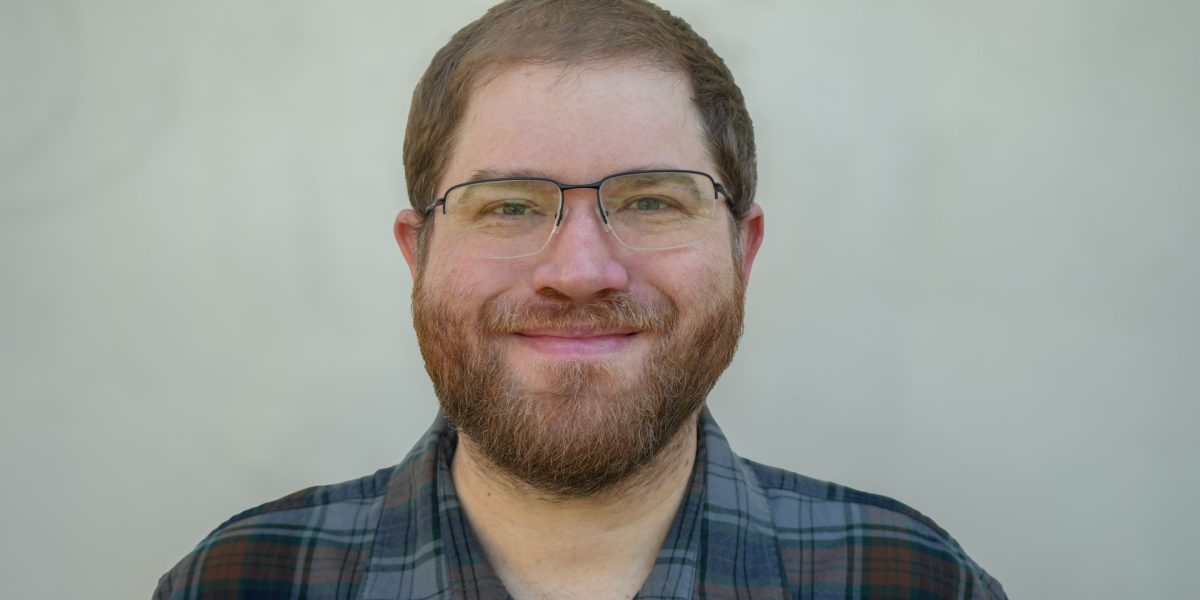
Miles Brundage, a well-known former policy researcher at OpenAI, is launching an institute dedicated to a simple idea: AI companies shouldn’t be allowed to grade their own homework.

Today Brundage formally announced the AI Verification and Evaluation Research Institute (AVERI), a new nonprofit aimed at pushing the idea that frontier AI models should be subject to external auditing. AVERI is also working to establish AI auditing standards.

The launch coincides with the publication of a research paper, coauthored by Brundage and more than 30 AI safety researchers and governance experts, that lays out a detailed framework for how independent audits of the companies building the world’s most powerful AI systems could work.

Brundage spent seven years at OpenAI, as a policy researcher and an advisor on how the company should prepare for the advent of human-like artificial general intelligence. He left the company in October 2024. 

“One of the things I learned while working at OpenAI is that companies are figuring out the norms of this kind of thing on their own,” Brundage told Fortune. “There’s no one forcing them to work with third-party experts to make sure that things are safe and secure. They kind of write their own rules.”

That creates risks. Although the leading AI labs conduct safety and security testing and publish technical reports on the results of many of these evaluations, some of which they conduct with the help of external “red team” organizations, right now consumers, business and governments simply have to trust what the AI labs say about these tests. No one is forcing them to conduct these evaluations or report them according to any particular set of standards.

Brundage said that in other industries, auditing is used to provide the public—including consumers, business partners, and to some degree regulators—assurance that products are safe and have been tested in a rigorous way. 

“If you go out and buy a vacuum cleaner, you know, there will be components in it, like batteries, that have been tested by independent laboratories according to rigorous safety standards to make sure it isn’t going to catch on fire,” he said.

New institute will push for policies and standards

Brundage said that AVERI was interested in policies that would encourage the AI labs to move to a system of rigorous external auditing, as well as researching what the standards should be for those audits, but was not interested in conducting audits itself.

“We’re a think tank. We’re trying to understand and shape this transition,” he said. “We’re not trying to get all the Fortune 500 companies as customers.”

He said existing public accounting, auditing, assurance, and testing firms could move into the business of auditing AI safety, or that startups would be established to take on this role.

AVERI said it has raised $7.5 million toward a goal of $13 million to cover 14 staff and two years of operations. Its funders so far include Halcyon Futures, Fathom, Coefficient Giving, former Y Combinator president Geoff Ralston, Craig Falls, Good Forever Foundation, Sympatico Ventures, and the AI Underwriting Company. 

The organization says it has also received donations from current and former non-executive employees of frontier AI companies. “These are people who know where the bodies are buried” and “would love to see more accountability,” Brundage said.

Insurance companies or investors could force AI safety audits

Brundage said that there could be several mechanisms that would encourage AI firms to begin to hire independent auditors. One is that big businesses that are buying AI models may demand audits in order to have some assurance that the AI models they are buying will function as promised and don’t pose hidden risks.

Insurance companies may also push for the establishment of AI auditing. For instance, insurers offering business continuity insurance to large companies that use AI models for key business processes could require auditing as a condition of underwriting. The insurance industry may also require audits in order to write policies for the leading AI companies, such as OpenAI, Anthropic, and Google.

“Insurance is certainly moving quickly,” Brundage said. “We have a lot of conversations with insurers.” He noted that one specialized AI insurance company, the AI Underwriting Company, has provided a donation to AVERI because “they see the value of auditing in kind of checking compliance with the standards that they’re writing.”

Investors may also demand AI safety audits to be sure they aren’t taking on unknown risks, Brundage said. Given the multi-million and multi-billion dollar checks that investment firms are now writing to fund AI companies, it would make sense for these investors to demand independent auditing of the safety and security of the products these fast-growing startups are building. If any of the leading labs go public—as OpenAI and Anthropic have reportedly been preparing to do in the coming year or two—a failure to employ auditors to assess the risks of AI models could open these companies up to shareholder lawsuits or SEC prosecutions if something were to later go wrong that contributed to a significant fall in their share prices.  

Brundage also said that regulation or international agreements could force AI labs to employ independent auditors. The U.S. currently has no federal regulation of AI and it is unclear whether any will be created. President Donald Trump has signed an executive order meant to crack down on U.S. states that pass their own AI regulations. The administration has said this is because it believes a single, federal standard would be easier for businesses to navigate than multiple state laws. But, while moving to punish states for enacting AI regulation, the administration has not yet proposed a national standard of its own.

In other geographies, however, the groundwork for auditing may already be taking shape. The EU AI Act, which recently came into force, does not explicitly call for audits of AI companies’ evaluation procedures. But its “Code of Practice for General Purpose AI,” which is a kind of blueprint for how frontier AI labs can comply with the Act, does say that labs building models that could pose “systemic risks” need to provide external evaluators with complimentary access to test the models. The text of the Act itself also says that when organizations deploy AI in “high-risk” use cases, such as underwriting loans, determining eligibility for social benefits, or determining medical care, the AI system must undergo an external “conformity assessment” before being placed on the market. Some have interpreted these sections of the Act and the Code as implying a need for what are essentially independent auditors.

Establishing ‘assurance levels,’ finding enough qualified auditors

The research paper published alongside AVERI’s launch outlines a comprehensive vision for what frontier AI auditing should look like. It proposes a framework of “AI Assurance Levels” ranging from Level 1—which involves some third-party testing but limited access and is similar to the kinds of external evaluations that the AI labs currently employ companies to conduct—all the way to Level 4, which would provide “treaty grade” assurance sufficient for international agreements on AI safety.

Building a cadre of qualified AI auditors presents its own difficulties. AI auditing requires a mix of technical expertise and governance knowledge that few possess—and those who do are often lured by lucrative offers from the very companies that would be audited.

Brundage acknowledged the challenge but said it’s surmountable. He talked of mixing people with different backgrounds to build “dream teams” that in combination have the right skill sets. “You might have some people from an existing audit firm, plus some people from a penetration testing firm from cybersecurity, plus some people from one of the AI safety nonprofits, plus maybe an academic,” he said.

In other industries, from nuclear power to food safety, it has often been catastrophes, or at least close calls, that provided the impetus for standards and independent evaluations. Brundage said his hope is that with AI, auditing infrastructure and norms could be established before a crisis occurs.

“The goal, from my perspective, is to get to a level of scrutiny that is proportional to the actual impacts and risks of the technology, as smoothly as possible, as quickly as possible, without overstepping,” he said.


Source link

Continue Reading

Business

Trump’s visa crackdown hits SEA’s Cambodia and Thailand, a decision experts find ‘puzzling’

Published

on


Several Asian countries are hit by the Trump Administration’s decision to pause immigrant processing for 75 countries, including the Southeast Asian nations of Cambodia, Thailand, Myanmar and Laos. 

The suspension, which will take effect on Jan. 21, is the first time the U.S. is restricting applicants from Cambodia and Thailand, just months after U.S. President Donald Trump inked trade deals with both nations on the sidelines of the 2025 ASEAN Summit. He had assured Southeast Asian leaders at the event that they could view the U.S. as a “strong partner and friend” in the years to come. 

The suspension covers several other countries elsewhere in Asia, including the South Asian nations of Bangladesh and Pakistan, as well as countries in Central Asia and the Middle East. The suspension only covers immigrant visas; non-immigrant visas, like tourist and business visas, are not affected. (The U.S. is set to host the FIFA World Cup this year).

“President Trump has made clear that immigrants must be financially self-sufficient and not be a financial burden to Americans,” the U.S. State Department wrote in a post on Jan. 14. It continued that it was starting a “full review of all policies, regulations, and guidance to ensure that immigrants from these high-risk countries do not utilize welfare in the United States or become a public charge.” The post made clear that while nationals in the affected countries could submit applications, no visas would be issued during the suspension. 

“Given the transactional nature of the U.S. dealings with other countries, these pauses can be seen as another way for the U.S. to coerce countries to strike deals that they otherwise would not be keen to do,” suggests Nona Pepito, an associate professor of economics at Singapore Management University. 

Trump’s engagement with Southeast Asia has remained mostly focused on trade, though the U.S. President also tried to negotiate a ceasefire to the violent border conflict between Cambodia and Thailand last year. 

The ceasefire ultimately fell apart, and the two countries began fighting again in late December; both now operate under another, China-facilitated, ceasefire. Last week, the U.S. offered $45 million in aid to both countries to help maintain the truce. 

Laos is already subject to a full travel ban. Cambodia has also previously been in the Trump Administration’s cross-hairs, appearing in a leaked State Department memo last July that noted “concerns” with the Southeast Asian country’s migration policies, though it wasn’t included in later travel restrictions.

Before this suspension, Thailand had yet to be targeted by U.S. immigration policies. A ban could risk “pushing the Thai government and its people closer to China,” Pepito warns. “If the U.S. is seen as an unreliable partner, Thailand, a key treaty ally, may look elsewhere for security and economic cooperation.”

Thailand’s addition is “puzzling,” says Tan Sook Rei, a senior lecturer at Singapore’s James Cook University (JCU), who points out that both the Philippines and Vietnam—which rank among the top sources of U.S. immigrant visas—are “notably absent” from the visa suspension list. “The policy appears less focused on managing migration volumes than on political signaling.”

Jacob Wood, an associate professor of economics at JCU, points to allegations by U.S. officials that Thai businesses have been issuing fake certificates of origin to support China’s “tariff-washing” practices as a source of tension between Washington and Bangkok.

Trump has launched a sweeping crackdown on immigration since taking office a year ago. Last month, the U.S. Department of Homeland Security, in what it called “historic progress in securing the homeland,” claimed that over 2.5 million “illegal aliens” had left the U.S. 

The U.S. is also tightening pathways for legal migration to the country. Trump suspended the U.S. Refugee Admissions Program (USRAP), which provided a safe haven for individuals overseas of “special humanitarian concern.” 

Moreover, the president has increased vetting for international students trying to attend the U.S. The number of new international students starting at a U.S. college or university in fall 2025 fell by 17%, according to the Institute of International Education.

The U.S. has also hiked fees for H-1B employment visas, often used by high-skilled labor in sectors like tech, to $100,000.


Source link

Continue Reading

Business

Oregon QB Dante Moore turns down $50 million in NFL to stay in school amid growing NIL appeal

Published

on


Dante Moore, the quarterback for the University of Oregon Ducks, plans to play another year of college football—turning down an eight-figure salary as a result. 

The 20-year-old college athlete announced on Wednesday he would remain on the Oregon Ducks for the 2026 season, delaying the draft, where he was expected to be a top-two pick. Last year’s No. 2 draft pick Travis Hunter signed a four-year, $46.65 million deal, and this year’s projected earnings are expected to increase.

“This year, I’ve had many great throws, many great plays, but at the end of the day I feel I can still learn so much more,” Moore said in an interview with ESPN on Wednesday. “As a kid, since I was 4 years old, I’ve dreamed about being in the NFL—but this team, we’ve been through a lot, a lot of people are returning, so we’ve got some exciting things to come this year. I’m excited to keep pushing my team.”

Moore, who threw for threw for 3,565 yards and had 30 touchdowns in the 2025 season, is part of only a small fraction of college football players who have taken more time before going pro: Stanford quarterback Andrew Luck announced in 2011 he would delay NFL entry to finish his architectural design degree, allowing the Carolina Panthers to select Cam Newton as its No. 1 draft pick instead. USC quarterback Matt Leinart made a similar decision in 2005.

But Moore’s choice may mark the beginning of a new pattern among college athletes: Beyond an extra opportunity to notch a national championship, college athletes also have a shot at making real money while enrolled at school thanks to expanding name, image, and likeness (NIL) rules, taking away pressure to go pro before getting a degree or maturing as a player.

A June 2021 Supreme Court ruling made it possible for the NCAA to adopt a policy for college athletes to benefit from their own name, image, and likeness. A House settlement last summer allows for colleges to now directly pay their athletes for the first time, creating a revenue-sharing model where athletic departments could distribute about $20.5 million in NIL revenue to their athletes during the 2025-2026 season.

Cashing in on the NIL boom

Moore has already been a beneficiary of the NIL boom for college athletes, cashing in on his own deals with Nike, Beats by Dr. Dre, and Raising Cane’s. He has a net worth of $2.3 million, according to On3, making him the 12th wealthiest college football player, and the highest-earning Oregon Duck. 

Moore, via a University of Oregon spokesperson, did not immediately respond to Fortune’s request for comment.

The University of Oregon has also become a dominant force in NIL, thanks to Nike founder Phil Knight—known as “Uncle Phil” to the college’s football stars—who has donated more than $1 billion to his alma mater as of 2023. Knight founded Division Street, a sports venture whose Ducks of a Feather program effectively serves as a premium marketing agency for University of Oregon’s athletes, ultimately a bid for Knight, 87, to assist in his hope of the Ducks winning another championship.

“Phil Knight is bankrolling that whole thing and wants to see them win a national title,” one unnamed NIL agent told CBS Sports. “They are really, really aggressive with money.”

NIL deals are already beginning to change the landscape of professional league drafts. The 2025 NBA draft  saw the lowest number of early-entrant candidates in about ten years, with more than a dozen other high-potential candidates withdrawing at the draft deadline. Basketball analysts attributed the dip in part to the growing appeal of NIL.

Basketball insider Jeff Borzello told ESPN in May 2025 NIL has transformed how student athletes think about going pro, particularly in the NBA, where the minimum salary for rookies is $1.2 million, a number many college athletes can surpass with brand deals and revenue-sharing models. Meanwhile, students can theoretically improve their game and still maintain relationships with the NBA teams scouting them.

“With salaries for the final handful of picks in this year’s first round clocking in at below $3 million per season for the next two seasons, per the rookie scale, players projected in that range can now make just as much money by opting to stay in college while theoretically improving their draft stock,” Borzello said.


Source link

Continue Reading

Business

Children of property-rich parents get offered the best jobs—and new research has revealed why

Published

on


It’s no secret that the children of wealthy families have an upper hand in success—money and connections have historically helped them break into Hollywood, and even the C-suite. Now, new research shows that U.K. parents who reaped the rewards of the country’s housing boom three decades ago set their kids up for success down the line.

Around the turn of the 21st century, the U.K. witnessed a dramatic surge in housing prices: the costs rose from four times peoples’ annual earnings in 1995, to eight times by 2010. Homeowners subsequently enjoyed a wealth windfall, and it resulted in their kids receiving more housing wealth and higher-paying jobs, according to recent research from the Institute for Fiscal Studies. Lower-income renters, on the other hand, were faced with new affordability challenges. 

“This property boom meant enormous wealth gains for some households but not others,” the report notes. “Our results show that housing wealth, independent of other factors such as parents’ skills, substantially affects inequality in the subsequent generation.”

To put the wealth divide into perspective, the study found that for every £100,000 ($133,800) of extra property the wealthy parents had, the children were £15,000 ($20,000) better off in household assets when they reached their late 20s. It catapulted the social mobility of rich kids—who had enough funds to move to high-paying jobs in London—while the children of renters were blocked from generational wealth opportunities. 

Likewise, in the U.S. higher house prices provide parents with additional funding to invest in their children, resulting in higher salaries than the children of renters.

Why the children of property-boom parents have an upperhand 

It didn’t matter what wealthy parents did for work, or what degrees they had—the study found the kids of rich homeowners benefited regardless. And a key reason why they were able to secure tens of thousands of dollars in wealth gains is because of location; those who benefitted most from the housing boom owned property in London, or were able to move to the capital city brimming with better job opportunities. 

“An important explanation for this finding is that the children of parents more exposed to the house price boom were more likely to own in London—the most expensive property market in the country,” the report explains. 

“This is partly explained by an increased tendency of people whose parents did relatively well out of the house price boom, but who grew up outside of London, to move to the capital.”

The children of parents who fared better in the housing boom were less likely to take on middle-paying jobs outside of the U.K.’s capital, the study found. Instead, they were inclined to funnel into higher-paying occupations in the city compared to their family renter counterparts. 

However, the benefits have not been equally distributed among the children of these housing-rich families. Their sons were the most likely to secure jobs at the top of the earnings distribution—meanwhile, there was “no significant effect” with the daughters. The study found that “wealth from parents may help male children in particular access better labour market opportunities.”

U.K.’s housing affordability and stagnating wages 

While rich kids are reaping wealth and career gains from their parents’ housing boom success, many in the U.K. have given up on buying a home with their abysmal salaries.

U.K. property offers the worst value for money in the developed world, according to a 2024 analysis from The Resolution Foundation. Not only are U.K. housing costs more expensive relative to general prices than in any OECD country, the study found, but homes in England are even more cramped than those in New York City. The average house price in the U.K. currently rests at about £270,000 ($361,100). And those who rent are also up against an affordability crisis: rent in England is set to skyrocket by 25% in the next four years, real estate group Hamptons International predicted in 2023.

“Britain’s housing crisis is decades in the making, with successive governments failing to build enough new homes and modernize our existing stock,” Adam Corlett, principal economist at the Resolution Foundation, told Bloomberg. “That now has to change.”

But as housing costs increase every year, U.K.’s workers aren’t seeing the same bumps in their annual salaries—especially young people at the bottom of the totem pole. The average salary for working-age U.K. graduates is 30% lower than it was 15 years ago, according to government data analyzed by Bloomberg

Gen Zers are only getting around two-thirds of the pay their millennial counterparts received at the same career stage, and it’s causing many to reconsider if they can even succeed in the U.K. One in four Britons between the ages of 18 and 30 said they might leave, with many pointing fingers at the lack of affordable housing and high cost of living, according to a 2025 study from the Adam Smith Institute.


Source link

Continue Reading

Trending

Copyright © Miami Select.