Connect with us

Business

Down Arrow Button Icon

Published

on


The S&P 500 fell 0.19% yesterday but, interestingly, the “equal weight” S&P 500 (a notional index that values each stock equally) was marginally up. That’s because more investors are picking between winners and losers on the index—and many of the losers are the “Magnificent Seven” tech stocks.

The market as a whole is up 0.48% year-to-date. Given that the year is only a few days old, that pace promises healthy gains ahead.

But only two of the Mag 7 stocks are in positive territory so far, Alphabet and Amazon. All the others are down. Some of them are down bad. Tesla has lost 4.73% so far, Apple is down 4.83%.

The collapse of the Mag 7 is important because in the last few years the valuation of those stocks has grown so big that they now form more 30% of the value of the S&P as a whole. It created a situation where even if you bought an S&P 500 exchange-traded fund your results were mostly affected by the Mag 7.

To give you an idea of how worried analysts are about this concentration risk, Apollo Global Management chief economist Torsten Sløk recently published a note whose opening page looked like this:

But the dominance of the Mag 7 is likely to come to an end this year, many on Wall Street believe—if only because their valuations can’t exponentially go up forever. 

Morgan Stanley Wealth Management Chief Investment Officer Lisa Shalett believes the market is undergoing a healthy rotation away from tech stocks and back into the non-tech components of the S&P.

“We see several drivers of healthy deconcentration of the current ‘top 10’ components persisting,” she said in a recent note. “First is relative earnings acceleration. Growth rates are apt to continue to decline for the ‘Magnificent Seven’ while those of ‘the 493’ improve. Second, stock-buyback activity among the tech giants is falling as operating cash flow increasingly goes to [AI-related] capex.” 

The result is something that traders are pretty happy about because—as yesterday’s equal weight S&P performance shows—the other 493 stocks are still able to generate gains even if the Mag 7 are crumbling.

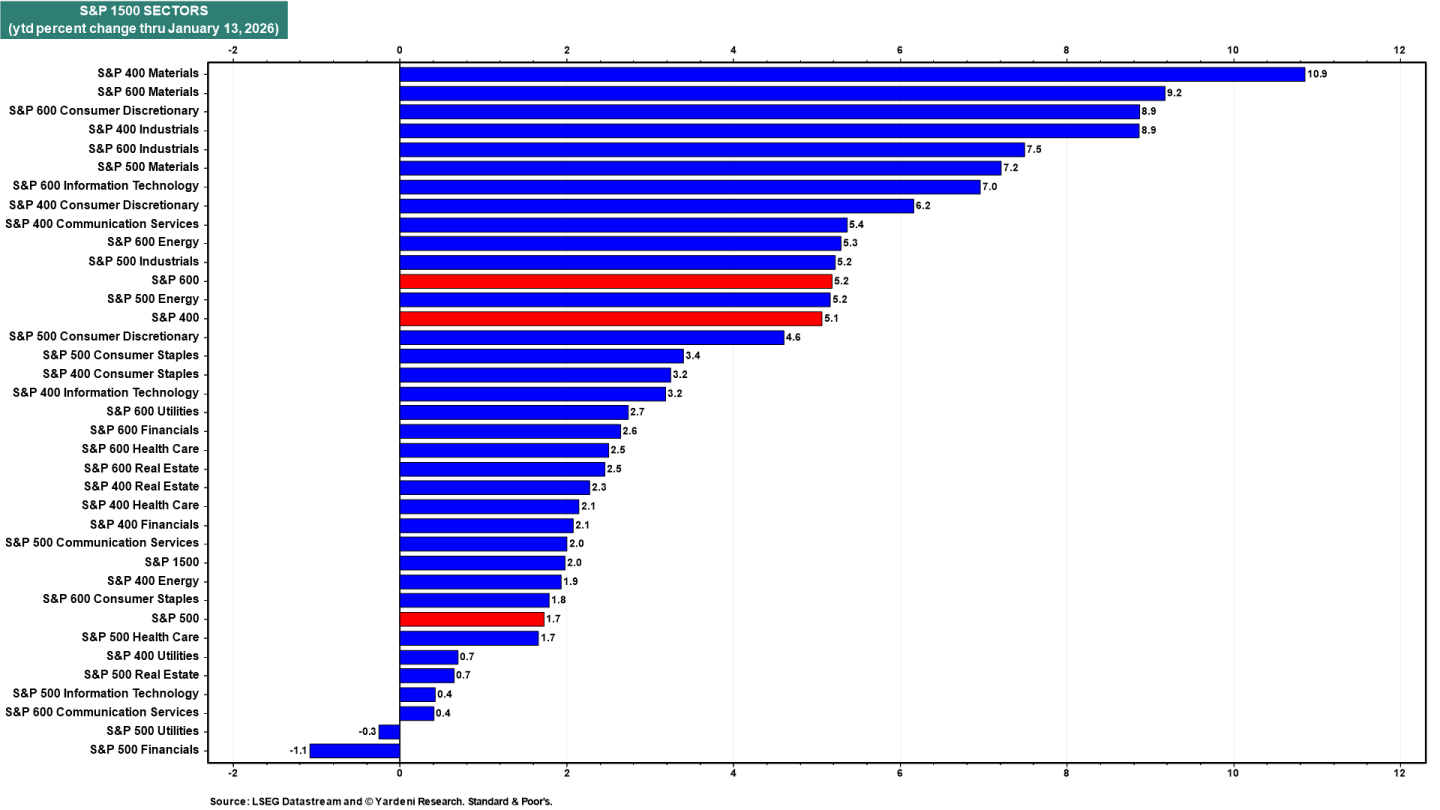
“On a [year-to-date] basis, the bull market in the S&P 500 is broadening, as we expected it might this year. The S&P 400 and S&P 600 are outperforming the S&P 500,” Ed Yardeni of Yardeni Research told clients this morning:

The Mag 7 has been in decline for two and a half months. “The Impressive-493 has outperformed the Magnificent-7 since last November. We expect this will continue in 2026, as last year’s LargeCap laggards catch up,” Yardeni said.

Here’s a snapshot of the markets ahead of the opening bell in New York this morning:

  • S&P 500 futures were down 0.44% this morning. The last session closed down 0.19%.
  • STOXX Europe 600 was up 0.27% in early trading.
  • The U.K.’s FTSE 100 was up o.3% in early trading. 
  • Japan’s Nikkei 225 was up 1.48%.
  • China’s CSI 300 was down o.4%. 
  • The South Korea KOSPI was up 0.65%. 
  • India’s NIFTY 50 was down 0.26%. 
  • Bitcoin was at $95K.
Join us at the Fortune Workplace Innovation Summit May 19–20, 2026, in Atlanta. The next era of workplace innovation is here—and the old playbook is being rewritten. At this exclusive, high-energy event, the world’s most innovative leaders will convene to explore how AI, humanity, and strategy converge to redefine, again, the future of work. Register now.


Source link

Continue Reading

Business

Down Arrow Button Icon
Published

on


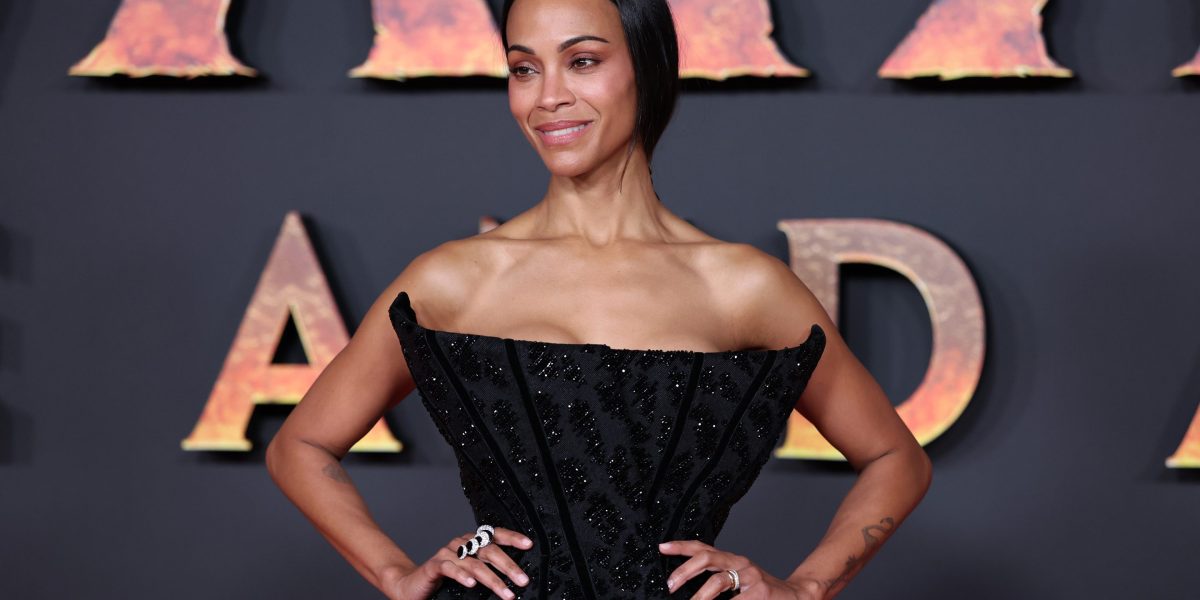
Hollywood has a new queen bee, and the money made from her movie portfolio outmatches the market caps of billion-dollar companies like Alaska Airlines and H&R Block. Academy Award-winning star Zoe Saldaña was just crowned the highest-grossing actor in Hollywood, surpassing Scarlett Johansson and Samuel L. Jackson after a breakout year of entertainment

The movies Saldaña has starred in as a leading actress have earned a staggering $15.47 billion—ranking her above every other actor in the world—according to recent data from The Numbers. Following the immense $1.08 billion global success of Avatar: Fire and Ash, she finally overtook her Marvel peer Johansson ($15.4 billion) and Hollywood icon Jackson ($14.6 billion), who ranked above her in 2024.

The 47-year-old is also the first woman in Hollywood to have starred in four projects that have amassed more than $2 billion globally. And 2025 was her year—aside from the success of Fire and Ash, she won the best supporting actress Oscar for her role in Emilia Pérez, becoming the first Dominican American to win an Academy Award. 

Saldaña took to the internet to celebrate her most recent milestone. “I just want to express my sincerest gratitude for the extraordinary journey that has led me to become the highest-grossing film actor of all time today,” Saldaña said in an Instagram video. “An achievement made possible entirely, entirely by the incredible franchises and the collaborators that I have been fortunate enough to be a part of, to every director who placed their trust in me.”

She also credited the directors of some of her biggest franchise hits—from Star Trek and Guardians of the Galaxy, to Avengers and Avatar—in challenging her and shaping her as an artist. But it’s her mom who gave her the biggest career advice, Saldaña has previously admitted.

Leaning on this critical advice while breaking barriers in Hollywood

Throughout her 27-year career starring in billion-dollar franchises and indie flicks, Saldaña has made her mark on Hollywood despite the challenges. As a woman and Latina in the movie industry, the actress has faced barriers and felt the pressure to work “twice as hard, because I’m a woman,” she told CNBC Make It. 

In those tough moments, Saldaña leaned on the advice her mother gave her earlier on—which she “didn’t know how powerful that [advice] was going to be” until she had to navigate her own unique obstacles in entertainment. 

“She was always reminding me that I mattered,” Saldana told CNBC Make It in 2019. 

“She was like, ‘Don’t forget about you…Don’t forget about your happiness. Don’t forget about your beauty. Don’t forget about your opinion.’”

Hollywood’s top-grossing actresses and actors 

The five top-grossing actresses and actors in leading roles at the worldwide box office, according to recent data from The Numbers

  1. Zoe Saldaña: $15.5 billion
  2. Scarlett Johansson: $15.4 billion 
  3. Emma Watson: $9.3 million
  4. Karen Gillan: $8.4 billion
  5. Elizabeth Olsen: $8.4 billion 
  1. Samuel L. Jackson: $14.6 billion 
  2. Robert Downey Jr.: $14.3 billion
  3. Chris Pratt: $14.1 billion
  4. Tom Cruise: $12.7 billion
  5. Chris Hemsworth: $12.2 billion


Source link

Continue Reading

Business

Down Arrow Button Icon

Published

on


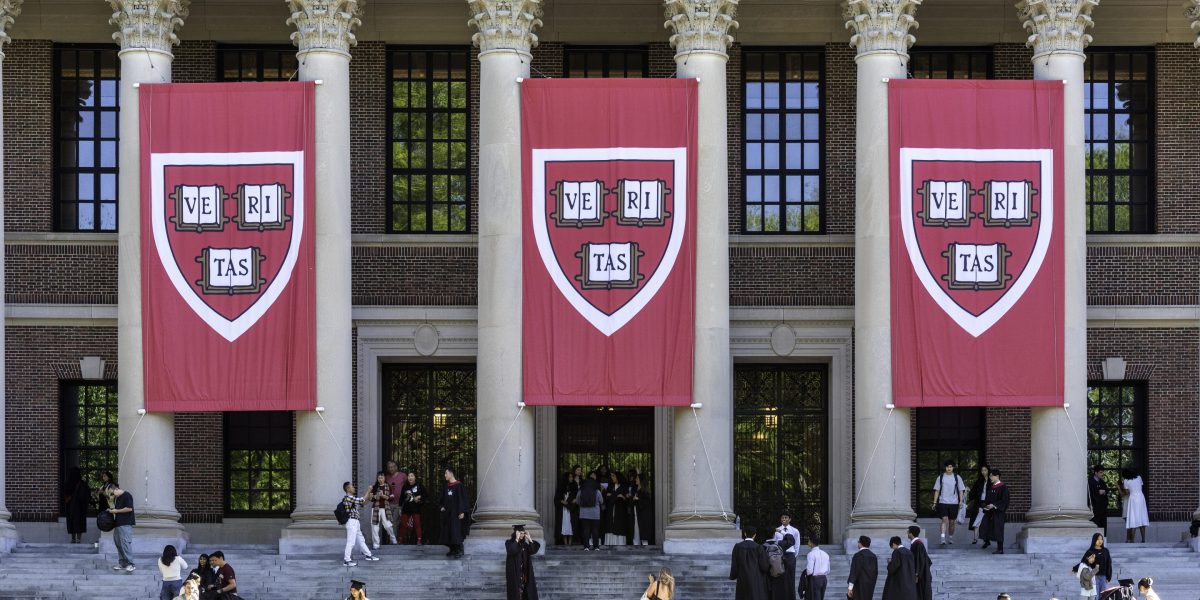
College is expensive, and a growing number of skeptics have questioned its value proposition. Palantir CEO Alex Karp has said it doesn’t really matter where his employees went to college, and Apple CEO Tim Cook has said a four-year degree isn’t even required to work at the company. The rise of AI has only added to doubts of a degree’s value. But some economists say college still holds some implicit value, like teaching students things AI could never learn how to do.

Carl Benedikt Frey is an economist at the University of Oxford and the author of a famous 2013 paper that estimated automation could put nearly half of U.S. jobs at risk. He paints a troubling picture for the future of white-collar US jobs, saying as AI advances, high-skilled work is more likely to be offshored.

“If AI makes these jobs easier, you will see more activities shifting towards places where labor is cheaper, whether that’s India or the Philippines,” Frey told Fortune. “I think that’s going to put a lot of pressure on people’s wages doing knowledge work.”

Despite his estimation, Frey says earning a college degree is still worthwhile, as it imparts three core skills in which humans hold a competitive edge over AI: complex social interactions, creativity, and navigating complex environments. 

Complex social interactions

AI has made leaps in communication advancements during the past decade. Despite that, Frey says those improvements actually make human-to-human interaction more valuable. 

“The value of social skills have gone up over the past decade, whereas the value of math skills has been trending downwards,” Frey said.

That’s because AI can’t hold a meeting as well as it can solve long division. Communication and emotional intelligence are things AI models cannot replicate—at least for now—maintaining their value in the workplace. A Stanford University study evaluating how AI will shift valued skills in the workplace found communication skills will grow in importance, while high-wage skills like data analysis and accounting will diminish in value.

Creativity

Sure, you can ask ChatGPT to read the Rolling Stones’ “Sympathy for the Devil” in the manner of William Shakespeare, or even train an algorithm in impressionist art and ask it to turn your wedding photos into Monet paintings. But human creativity extends beyond memorizing knowledge and regurgitating it in different formats. It takes the ability to think differently and push boundaries.

“If you had asked an LLM in 1900, ‘would humans ever be able to fly?’” Frey said, “it would have concluded that there’s no bird that weighs more than 30 pounds that’s able to get off the ground.”

That is why creativity is becoming a critical trait for workers to have. The World Economic Forum’s Future of Jobs Report 2025 also says creative thinking is becoming more important amid AI’s rise. Frey says active discussion and debate—a cornerstone of a college education—is a critical activity to enhance creative thinking.

Resilience

Frey says AI doesn’t quite possess the resiliency to function like a human. It can provide—with the click of a button—a wide range of information, from a slew of complex legal cases to optimized travel itineraries. But it doesn’t do well in environments that are in constant flux, as is the real world. 

“An undergraduate textbook will not have changed that much in recent decades,” Frey said. “AI thrives as a tutor in those relatively static environments.”

That means flexibility will hold more currency as AI continues to enhance. The WEF’s 2025 Future of Jobs Report also named resiliency a skill that is rising in importance. And business leaders note its importance in the age of AI, saying it is a required trait to navigate the many changes a business faces amid AI adoption. While AI can help “democratize” basic information, such as what is found in a typical 101 course textbook, college prepares students to interpret that information for complex environments, according to Frey.

“In professions where you have more volatility where your job changes more day to day, [those jobs] are less likely to be exposed or automated,” Frey said.


Source link

Continue Reading

Business

Meld raises $7 million to integrate stablecoin networks, build the ‘Visa for crypto’

Published

on


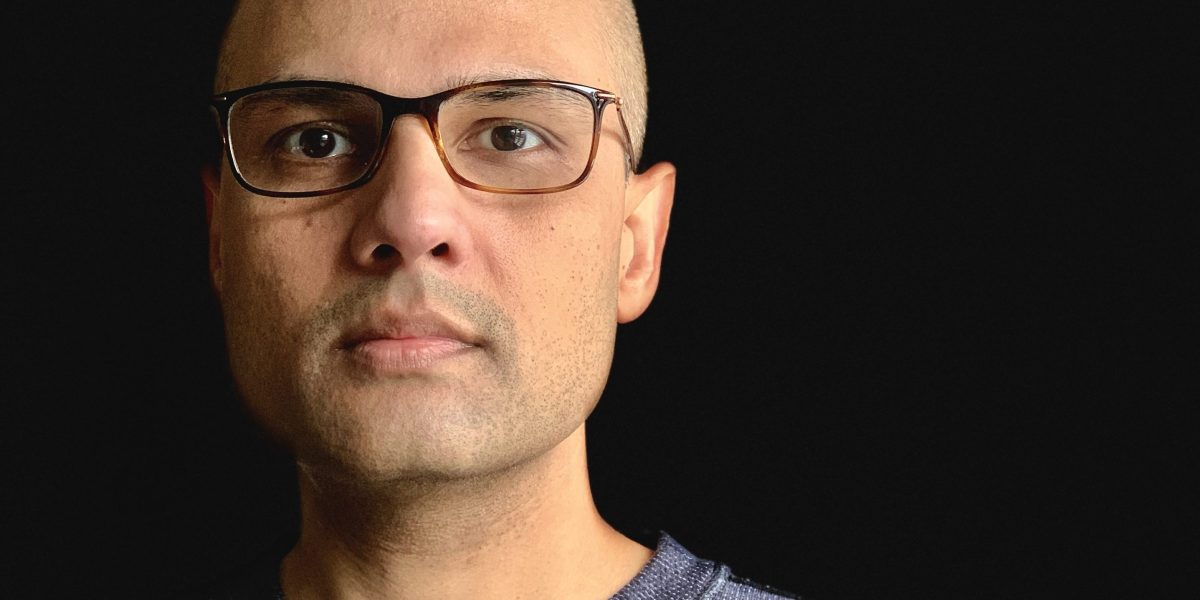
When a company wants to pay its employees in different countries using stablecoins, it encounters a roadblock: many countries use different stablecoin service providers: there is Yellow Card in South Africa, Onmeta in India, and so on. Pankaj Bengani, a veteran of payment giant Block, founded Meld in part to fix this issue. He is building a network called Meld that aims to be a one-stop shop for companies and individuals to access and convert digital assets globally. 

The startup announced on Wednesday that it raised $7 million dollars in a funding round led by Lightspeed Faction, with participation from F-Prime, Yolo Investments, and Scytale Digital, which brings their total capital raised to $15 million. Bengani, the founder and CEO of Meld, did not disclose his company’s valuation in an interview with Fortune. 

“It’s very fragmented—there are so many blockchains, there are so many stablecoins, there are so many payment methods,” Bengani said. “It’s ripe for one company to make it easier, and that’s what we want to do.”

When companies and individuals connect to the Meld network, they can buy or settle stablecoins, Bitcoin, Ethereum, or any other type of digital asset around the world. The network launched in 2024 and partners with over 50 providers—like Yellow Card and Onmeta—in more than 180 countries, working in over 150 fiat currencies, the company says. People can use the network for remittances and global payroll, among other use cases. In the same way Visa partners with banks around the world for the last mile of transactions, Meld aims to partner with global crypto providers. 

There are two fintech giants, Stripe and Bridge, that provide on and off ramping of crypto. Bengani says that these companies only serve a select few countries, mainly European countries and the United States, whereas Meld is more global. 

The startup generates revenue through transaction fees, although it did not disclose exact numbers. Meld said that it expects to at least quadruple its revenue from last year. It currently has about 15 employees. 

Prior to founding Meld, Bengani worked at Square (as Block was then known) for about five years. There, he felt aligned with the company’s mission of financial inclusion, which he says it accomplished by helping small businesses. He takes those same values to Meld, where he believes he’s promoting financial inclusion by providing people access to crypto at a global scale. 

“It’s fun to make money and feel like you’re making the world a better place, as corny as that sounds,” he said. “If you can give financial access to people on these new rails, that’s pretty cool.” 


Source link

Continue Reading

Trending

Copyright © Miami Select.