Connect with us

Business

Down Arrow Button Icon

Published

on


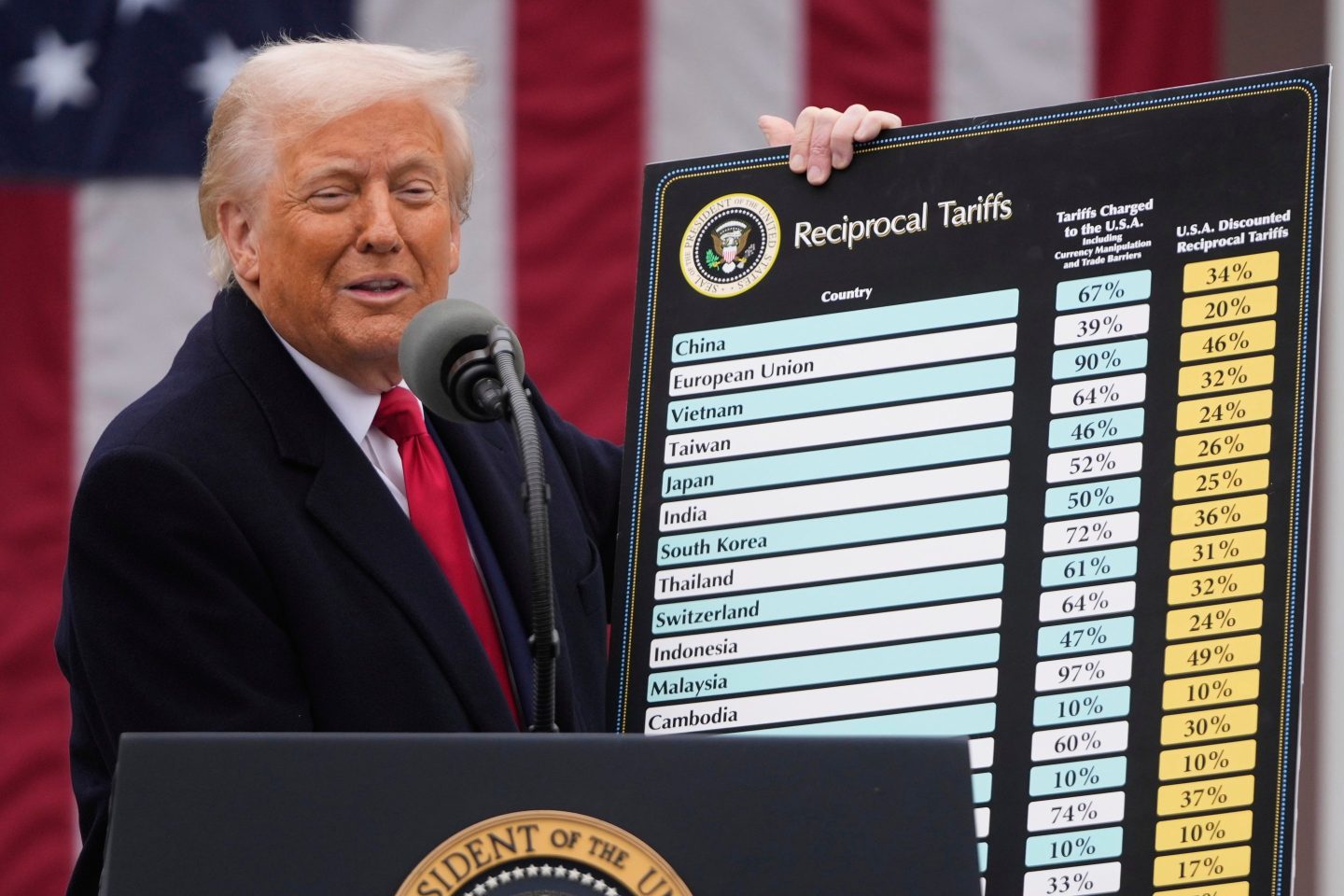
Whoever replaces Jerome Powell as chairman of the U.S. Federal Reserve in May knows one thing: If they don’t do what President Trump wants, they risk being criminally prosecuted. That was the unambiguous message in Powell’s extraordinary statement yesterday, in which he vowed to continue to set monetary policy independently regardless of the federal grand jury subpoenas investigating his statements to Congress about alleged cost overruns in the renovation of the Fed’s HQ building. 

“This new threat is not about my testimony last June or about the renovation of the Federal Reserve buildings. … Those are pretexts. The threat of criminal charges is a consequence of the Federal Reserve setting interest rates based on our best assessment of what will serve the public, rather than following the preferences of the President,” he said.

“This is about whether the Fed will be able to continue to set interest rates based on evidence and economic conditions—or whether instead monetary policy will be directed by political pressure or intimidation.”

Markets moved back into “Sell America” mode overnight as traders digested the prospect of an incoming Fed chair who lacks independent credibility: The dollar sank 0.32% against a basket of international currencies; the yield on 5-year Treasuries moved sharply up, a sign that investors now regard U.S. government bonds as being suddenly more risky; gold futures—the traditional safe haven—rose 2.21% today to hit a new record high over $4,600 per troy ounce; and S&P 500 futures are down 0.66% this morning prior to the opening bell.

Wall Street analysts are almost universally negative about the news.

“The combined drop in the dollar, equities and Treasuries was a reminiscence of the ‘sell America’ days of last spring,” ING’s Francesco Pesole told clients this morning. “The downside risks for the dollar from any indications of further determination to interfere with the Fed’s independence are substantial. Again, the bond market will be the most important barometer, both on the short end of the curve if markets price back in more rate cuts, or in the long end with potential stress signs on independence risks. A sharp steepening of the curve could take the dollar on a fall.”

At Invesco Asset Management, analyst David Chao told Bloomberg, “The Fed subpoena is another example of how US assets are becoming less attractive … Not only is the US retrenching behind its Fortress America borders, the country is also becoming more predatory.”

The subpoenas may also trigger a burst of inflation, according to RBC Capital Markets’ Blake Gwinn. “Markets will start to price in greater inflation expectations, inflation risk premium, and term premium if the Fed’s independence comes under further attack,” he told the Financial Times. “We don’t appear to have hit it yet, but every action is another step closer to it.”

Counterintuitively, some analysts think that the investigation now makes near-term interest rate cuts less likely, because Powell and the other members of the Federal Open Markets Committee will be determined to show the markets that they are guided by the data and not legal threats.

“The move may also help Fed independence,” UBS’s Paul Donovan said in an email. “Powell’s defiance might signal a reluctance to quit as a Fed governor this year. There are signs the Senate may delay confirming the nomination of a new Fed Chair. Concerns about market reactions and perceptions of institutional independence (in the wake of legal challenges) may become hawkish considerations in setting interest rates.”

ING’s Pesole said, “Markets aren’t ready to price in a loss of Fed independence just yet, either on the view that Powell will indeed remain firm in his policy views (as he’s pledged to), the FOMC won’t be heavily affected, or that the DoJ subpoenas aren’t likely to lead to an indictment.”

Either way, there’s a real sense of uncertainty among asset managers right now. “The Fed as we have understood it as an institution over the past couple of decades is fading from view. It’s operating in a different environment,” ANZ’s chief economist, Richard Yetsenga, told the FT.

Here’s a snapshot of the markets ahead of the opening bell in New York this morning:

  • S&P 500 futures were down 0.66% this morning. The last session closed up 0.65%.
  • STOXX Europe 600 was down 0.1% in early trading. 
  • The U.K.’s FTSE 100 was flat in early trading. 
  • Japan’s Nikkei 225 was closed today.
  • China’s CSI 300 was up 0.65%. 
  • The South Korea KOSPI was up 0.84%.
  • India’s NIFTY 50 was up 0.42% 
  • Bitcoin was at $90.4K.
Join us at the Fortune Workplace Innovation Summit May 19–20, 2026, in Atlanta. The next era of workplace innovation is here—and the old playbook is being rewritten. At this exclusive, high-energy event, the world’s most innovative leaders will convene to explore how AI, humanity, and strategy converge to redefine, again, the future of work. Register now.


Source link

Continue Reading

Business

Molson Coors CEO: We’re doing our part to solve society’s ‘occasion problem’ – and we’re getting some unexpected help

Published

on


Source link

Continue Reading

Business

A cautionary Hollywood tale: the Ellisons’ lose-lose Paramount positioning

Published

on


A cautionary Hollywood tale: the Ellisons’ lose-lose Paramount positioning | Fortune

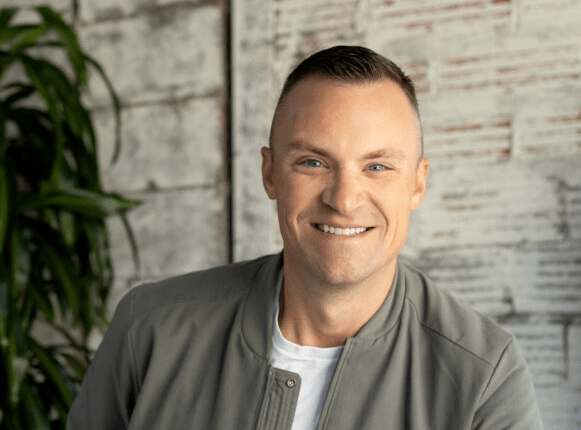
Jeffrey Sonnenfeld is Lester Crown Professor of Leadership Practice at the Yale School of Management and founder of the Yale Chief Executive Leadership Institute. A leadership and governance scholar, he created the world’s first school for incumbent CEOs and he has advised five U.S. presidents across political parties. His latest book, Trump’s Ten Commandments, will be published by Simon & Schuster in March 2026.
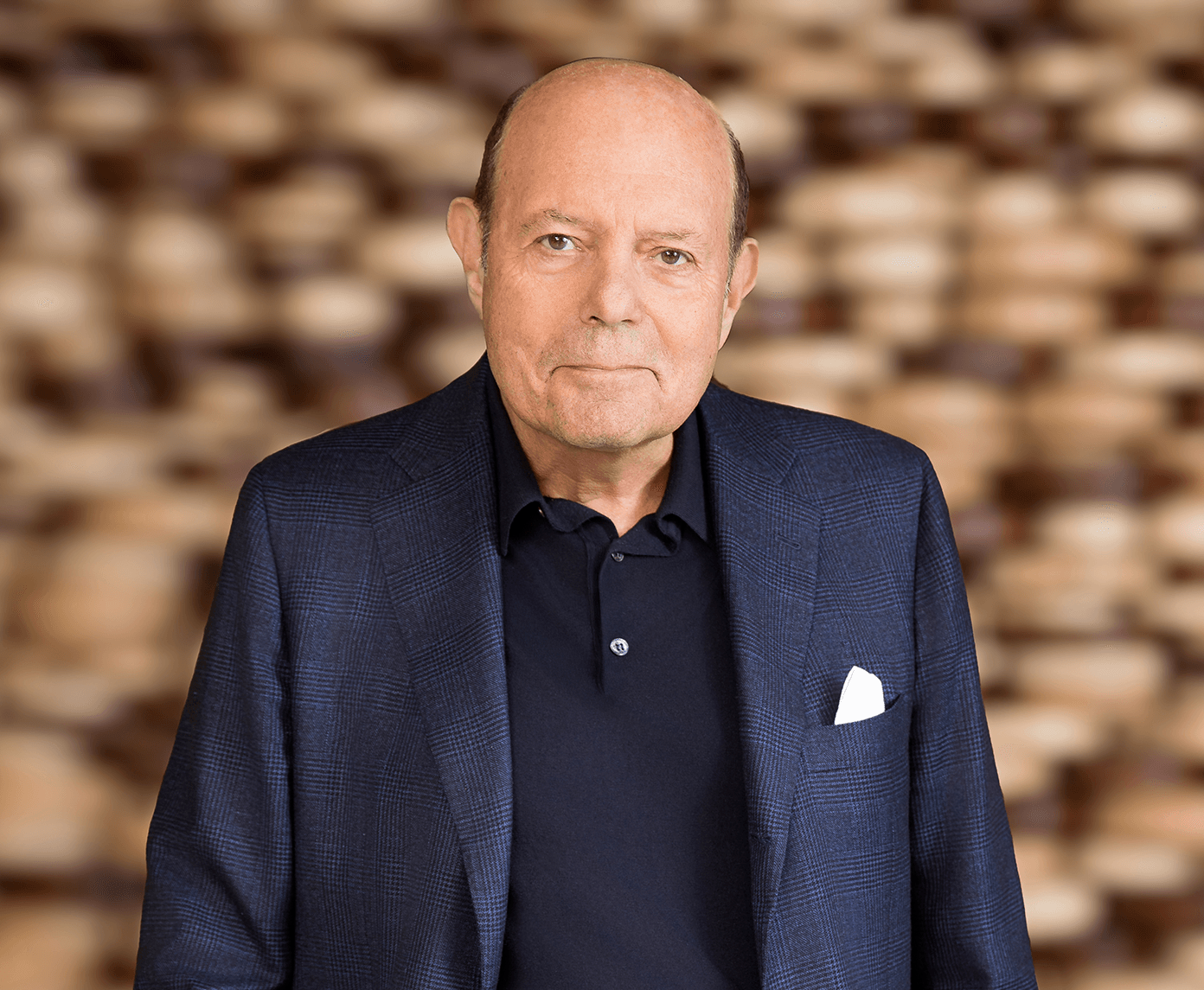
Stephen Henriques is a senior research fellow of the Yale Chief Executive Leadership Institute. He was a consultant at McKinsey & Company and a policy analyst for the governor of Connecticut.

Source link

Continue Reading

Business

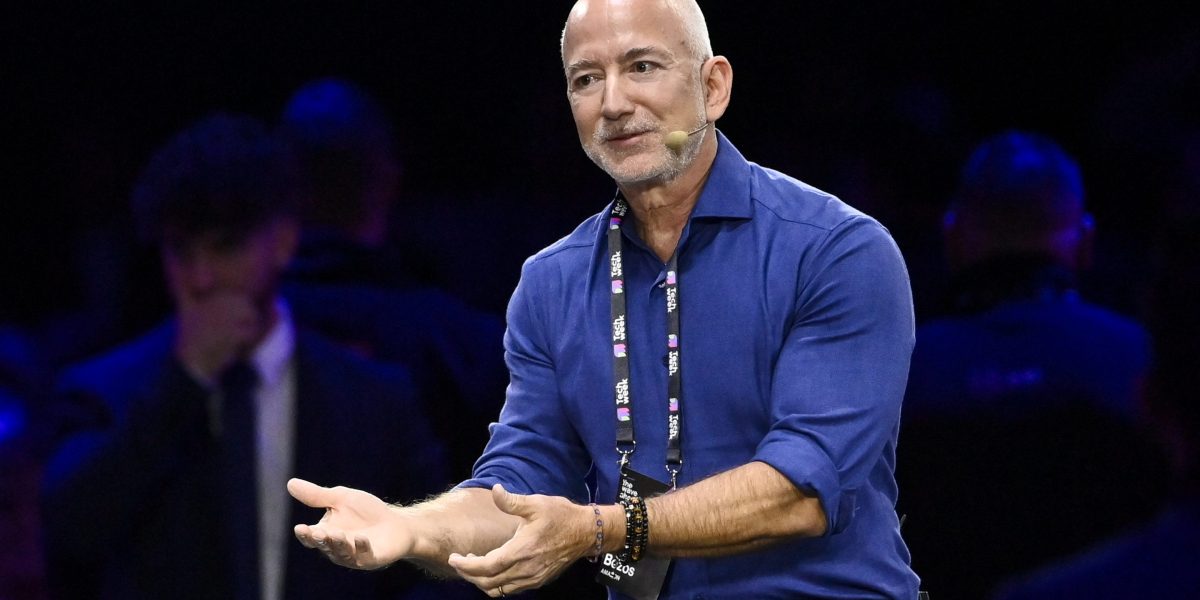
Jeff Bezos tells Gen Z entrepreneurs to gain work experience before launching new companies
Published

on


Some of Big Tech’s greatest success stories are from college dropouts. Mark Zuckerberg launched Facebook in 2004 from his Harvard University dorm room (and later dropped out). Bill Gates also left Harvard and cofounded Microsoft with Paul Allen in 1975. 

But Jeff Bezos, founder of the world’s largest online retailer Amazon, said Zuckerberg and Gates are the “exception” to the idea that all major tech companies were founded by college dropouts and that a degree doesn’t matter as much these days. 

While it’s “possible” to be 18, 19, or 20 years old and drop out of college to become a great entrepreneur, Bezos said these tech leaders are an exception.

“I always advise to young people: Go work at a best-practices company somewhere where you can learn a lot of basic fundamental things [like] how to hire really well, how to interview, etc.,” Bezos said during an interview at Italian Tech Week last fall. “There’s a lot of stuff you would learn in a great company that will help you, and then there’s still lots of time to start a company after you have absorbed it.”

Working at a company, instead of immediately trying to start one, “increases your odds” of being successful, he added. 

Bezos, now the third-richest person in the world at a $268 billion net worth, founded Amazon when he was 30 years old after about a decade of work experience. Both Gates and Zuckerberg, on the other hand, were just 19 years old when they launched Microsoft and Facebook, respectively. Still, Zuckerberg is the sixth-wealthiest person in the world with a $231 billion net worth, and Gates is the 16th-richest at a $118 billion net worth. 

But Bezos says that “extra 10 years of experience actually improved the odds that Amazon would succeed.” And succeed it did: Today, the online retailer has a whopping $2.64 trillion market cap.

Not only did Bezos have work experience, but he also finished college. He graduated summa cum laude—the highest honors—from Princeton University in 1986 with a bachelor’s degree in engineering. 

He was also elected to honor societies Phi Beta Kappa and Tau Beta Pi, and also served as president of the Princeton chapter of the Students for the Exploration and Development of Space. That academic focus later came to fruition in 2000 with Bezos’s aerospace-tech company Blue Origin, which he’s described as the “most important work” he does. Blue Origin is a private company, so its valuation has never been disclosed, but Bezos has said he thinks it will eventually be bigger than Amazon.

“That would always be my advice: I finished college, and I enjoyed college,” Bezos said. “I think it’s been helpful to me.”

Still, younger generations continue to question the value of a college degree. As the cost of college continues to grow and available jobs for newer grads shrink, many are starting to question the real return on investment for a degree. Even Jim Farley, the CEO of Ford, said during a recent company conference last week, going to college “should be a debate.”

“Nothing in the history of Western civilization has gotten more expensive, more quickly,” added Mike Rowe, a longtime vocational advocate. “Not energy, not food, not real estate, not even health care, [nothing has been inflated more] than the cost of a four-year degree.”

A version of this story was published on Fortune.com on October 6, 2025.

More on entrepreneurship:

Join us at the Fortune Workplace Innovation Summit May 19–20, 2026, in Atlanta. The next era of workplace innovation is here—and the old playbook is being rewritten. At this exclusive, high-energy event, the world’s most innovative leaders will convene to explore how AI, humanity, and strategy converge to redefine, again, the future of work. Register now.


Source link

Continue Reading

Trending

Copyright © Miami Select.