Connect with us

Business

Down Arrow Button Icon

Published

on


Federal officers have encountered opposition in nearly all of the cities targeted by President Donald Trump’s immigration enforcement campaign. But it was in Minnesota — a state in daily conflict with the Trump administration this year — that a 37-year-old woman was shot and killed by an immigration officer.

Trump has focused on several blue states in the divide-and-conquer campaign that has characterized his second term, and now he has turned to Minnesota, where the killing of George Floyd and the protests it sparked stained his first presidency.

Trump last month called the state’s Somali population “garbage” in the wake of a massive federal investigation into COVID-19 and medical aid fraud tied to organizations serving Somali immigrants, among others. The fraud cases led Minnesota’s Democratic governor, Tim Walz — former Vice President Kamala Harris’ 2024 running mate — to announce this week he will not run for reelection.

In June, a Democratic state lawmaker and her husband were assassinated by a Trump supporter, although conservatives insist the gunman was actually a leftist working at Walz’s behest. On Sunday, the victims’ family begged Trump to take down a social media post echoing those conspiracy theories.

Memories of the chaos that followed the killing of George Floyd

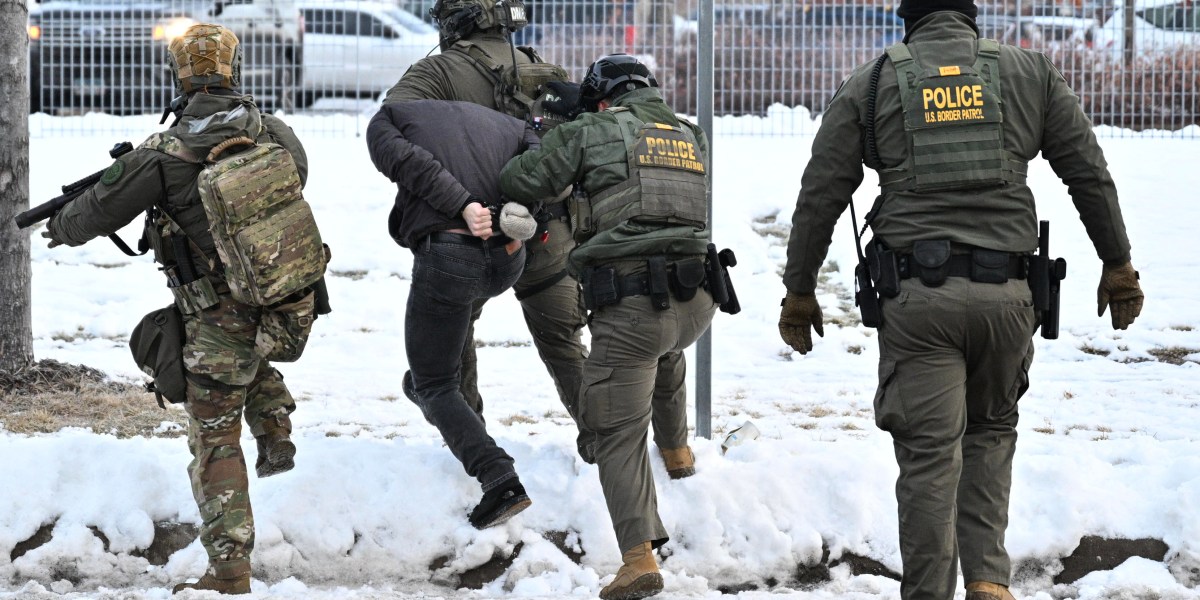
Amid that mounting tension, the Trump administration announced Tuesday that it was sending more than 2,000 federal officers to the Twin Cities of Minneapolis and St. Paul in what it claimed would be the biggest immigration enforcement operation in history.

The Immigration and Customs Enforcement officer who killed Renee Good during a protest Wednesday against the immigration raids opened fire just blocks from where, in 2020, a Minneapolis police officer killed George Floyd. The parallels were painful and frightening for many in the area, including Stephanie Abel, a 56-year-old Minneapolis nurse, who is keeping her gas tank full and cash handy in memory of the chaos that followed that slaying.

“I thought the federal government would realize that now is not the time to be toying with people,” Abel said. “What are they going to try to do to get Minneapolis to ignite?”

Floyd’s death sparked the biggest protests of Trump’s first term. The president, who is still publicly bitter about the unrest, contends it should have been met with a stronger show of force.

That’s the approach Trump has adopted in his second term, trying to cow blue states by surging military and immigration agents into their cities and insisting that anyone who doesn’t comply with federal demands will face severe consequences.

Immigration operations that started last summer in liberal strongholds such as Chicago,Los Angeles and Portland also generated large protests. Good is at least the fifth person killed during ICE enforcement efforts.

On Thursday, Vice President JD Vance said Good’s death was “a tragedy of her own making,” blamed “leftist ideology” and said the media had encouraged protests against Trump’s immigration crackdown.

Federal investigators have Somalis in their sights

The Twin Cities operation is intertwined with a conservative effort to make Minnesota the poster child for government fraud. Though prosecutions for the fraudulent use of hundreds of millions of dollars of federal COVID-19 and health aid by social service groups began in the Biden administration, Trump and conservatives have seized on the scandal in recent weeks.

In November, Trump called Minnesota “a hub of fraudulent money laundering activity” after a report by a conservative news site, City Journal, claimed federal money was fraudulently flowing to the militant group al-Shabab. There has been little, if any, evidence, proving such a link. Nevertheless, the president said he would end Temporary Protected Status for Somalis in Minnesota.

The allegations got a new charge late last month when conservative influencer Nick Shirley posted an unconfirmed video claiming that day care centers in Minneapolis run by Somalis had fraudulently collected over $100 million in government aid.

Jamal Osman, a Somali immigrant and Minneapolis city councilman who lives just a few blocks from the location of the ICE shooting, said he and other prominent Somalis in the area have been swamped with angry calls and messages since Trump made his statements. The vitriol, he said, mainly comes from out of state.

“We have whole groups of people who’ve never been to Minnesota,” Osman said in an interview. “Minnesota is probably one of the nicest places to live. It’s a beautiful area with very nice people and we blended in, it’s all very nice. We don’t really see bad things happening here normally.”

The Trump administration on Tuesday said is withholding funding for programs that support needy families with children, including day care funding, in five Democratic-led states over concerns about fraud. Joining Minnesota on the list were California, Colorado, Illinois and New York.

‘Leave our state alone’

Minnesota’s place on a list of targeted blue states is not unexpected.

Under Walz, Minnesota has become something of a beacon for liberals as an example of a state that expanded the public safety net even as the nation swung to the right. Since Trump’s first election, the state has seen large increases in education spending, free school breakfasts and lunches, and improved protection of abortion rights.

Trump lost Minnesota by only 4 percentage points in 2024, making it significantly less liberal than California and New York. Still, it has been reliably Democratic throughout the Trump years, a rarity in the swingy upper Midwest.

The state’s political tilt reflects the size of the Twin Cities metro area and its robust population of college-educated liberals, which overwhelm the state’s more conservative rural reaches.

It’s the sort of cleavage that has defined national politics during Trump’s years in office.

“Minnesota is a microcosm of a lot of the tensions we have in our society,” said David Schultz, a political scientist at Hamline University in St. Paul. “We’re a country that’s hugely polarized, Democrats-Republicans, urban-rural.”

On Thursday, Minnesota was an ominous indicator of the damage those divisions can inflict. Minneapolis schools remained closed after immigration agents clashed with high school students at one campus on Wednesday. The state’s National Guard remained on standby at Walz’s directive.

Walz begged Trump to ease up, saying Minnesota’s residents are “exhausted” by the president’s “relentless assault on Minnesota.”

“So please, just give us a break,” Walz said during a news conference Thursday. “And if it’s me, you’re already getting what you want, but leave my people alone. Leave our state alone.”

___

Riccardi reported from Denver. Associated Press reporters Giovanna Dell’Orto, Rebecca Santana and Tim Sullivan in Minneapolis contributed.


Source link

Continue Reading

Business

If Trump takes Greenland, he must build a welfare state ‘that he doesn’t want for his own citizens’

Published

on


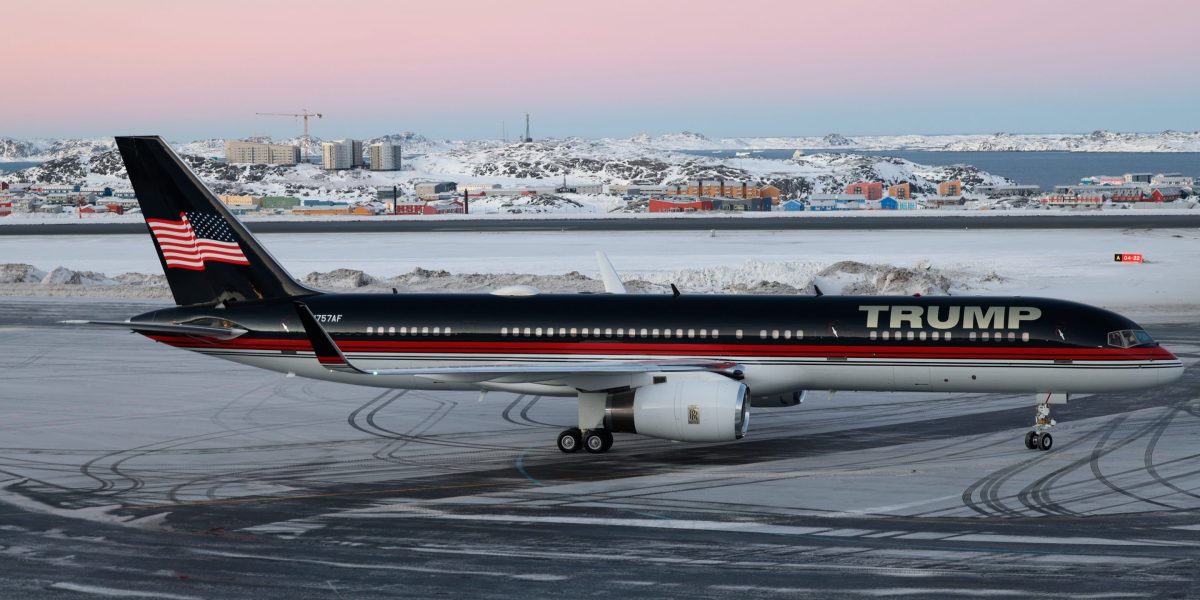
U.S. President Donald Trump wants to own Greenland. He has repeatedly said the United States must take control of the strategically located and mineral-rich island, which is a semiautonomous region that’s part of NATO ally Denmark.

Officials from Denmark, Greenland and the United States met Thursday in Washington and will meet again next week to discuss a renewed push by the White House, which is considering a range of options, including using military force, to acquire the island.

Trump said Friday he is going to do “something on Greenland, whether they like it or not.”

If it’s not done “the easy way, we’re going to do it the hard way,” he said without elaborating what that could entail. In an interview Thursday, he told The New York Times that he wants to own Greenland because “ownership gives you things and elements that you can’t get from just signing a document.”

Danish Prime Minister Mette Frederiksen has warned that an American takeover of Greenland would mark the end of NATO, and Greenlanders say they don’t want to become part of the U.S.

This is a look at some of the ways the U.S. could take control of Greenland and the potential challenges.

Military action could alter global relations

Trump and his officials have indicated they want to control Greenland to enhance American security and explore business and mining deals. But Imran Bayoumi, an associate director at the Atlantic Council’s Scowcroft Center for Strategy and Security, said the sudden focus on Greenland is also the result of decades of neglect by several U.S. presidents towards Washington’s position in the Arctic.

The current fixation is partly down to “the realization we need to increase our presence in the Arctic, and we don’t yet have the right strategy or vision to do so,” he said.

If the U.S. took control of Greenland by force, it would plunge NATO into a crisis, possibly an existential one.

While Greenland is the largest island in the world, it has a population of around 57,000 and doesn’t have its own military. Defense is provided by Denmark, whose military is dwarfed by that of the U.S.

It’s unclear how the remaining members of NATO would respond if the U.S. decided to forcibly take control of the island or if they would come to Denmark’s aid.

“If the United States chooses to attack another NATO country militarily, then everything stops,” Frederiksen has said.

Trump said he needs control of the island to guarantee American security, citing the threat from Russian and Chinese ships in the region, but “it’s not true” said Lin Mortensgaard, an expert on the international politics of the Arctic at the Danish Institute for International Studies, or DIIS.

While there are probably Russian submarines — as there are across the Arctic region — there are no surface vessels, Mortensgaard said. China has research vessels in the Central Arctic Ocean, and while the Chinese and Russian militaries have done joint military exercises in the Arctic, they have taken place closer to Alaska, she said.

Bayoumi, of the Atlantic Council, said he doubted Trump would take control of Greenland by force because it’s unpopular with both Democratic and Republican lawmakers, and would likely “fundamentally alter” U.S. relationships with allies worldwide.

The U.S. already has access to Greenland under a 1951 defense agreement, and Denmark and Greenland would be “quite happy” to accommodate a beefed up American military presence, Mortensgaard said.

For that reason, “blowing up the NATO alliance” for something Trump has already, doesn’t make sense, said Ulrik Pram Gad, an expert on Greenland at DIIS.

Bilateral agreements may assist effort

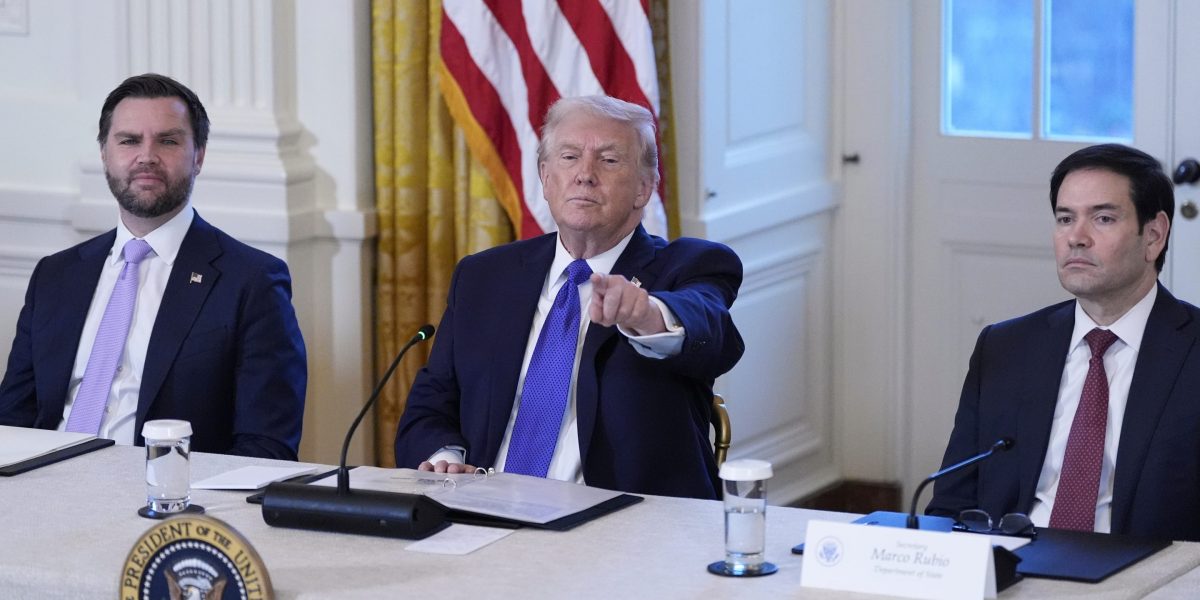
U.S. Secretary of State Marco Rubio told a select group of U.S. lawmakers this week that it was the Republican administration’s intention to eventually purchase Greenland, as opposed to using military force. Danish and Greenlandic officials have previously said the island isn’t for sale.

It’s not clear how much buying the island could cost, or if the U.S. would be buying it from Denmark or Greenland.

Washington also could boost its military presence in Greenland “through cooperation and diplomacy,” without taking it over, Bayoumi said.

One option could be for the U.S. to get a veto over security decisions made by the Greenlandic government, as it has in islands in the Pacific Ocean, Gad said.

Palau, Micronesia and the Marshall Islands have a Compact of Free Association, or COFA, with the U.S.

That would give Washington the right to operate military bases and make decisions about the islands’ security in exchange for U.S. security guarantees and around $7 billion of yearly economic assistance, according to the Congressional Research Service.

It’s not clear how much that would improve upon Washington’s current security strategy. The U.S. already operates the remote Pituffik Space Base in northwestern Greenland, and can bring as many troops as it wants under existing agreements.

Influence operations expected to fail

Greenlandic politician Aaja Chemnitz told The Associated Press that Greenlanders want more rights, including independence, but don’t want to become part of the U.S.

Gad suggested influence operations to persuade Greenlanders to join the U.S. would likely fail. He said that is because the community on the island is small and the language is “inaccessible.”

Danish Foreign Minister Lars Løkke Rasmussen summoned the top U.S. official in Denmark in August to complain that “foreign actors” were seeking to influence the country’s future. Danish media reported that at least three people with connections to Trump carried out covert influence operations in Greenland.

Even if the U.S. managed to take control of Greenland, it would likely come with a large bill, Gad said. That’s because Greenlanders currently have Danish citizenship and access to the Danish welfare system, including free health care and schooling.

To match that, “Trump would have to build a welfare state for Greenlanders that he doesn’t want for his own citizens,” Gad said.

Disagreement unlikely to be resolved

Since 1945, the American military presence in Greenland has decreased from thousands of soldiers over 17 bases and installations to 200 at the remote Pituffik Space Base in the northwest of the island, Rasmussen said last year. The base supports missile warning, missile defense and space surveillance operations for the U.S. and NATO.

U.S. Vice President J.D. Vance told Fox News on Thursday that Denmark has neglected its missile defense obligations in Greenland, but Mortensgaard said that it makes “little sense to criticize Denmark,” because the main reason why the U.S. operates the Pituffik base in the north of the island is to provide early detection of missiles.

The best outcome for Denmark would be to update the defense agreement, which allows the U.S. to have a military presence on the island and have Trump sign it with a “gold-plated signature,” Gad said.

But he suggested that’s unlikely because Greenland is “handy” to the U.S president.

When Trump wants to change the news agenda — including distracting from domestic political problems — “he can just say the word ‘Greenland’ and this starts all over again,” Gad said.


Source link

Continue Reading

Business

The ‘Holy Grail of comic books’ once owned by Nicolas Cage sells at auction for a record $15 million

Published

on


A rare copy of the comic book that introduced the world to Superman and also was once stolen from the home of actor Nicolas Cage has been sold for a record $15 million.

The private deal for “Action Comics No. 1” was announced Friday. It eclipses the previous record price for a comic book, set last November when a copy of “Superman No. 1″ was at sold at auction for $9.12 million.

The Action Comics sale was negotiated by Manhattan-based Metropolis Collectibles/Comic Connect, which said the comic book’s owner and the buyer wished to remain anonymous.

The comic — which sold for 10 cents when it came out in 1938 — was an anthology of tales about mostly now little-known characters. But over a few panels, it told the origin story of Superman’s birth on a dying planet, his journey to Earth and his decision as an adult to “turn his titanic strength into channels that would benefit mankind.”

Its publication marked the beginning of the superhero genre. About 100 copies of Action Comics No. 1 are known to exist, according to Metropolis Collectibles/Comic Connect President Vincent Zurzolo.

“This is among the Holy Grail of comic books. Without Superman and his popularity, there would be no Batman or other superhero comic book legends,” Zurzolo said. “It’s importance in the comic book community shows with his deal, as it obliterates the previous record,” Zurzolo said.

The comic book was stolen from Cage’s Los Angeles home in 2000 but was recovered in 2011 when it was found by a man who had purchased the contents of an old storage locker in southern California. It eventually was returned to Cage, who had bought it in 1996 for $150,000. Six months after it was returned to him, he sold it at auction for $2.2 million.

Stephen Fishler, CEO of Metropolis Collectibles/Comic Connect, said the theft eventually played a big role in boosting the comic’s value.

“During that 11-year period (it was missing), it skyrocketed in value.,” Fishler said “The thief made Nicolas Cage a lot of money by stealing it.”

Fishler compared it to the theft of Mona Lisa, which was stolen from the Louvre museum in Paris in 1911.

“It was kept under the thief’s bed for two years,” Fishler noted. “The recovery of the painting made the Mona Lisa go from being just a great Da Vinci painting to a world icon — and that’s what Action No. 1 is — an icon of American pop culture.”


Source link

Continue Reading

Business

Trump order says Venezuelan oil money is being held by US for ‘governmental and diplomatic purposes’

Published

on


President Donald Trump’s new executive order on Venezuelan oil revenue is meant to ensure that the money remains protected from being used in judicial proceedings.

The executive order, made public on Saturday, says that if the funds were to be seized for such use, it could “undermine critical U.S. efforts to ensure economic and political stability in Venezuela.”

The order comes amid caution from top oil company executives that the tumult and instability in Venezuela could make the country less attractive for private investment and rebuilding.

“If we look at the commercial constructs and frameworks in place today in Venezuela, today it’s uninvestable,” said Darren Woods, CEO of ExxonMobil, the largest U.S. oil company, during a meeting convened by Trump with oil executives on Friday.

During the session, Trump tried to assuage the concerns of the oil companies and said the executives would be dealing directly with the U.S., rather than the Venezuelan government.

Venezuela has a history of state asset seizures, ongoing U.S. sanctions and decades of political uncertainty.

Getting U.S. oil companies to invest in Venezuela and help rebuild the country’s infrastructure is a top priority of the Trump administration after the dramatic capture of now-deposed leader Nicolás Maduro.

The White House is framing the effort to “run” Venezuela in economic terms, and Trump has seized tankers carrying Venezuelan oil, has said the U.S. is taking over the sales of 30 million to 50 million barrels of previously sanctioned Venezuelan crude, and plans to control sales worldwide indefinitely.

“I love the Venezuelan people, and am already making Venezuela rich and safe again,” Trump, who is currently in southern Florida, wrote on his social media site on Saturday. “Congratulations and thank you to all of those people who are making this possible!!!”

The order says the oil revenue is property of Venezuela that is being held by the United States for “governmental and diplomatic purposes” and not subject to private claims.

Its legal underpinnings are the National Emergencies Act and the International Emergency Economic Powers Act. Trump, in the order, says the possibility that the oil revenues could be caught up in judicial proceedings constitutes an “unusual and extraordinary threat” to the U.S.


Source link

Continue Reading

Trending

Copyright © Miami Select.