Connect with us

Business

Down Arrow Button Icon
Published

on


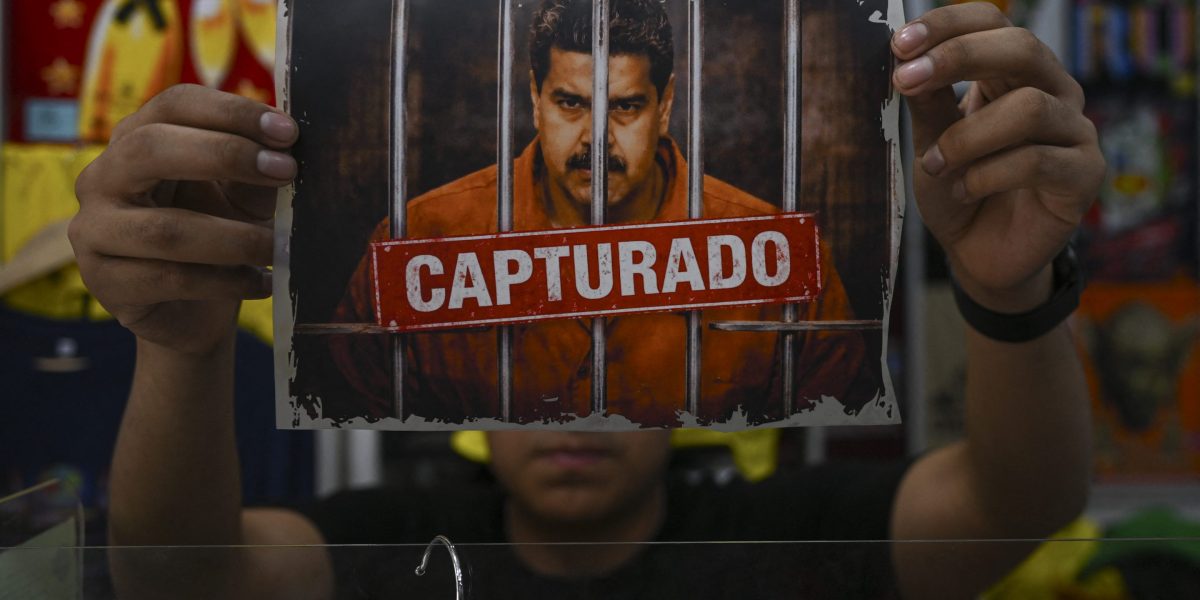
The U.S. mission to seize Venezuela’s President Nicolás Maduro has pushed the concept of regime change back into everyday conversation. “Regime Change in America’s Back Yard,” declared The New Yorker in a piece that typified the response to the Jan. 3 operation that saw Maduro exchange a compound in Caracas for a jail in Brooklyn.

Commentators and politicians have been using the term as shorthand for removing Maduro and ending Venezuela’s crisis, as if the two were essentially the same thing. But they are not.

In fact, to an international relations specialist like me, the use of “regime change” to explain what just went down in Venezuela muddies the term rather than clarifies it. I’ll explain.

Regime change, as it has been practiced and discussed in international politics, refers to something far more ambitious and far more consequential than plucking out a single leader. It is an attempt by an outside power to transform how another country is governed, not just change who governs it.

Of course, that doesn’t mean that regime change in Venezuela isn’t still in the cards. Only that Maduro being replaced by his deputy, former Vice President Delcy Rodríguez, doesn’t reach that bar yet – even if, as U.S. President Donald Trump has suggested, she will be under pressure to toe Washington’s line.

Understanding this distinction is essential to grasping what is at stake in Venezuela as it transitions to a post-Maduro world, but not necessarily one removed from the Chavismo ideology that Maduro inherited from his predecessor, Hugo Chavez.

A more technical removal

Regime change, as it is understood by most foreign policy analysts, refers to efforts by external actors to force a deep transformation of another state’s system of rule. The aim is to reshape who holds authority and how power is exercised by changing the structure and institutions of political power, rather than a government’s policies or even its personnel.

Once understood this way, the history of the term comes into clearer view.

The concept of “regime change” gained wider use after the Cold War as a way to describe externally imposed political transformation without relying on older, more direct terms.

Military and political leaders in earlier eras tended to speak openly of overthrow, deposition, invasion or interference in another state’s internal affairs.

In contrast, the newer term “regime change” sounded technical and restrained. It suggested planning and manageability rather than domination, softening the reality that what was being discussed was the deliberate dismantling of another country’s political order.

A Google Ngram graph depicts the prevalence of ‘regime change’ in text through the centuries (click to zoom).

That choice of language mattered. Describing the overthrow of governments as “regime change” reduced the moral and legal weight associated with coercive intervention.

It also carried an assumption that political systems could be taken apart and rebuilt through expertise and design.

The term implied that once an existing order was removed, a more acceptable one would take its place, and that this transition could be guided from the outside.

And then came Iraq

During the 1990s and early 2000s, this assumption became embedded in the thinking of the U.S. foreign policy establishment.

Regime change came to be associated with ambitious efforts to replace hostile governments with fundamentally different systems of rule. Iraq became the most important test of that idea.

The intervention by the U.S. in 2003 succeeded in removing Saddam Hussein’s government, but it also exposed the limits of externally driven transformation.

Along with Hussein, senior members of his long-ruling Ba’ath Party were banned from involvement in the new government – this was real regime change.

The collapse of the existing order in Iraq following the U.S.-led invasion, however, did not yield a stable successor. Instead, it produced a violent struggle for power that outside powers were unable to control.

That experience altered how the term was understood. The term regime change did not disappear from political debate, but its meaning shifted. It became a label tied to concerns about overreach and the risks of assuming that foreign powers can reengineer political systems.

In this usage, regime change no longer promised control or resolution. It functioned as a warning drawn from experience.

A fine distinction

Both meanings are now visible in discussions of Venezuela. Some audiences invoke regime change to signal resolve and a willingness to break an entrenched system that appears resistant to reform.

Others hear the same term and think of earlier cases where the collapse of a regime produced fragmentation and prolonged instability. The significance attached to the concept depends on who is using it and what political purpose it serves.

This distinction matters because externally driven regime change does not end when a government falls or a dictator is removed. It sets off a contest over how power will be reorganized once existing institutions are dismantled.

This article is part of a series explaining foreign policy terms commonly used but rarely explained.

Andrew Latham, Professor of Political Science, Macalester College

This article is republished from The Conversation under a Creative Commons license. Read the original article.

The Conversation


Source link

Continue Reading

Business

Allegiant to acquire Sun Country in deal valued at $1.5 billion

Published

on


Allegiant Travel Co. will acquire Sun Country Airlines Holdings Inc. in a cash-and-stock deal valued at $1.5 billion including Sun Country’s debt, the two carriers said in a joint statement on Sunday. 

Sun Country’s shareholders will receive 0.1557 shares of Allegiant common stock and $4.10 in cash per Sun Country share, the companies said. The offer represents a premium of 19.8% over Sun Country’s closing share price on Friday, according to the statement.

The combined entity will provide more than 650 routes, including 18 international destinations in Mexico, Canada, the Caribbean and Central America, the companies said.  

“Together, our complementary networks will expand our reach to more vacation destinations including international locations,” said Allegiant Chief Executive Officer Gregory C. Anderson in a statement. 

Join us at the Fortune Workplace Innovation Summit May 19–20, 2026, in Atlanta. The next era of workplace innovation is here—and the old playbook is being rewritten. At this exclusive, high-energy event, the world’s most innovative leaders will convene to explore how AI, humanity, and strategy converge to redefine, again, the future of work. Register now.


Source link

Continue Reading

Business

Iran edges closer to a revolution that would reshape the world

Published

on


As protesters pour into the streets of Iran night after night, leaders across the region and around the world are grappling with the possibility that the Islamic Republic could be overthrown — a seminal event that would transform global geopolitics and energy markets.

The regime of Supreme Leader Ayatollah Ali Khamenei has weathered bouts of protests many times, but demonstrations that began two weeks ago are spreading — by some accounts, hundreds of thousands of people defied authorities’ threats and a brutal crackdown to take to the streets over the weekend, from the capital Tehran to dozens of other cities across the nation of 90 million. They are being cheered on by President Donald Trump, fresh off the capture of Venezuela’s Nicolas Maduro, and the US leader has in recent days repeatedly threatened to strike Iran, suggesting that America is back in the regime change business.

World leaders and investors are watching closely. US commanders have briefed Trump on options for military strikes, according to a White House official. Brent crude surged more than 5% on Thursday and Friday to over $63 a barrel as investors priced in the possibility of supply disruptions in OPEC’s fourth-biggest producer.

“This is the biggest moment in Iran since 1979,” said William Usher, a former senior Middle East analyst at the Central Intelligence Agency, referring to the revolution that birthed the Islamic Republic, upended the balance of power in the region and led to decades of rancor between Tehran and the US and its allies. “The regime is in a very tough spot right now and the primary driver is the economy. I think they have a narrowing window to reassert control and a diminished toolset to do it.”

More than 500 protesters have been killed in the past two weeks, according to the AP, citing the US-based Human Rights Activists News Agency, and more than 10,000 have been arrested in demonstrations triggered by a currency crisis and economic collapse, but now also focused on the regime.

Authorities have tried to block the internet and telephone networks since Thursday, as they seek to quell Iranians’ growing outrage over government corruption, economic mismanagement and repression. Foreign airlines have canceled flights to the country.

Trump’s repeated warnings to Iran that the US will strike if it kills peaceful protesters come as the president escalates his assault on the post-World War II global order in a stunning assertion of American power that’s included claiming Venezuela’s oil after seizing Maduro, and threatening to take over Greenland from NATO ally Denmark.

Israel, which battered Iran during a US-assisted 12-day air war in June, is liaising closely with European governments about the situation on the ground, according to a senior European official, who asked not to be named discussing private talks. 

If the regime does fall, it would be a blow to Russian President Vladimir Putin, who would lose another foreign ally after Maduro this month and the overthrow of Syria’s Bashar al-Assad just over a year ago, the official added.

The stakes for oil traders are significant. But it’s unclear if Khuzestan, the main oil-pumping province, has seen unrest and so far there are no signs of reduced crude exports. On Saturday, Reza Pahlavi, the son of the former shah who’s exiled in the US and positioning himself as an opposition leader, urged petroleum workers to strike. Oil strikes in 1978 were one of the death knells of his father’s monarchy because of how they immediately hit the economy.

The market’s “focus has now shifted to Iran,” said Arne Lohmann Rasmussen, chief analyst at A/S Global Risk Management, which helps clients manage volatility in energy markets. “There is also growing concern in the market that the US, with Trump at the helm, could exploit the chaos to attempt to overthrow the regime, as we have seen in Venezuela.”

The White House is on a high after the tactical success of the operation against Maduro, as well as Trump’s decision to bomb Iranian nuclear facilities at the end of the 12-day war. American officials are also increasing pressure on Denmark to cede control of Greenland, signaling the administration has the appetite for more forays abroad.

Read More: Trump’s Ousting of Maduro Shows His New World Order Is Here

Trump may well be tempted, for all the risks, to try to topple a government that’s been an archenemy to the US and Israel for over 45 years. 

“The balance of power would change dramatically,” Mark Mobius, the veteran emerging markets investor, said of the downfall of the Islamic Republic. “The best outcome would be a complete change in the government. The worst outcome would be continued internal conflict and a continuing rule by the current regime.”

Trump at times ran against American adventurism in the region, where the ousting of longtime US enemy Saddam Hussein in Iraq unleashed a generation of chaos and terrorism, costing hundreds of thousands of lives and trillions of dollars.

It’s just that kind of potential power vacuum that’s worrying Arab leaders in the Gulf Cooperation Council, according to regional officials. While the group — which includes Saudi Arabia, the United Arab Emirates and Qatar — has often viewed Iran as an adversary, its members have sought to improve ties in recent years to ensure Tehran doesn’t lash out against any Israeli or US military action by attacking them. The specter of the Arab Spring, where dictators fell across the region only for chaos to follow, looms large.

Iran has warned that if it’s attacked, American assets in the region — where it has deep commercial ties and tens of thousands of troops stationed — and Israel will be “legitimate targets for us.”

Read More: How Sanctions and a Currency Crash Fueled Iran Unrest

The Islamic Republic has been severely weakened in the past two years, thanks to its stagnating economy, rampant inflation and Israel striking both it and its proxies. But it retains a large and sophisticated arsenal of ballistic missiles able to hit targets across the Middle East, from military bases to oil installations, and the regime still has the backing of the country’s myriad security forces, including the all-important Islamic Revolutionary Guard Corps.

For the GCC and the likes of Turkey and Pakistan, the worst outcome would be chaos in Iran, said Ellie Geranmayeh, deputy program director for the Middle East and North Africa at the European Council on Foreign Relations. It’s an eventuality made more possible by the sheer diversity of Iranian protesters, who include everyone from urban, secular elites to religious conservatives and lack a unifying leader.

“With the GCC reconciliation of the past few years with Tehran, there’s a sense of better the devil you know rather than complete chaos or an unknown power structure that is alien to them,” said Geranmayeh.

US and Israeli strikes might even strengthen the government and reduce the appeal of the protest movement. In June, there was a surge in nationalism as the Jewish state and Washington rained down bombs.

The Islamic Republic probably won’t survive in its current form by the end of 2026, according to Dina Esfandiary, a Middle East analyst at Bloomberg Economics. The most likely scenario, she said, is a leadership reshuffle that largely preserves the system or a coup by the IRGC, which could mean greater social freedom — the organization is run by generals rather than clerics — but less political liberty and a more militaristic foreign policy.

The chances of a revolution are still fairly low, she said.

“A collapse appears unlikely for now,” she said. “Iranians are frightened of chaos, having seen it wreak havoc in neighboring Iraq and Syria. More importantly, the government is cracking down hard.”

On Sunday, President Masoud Pezeshkian, a former heart surgeon and a moderate relative to others at the top of the Iranian government, struck a conciliatory note, offering condolences to families affected by the “tragic consequences.”

“Let’s sit down together, hand in hand, and solve the problems,” he said on state TV.

It’s unlikely many protesters will believe him. The supreme leader, a much more powerful figure, as well as members of the security forces, are increasingly bellicose, floating the death penalty and making clear they’re prepared to respond as they always have — with brutal force.

“I don’t think a collapse of the regime would be pretty,” said Usher, the former CIA analyst. “Short-term, I could imagine some fracturing of the country as ethnic minority groups and some provinces pursue autonomy from Tehran. The IRGC will fight vigorously to save the regime so I think there’d be strong possibility for large-scale violence.”


Source link

Continue Reading

Business

Britain is in talks with NATO to boost Arctic security, agreeing with Trump on Russia and China

Published

on


Britain is discussing with NATO allies how it can help beef up security in the Arctic to counter threats from Russia and China, a government minister said Sunday.

Transport Secretary Heidi Alexander said the talks are “business as usual” rather than a response to recent threats by U.S. President Donald Trump to take over Greenland.

Trump said Friday that he would like to make a deal to acquire Greenland, a semiautonomous region of NATO ally Denmark, to prevent Russia or China from taking it over.

“We are going to do something on Greenland whether they like it or not,” Trump said Friday.

Greenland, with a population of around 57,000, is defended by Denmark, whose military is dwarfed by that of the U.S., which has a military base on the island. Denmark’s prime minister has warned that a takeover would threaten NATO.

The U.K. agrees with Trump that Russia and China are increasingly becoming more competitive in the Arctic Circle, Alexander said.

“Whilst we haven’t seen the appalling consequences in that part of the world that we’ve seen in Ukraine, it is really important that we do everything that we can with all of our NATO allies to ensure that we have an effective deterrent in that part of the globe against (Russian President Vladimir) Putin,” Alexander told the BBC.

Britain’s former ambassador to the U.S., Peter Mandelson, who was sacked last year because of his friendship with the disgraced financier Jeffrey Epstein, said he did not think Trump would take Greenland by force.

“He’s not a fool,” Mandelson said. “We are all going to have to wake up to the reality that the Arctic needs securing against China and Russia. And if you ask me who is going to lead in that effort to secure, we all know, don’t we, that it’s going to be the United States.”

Ed Davey, leader of the Liberal Democrat Party, suggested Britain offer to deploy troops to Greenland in a joint command with Denmark.

“If Trump is serious about security, he’d agree to participate and drop his outrageous threats,” Davey said. “Tearing the NATO alliance apart would only play into the hands of Putin.”

It’s unclear how remaining NATO members would respond if the U.S. decided to forcibly take control of the island or if they would come to Denmark’s aid.


Source link

Continue Reading

Trending

Copyright © Miami Select.