Business
Down Arrow Button Icon
Published
20 hours agoon
By
Jace Porter
As our Crystal Ball series continues, it’s time to drill down into specific sectors.
Term Sheet readers, generally speaking, are an optimistic bunch. But there’s a lot of concern about whether we’re prepared to meet growing cybersecurity risks, with one reader predicting that even Fortune 500 CEOs will be in the crosshairs as high-stakes breaches materialize.
AI, of course, is at the center of these escalating cybersecurity risks, and at the changes that are happening in industries like robotics and healthcare. But some industries, like fintech and crypto, have created their own waves of transformation and possibility.
Without further ado (since you all had quite a lot to say) here’s what Term Sheet readers see ahead across the business landscape.
Note: Answers have been edited for clarity and brevity.
The cybersecurity stakes hit an all-time high
Cyberwar is no longer a future threat – it’s the present reality, with nation-states like China and Russia pursuing coordinated, long-term strategies that align with their geopolitical goals. —Snehal Antani, CEO and cofounder, Horizon3.ai
Trust becomes an engineering requirement, not a marketing message. Black-box AI will hit a wall in regulated industries. “Mostly correct” is not good enough when wrong answers carry real consequences. —Joel Hron, Thomson Reuters CTO
In 2026, AI browsers will move fully into an ask-and-act model, changing how people interact with the web. This convenience introduces new security risks. —Etay Maor, vice president, threat intelligence, Cato Networks
In 2026, we’ll see the first major enterprise breach caused by an AI agent behaving in unexpected ways. As autonomous systems become more deeply embedded in operations, emergent behavior will create a new class of cyber risk. —Aaron Jacobson, partner, NEA
By the end of 2026, we will see at least three Fortune 500 CEOs lose their roles explicitly due to AI system failures that their organizations cannot explain, reproduce or defend post-incident. Unlike past outages tied to infra or human error, these failures will stem from opaque AI decision paths. —Sameer Agarwal, cofounder and CTO, Deductive AI
Fintech and crypto at a crossroads
In 2026, stablecoins will just be part of your next app update on your phone. The next major app to be powered by stablecoins is one you’re already using. —Itai Turbahn, CEO and cofounder, Dynamic
Crypto credit cards will bridge the gap between traditional and digital finance in 2026. This transition will position exchanges to be comprehensive financial hubs that could compete with traditional banks and fintechs, rather than just a digital asset platform. —Matthew Goldman, founder, Totavi
Banks will lose more mass affluent customers to fintechs in 2026 than ever before. It used to be that fintechs served the customers Banks didn’t want. The less affluent. The young. Now fintechs have grown up and so have their customers. —Rex Salisbury, founder and general partner, Cambrian
Stablecoins have proven blockchain’s first killer app beyond store of value, regulation is clarifying, and institutions are finally entering the space – setting up 2026 and 2027 as some of the strongest blockchain venture vintages yet. The irony? Most LPs will sit this out, distracted by Bitcoin’s volatility theatrics and the AI gold rush. By the time the noise clears, the best funds will have been raised and committed. —Aaron Miller, head of global venture capital, CF Private Equity
As C.S. Lewis wrote, “There are far, far better things ahead than any we leave behind.” For financial services, the year ahead will prove it. —Sarah Biller, cofounder, Fintech Sandbox
The future of healthcare and its many offshoots
AI will discover at least one groundbreaking pharmaceutical that will start Phase I clinical trials. —Kanyi Maqubela, managing partner, Kindred Ventures:
The American consumer is more diverse than ever, and we are aging – by 2030 Americans over 65 will outnumber those under 18 for the first time in U.S. history. In 2026 we will see more investor activity into these areas, such as menopause, longevity medicine, elder care, and more. —Erin Harkless Moore, managing director of investments, Pivotal Ventures
In 2026, rising healthcare costs and continued strain on the nation’s public health infrastructure will act as a powerful catalyst across the industry. Employers, insurers, health systems and providers will all feel the pressure, setting off a ripple effect that is likely to accelerate dealmaking. —Amanda Zablocki, partner, co-leader of national healthcare team, Sheppard Mullin
2026 will be the year AI feels clinically real. With tools like OpenEvidence already adopted by nearly half of U.S. physicians, healthcare is moving faster than software. AI “colleagues” aka digital nurses, doctors, and copilots will eliminate non-clinical work and personalize care at scale. The next healthcare revolution won’t come from hospitals or insurers, it’ll come from AI workflows physicians already trust. —Latif Peracha, general partner, M13
In 2026, the next wave of healthcare transformation will happen at home. As reimbursement pressures mount, providers will increasingly turn to home-based care models that pair automation with intelligent, agentic AI workflows. —Irem Rami, Partner, Norwest
Demographics don’t lie: the caregiver-to-patient ratio will continue collapsing. Leading systems will begin preparing for the 2030 reality by investing in models that extend human touch without requiring more humans. Expect more deliberate reliance on recovery support partners, proactive monitoring, and simplified patient pathways. —Kyle Cooksey, CEO, Deacon Health
The next big consumer-health category isn’t new or exotic. It’s fiber. Gut health is going mainstream, GLP-1s are reshaping eating habits, and 90 percent of adults still don’t get enough daily fiber. The brands that approach fiber with science-forward messaging, innovation, and real consumer education to build daily habits will win this underserved market. —Lisa Wu, partner, Norwest
Defense and robotics
2026 will see the return of the Valley of Death to defense tech as the law of large numbers forces growing companies to seek larger and larger contracts in the context of a slow-growing defense budget. —Peter Wilczynski, CPO, Vantor
Dual‑use deep tech continues its shift from niche to mainstream. For many years, defense was a difficult category for venture capital. That’s changing fast as governments recognize these firms are essential to sovereignty and resilience—global military expenditures are growing at their highest rates since the Cold War. We expect dual‑use companies to become some of the most attractive growth stories in 2026. —Nic Brathwaite, founding managing partner, Celesta Capital
Defense tech investing will continue to gain momentum globally. The continued conflicts in Ukraine and Gaza have convinced the EU to invest almost a trillion dollars to rearm themselves and ensure a sovereign defense posture. —Brad Harrison, managing partner, Scout
In 2026, aerospace and defense investing is primed to accelerate further with more investors entering the sector and deal structures broadening across dual-use and mission-critical technology. The full force of that upswing is highly dependent on U.S. defense contracts rolling again. —Anita Antenucci, founder and managing partner, 3Wire
AI starts to hit the physical world: robots begin to move out of the lab and ship the first production-ready, end-to-end systems into biopharma labs, manufacturing lines, and logistics warehouses. Not prototypes. Not pilots. Revenue-generating deployments that deliver ROI. —Talia Goldberg, partner, Bessemer Venture Partners
Robotics reaches escape velocity, and the real boom hits in 2027. 2026 marks the rapid emergence of a unified robotics market. The true mainstream adoption wave — warehouses, micro-factories, home services—hits in 2027 as platforms stabilize. —Anders Ranum, partner, Sapphire Ventures
Silicon Valley is shifting its attention back to hardware as demand for compute and energy accelerates. Chips, energy systems and critical physical infrastructure are reemerging as the engines of the next wave of progress. Robotics is set to become one of the most important innovation arenas as we move toward 2026. —Luke Pappas, partner, NEA
We think 2026 will be the year where we start to see deployments of this new generation of AI-driven robotic systems in industrial (manufacturing and logistics) settings and service industries such as hospitality and healthcare. —Emily Zhao, principal, Salesforce Ventures
See you tomorrow,
Allie Garfinkle
X: @agarfinks
Email: alexandra.garfinkle@fortune.com
Submit a deal for the Term Sheet newsletter here.
Joey Abrams curated the deals section of today’s newsletter. Subscribe here.
VENTURE CAPITAL
– Soley Therapeutics, a South San Francisco, Calif.-based drug discovery and development company, raised $200 million in Series C funding. Surveyor Capital led the round and was joined by HRTG Partners, RWN Management, and existing investors.
– Corsera Health, a Boston, Mass.-based cardiovascular health prediction and prevention platform, raised $80 million in Series A funding. Forbion and Population Health Partners led the round and were joined by others.
– Mediar Therapeutics, a Boston, Mass.-based developer of therapies designed to stop fibrosis, raised $76 million in Series B funding. ICG Life Sciences and Amplitude Ventures led the round.
– Blackbird.AI, a New York City-based developer of an AI model designed to identify narrative threats to companies, raised $28 million in funding from Ten Eleven Ventures, Dorilton Ventures, and others.
– Luminate, a Galway, Ireland-based at-home cancer treatment company, raised $21 million in Series A funding. ARTIS Ventures and Lachy Groom led the round and were joined by Western Alliance Life Sciences and existing investors 8VC, Y Combinator, Atlantic Bridge, and others.
– Autonomous Technologies Group, a New York City-based developer of AI agents designed to serve as financial advisors, raised $15 million in pre-seed funding from Y Combinator, Collaborative Group, Fusion Fund, and others.
– Biographica, a London, U.K.-based company using AI to decode crop genetics, raised £7 million ($9.4 million) in seed funding. Faber VC led the round and was joined by SuperSeed, Cardumen Capital, The Helm, EQT Foundation, Sie Ventures, and existing investors.
– AgileRL, a London, U.K.-based developer of AI training, tuning, and deployment company, raised $7.5 million in funding. Fusion Fund led the round and was joined by Flying Fish, Octopus Ventures, Entrepreneur First, and Counterview Capital.
– Oasys, a New York City-based developer of an AI-powered operating system for behavioral health, raised $4.6 million in funding from Pathlight Ventures, Twine Ventures, Better Ventures, and 1984 Ventures.
PRIVATE EQUITY
– Arxis, a portfolio company of Arcline Investment Management, acquired Micro-Tronics, a Tempe, Ariz.-based producer of components for aerospace and defense applications. Financial terms were not disclosed.
– Atar Capital acquired DataMaster Online, a Saint-Grégoire, France-based printing solutions company. Financial terms were not disclosed.
– ATL Partners acquired SkyMark Companies, a Kansas City, Mo.-based manufacturer of aircraft fueling trucks and hydrant dispensers, and Rampmaster, a Coatesville, Pa.-based manufacturer of aircraft refueling solutions. Financial terms were not disclosed.
– AxioAero Group, a portfolio company of CORE Industrial Partners, acquired Airway Aerospace, a Doral, Fla.-based airplane repair company. Financial terms were not disclosed.
– Gemspring Capital acquired TRG, a Cleveland, Ohio-based provider of enterprise mobility and technology lifecycle management solutions. Financial terms were not disclosed.
– Gryphon Investors announced a majority recapitalization of Fortreum, a Lansdowne, Va.-based cybersecurity firm. Financial terms were not disclosed.
– Kelvin Group, backed by Southfield Capital, acquired PermaCold Engineering, a Portland, Ore.-based ammonia and carbon dioxide refrigeration system company. Financial terms were not disclosed.
– PestCo Holdings, a portfolio company of Thompson Street Capital Partners, acquired Bio-Tech Pest Control, a Spring, Texas-based pest control company. Financial terms were not disclosed.
– Proven Optics, a portfolio company of Silversmith Capital Partners, acquired brightfin, a Centennial, Colo.-based developer of Service Now Technology Expense Management and digital workplace solutions. Financial terms were not disclosed.
– PureStar, backed by Cornell Capital, acquired Emerald Textiles, a San Diego, Calif.-based health care linen services provider. Financial terms were not disclosed.
– TA Associates acquired a majority stake in OneSource Virtual, a Dallas, Texas-based provider of HR payments services for the Workday ecosystem. Financial terms were not disclosed.
– The Blackhawk Group, backed by New State Capital, acquired Silver Sky Aviation, a Wasilla, Ak.-based aircraft maintenance company. Financial terms were not disclosed.
EXITS
– A. O. Smith acquired Leonard Valve, a Cranston, R.I.-based water temperature control valve company, from Bessemer Investors. Financial terms were not disclosed.
– Service Express, a portfolio company of Warburg Pincus, acquired Park Place Technologies, a Cleveland, Ohio-based IT infrastructure services company, from GTCR and Charlesbank. Financial terms were not disclosed.
IPOS
– Aktis Oncology, a Boston, Mass.-based biotech company focused on solid tumors, now plans to raise up to $318.6 million in an offering of 17.7 million shares priced between $16 and $18 on the Nasdaq. The company posted $6 million in revenue for the year ended Sept. 30. MPM BioImpact, Vida Ventures, EcoR1 Capital, and Blue Owl Capital Holdings back the company.
FUNDS + FUNDS OF FUNDS
– Warburg Pincus, a New York City-based private equity firm, raised $3 billion for its third fund focused on financial services companies.
– Lux Capital, a New York City and Menlo Park, Calif.-based venture capital firm, raised $1.5 billion for its ninth fund focused on emerging science and technology companies.
PEOPLE
– Savory Fund, a Lehi, Utah-based private equity firm, promoted Shauna K. Smith to managing director and named Clay Dover as CEO. Formerly, Dover was CEO of Velvet Taco.
You may like
Business
Singapore-based startup founder Anand Roy thinks generative AI can help fix a broken music sector
Published
6 hours agoon
January 8, 2026By
Jace Porter
For Anand Roy, making music used to mean jamming with his progressive rock band based out of Bangalore. Today, the one-time metalhead now makes music with a simple tap of a button through his start-up Wubble AI, which allows users to generate, edit, and customize royalty-free music in over 60 different genres.
Roy started Wubble with his co-founder, Shaad Sufi, in 2024, from a small office in Singapore’s central business district. Since then, his platform has generated tunes for global giants like Microsoft, HP, L’Oreal and NBCUniversal. They’re even used on the Taipei Metro, where AI-generated tunes soothe harried commuters.
Generative AI has been a controversial subject in the creative industry: Artists, musicians and other content creators worry that companies will train AI on copyrighted materials, then ultimately automate away the need for human creators at all.
Roy, however, thinks Wubble is a way to fix a music sector that’s already broken. Artists are awarded micro-payments on streaming sites like Spotify, which only works for the most famous artists.
Roy spent almost two decades at Disney, where he oversaw operations at its networks and studios in major cities like Tokyo, Mumbai and Los Angeles. He said his time leading Disney’s music group opened his eyes to the tedious process of music licensing.
“So many licensing deals were not going through because of the quantum of paperwork, the amount of red tape, and how expensive, complex and convoluted the entire process was,” he says. Yet, the incumbent music firms “don’t have a lot of motivation to streamline processes.”
Wubble is trying something different, collaborating directly with musicians and paying them for the raw material used to train Wubble’s AI. “If we’re looking at Latino hip hop, we’ll go to a recording studio in Buenos Aires or Rio de Janeiro, and tell them we need ten hours of Latino music,” Roy says. Wubble then negotiates a deal and offers a one-time payment for their work, at rates Roy argues are more competitive than other companies offering music streaming services.
He admits that a one-time payment isn’t a perfect solution, however, and adds that he’s currently exploring how technologies like blockchain can uncover new ways to compensate musicians for their help training Wubble’s AI models.
David Gunkel, who teaches communication studies at Northern Illinois University in Chicago, thinks training AI from artist-commissioned material is a smarter business move than just trawling the web for copyrighted content.
Production companies like Disney, Universal and Warner Bros., for example, are suing AI companies like Midjourney and Minimax of copyright infringement, arguing that users can easily generate images and videos of protected characters like Star Wars’s Darth Vader.
“If you’re curating your data sets, and compensating and giving credit to the artists that are being utilized to train your model, you won’t find yourself in a lawsuit,” he explains. “It’s a better business practice, just in terms of your long-term viability as a commercial actor.”
Text-to-speech generation
Wubble currently offers just instrumental music and audio effects, but Roy thinks voice is the next step. By end-January, Roy says his platform will offer AI-generated voiceovers created from written scripts, to cater to clients who require narrative-led audio tracks. “So, the entire audio content workflow for a business can be housed on Wubble,” he concludes proudly.
AI music startups are popping up around the world, hoping to use the powerful new technology to make the process of creating tunes and songs easier. Some, like Suno, cater in generating full songs, while others like Moises offer tools for artists.
In Asia, too, Korean AI startup Supertone offers voice synthesis and cloning, using samples to generate new vocal tracks. The startup, founded by Kyogu Lee, was acquired by HYBE, the entertainment company behind K-pop sensation BTS, and now operates as its subsidiary. Supertone even debuted a fully virtual K-pop girl group, SYNDI8, in 2024.
At Fortune Brainstorm AI Singapore last year, Lee said he saw musical artists as “co-creators,” not just in terms of licensing their voices, but also asking for their help in refining the technology.
AI “will democratize the creative process, so every creator or artist can experiment with this new technology to explore and experiment with new ideas,” he told the audience.
Roy, from Wubble, also sees AI as a way to make it easier for more people to get involved in music creation.
“Music creation has always been a privilege. It’s been the domain of those who have the time and resources to learn an instrument,” he says. “We believe that every human being should be able to create—and AI enables that now.”
Business
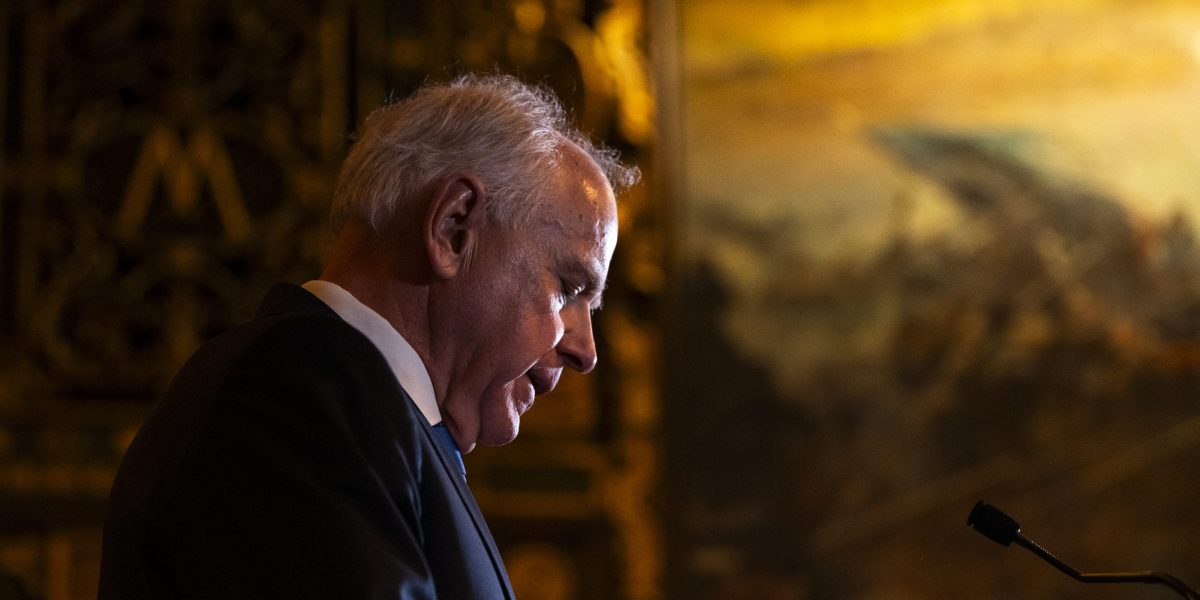
Tim Walz insists Minnesota has a role to play in investigating fatal shooting of a U.S. citizen by ICE
Published
7 hours agoon
January 8, 2026By
Jace Porter
Minnesota must play a role in investigating the fatal shooting of a Minneapolis woman by an Immigration and Customs Enforcement officer, Gov. Tim Walz insisted Thursday, pushing back against the Trump administration’s decision to keep the investigation solely in federal hands.
A day after the ICE officer shot Renee Good in the head as she tried to drive away on a snowy Minneapolis street, tensions remained high, with dozens of protesters venting their outrage outside of a federal facility that’s serving as a hub for the administration’s latest immigration crackdown on a major city.
“We should be horrified,” protester Shanta Hejmadi said as demonstrators shouted “No More ICE,” “Go Home Nazis,” and other slogans at a line of Border Patrol officers, who responded with tear gas and pepper spray. “We should be saddened that our government is waging war on our citizens. We should get out and say no. What else can we do?”
Homeland Security Secretary Kristi Noem, President Donald Trump and others in his administration characterized the shooting as an act of self-defense and cast Good as a villain, suggesting she used her vehicle as a weapon to attack the officer who shot her.
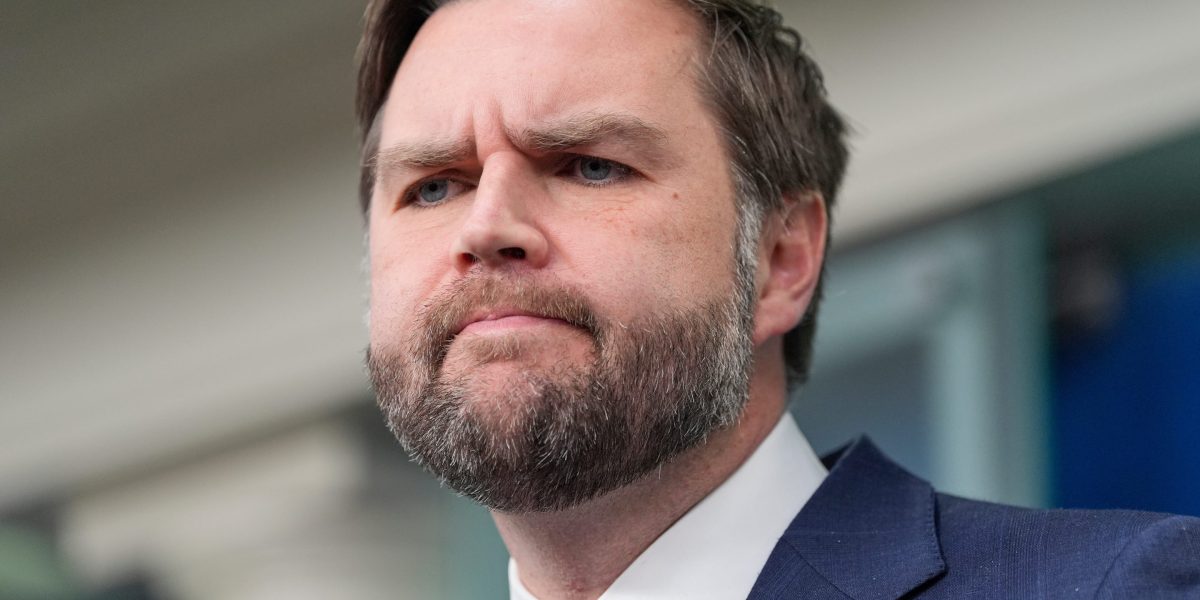
Vice President JD Vance weighed in Thursday, saying the shooting was justified and that Good, a 37-year-old mother of three, was a “victim of left-wing ideology.”
“I can believe that her death is a tragedy while also recognizing that it is a tragedy of her own making,” Vance said, noting that the officer who killed her was injured while making an arrest last June.
But state and local officials and protesters rejected that characterization, with Minneapolis Mayor Jacob Frey saying video of the shooting shows the self-defense argument to be “garbage.”
An immigration crackdown quickly turns deadly
The shooting happened on the second day of the Trump administration’s immigration crackdown on the Twin Cities of Minneapolis and St. Paul, which the Department of Homeland Security said is the biggest immigration enforcement operation ever. More than 2,000 officers are taking part, and Noem said they have already made more than 1,500 arrests.
It provoked an immediate response in the city where police killed George Floyd in 2020, with hundreds of people turning up to the scene to vent their outrage at the ICE officers and the school district later canceling classes for the rest of the week as a precaution.
Good’s death — at least the fifth tied to an immigration crackdown under Trump — has resonated far beyond Minneapolis, as anti-immigration enforcement protests took place or were expected Thursday in New York City, Seattle, Detroit, Washington, D.C., Los Angeles, Philadelphia, San Antonio, New Orleans and Chicago. Protests were also scheduled for later this week in Arizona, North Carolina, and New Hampshire.
Who will investigate?
On Thursday, the Minnesota agency that investigates officer-involved shootings said it was informed that the FBI and U.S. Justice Department would not work with the department, effectively ending any role for the state to determine if crimes were committed. Noem said the state has no jurisdiction.
“Without complete access to the evidence, witnesses and information collected, we cannot meet the investigative standards that Minnesota law and the public demands,” Drew Evans, the Minnesota Bureau of Criminal Apprehension’s superintendent, said in a statement.
Walz publicly demanded that the state be allowed to take part, repeatedly emphasizing that it would be “very, very difficult for Minnesotans” to accept that an investigation that excludes the state could be fair.
Noem, he said, was “judge, jury and basically executioner” during her public comments defending the officer’s actions.
“People in positions of power have already passed judgment, from the president to the vice president to Kristi Noem — have stood and told you things that are verifiably false, verifiably inaccurate,” said the governor, who repeated his calls for protesters to remain calm.
Mary Moriarty, the prosecutor in Hennepin County, which includes Minneapolis, said her office is exploring whether a state investigation can proceed.
“We want to make sure that there is a check on this administration to ensure that this investigation is done for justice, not for the sake of a cover-up,” Frey, the mayor, told The Associated Press.
Deadly encounter seen from multiple angles
Several bystanders captured footage of Good’s killing, which happened in a residential neighborhood south of downtown.
The videos show an officer approaching an SUV stopped across the middle of the road, demanding the driver open the door and grabbing the handle. The Honda Pilot begins to pull forward, and a different ICE officer standing in front of it pulls his weapon and immediately fires at least two shots at close range, jumping back as the vehicle moves toward him.
It isn’t clear from the videos if the vehicle makes contact with the officer, and there is no indication of whether the woman had interactions with ICE agents earlier. After the shooting the SUV speeds into two cars parked on a curb before crashing to a stop.
In another recording made afterward, an unidentified woman who identifies Good as her spouse is seen crying near the vehicle. She says she and Good recently arrived in Minnesota and that they had a child.
The mayor said he’s working with community leaders to try to keep Minneapolis calm and ensure that residents keep their protests peaceful.
“The top thing that this Trump administration is looking for is an excuse to come in with militarized force, to further occupy our streets, to cause more chaos, to have this kind of civil war on the streets of America in a Democratically run city,” Frey told the AP. “We cannot give them what they want.”
Officer identified in court documents
Noem hasn’t publicly named the officer who shot Good. But a Homeland Security spokesperson said her description of his injuries last summer refers to an incident in Bloomington, Minnesota, in which court documents identify him as Jonathan Ross.
Ross got his arm stuck in the window of a vehicle of a driver who was fleeing arrest on an immigration violation, and was dragged roughly 100 yards (91 meters) before he was knocked free, records show.
He fired his Taser, but the prongs didn’t incapacitate the driver, according to prosecutors. Ross was transported to a hospital, where he received more than 50 stitches.
The driver claimed he didn’t know that Ross was a federal agent. A jury, however, found him guilty of assaulting a federal officer with a dangerous or deadly weapon.
DHS assistant secretary Tricia McLaughlin said the officer involved in the shooting had worked more than 10 years as a deportation officer and had been selected for ICE’s special response team, which includes a 30-hour tryout and additional training. She said those skills include breaching techniques, perimeter control, advanced firearms training and hostage rescue.
McLaughlin declined to confirm the identity of the officer as Ross. The AP wasn’t immediately able to locate a phone number or address for Ross, and ICE no longer has a union that might comment on his behalf.
___
Associated Press reporters Steve Karnowski, Giovanna Dell’Orto and Mark Vancleave in Minneapolis, Ed White in Detroit, Valerie Gonzalez in Brownsville, Texas, Graham Lee Brewer in Norman, Oklahoma, Michael Biesecker In Washington, Jim Mustian in New York and Ryan Foley in Iowa City, Iowa contributed.
This story was originally featured on Fortune.com
Business
Vance on woman shot and killed by ICE: ‘a tragedy of her own making’
Published
8 hours agoon
January 8, 2026By
Jace Porter
Vice President JD Vance on Thursday blamed a federal immigration officer’s fatal shooting of a Minneapolis woman on “a left-wing network,” Democrats, the news media and the woman who was killed as protests related to her death expanded to cities across the country.
The vice president, who made his critiques in a rare appearance in the White House briefing room and on social media, was the most prominent example yet of the Trump administration quickly assigning culpability for the death of 37-year-old Renee Good while the investigation is still underway. Good was shot and killed by an ICE officer while she tried to drive away on a snowy residential street as officers were carrying out an operation related to the administration’s immigration crackdown.
Vance said at the White House that he wasn’t worried about prejudging the investigation into Good’s killing, saying of the videos he’d seen of the Wednesday incident, “What you see is what you get in this case.”
Vance said he was certain that Good accelerated her car into the officer and hit him. It isn’t clear from the videos if the vehicle makes contact with the officer. Minneapolis Mayor Jacob Frey said Wednesday that video of the shooting shows arguments that the officer was acting in self-defense were “garbage.”
The vice president also said part of him felt “very, very sad” for Good. He called her “brainwashed” and “a victim of left-wing ideology.”
“I can believe that her death is a tragedy, while also recognizing that it’s a tragedy of her own making and a tragedy of the far left who has marshaled an entire movement — a lunatic fringe — against our law enforcement officers,” Vance said.
His defense of the officer, at times fiery, came as Homeland Security Secretary Kristi Noem and President Donald Trump likewise said the officer’s actions were a justified act of self-defense. Trump said Good “viciously ran over” the ICE officer, though video footage of the event contradicts that claim.
Trump has made a wide-ranging crackdown on crime and immigration in Democratic cities a centerpiece of his second term in office. He has deployed federal law enforcement officials and National Guard troops to support the operations and has floated the idea of invoking the Insurrection Act to try to stop his opponents from blocking his plans through the courts.
Trump officials made it clear that they were rejecting claims by Democrats and officials in Minnesota that the president’s move to deploy immigration officers in American cities had been inflammatory and needed to end.
“The Trump administration will redouble our efforts to get the worst of the worst criminal, illegal alien killers, rapists and pedophiles off of American streets,” White House press secretary Karoline Leavitt said Thursday before Vance spoke.
She called Good’s killing “a result of a large, sinister left-wing movement.”
Vance was selected as Trump’s running mate last year partly for his ability to verbally spar, especially with the media. He opened his remarks by condemning headlines he saw about the shooting, at times raising his voice and decrying the “corporate media.”
“This was an attack on law and order. This was an attack on the American people,” Vance said.
He accused journalists of falsely portraying Good as “innocent” and said: “You should be ashamed of yourselves. Every single one of you.”
“The way that the media, by and large, has reported this story has been an absolute disgrace,” he added. “And it puts our law enforcement officers at risk every single day.”
When asked what responsibility he and Trump bore to defuse tension in the country over the incident, Vance said their responsibility was to “protect the people who are enforcing law and protect the country writ large.”
“The best way to turn down the temperature is to tell people to take their concerns about immigration policy to the ballot box,” he said.
Vance also announced that the administration was deputizing a new assistant attorney general to prosecute the abuse of government assistance programs in response to growing attention to fraud in childcare programs in Minnesota.
He said the prosecutor will focus primarily on Minnesota, and will be nominated in coming days. Vance added that Senate Majority Leader John Thune told him he’d seek a prompt confirmation.
___
Associated Press writers Konstantin Toropin, Will Weissert and Jonathan J. Cooper contributed to this report.
Chuck Bonfiglio installed as Florida Realtors President
Nick Reiner Believes He’s the Victim of a Conspiracy After Parents’ Murder
Next sales and marketing chief Shields to retire, Barnes steps up
Trending
-
Politics8 years agoCongress rolls out ‘Better Deal,’ new economic agenda
-
Entertainment8 years agoNew Season 8 Walking Dead trailer flashes forward in time
-
Politics8 years agoPoll: Virginia governor’s race in dead heat
-
Entertainment8 years agoThe final 6 ‘Game of Thrones’ episodes might feel like a full season
-
Politics8 years agoIllinois’ financial crisis could bring the state to a halt
-
Entertainment8 years agoMeet Superman’s grandfather in new trailer for Krypton
-
Business8 years ago6 Stunning new co-working spaces around the globe
-
Tech8 years agoHulu hires Google marketing veteran Kelly Campbell as CMO