
Business
Down Arrow Button Icon
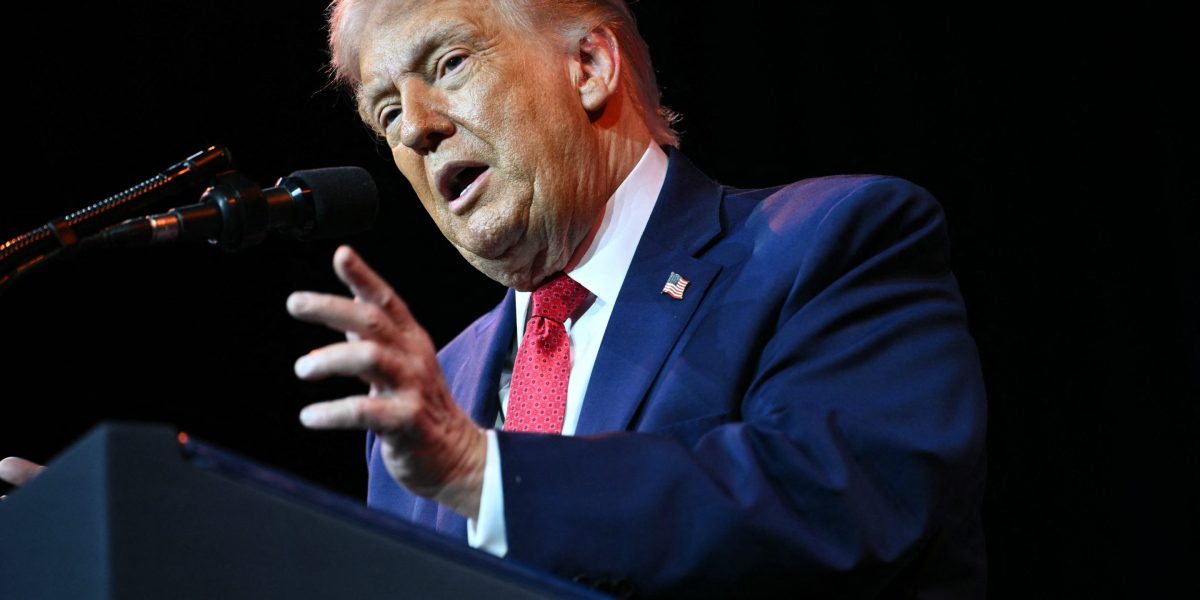
When President Donald Trump entered his second term, he renewed his 2019 vow to take over Greenland. But what started as a seemingly quixotic proposal to purchase the Arctic island has now morphed into an unprecedented threat against a NATO ally—one that experts told Fortune could cost hundreds of billions of dollars, destroy the Western alliance, and yield minimal economic benefit for decades.
Days after invading Venezuela to capture President Nicolas Maduro, Trump doubled down on his proposed plans for the small arctic nation, declaring yesterday that “we need Greenland from a national security situation.” Accomplishing this goal, the White House now says, could include using the U.S. military.
Fortune contacted the White House for comment.
“People need to understand that he is serious. He wants Greenland to be a part of the United States,” Alexander Gray, who served in Trump’s first administration and testified before the Senate on Greenland acquisition mechanisms, told Fortune. “How that happens is subject to discussion, but the overall aim is not changing.”
The Venezuela operation that saw U.S. forces capture Maduro last week has “galvanized” the administration’s focus on the western hemisphere. “It has given new impetus for people in government, at the very senior level, to say the President’s reiterated that the hemisphere is our number one priority. Greenland is very important to him. Let’s actually go about coming up with a realistic plan for making that happen,” Gray said.
But as experts parse Trump’s motivations and examine the feasibility of his territorial ambitions, a murky reality emerges: the economic case weak, the security rationale is questionable, and the geopolitical costs could be catastrophic.
The shaky economic case
Trump officials have repeatedly pointed to Greenland’s mineral wealth as justification for U.S. control. The island is estimated to hold 36-42 million metric tons of rare earth oxides—potentially the world’s second-largest reserve after China. With the global rare earth elements market projected to reach $7.6 billion in 2026, and China controlling 69% of production, securing alternative sources seems like a strategically sound idea.
Administration officials told Reuters in May that the U.S. was assisting Greenland diversify its economy to achieve greater economic independence from Denmark. They pointed to the Tanbreez Project, which seeks to extract rare earths on the island to be processed in the U.S. as part of this plan.
But Anthony Marchese, chairman of Texas Mineral Resources Corporation who also testified before Congress, gave Fortune a sobering assessment of the mining reality in Greenland: “If you’re going to go to Greenland for its minerals, you’re talking billions upon billions upon billions of dollars and extremely long time before anything ever comes of it.”
The obstacles are formidable. According to Marchese, the northern part of Greenland is only mineable six months out of the year, due to the harsh climate. Mining equipment and fuel, he said, would have to be stored outside in the harsh winter elements for months.
Infrastructure costs compound the challenge. Greenland has virtually no roads connecting its settlements, which are often located on small islands or remote coastal spits of land. It has a limited number of ports. Greenland does not produce enough energy, nor does it have the energy infrastructure to support industrial-scale mining.
CARSTEN SNEJBJERG—Bloomberg/Getty Images
The nation has a population of roughly 56,000 people, most of whom live in southern coastal settlements, including the capital Nuuk. In terms of mining specifically, only one mine in the country is fully operational and the practice itself is widely unpopular among locals and environmental groups. Greenland’s mineral industry generates close to zero revenues. Most operations are still in the exploratory stage. Environmental concerns have made getting mining projects approved in the country especially difficult, Marchese says. And even if a mining operation were to be approved, there is no guarantee it would be lucrative.
“You’re going to have hundreds of millions of dollars of drilling to do in order to determine first, is this a deposit that’s worth mining?” Marchese says. “Even if I had all the money in the world, it’s not like I’m just going to go into Greenland next month and start drilling.”
More fundamentally, the minerals identified so far are largely uncharacterized. Mineral sampling maps of the island, he says, are almost certainly very lightly sampled, Marchese said. “Sampling means I go in, I look at a small area, I take a few samples. What it doesn’t tell you is how large is the deposit? What grade is the deposit?”
His timeline estimate? “My opinion, 10 to 15 years. No question, given the infrastructure you have to overcome, given the local political situation there.”
Rebecca Pincus, a senior fellow at the Foreign Policy Research Institute and Arctic specialist who testified before Congress in March 2025, agrees the economic argument collapses under scrutiny. While she concedes that Greenland has rare earth minerals, the island’s conditions make mining these resources economically irrational. she says. “That doesn’t change if Greenland becomes an American territory. There’s just not a lot of infrastructure there. The climate is really super harsh. Those barriers aren’t going to magically go away.”
The hundreds of billions question
Gray acknowledges the astronomical costs but dismissed them as secondary. His Senate testimony referenced estimates of “hundreds of billions of dollars” to acquire and support Greenland—costs stemming from replacing Denmark’s annual $600 million subsidy to the nation, massive infrastructure investments, and replicating the safety net Greenlanders currently enjoy.
“The cost is actually not the most important piece of this,” Gray insists. “This is not an economic issue for the United States. This is not a question of dollars and cents. This is not about mineral resources. I see this as a strategic issue, a national security issue with a lot of continuity across centuries.”
Gray points to U.S. relationships with the Freely Associated States in the Pacific—Marshall Islands, Micronesia, and Palau—as a template. “We basically provide for their entire defense and we have unlimited access to their land, air and sea. If you look at those relationships, the math has never added up, and those will always be a net deficit from a math perspective for the United States. But they are incalculably valuable from a strategic standpoint.”
There’s a significant problem with this comparison, however. According to research by the Danish Institute for International Studies, the U.S. currently pays the Compact of Free Association (COFA) states approximately $2,025 per capita, while Denmark provides Greenland roughly $12,500 per capita—more than six times as much.
Gray’s solution involves creative financing: a minerals and oil trust fund modeled on Alaska’s Permanent Fund, and distributing universal basic income to every Greenlander. “I think that’s a way, an innovative way, that can help take some of the pressure off the U.S. Treasury for funding this whole thing.”
But this assumes viable mineral extraction—an assumption experts like Marchese consider highly optimistic.
The security rationale under scrutiny
Trump claims “Greenland is covered with Russian and Chinese ships all over the place,” framing its acquisition as essential to national security. But experts like Pincus dispute this characterization.
“The idea of the U.S. purchasing or annexing or conquering Greenland is a really maximalist solution to a set of problems that’s much more modest,” she told Fortune.
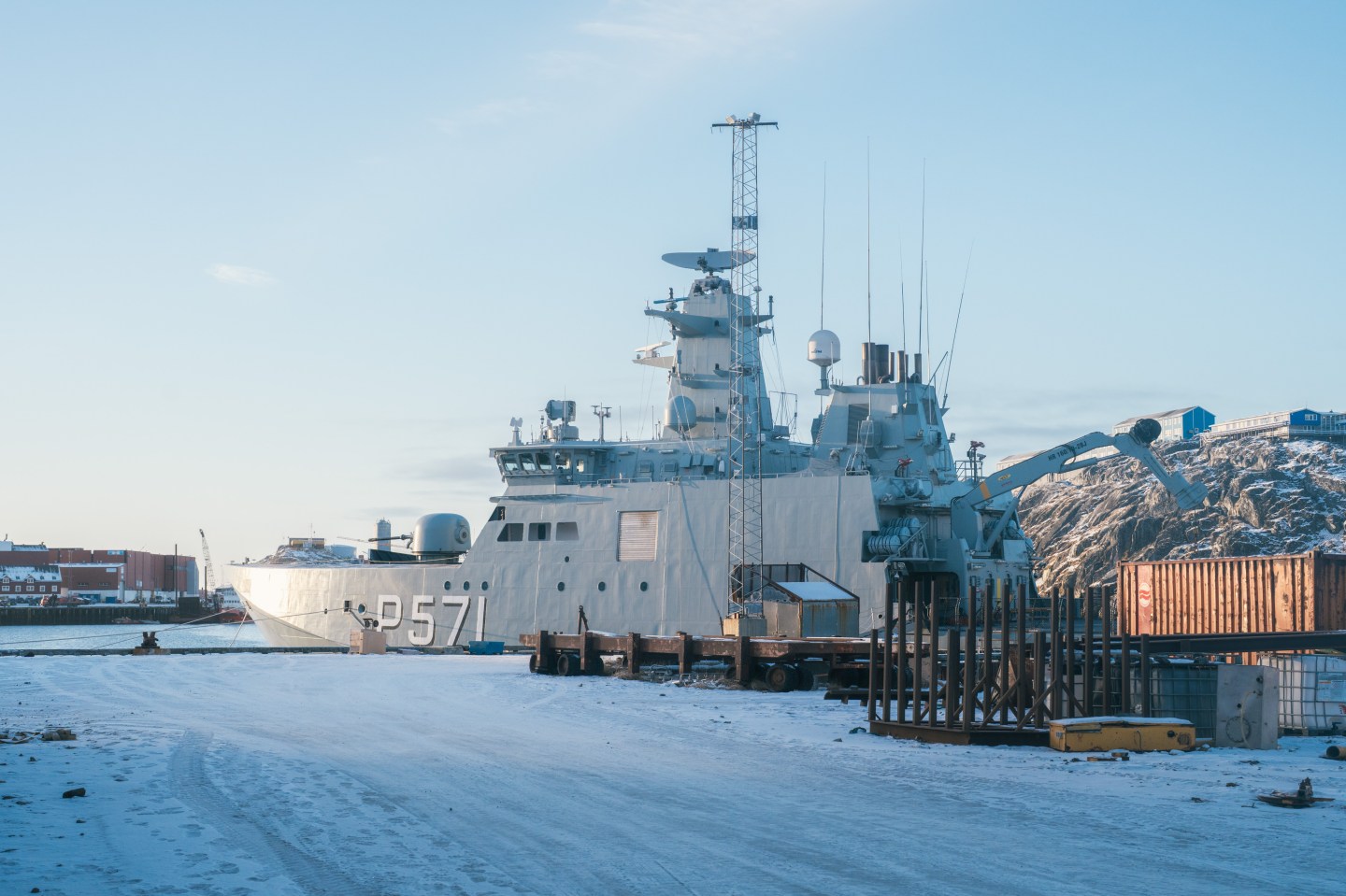
The U.S. already operates the Pituffik Space Base in northwestern Greenland, housing critical early warning radar systems for homeland missile defense. “The U.S. has had this base there since the Cold War, decades and decades. It’s super important to Homeland Defense,” Pincus notes. “The Greenlanders and Danes have made it very clear that they are open to the U.S. making requests for additional presence on Greenland.”
JULIETTE PAVY—Bloomberg/Getty Images
Regarding Russian threats, Pincus is skeptical: “I just don’t see any likelihood of Russia trying to seize Greenland. Why? For what purpose? There’s been no indication from Russia that they’re even considering some sort of design on Greenland.”
On Chinese influence, Pincus acknowledges that the nation has attempted investments in Greenland infrastructure—most notably bidding on airport construction projects. But “Greenland is not high on China’s list of priorities,” she argues. “Greenlanders are smart and savvy, and they recognize that in the current climate, you can play the U.S. and China off against each other to maximize your benefits.” When China expressed interest in the airports, “Copenhagen swooped in and said they would cover it.”
Gray offers a different perspective, warning that an independent Greenland—which has been on a path toward sovereignty for 45 years—would be vulnerable. “The question is, what’s greeting them when they become independent? Is it Russia? Is it China? Both of those powers will pounce on Greenland and take advantage of them. They will be absorbed and coerced and lose their sovereignty within hours of becoming an independent country.”
An ego play masquerading as strategy?
Lin Mortensgaard, an international politics of the Arctic specialist at the Danish Institute for International Studies, sees Trump’s motivations as shifting constantly. “On Mondays, Trump wants resources. On Tuesdays it’s for national security, and on Wednesday, it’s for international security. I think that explicit motivation changes all the time, but I’m starting to read it more and more as it’s an ego thing about expanding the American territory,” she told Fortune.
She points to the administration’s “Donroe Doctrine“—a merger of Trump’s name with the Monroe Doctrine—as evidence of “hemisphere thinking” where “there’s a US hemisphere, or sphere of interest. There’s a Russian sphere of interest, and it’s a Chinese sphere of interest.”
Mujtaba Rahman, Managing Director for Europe at Eurasia Group, frames it more starkly: “The question for the Europeans is: what is it that the Americans want to do that they can’t already do given the existing governance arrangements that are in place?” The U.S. already exercises de facto military sovereignty over Greenland through the 1951 Defense Agreement. “There’s no Danish opposition to more U.S. bases,” he told Fortune. “That’s why there is a belief that the goals are different. It’s real estate, it’s predatory, it’s ideology. It’s about territorial expansion.”
The NATO nightmare
The gravest concern among the majority of experts who spoke with Fortune, however, isn’t financial—it’s the potential destruction of NATO. “This is completely unprecedented, that not only a NATO ally, but the biggest, most powerful state within the NATO alliance threatens another with annexation,” Mortensgaard says. “That would really be the end of NATO if there is real fighting between NATO allies.”
Rahman goes further, arguing that “Greenland represents a bigger risk to NATO cohesion than Russia’s invasion of Ukraine.” His logic: “Russia is an adversary that European countries understand. But if you have the most important country in NATO, the country responsible for European security, now seeking to annex the territory of another NATO member and ally, all of the assumptions that have underpinned the way Europe thinks about the world are completely upended.”
Put more simply: “It involves dealing with America, and America is meant to be a friend, not an enemy,” he says.
U.S. allies have already begun voicing concern and even condemnation. Seven major European nations issued a rare joint statement on January 6 declaring that “Greenland belongs to its people” and warning that “security in the Arctic must be achieved collectively” while “upholding the principles of the UN Charter, including sovereignty, territorial integrity and the inviolability of borders.”
Danish Prime Minister Mette Frederiksen also warned bluntly: “If the United States chooses to attack another NATO country militarily, then everything stops—that is, including NATO.”
What happens next?
Mortensgaard believes actual military action would be symbolically simple but strategically catastrophic. “In practical terms, it’s about taking over a few government buildings in Nuuk, which has 20,000 inhabitants, and then hoisting the stars and stripes. So in that sense, it’s easily done. But the bigger damage of this in NATO terms would be completely unprecedented and actually difficult to compute.”
Rahman sees a more sophisticated approach emerging: “A political influence operation that involves political and economic coercion.” The administration narrative would be “America is going to liberate you, Greenland, from Denmark,” targeting “sympathetic pockets within the population and among the elites that are willing to work with America.”
He notes that opposition parties in Greenland are already saying “we should talk to Trump directly”—precisely the opening the administration seeks. “Trump is deeply unpopular in Greenland today. The question is, does he remain unpopular over the medium term if the administration brings to bear economic incentives and attempts to work with local partners to change public opinion over time?”
For businesses eyeing Greenland’s resources, the uncertainty creates what Rahman calls “a very substantial chilling effect on investment. The Greenland question is now the central question informing the future of the Transatlantic Alliance. As long as that question remains unresolved, I can imagine it would have a chilling effect.”
Pincus worries the aggressive approach undermines U.S. interests: “Greenlanders are very proud of their democracy, and they are in pursuit of independence, and the U.S. is acting scary right now. That doesn’t necessarily help us.”
Gray remains confident the administration will find a path forward, modeling it on Pacific island relationships that prioritize strategic value over economic return. “Frankly, the intangible security value to the United States is worth a lot more than any social services calculation,” he argues.
But as Marchese pointedly asks about the Chinese, who have scoured the globe for rare earth deposits for three decades: “Why aren’t they in Greenland? I believe they’re not stupid people. They’re all over the world. Why don’t you see any of that there? I think it’s just an infrastructure issue. How much money do you want to spend in the billions, and how long is it going to take?”
The answer, experts agree, is measured not in months or single-digit years, but in decades and hundreds of billions of dollars—assuming Greenland’s people, Denmark, Europe, and the foundations of the Western alliance survive the attempt intact.