Business
Down Arrow Button Icon
Published
1 day agoon
By
Jace Porter
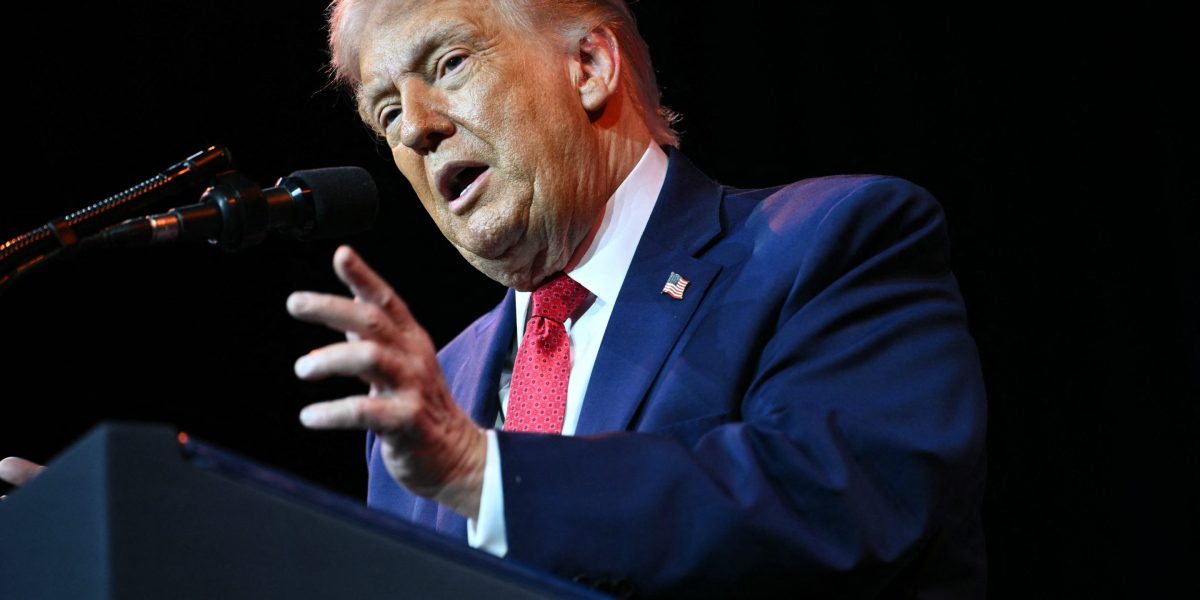
When President Donald Trump entered his second term, he renewed his 2019 vow to take over Greenland. But what started as a seemingly quixotic proposal to purchase the Arctic island has now morphed into an unprecedented threat against a NATO ally—one that experts told Fortune could cost hundreds of billions of dollars, destroy the Western alliance, and yield minimal economic benefit for decades.
Days after invading Venezuela to capture President Nicolas Maduro, Trump doubled down on his proposed plans for the small arctic nation, declaring yesterday that “we need Greenland from a national security situation.” Accomplishing this goal, the White House now says, could include using the U.S. military.
Fortune contacted the White House for comment.
“People need to understand that he is serious. He wants Greenland to be a part of the United States,” Alexander Gray, who served in Trump’s first administration and testified before the Senate on Greenland acquisition mechanisms, told Fortune. “How that happens is subject to discussion, but the overall aim is not changing.”
The Venezuela operation that saw U.S. forces capture Maduro last week has “galvanized” the administration’s focus on the western hemisphere. “It has given new impetus for people in government, at the very senior level, to say the President’s reiterated that the hemisphere is our number one priority. Greenland is very important to him. Let’s actually go about coming up with a realistic plan for making that happen,” Gray said.
But as experts parse Trump’s motivations and examine the feasibility of his territorial ambitions, a murky reality emerges: the economic case weak, the security rationale is questionable, and the geopolitical costs could be catastrophic.
The shaky economic case
Trump officials have repeatedly pointed to Greenland’s mineral wealth as justification for U.S. control. The island is estimated to hold 36-42 million metric tons of rare earth oxides—potentially the world’s second-largest reserve after China. With the global rare earth elements market projected to reach $7.6 billion in 2026, and China controlling 69% of production, securing alternative sources seems like a strategically sound idea.
Administration officials told Reuters in May that the U.S. was assisting Greenland diversify its economy to achieve greater economic independence from Denmark. They pointed to the Tanbreez Project, which seeks to extract rare earths on the island to be processed in the U.S. as part of this plan.
But Anthony Marchese, chairman of Texas Mineral Resources Corporation who also testified before Congress, gave Fortune a sobering assessment of the mining reality in Greenland: “If you’re going to go to Greenland for its minerals, you’re talking billions upon billions upon billions of dollars and extremely long time before anything ever comes of it.”
The obstacles are formidable. According to Marchese, the northern part of Greenland is only mineable six months out of the year, due to the harsh climate. Mining equipment and fuel, he said, would have to be stored outside in the harsh winter elements for months.
Infrastructure costs compound the challenge. Greenland has virtually no roads connecting its settlements, which are often located on small islands or remote coastal spits of land. It has a limited number of ports. Greenland does not produce enough energy, nor does it have the energy infrastructure to support industrial-scale mining.
CARSTEN SNEJBJERG—Bloomberg/Getty Images
The nation has a population of roughly 56,000 people, most of whom live in southern coastal settlements, including the capital Nuuk. In terms of mining specifically, only one mine in the country is fully operational and the practice itself is widely unpopular among locals and environmental groups. Greenland’s mineral industry generates close to zero revenues. Most operations are still in the exploratory stage. Environmental concerns have made getting mining projects approved in the country especially difficult, Marchese says. And even if a mining operation were to be approved, there is no guarantee it would be lucrative.
“You’re going to have hundreds of millions of dollars of drilling to do in order to determine first, is this a deposit that’s worth mining?” Marchese says. “Even if I had all the money in the world, it’s not like I’m just going to go into Greenland next month and start drilling.”
More fundamentally, the minerals identified so far are largely uncharacterized. Mineral sampling maps of the island, he says, are almost certainly very lightly sampled, Marchese said. “Sampling means I go in, I look at a small area, I take a few samples. What it doesn’t tell you is how large is the deposit? What grade is the deposit?”
His timeline estimate? “My opinion, 10 to 15 years. No question, given the infrastructure you have to overcome, given the local political situation there.”
Rebecca Pincus, a senior fellow at the Foreign Policy Research Institute and Arctic specialist who testified before Congress in March 2025, agrees the economic argument collapses under scrutiny. While she concedes that Greenland has rare earth minerals, the island’s conditions make mining these resources economically irrational. she says. “That doesn’t change if Greenland becomes an American territory. There’s just not a lot of infrastructure there. The climate is really super harsh. Those barriers aren’t going to magically go away.”
The hundreds of billions question
Gray acknowledges the astronomical costs but dismissed them as secondary. His Senate testimony referenced estimates of “hundreds of billions of dollars” to acquire and support Greenland—costs stemming from replacing Denmark’s annual $600 million subsidy to the nation, massive infrastructure investments, and replicating the safety net Greenlanders currently enjoy.
“The cost is actually not the most important piece of this,” Gray insists. “This is not an economic issue for the United States. This is not a question of dollars and cents. This is not about mineral resources. I see this as a strategic issue, a national security issue with a lot of continuity across centuries.”
Gray points to U.S. relationships with the Freely Associated States in the Pacific—Marshall Islands, Micronesia, and Palau—as a template. “We basically provide for their entire defense and we have unlimited access to their land, air and sea. If you look at those relationships, the math has never added up, and those will always be a net deficit from a math perspective for the United States. But they are incalculably valuable from a strategic standpoint.”
There’s a significant problem with this comparison, however. According to research by the Danish Institute for International Studies, the U.S. currently pays the Compact of Free Association (COFA) states approximately $2,025 per capita, while Denmark provides Greenland roughly $12,500 per capita—more than six times as much.
Gray’s solution involves creative financing: a minerals and oil trust fund modeled on Alaska’s Permanent Fund, and distributing universal basic income to every Greenlander. “I think that’s a way, an innovative way, that can help take some of the pressure off the U.S. Treasury for funding this whole thing.”
But this assumes viable mineral extraction—an assumption experts like Marchese consider highly optimistic.
The security rationale under scrutiny
Trump claims “Greenland is covered with Russian and Chinese ships all over the place,” framing its acquisition as essential to national security. But experts like Pincus dispute this characterization.
“The idea of the U.S. purchasing or annexing or conquering Greenland is a really maximalist solution to a set of problems that’s much more modest,” she told Fortune.
The U.S. already operates the Pituffik Space Base in northwestern Greenland, housing critical early warning radar systems for homeland missile defense. “The U.S. has had this base there since the Cold War, decades and decades. It’s super important to Homeland Defense,” Pincus notes. “The Greenlanders and Danes have made it very clear that they are open to the U.S. making requests for additional presence on Greenland.”
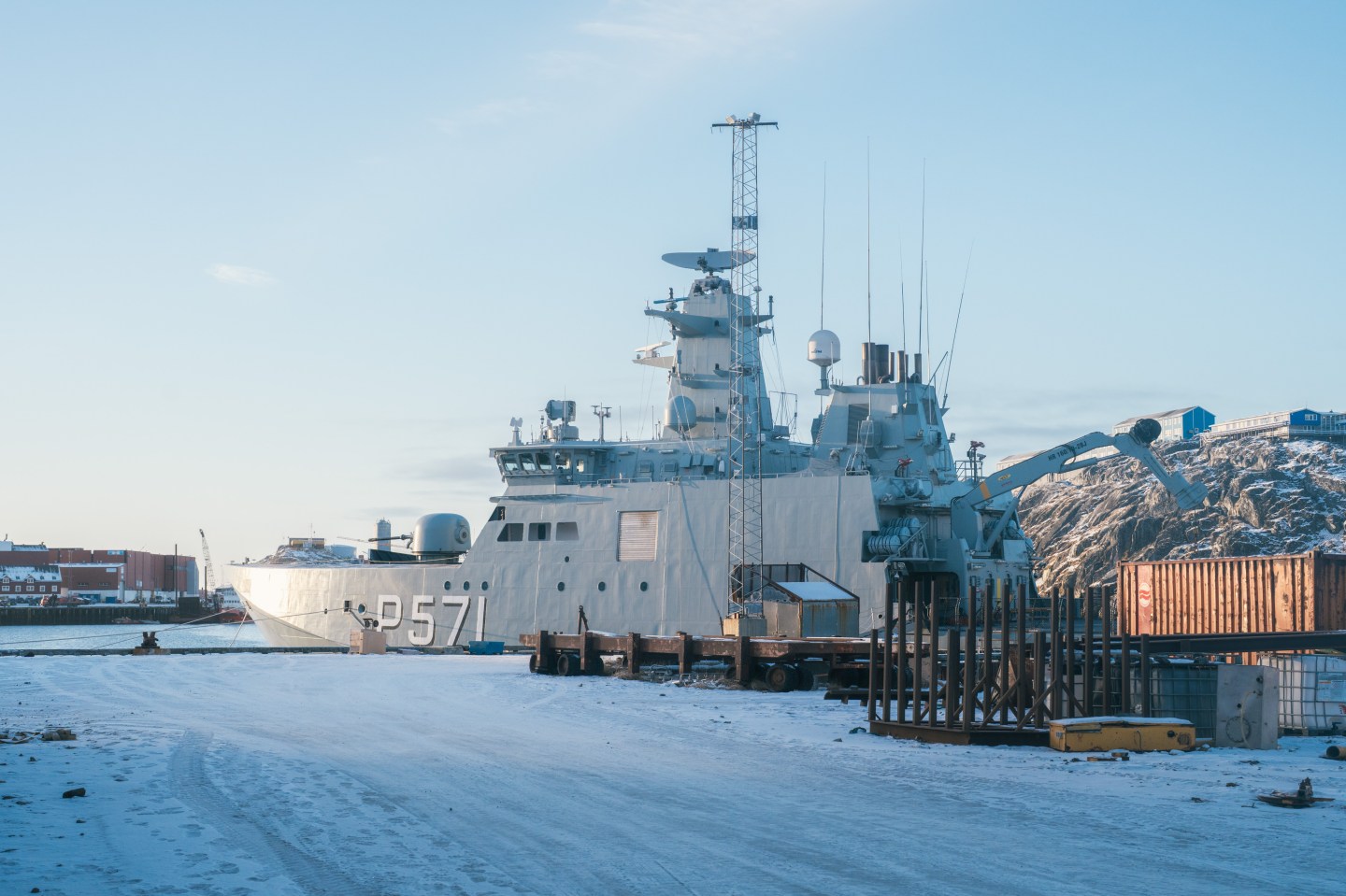
JULIETTE PAVY—Bloomberg/Getty Images
Regarding Russian threats, Pincus is skeptical: “I just don’t see any likelihood of Russia trying to seize Greenland. Why? For what purpose? There’s been no indication from Russia that they’re even considering some sort of design on Greenland.”
On Chinese influence, Pincus acknowledges that the nation has attempted investments in Greenland infrastructure—most notably bidding on airport construction projects. But “Greenland is not high on China’s list of priorities,” she argues. “Greenlanders are smart and savvy, and they recognize that in the current climate, you can play the U.S. and China off against each other to maximize your benefits.” When China expressed interest in the airports, “Copenhagen swooped in and said they would cover it.”
Gray offers a different perspective, warning that an independent Greenland—which has been on a path toward sovereignty for 45 years—would be vulnerable. “The question is, what’s greeting them when they become independent? Is it Russia? Is it China? Both of those powers will pounce on Greenland and take advantage of them. They will be absorbed and coerced and lose their sovereignty within hours of becoming an independent country.”
An ego play masquerading as strategy?
Lin Mortensgaard, an international politics of the Arctic specialist at the Danish Institute for International Studies, sees Trump’s motivations as shifting constantly. “On Mondays, Trump wants resources. On Tuesdays it’s for national security, and on Wednesday, it’s for international security. I think that explicit motivation changes all the time, but I’m starting to read it more and more as it’s an ego thing about expanding the American territory,” she told Fortune.
She points to the administration’s “Donroe Doctrine“—a merger of Trump’s name with the Monroe Doctrine—as evidence of “hemisphere thinking” where “there’s a US hemisphere, or sphere of interest. There’s a Russian sphere of interest, and it’s a Chinese sphere of interest.”
Mujtaba Rahman, Managing Director for Europe at Eurasia Group, frames it more starkly: “The question for the Europeans is: what is it that the Americans want to do that they can’t already do given the existing governance arrangements that are in place?” The U.S. already exercises de facto military sovereignty over Greenland through the 1951 Defense Agreement. “There’s no Danish opposition to more U.S. bases,” he told Fortune. “That’s why there is a belief that the goals are different. It’s real estate, it’s predatory, it’s ideology. It’s about territorial expansion.”
The NATO nightmare
The gravest concern among the majority of experts who spoke with Fortune, however, isn’t financial—it’s the potential destruction of NATO. “This is completely unprecedented, that not only a NATO ally, but the biggest, most powerful state within the NATO alliance threatens another with annexation,” Mortensgaard says. “That would really be the end of NATO if there is real fighting between NATO allies.”
Rahman goes further, arguing that “Greenland represents a bigger risk to NATO cohesion than Russia’s invasion of Ukraine.” His logic: “Russia is an adversary that European countries understand. But if you have the most important country in NATO, the country responsible for European security, now seeking to annex the territory of another NATO member and ally, all of the assumptions that have underpinned the way Europe thinks about the world are completely upended.”
Put more simply: “It involves dealing with America, and America is meant to be a friend, not an enemy,” he says.
U.S. allies have already begun voicing concern and even condemnation. Seven major European nations issued a rare joint statement on January 6 declaring that “Greenland belongs to its people” and warning that “security in the Arctic must be achieved collectively” while “upholding the principles of the UN Charter, including sovereignty, territorial integrity and the inviolability of borders.”
Danish Prime Minister Mette Frederiksen also warned bluntly: “If the United States chooses to attack another NATO country militarily, then everything stops—that is, including NATO.”
What happens next?
Mortensgaard believes actual military action would be symbolically simple but strategically catastrophic. “In practical terms, it’s about taking over a few government buildings in Nuuk, which has 20,000 inhabitants, and then hoisting the stars and stripes. So in that sense, it’s easily done. But the bigger damage of this in NATO terms would be completely unprecedented and actually difficult to compute.”
Rahman sees a more sophisticated approach emerging: “A political influence operation that involves political and economic coercion.” The administration narrative would be “America is going to liberate you, Greenland, from Denmark,” targeting “sympathetic pockets within the population and among the elites that are willing to work with America.”
He notes that opposition parties in Greenland are already saying “we should talk to Trump directly”—precisely the opening the administration seeks. “Trump is deeply unpopular in Greenland today. The question is, does he remain unpopular over the medium term if the administration brings to bear economic incentives and attempts to work with local partners to change public opinion over time?”
For businesses eyeing Greenland’s resources, the uncertainty creates what Rahman calls “a very substantial chilling effect on investment. The Greenland question is now the central question informing the future of the Transatlantic Alliance. As long as that question remains unresolved, I can imagine it would have a chilling effect.”
Pincus worries the aggressive approach undermines U.S. interests: “Greenlanders are very proud of their democracy, and they are in pursuit of independence, and the U.S. is acting scary right now. That doesn’t necessarily help us.”
Gray remains confident the administration will find a path forward, modeling it on Pacific island relationships that prioritize strategic value over economic return. “Frankly, the intangible security value to the United States is worth a lot more than any social services calculation,” he argues.
But as Marchese pointedly asks about the Chinese, who have scoured the globe for rare earth deposits for three decades: “Why aren’t they in Greenland? I believe they’re not stupid people. They’re all over the world. Why don’t you see any of that there? I think it’s just an infrastructure issue. How much money do you want to spend in the billions, and how long is it going to take?”
The answer, experts agree, is measured not in months or single-digit years, but in decades and hundreds of billions of dollars—assuming Greenland’s people, Denmark, Europe, and the foundations of the Western alliance survive the attempt intact.
You may like
Business
Vance on woman shot and killed by ICE: ‘a tragedy of her own making’
Published
24 minutes agoon
January 8, 2026By
Jace Porter
Vice President JD Vance on Thursday blamed a federal immigration officer’s fatal shooting of a Minneapolis woman on “a left-wing network,” Democrats, the news media and the woman who was killed as protests related to her death expanded to cities across the country.
The vice president, who made his critiques in a rare appearance in the White House briefing room and on social media, was the most prominent example yet of the Trump administration quickly assigning culpability for the death of 37-year-old Renee Good while the investigation is still underway. Good was shot and killed by an ICE officer while she tried to drive away on a snowy residential street as officers were carrying out an operation related to the administration’s immigration crackdown.
Vance said at the White House that he wasn’t worried about prejudging the investigation into Good’s killing, saying of the videos he’d seen of the Wednesday incident, “What you see is what you get in this case.”
Vance said he was certain that Good accelerated her car into the officer and hit him. It isn’t clear from the videos if the vehicle makes contact with the officer. Minneapolis Mayor Jacob Frey said Wednesday that video of the shooting shows arguments that the officer was acting in self-defense were “garbage.”
The vice president also said part of him felt “very, very sad” for Good. He called her “brainwashed” and “a victim of left-wing ideology.”
“I can believe that her death is a tragedy, while also recognizing that it’s a tragedy of her own making and a tragedy of the far left who has marshaled an entire movement — a lunatic fringe — against our law enforcement officers,” Vance said.
His defense of the officer, at times fiery, came as Homeland Security Secretary Kristi Noem and President Donald Trump likewise said the officer’s actions were a justified act of self-defense. Trump said Good “viciously ran over” the ICE officer, though video footage of the event contradicts that claim.
Trump has made a wide-ranging crackdown on crime and immigration in Democratic cities a centerpiece of his second term in office. He has deployed federal law enforcement officials and National Guard troops to support the operations and has floated the idea of invoking the Insurrection Act to try to stop his opponents from blocking his plans through the courts.
Trump officials made it clear that they were rejecting claims by Democrats and officials in Minnesota that the president’s move to deploy immigration officers in American cities had been inflammatory and needed to end.
“The Trump administration will redouble our efforts to get the worst of the worst criminal, illegal alien killers, rapists and pedophiles off of American streets,” White House press secretary Karoline Leavitt said Thursday before Vance spoke.
She called Good’s killing “a result of a large, sinister left-wing movement.”
Vance was selected as Trump’s running mate last year partly for his ability to verbally spar, especially with the media. He opened his remarks by condemning headlines he saw about the shooting, at times raising his voice and decrying the “corporate media.”
“This was an attack on law and order. This was an attack on the American people,” Vance said.
He accused journalists of falsely portraying Good as “innocent” and said: “You should be ashamed of yourselves. Every single one of you.”
“The way that the media, by and large, has reported this story has been an absolute disgrace,” he added. “And it puts our law enforcement officers at risk every single day.”
When asked what responsibility he and Trump bore to defuse tension in the country over the incident, Vance said their responsibility was to “protect the people who are enforcing law and protect the country writ large.”
“The best way to turn down the temperature is to tell people to take their concerns about immigration policy to the ballot box,” he said.
Vance also announced that the administration was deputizing a new assistant attorney general to prosecute the abuse of government assistance programs in response to growing attention to fraud in childcare programs in Minnesota.
He said the prosecutor will focus primarily on Minnesota, and will be nominated in coming days. Vance added that Senate Majority Leader John Thune told him he’d seek a prompt confirmation.
___
Associated Press writers Konstantin Toropin, Will Weissert and Jonathan J. Cooper contributed to this report.
Business
Nicolas Maduro and Luigi Mangione joined at Brooklyn lock-up by Tekashi 6ix9ine
Published
54 minutes agoon
January 8, 2026By
Jace Porter
Rapper Tekashi 6ix9ine is joining Venezuela’s president and the man charged with gunning down United Healthcare’s CEO in a notorious federal lockup in New York City.
The embattled 29-year-old artist, whose real name is Daniel Hernandez, reported to the Metropolitan Detention Center in his native Brooklyn on Tuesday to serve out his latest stint behind bars.
He drove up to the gates of the jail in a luxury van with internet personality Adin Ross and a camera crew streaming live as he turned himself in.
The facility is the only federal jail in New York City but is so troubled that some judges have refused to send people there and others have described it as “ hell on earth ” for its poor conditions and constant violence.
It currently houses Venezuelan President Nicolás Maduro and his wife, Cilia Flores, as well as Luigi Mangione, who is accused of killing Brian Thompson, the leader of the country’s biggest health insurer.
Over the years, MDC Brooklyn has housed a constellation of other infamous inmates, including music stars R. Kelly and Sean “Diddy” Combs and longtime Jeffrey Epstein associate Ghislaine Maxwell.
Hernandez’s lawyers didn’t immediately respond to emails seeking comment Tuesday, but have said previously that the rapper looked forward to serving out his sentence so he could resume his music career.
Hernandez admitted last year to assaulting a man and possessing drugs, in violation of the terms of his supervised release in a gang-related case.
He was sentenced in December to serve three more months in federal custody. He was previously slapped with a 45-day sentence in 2024 for breaking the terms of his supervised release.
Hernandez shot to fame with the 2017 release of his song “Gummo,” but the following year he pleaded guilty to his involvement with a violent New York-based gang, the Nine Trey Gangsta Bloods.
He was sentenced to two years in prison in 2019, followed by five years of supervised release for his cooperation in the racketeering case against other gang members.
He was released from federal prison several months early during the height of COVID-19 pandemic in 2020.
Hernandez’s latest sentence is related to small amounts of cocaine and ecstasy found at his Miami home during a police raid. Prosecutors say he also punched a man who taunted him at a Florida mall over his cooperation against gang members.
Business
Greenland, Denmark officials meet with White House to discuss Trump’s ‘takeover’ threats
Published
1 hour agoon
January 8, 2026By
Jace Porter
Denmark’s ambassador, Jesper Møller Sørensen, and Jacob Isbosethsen, Greenland’s chief representative to Washington, met on Thursday with White House National Security Council officials to discuss a renewed push by Trump to acquire Greenland, perhaps by military force, according to Danish government officials who were not authorized to comment publicly and spoke on the condition of anonymity.
The White House did not respond to a request for comment about the meeting.
The envoys have also held a series of meetings this week with American lawmakers as they look to enlist help in persuading Trump to back off his threat.
Secretary of State Marco Rubio is expected to meet next week with Danish officials.
Trump, in a New York Times interview published Thursday, said he has to possess the entirety of Greenland instead of just exercising a long-standing treaty that gives the United States wide latitude to use Greenland for military posts.
“I think that ownership gives you a thing that you can’t do with, you’re talking about a lease or a treaty. Ownership gives you things and elements that you can’t get from just signing a document,” Trump told the newspaper.
The U.S. is party to a 1951 treaty that gives it broad rights to set up military bases there with the consent of Denmark and Greenland.
Meanwhile, Trump’s vice president, JD Vance, told reporters that European leaders should “take the president of the United States seriously” as he framed the issue as one of defense.
“What we’re asking our European friends to do is take the security of that landmass more seriously, because if they’re not, the United States is going to have to do something about it,” Vance said.
But the administration is starting to hear pushback from lawmakers, including some Republicans, about Trump’s designs on the territory.
In a floor speech Thursday, Sen. Lisa Murkowski, R-Alaska, warned that the rhetoric from some in the Trump administration is “profoundly troubling.”
“We’ve got a lot ahead of us in 2026,” Murkowski said. “Greenland – or taking Greenland, or buying Greenland – should not be on that list. It should not be an obsession at the highest levels of this administration.”
Danish officials are hopeful about the upcoming talks with Rubio in Washington.
“This is the dialogue that is needed, as requested by the government together with the Greenlandic government,” Danish Defense Minister Troels Lund Poulsen told Danish broadcaster DR.
The island of Greenland, 80% of which lies above the Arctic Circle, is home to about 56,000 mostly Inuit people.
Vance criticizes Denmark
Vance said on Wednesday that Denmark “obviously” had not done a proper job in securing Greenland and that Trump “is willing to go as far as he has to” to defend American interests in the Arctic.
In an interview with Fox News, Vance repeated Trump’s claim that Greenland is crucial to both the U.S. and the world’s national security because “the entire missile defense infrastructure is partially dependent on Greenland.”
He said the fact that Denmark has been a faithful military ally of the U.S. during World War II and the more recent “war on terrorism” did not necessarily mean they were doing enough to secure Greenland today.
“Just because you did something smart 25 years ago doesn’t mean you can’t do something dumb now,” Vance said, adding that Trump “is saying very clearly, ‘you are not doing a good job with respect to Greenland.’”
Right to self-determination
Earlier, Rubio told a select group of U.S. lawmakers that it was the Republican administration’s intention to eventually purchase Greenland, as opposed to using military force.
“Many Greenlanders feel that the remarks made are disrespectful,” Aaja Chemnitz, one of the two Greenlandic politicians in the Danish parliament, told The Associated Press. “Many also experience that these conversations are being discussed over their heads. We have a firm saying in Greenland, ‘Nothing about Greenland, without Greenland.’”
She said most Greenlanders “wish for more self-determination, including independence” but also want to “strengthen cooperation with our partners” in security and business development as long as it is based on “mutual respect and recognition of our right to self-determination.”
Chemnitz denied a claim by Trump that Greenland is “covered with Russian and Chinese ships all over the place.”
Greenland is “a long-standing ally and partner to the U.S. and we have a shared interest in stability, security, and responsible cooperation in the Arctic,” she said. “There is an agreement with the U.S. that gives them access to have bases in Greenland if needed.”
France’s President Emmanuel Macron has denounced the “law of the strongest” that is making people “wonder if Greenland will be invaded.”
In a speech to French ambassadors at the Elysee presidential palace on Thursday, Macron said: “It’s the greatest disorder, the law of the strongest, and everyday people wonder whether Greenland will be invaded, whether Canada will be under the threat of becoming the 51st state (of the United States) or whether Taiwan is to be further circled.”
He pointed to an “increasingly dysfunctional” world where great powers, including the U.S and China, have “a real temptation to divide the world amongst themselves.”
The United States is “gradually turning away from some of its allies and freeing itself from the international rules,” Macron said.
Surveillance operations for the US
The leaders of Canada, France, Germany, Italy, Poland, Spain and the U.K. joined Denmark’s Prime Minister Mette Frederiksen on Tuesday in defending Greenland’s sovereignty in the wake of Trump’s comments about Greenland, which is part of the NATO military alliance.
After Vance’s visit to Greenland last year, Danish Foreign Minister Lars Løkke Rasmussen published a video detailing the 1951 defense agreement between Denmark and the U.S.. Since 1945, the American military presence in Greenland has decreased from thousands of soldiers over 17 bases and installations on the island, Rasmussen said, to the remote Pituffik Space Base in the northwest with some 200 soldiers today. The base supports missile warning, missile defense and space surveillance operations for the U.S. and NATO.
The 1951 agreement “offers ample opportunity for the United States to have a much stronger military presence in Greenland,” Rasmussen said. “If that is what you wish, then let us discuss it.”
‘Military defense of Greenland’
Last year, Denmark’s parliament approved a bill to allow U.S. military bases on Danish soil. The legislation widens a previous military agreement, made in 2023 with the Biden administration, where U.S. troops had broad access to Danish air bases in the Scandinavian country.
Denmark is also moving to strengthen its military presence around Greenland and in the wider North Atlantic.
Last year, the government announced a 14.6 billion-kroner ($2.3 billion) agreement with parties including the governments of Greenland and the Faroe Islands, another self-governing territory of Denmark, to “improve capabilities for surveillance and maintaining sovereignty in the region.”
___
Associated Press writers Seung Min Kim, Konstantin Toropin in Washington and Sylvie Corbet in Paris contributed to this report.
Olaplex said to attract takeover offer From Germany’s Henkel
Vance on woman shot and killed by ICE: ‘a tragedy of her own making’
Meghan Trainor’s Husband Hopes Ashley Tisdale Is OK Amid Mom Group Rumors
Trending
-
Politics8 years agoCongress rolls out ‘Better Deal,’ new economic agenda
-
Entertainment8 years agoNew Season 8 Walking Dead trailer flashes forward in time
-
Politics8 years agoPoll: Virginia governor’s race in dead heat
-
Entertainment8 years agoThe final 6 ‘Game of Thrones’ episodes might feel like a full season
-
Politics8 years agoIllinois’ financial crisis could bring the state to a halt
-
Entertainment8 years agoMeet Superman’s grandfather in new trailer for Krypton
-
Business8 years ago6 Stunning new co-working spaces around the globe
-
Tech8 years agoHulu hires Google marketing veteran Kelly Campbell as CMO