Connect with us

Business

Down Arrow Button Icon
Published

on


In September 2018, the CEO of what was then Michael Kors Holdings delivered thrilling news to investors. The company had agreed to acquire the storied Italian fashion house Versace from private equity giant Blackstone in a $2.1 billion blockbuster deal. 

The purchase created a multi-brand luxury powerhouse made up of Michael Kors jet-set lifestyle apparel and designer bags, the iconic Jimmy Choo footwear brand, plus the red-carpet glamour of Versace. Donatella Versace herself, who stepped up to lead after her brother Gianni’s tragic death in 1997, was in place as the creative visionary and said she was “excited” about the long-term prospects for the brand her brother founded in Milan in 1978. The nouveau American fashion conglomerate was poised to rival European competitors like Louis Vuitton and Hermes owner LVMH and Gucci owner Kering—with soaring revenues to boot. 

“We believe that the strength of the Michael Kors and Jimmy Choo brands, and the acquisition of Versace, position us to deliver multiple years of revenue and earnings growth,” said CEO and Chairman John D. Idol. “I am thrilled to have the opportunity to work with Donatella on Versace’s next chapter of growth.”

After the acquisition, the company renamed itself Capri Holdings after the striking three-rock formation that is one of the most recognizable sights on the Italian billionaire playground island of Capri. The company targeted revenues of $8 billion for the group, with Versace delivering $2 billion, Michael Kors behind $5 billion, and Jimmy Choo delivering $1 billion. 

Seven years on, that vision is in tatters. 

Capri has been in free fall. The company posted a $1.18 billion loss in fiscal 2025 and revenues have plummeted 21% from $5.6 billion to $4.4 billion during the past two fiscal years. The crown jewel, its Michael Kors brand which accounts for nearly 70% of the company’s revenues, has bled $864 million in sales since 2023. In April 2025, Capri announced it would sell Versace to Prada for $1.375 billion, a stunning loss after failing to capitalize on the tour de force of Donatella Versace, who stepped down as artistic director to the new role of chief brand ambassador in April 2025. Meanwhile, the company’s struggles are unfolding against the backdrop of a shrinking luxury market and a slowdown in buying. (Capri declined to comment for this story.)

Simeon Siegel, senior managing director at Guggenheim Partners, said Capri is also facing off against rival Tapestry, which has seen significant success with its Coach brand. “Tapestry is the hero of retail and they have succeeded like no other with Coach,” said Siegel, who notes that the rest of the Tapestry portfolio, which includes Kate Spade and Stuart Weitzman, has lagged. Coach’s revenues tell the opposite story of Capri. In fiscal 2023, Coach saw $4.96 billion in sales, which climbed to $5.1 billion in 2024 and reached $5.6 billion in fiscal 2025. 

‘Help!!! Fast!!!’

Idol has led the company in the two decades since the Hong Kong private equity firm Sportswear Holdings—owned by Silas Chou and Lawrence Stroll—bought a majority stake in Michael Kors in 2003 for about $100 million. Michael Kors’ growth exploded from $20 million in sales in 2004 to roughly $3 billion a decade later. Idol added the chairman title in 2011, the same year the company went public, and he now reports to an eight-member board with an average tenure of 9 years.

Michael Kors sales hit a peak in 2016 of about $4.7 billion, and has been roughly on the decline in the years since. Meanwhile Idol has retained a tight grip on the leadership role even as two probable CEO candidates cycled through Capri. In August 2021, Capri announced that it had hired Joshua Schulman to the newly created role of CEO of Michael Kors—after plucking him from his previous role as CEO of Coach at Tapestry. (Schulman also served a previous stint as CEO of Jimmy Choo, before Capri bought it in 2017.) Schulman was set to ease in as CEO of Michael Kors before completely succeeding Idol in September 2022 as CEO of Capri, with Idol moving up to serve as executive chair. Idol told investors he would focus on long-term strategy, future potential luxury acquisitions, and board leadership as executive chair.

It wasn’t to be. Seven months later, Capri announced that Schulman was out, although Schulman still collected roughly $8 million in payments for contractually guaranteed salary and bonus. Capri also reduced his non-compete agreement to a six-month period. Idol stayed on as chairman and CEO, according to a March 7, 2022 announcement. In January 2023, Capri announced it had hired Cedric Wilmotte to serve as CEO of Michael Kors—only to announce his departure in November 2024. That time, the board didn’t announce a succession plan—only that Wilmotte would lead Michael Kors. Schulman is now CEO at Burberry and Wilmotte is an independent investor. Neither responded to requests for comment.

Only two new directors have joined the Capri board in the past five years, a strategy consultant who now chairs the audit committee, and the CEO of Bacardi International. Idol has stayed away from podcasts or long-form discussions, although he made an exception in 2013 at the McDonough School of Business at Georgetown University when his daughter attended. However, Idol appears smiling in photos alongside fashion models, actresses, Formula 1 drivers and other celebrities at fashion shows and events. 

Emails made public during an FTC lawsuit show that, despite Idol’s relaxed appearance in the milieu of a fashion scrum, he scrutinizes Coach’s marketing and its promotional and sales activity closely, particularly his rival’s email blasts to consumers. 

“Coach’s creativity on these emails (outlet in particular) is killing us… Sorry our backgrounds look cheap and uninspiring,” Idol wrote to Kors executives in May 2023. “This needs to be corrected quickly… Help!!! Fast!!!” 

He forwarded a holiday marketing email from Coach to another executive: “[T]hey are winning with the Outlet and promotional strategy in the US. It’s not just brand heat!” Idol wrote. 

If Coach-owner Tapestry is the hero, that makes Capri either the underdog or the damsel in distress, said Siegel. “The company needs to reinspire morale, reinspire creativity, reintroduce compelling products and then reconvince the customer to pay for it,” he said. “With any brand rooted in product and storytelling, this is much easier said than done.”

The Capri spiral followed an unraveling of a tie-up between the two fashion holding companies. In August 2023 Capri agreed to be acquired by Tapestry. The deal would have seen Tapestry paying $57 a share for an enterprise value of $8.5 billion. Executives hoped the combination would forge a six-brand luxury conglomerate with global annual sales in excess of $12 billion, plus a retail presence in more than 75 countries and $2 billion in profit, according to the merger announcement. But the Federal Trade Commission sued to block the acquisition, claiming it would lead to less competition for accessible luxury purses and accessories. By November 2024, the engagement to be married was officially dead.

Since then, Capri has struggled. A Bain and Altagamma outlook report published in November reported that the luxury market was experiencing the first market contraction in 15 years of 2%, barring Covid. Globally, consumers have turned to “experiential indulgence” over “conspicuous consumption” as the new status symbols of wealth and wellness. The years ahead will see luxe resort travel, elite sporting events, and fine dining prioritized over high-priced bougie bags, shoes, and glam, the report states. Spending in China is expected to shrink between 3% and 5% as consumers switch to local and more accessible brands, while North and South America are expected to hold steady with growth between 0% and 2%—a small bright spot in the report. Overall, the number of luxury customers dropped from 400 million in 2022 to about 340 million in 2025.   

These trends align with the struggles Capri has faced and a transformation plan that already failed to gain traction. By brand revenue, Versace fell from $1.1 billion in fiscal 2023 to $821 million in fiscal 2025; Jimmy Choo dropped from $633 million to $605 million; and crown jewel Michael Kors fell from $3.9 billion to $3 billion. Goodwill impairment was a major driver of the $1 billion loss in fiscal 2025, driven in part by $430 million in impairment charges related to Versace and Jimmy Choo—meaning those acquired businesses are now worth less than previously expected. Total impairment across all three brand assets was $797 million. 

Of the Versace-to-Prada sale, Idol said the company was on track to stabilizing its business in fiscal 2027, and planned to reinstate stock buybacks. “With the successful completion of the sale of Versace, we plan to use the proceeds to repay the majority of our debt, which will substantially strengthen our balance sheet,” Idol told investors.

Siegel said it’s fair to say at this point that when Tapestry was looking for a deal, “the business somewhat stopped.”

“I think as soon as that announcement hit, people walked out of the building, shut off the lights, and assumed they would be subsumed by Tapestry and thought they would be let go or retire,” said Siegel. “People were effectively either put on pause or self opted in to a pause.”

In contrast, Tapestry-owned Coach took off like a rocket, while Capri essentially realized it “needed to go back in the building and turn on the lights,” said Siegel. 

Just months after the deal with Tapestry fell through, Idol admitted to investors during the third and fourth quarter 2025 earnings calls that the company had made multiple “missteps” in trying to reposition the Michael Kors and Versace brands that negatively impacted results. Some of them, he said, “were self-inflicted.” 

Idol blamed a “comprehensive transformation plan” of the brand that had started back in the fall of 2023 under his leadership that went awry. The transformation was intended to be “quite radical,” said Idol during a February investor day presentation, and shifted who the brand targeted as consumers. 

“As part of this plan, we aimed to appeal to a younger audience, attempted to elevate price points too quickly, and significantly reduced our signature product offering while injecting too much fashion for our core consumer,” said Idol. That transformation backfired spectacularly. The plan not only didn’t work it alienated core consumers, Idol told analysts. 

“That was a mistake,” Idol told the audience at a consumer and retail conference in December hosted by Morgan Stanley

After Capri announced the deal to offload Versace to Prada, Idol told investors in an earnings call that Capri raised prices on Michael Kors’ ready-to-wear business by 20% to 40%. Idol later said that the company had since decreased prices by the same amount. The higher pricing strategy worked for a while, said Idol, but customers ultimately didn’t take to it. The CEO told analysts during an investor day event last year that the company didn’t rework its strategy right away because “there was a… a group who decided we needed to stay with this, and give it a chance and not just pivot after six months.” Idol said he later decided to pivot.

“The customer came back and said, ‘that’s not exactly what we expect from Michael Kors,’” Idol said during the fourth quarter earnings call. “There is a window of pricing that we enjoy consuming your products in, and we’d really like you to stay there.” 

But undoing damage is tricky. Discounting prices to that extent had a negative effect on the brand image and on the way customers and potential customers perceived the Kors brand, Idol told analysts. The company’s average unit retail prices (AURs), which indicate the average price customers pay for products as opposed to the ticket price, dropped by “high single digits” for the Michael Kors brand, said Idol. The widening gap between the raised ticket price and the actual selling price can do a number on profit margins, and it alters brand perception. 

Rick Patel, managing director of equity research at Raymond James, compared Tapestry’s Coach brand to Capri. Tapestry elevated its perception in the market as being a premier luxury brand, while Michael Kors became known as a heavily discounted brand. 

“Right now, part of improving consumer perception means pulling back on promotions, having compelling newness, and supporting it with strong storytelling,” Patel said. Michael Kors customers “became accustomed to waiting for sales before transacting, which is the opposite of what you want to see for a premier brand.”

Now, Idol said the company has refocused on Michael Kors and Jimmy Choo and they’re going back to basics. In May, Idol pointed to some early signs of potential progress driven by new purse collections, the Leila, Dakota, and Bryant, priced at what has been a historical sweet spot for Kors, which is $200 to $400. 

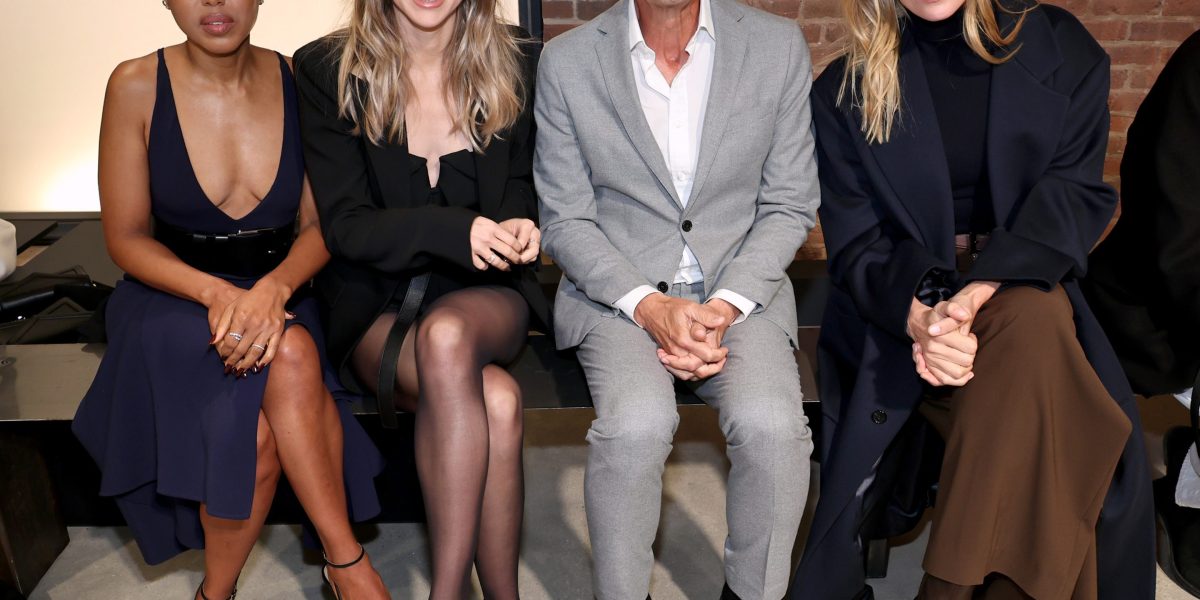
Capri is also planning a major store revamp, renovating 50% of its retail spaces over the next three years. There’s also a new marketing campaign, Hotel Stories, that focuses on “the joy of traveling the world in style.” The first chapter featured the glittering Ibiza landscape and English model and actress Suki Waterhouse. During the call with analysts, Idol leaned in heavily on the celebrity tethers to the Kors brand. Idol noted that the Fall-Winter 2025 runway show included attendees Waterhouse and actresses Uma Thurman, Kerry Washington, and Lea Michelle. 

Idol also promised a “renewed focus” on Jimmy Choo, with marketing focused on “an empowered sense of glamour” and growing the brand’s accessories and casual footwear offerings. 

Idol has said these initiatives could help Capri return to growth in fiscal 2027 and beyond. The plan, as it stands, is to target $4 billion in revenue from Kors and $800 million from Jimmy Choo. Whether Capri can execute the playbook successfully is an open question and the company is asking consumers to give a second chance to a brand they learned to wait for discounts to buy all in a luxury market that was smaller than it was two years ago. 

Siegel noted that retail is “rife” with turnarounds. Many companies that were once high flyers find themselves on the outs. “That’s what makes it fashion,” Siegel said. 


Source link

Continue Reading

Business

Investors cry foul over former NYC Mayor Eric Adams’s crypto launch: ‘Such an obvious rug’

Published

on


On Monday night, hours after announcing his “NYC Token” at a press conference in Times Square, former New York City Mayor Eric Adams launched his cryptocurrency. The purpose of the token was unclear—beyond a vague promise by Adams that it would combat antisemitism—but investors bought it up anyway, briefly sending its market cap to $600 million. Then it crashed. 

It didn’t take long for crypto observers to declare NYC Token had all the hallmarks of a dreaded rugpull—a common scam where someone launches a cryptocurrency then quickly extracts the value, leaving retail investors with worthless tokens. According to Nicolas Vaiman, the founder of the crypto analytics firm Bubblemaps, as well as blockchain transactions reviewed by Fortune, the developer likely netted around $1 million in proceeds after withdrawing profits from the market. 

Though it remains unclear whether Adams received any of the proceeds, the incident recalled similar debacles of celebrity memecoin launches, including Argentina President Javier Milei’s Libra scandal in early 2025 and Haliey ‘Hawk Tuah girl’ Welch’s failed launch in late 2024. “This is such an obvious rug,” said Vaiman. 

A representative for Adams did not respond to a request for comment. 

$NYC Token

When Adams revealed his “NYC Token” project to a gaggle of reporters in Times Square on Monday morning, he was short on specifics. The former mayor declined to clarify who else was involved with the cryptocurrency, and instead pointed to a website without functioning buttons. He added that the project would teach New York’s children about the virtues of blockchain technology and fund initiatives fighting antisemitism. 

Adams has long been a crypto booster. He started his mayoral term by declaring he would receive his first three paychecks in Bitcoin and palling around with Brock Pierce, the former Mighty Ducks star who earned his fortune on blockchain projects including the stablecoin Tether. 

Eddie Cullen, a former NYC mayoral candidate and founder of the crypto company Crescite, claims that he began sharing ideas with Adams’s inner circle for a NYC token around June 2025. A press release from his political action committee Innovate NY describes plans to support a trademarked initiative called NYC Token that would “channel blockchain technology to drive new city revenue,” and Cullen shared a presentation with Fortune detailing the project that he says he also shared with Adams’s team. 

Cullen says that he had no warning about Monday’s announcement and plans to send Adams a cease-and-desist. “I’m going to hold him accountable,” he told Fortune. “I’m more shocked that he would just go out and do this.” 

It remains unclear who besides Adams was involved with the token’s launch, with a new website listing C18 Digital as an associated entity. Delaware corporation records indicate that a limited liability company called C18 Digital was incorporated on Dec. 30, 2025. 

The muddled history of the token’s origination is just the tip of the iceberg. When a cryptocurrency launches, the developers behind the project will typically fund the new market with other assets such as USDC, a U.S. dollar-backed stablecoin, or the popular cryptocurrency Solana in a so-called “liquidity pool” so that users can both buy and sell the new token. 

But the NYC Token did not follow that approach, instead doing a one-sided liquidity pool that only comprised the token itself. When users began to buy it, injecting the liquidity pool with USDC, a wallet associated with the developer withdrew $2.5 million of those USDC. According to Vaiman, this kind of sell-off is more subtle because it doesn’t look like the wallets are selling the token itself. Hayden Davis— the infamous figure behind the Argentina Libra scandal, which saw investors lose $250 million in a memecoin associated with the country’s president—used a similar approach. 

After reports of a rugpull went viral on X on Monday night, a new account associated with the token announced that it had added new funds to the liquidity pool. Still, according to Vaiman, the developers likely were able to net around $1 million in profit. 

“I truly have no explanation on why they did it,” Vaiman said. “Is this as simple as just pure grift? Maybe I’m overoptimistic and I don’t want to believe that’s the case, but maybe this is what it is.” 


Source link

Continue Reading

Business

Fortune Article | Fortune

Published

on


The Trump administration’s criminal investigation of Federal Reserve Chair Jerome Powell appeared on Monday to be emboldening defenders of the U.S. central bank, who pushed back against President Donald Trump’s efforts to exert more control over the Fed.

The backlash reflected the overarching stakes in determining the balance of power within the federal government and the path of the U.S. economy at a time of uncertainty about inflation and a slowing job market. This has created a sense among some Republican lawmakers and leading economists that the Trump administration had overstepped the Fed’s independence by sending subpoenas.

The criminal investigation — a first for a sitting Fed chair — sparked an unusually robust response from Powell and a full-throated defense from three former Fed chairs, a group of top economic officials and even Republican senators tasked with voting on Trump’s eventual pick to replace Powell as Fed chair when his term expires in May.

White House press secretary Karoline Leavitt told reporters that Trump did not direct his Justice Department to investigate Powell, who has proven to be a foil for Trump by insisting on setting the Fed’s benchmark interest rates based on the data instead of the president’s wishes.

“One thing for sure, the president’s made it quite clear, is Jerome Powell is bad at his job,” Leavitt said. “As for whether or not Jerome Powell is a criminal, that’s an answer the Department of Justice is going to have to find out.”

Critics see Trump as trying to control the Fed

The investigation demonstrates the lengths the Trump administration is willing to go to try to assert control over the Fed, an independent agency that the president believes should follow his claims that inflationary pressures have faded enough for drastic rate cuts to occur. Trump has repeatedly used investigations — which might or might not lead to an actual indictment — to attack his political rivals.

The risks go far beyond Washington infighting to whether people can find work or afford their groceries. If the Fed errs in setting rates, inflation could surge or job losses could mount. Trump maintains that an economic boom is occurring and rates should be cut to pump more money into the economy, while Powell has taken a more cautious approach in the wake of Trump’s tariffs.

Several Republican senators have condemned the Department of Justice’s subpoenas of the Fed, which Powell revealed Sunday and characterized as “pretexts” to pressure him to sharply cut interest rates. Powell also said the Justice Department has threatened criminal indictments over his June testimony to Congress about the cost and design elements of a $2.5 billion building renovation that includes the Fed’s headquarters.

“After speaking with Chair Powell this morning, it’s clear the administration’s investigation is nothing more than an attempt at coercion,” said Sen. Lisa Murkowski, R-Alaska, on Monday.

Jeanine Pirro, U.S. attorney for the District of Columbia, said on social media that the Fed “ignored” her office’s outreach to discuss the renovation cost overruns, “necessitating the use of legal process — which is not a threat.”

“The word ‘indictment’ has come out of Mr. Powell’s mouth, no one else’s,” Pirro posted on X, although the subpoenas and the White House’s own statement about determining Powell’s criminality would suggest the risk of an indictment.

bipartisan group of former Fed chairs and top economists on Monday called the Trump administration’s investigation “an unprecedented attempt to use prosecutorial attacks” to undermine the Fed’s independence, stressing that central banks controlled by political leaders tend to produce higher inflation and lower growth.

“I think this is ham-handed, counter-productive, and going to set back the president’s cause,” said Jason Furman, an economist at Harvard and former top adviser to President Barack Obama. The investigation could also unify the Fed’s interest-rate setting committee in support of Powell, and means “the next Fed chair will be under more pressure to prove their independence.”

The subpoenas apply to Powell’s statements before a congressional committee about the renovation of Fed buildings, including its marble-clad headquarters in Washington. They come at an unusual moment when Trump was teasing the likelihood of announcing his nominee this month to succeed Powell as the Fed chair and could possibly be self-defeating for the nomination process.

While Powell’s term as chair ends in four months, he has a separate term as a Fed governor until January 2028, meaning that he could remain on the board. If Powell stays on the board, Trump could be blocked from appointing an outside candidate of his choice to be the chair.

Some Senate Republicans express doubts

Powell quickly found a growing number of defenders among Republicans in the Senate, who will have the choice of whether to confirm Trump’s planned pick for Fed chair.

Sen. Thom Tillis, a North Carolina Republican and member of the Senate Banking panel, said late Sunday that he would oppose any of the Trump administration’s Fed nominees until the investigation is “resolved.”

“If there were any remaining doubt whether advisers within the Trump Administration are actively pushing to end the independence of the Federal Reserve, there should now be none,” Tillis said.

Sen. Dave McCormick, R-Pa., said the Fed may have wasted public dollars with its renovation, but he said, “I do not think Chairman Powell is guilty of criminal activity.”

Senate Majority Leader John Thune offered a brief but stern response Monday about the tariffs as he arrived at the U.S. Capitol, suggesting that the administration needed “serious” evidence of wrongdoing to take such a significant step.

“I haven’t seen the case or whatever the allegations or charges are, but I would say they better, they better be real and they better be serious,” said Thune, a Republican representing South Dakota.

Powell could stay on the Fed board, possibly thwarting Trump

If Powell stays on the board after his term as chair ends, the Trump administration would be deprived of the chance to fill another seat that would give the administration a majority on the seven-member board. That majority could then enact significant reforms at the Fed and even block the appointment of presidents at the Fed’s 12 regional banks.

“They could do a lot of reorganizing and reforms” without having to pass new legislation, said Mark Spindel, chief investment officer at Potomac River Capital and author of a book on Fed independence. “That seat is very valuable.”

Powell has declined at several press conferences to answer questions about his plans to stay or leave the board.

Scott Alvarez, former general counsel at the Fed, says the investigation is intended to intimidate Powell from staying on the board. The probe is occurring now “to say to Chair Powell, ’We’ll use every mechanism that the administration has to make your life miserable unless you leave the Board in May,’” Alvarez said.

Asked on Monday by reporters if Powell planned to remain a Fed governor, Kevin Hassett, director of the White House National Economic Council and a leading candidate to become Fed chair, said he was unaware of Powell’s plans.

“I’ve not talked to Jay about that,” Hassett said.

A weaker Fed could mean a weaker economy

A bipartisan group of former Fed chairs and top economists said in their Monday letter that the administration’s legal actions and the possible loss of Fed independence could hurt the broader economy.

“This is how monetary policy is made in emerging markets with weak institutions, with highly negative consequences for inflation and the functioning of their economies more broadly,” the statement said.

The statement was signed by former Fed chairs Ben Bernanke, Janet Yellen, and Alan Greenspan, as well as former Treasury Secretaries Henry Paulson and Robert Rubin.

Still, Trump’s pressure campaign had been building for some time, with him relentlessly criticizing and belittling Powell.

He even appeared to preview the shocking news of the subpoenas at a Dec. 29 news conference by saying he would bring a lawsuit against Powell over the renovation costs.

“He’s just a very incompetent man,” Trump said. “But we’re going to probably bring a lawsuit against him.”

__

AP writers Lisa Mascaro and Joey Cappelletti contributed to this report.


Source link

Continue Reading

Business

Polygon Labs buys two crypto startups for $250 million as it looks to compete with Stripe

Published

on


The blockchain developer Polygon Labs has closed deals to buy the crypto startups Coinme and Sequence. The total purchase price for the two startups was for more than $250 million, but Polygon Labs declined to disclose how much it paid for each, or whether the deals were for cash, equity, or a mix of both. 

The acquisitions are meant to aid the blockchain network’s stablecoin strategy, said Polygon Labs CEO Marc Boiron and Polygon Foundation founder Sandeep Nailwal in an interview. The Seattle-based Coinme, which specializes in converting cash into crypto and is known for its work with crypto ATMs, has a suite of money transmitter licenses in the U.S. Meanwhile, New York-based Sequence builds out blockchain infrastructure, including crypto wallets.

Polygon Labs’ acquisitions of the two startups puts it in competition with the fintech giant Stripe, said Nailwal. Over the past year, the payments giant bought a stablecoin startup, a crypto wallet firm, and backed its own blockchain focused on payments. The Stripe acquisitions signalled an intention to own every layer of the stablecoin stack, from the servers that process payments to the accounts where users hold crypto. 

“It’s a reverse Stripe in a way,” Nailwal said of Polygon’s stablecoin play. Stripe first acquired its stablecoin startups and then built out its own blockchain. In contrast, Polygon already has a longstanding network of blockchains, and it’s bringing on startups to build on top of it. “Polygon Labs is becoming a full-blown fintech company,” said Nailwal.

Stablecoin shift

The push from Polygon Labs into payments comes amid a wave of hype for stablecoins, or cryptocurrencies that are pegged to real-world assets like the U.S. dollar. Especially after President Donald Trump signed into law in July a new bill regulating the tokens, fintechs, tech companies, and even banks have said they’ll launch their own stablecoins, which proponents say are an upgrade over decades-old financial infrastructure.

Polygon Labs, whose blockchain network sits on top of Ethereum, is aiming to ride this wave of enthusiasm. Best known for its prominence during the NFT boom of 2021 and 2022, Polygon has made significant investments in payments over the past year, even poaching Stripe’s head of crypto, John Egan. 

The deal for Coinme, its latest payments play, was for between $100 and $125 million, reported CoinDesk, which implies that the price for  Sequence was somewhere between $125 and $150 million. But Boiron, the CEO of Polygon Labs, pushed back on the reporting. “Almost everything that CoinDesk wrote in that article is wrong,” he said.

He also said he wasn’t worried about Coinme’s legal struggles. In 2025, regulators in California and Washington targeted the crypto company for violations that included a failure to stop customers from taking out more than $1,000 in a day from the firm’s affiliated crypto ATMs. Washington regulators agreed to stay a cease-and-desist order against Coinme a month after going after the startup. 

“I think they go far beyond what is required,” said Boiron, in reference to Coinme’s compliance regime. “On the back end, the way that they handle being able to limit risk to users, I think is state of the art.”


Source link

Continue Reading

Trending

Copyright © Miami Select.