Connect with us

Business

Down Arrow Button Icon
Published

on


Business leaders awoke on Saturday to a new reality in the aftermath of the successful U.S. military capture of President Nicolás Maduro and his wife Cilia Flores, who were dragged from their bedroom in the early morning hours. The couple was asleep at their home inside the heavily guarded Fort Tiuna military complex until they were seized by a military operation composed of U.S. Marines, the U.S. Airforce and the U.S. Army’s elite Delta Force, alongside FBI agents, reinforced by 150 aircraft in a strike lasting less than 30 minutes, with no casualties.  

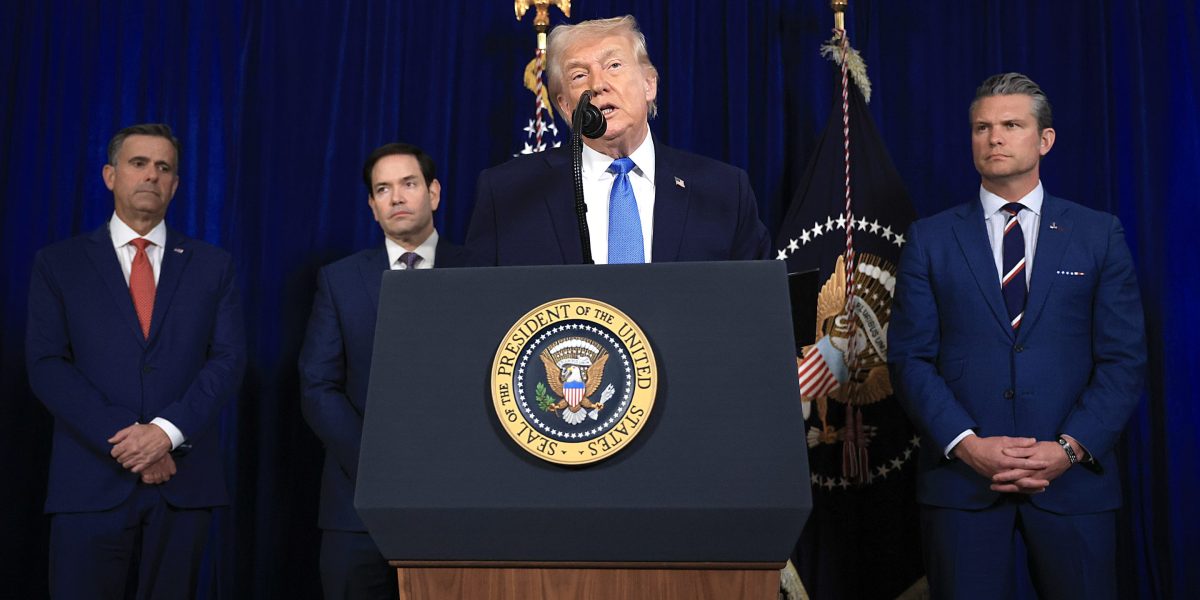
As reported laughter and joking in the hallway died down, President Trump declared with some bravado, at a press conference hailing the smooth military operation, “we’re going to be running Venezuela.” He insisted this would come at no cost to Americans, as reinstated oil reserves will pay for a U.S. occupation. But however CEOs feel about the removal of the brutal, corrupt Maduro, corporate leaders who are doing business in Latin America would be advised that a similar kind of public giddiness may not be their own best response.  

I usually encourage CEOs to speak out, but here they should avoid taking sides on such a matter, other than to show the world that Trump’s invasion was not driven solely by U.S. commercial interests. The diplomatic and domestic agenda, along with the legality of such actions, should be debated, but U.S. business leaders must clarify that they were not co-conspirators in such intrigue and governmental overthrow, otherwise trust in their motives globally will be diminished.

There is little dispute that Maduro was an evil, corrupt autocrat who undermined Venezuelan elections, with his brutality leading to the flight of 8 million refugees and impoverishing his resource-rich land. However, there is little incentive for U.S. corporate leaders to gloat and be used as foils. The Bauhaus architect Ludwig Mies van der Rohe’s mantra of “less is more” may be appropriate at this stage.

Here are five key themes that every CEO should consider:

  1. Consider an immediate temporary moratorium on executive travel between the U.S. and Latin America and take care in lower Manhattan
  • Revival or “ugly American” image and reprisals — This was actually the title of a famous 1958 novel by William Lederer and Eugene Burdick that critiqued U.S. foreign policy for its arrogance and cultural ignorance
  • The term “banana republic” was historically the result of complicity in undermining democratically elected Latin American governments as well as dictators, often with CIA involvement, for instance in Honduras, Guatemala ,Brazil, Chile, and Panama  1989 as well as support for coups in the Dominican Republic and Ecuador
  • Risk of being targeted outside of the U.S.
  • The federal Southern District of New York, where Maduro will be tried, is in a congested business/ residential zone with many federal and financial offices and the trial will take many months
  1. Hold off on public statements of support or condemnations until the justice process in the U.S. unfolds, Venezuelan streets and government processes are stable, succession is clear, and public statements emerge from Latin American nations.
  • The Southern District has a noted history in prosecuting foreign leaders such as Juan Orlando Hernández, the former President of Honduras, a drug lord later pardoned by President Trump despite being convicted and sentenced to 45 years in prison, and General Hugo Armando Carvajal Barrios, the former intelligence head of Venezuela and also a drug trafficker, as well as Taliban and Iranian leaders
  • The SDNY benefits from the superb, measured leadership under U.S. Attorney Jay Clayton, the renowned, trust former SEC chairman
  • This military operation may be interpreted by many threatening adversaries around the world as a highly effective show of U.S. military might and it could be a major disruption and deterrent to narco-terrorism
  • At the same time, many fear this U.S. aggression may be seen as a violation of international law for regional domination, giving a blueprint for Russia to eliminate Ukraine’s leadership and China to eliminate Taiwan’s leadership — as they both see those lands as governed by rogue leaders, much how Trump views Venezuela
  • Questions remain over Article 2 Constitutional authorization and precedent as used against Iraq, Panama (Noriega), and Al Qaeda, with both congratulations and condemnation for overreaching with illegal military intervention without U.S. Congressional clearance or consultation
  • This has only midly broken down along party lines with Democratic critics including Betty McCollum, the ranking Democrat on the U.S; House Appropriations Subcommittee on Defenseand Senator Ruben Gallego, and GOP defenders including Senators Tom Cotton and Rick Scott
  • Other voices such as former Trump supporters Marjorie Taylor Greene and Thomas Massie, along with Senators Rand Paul and even Senator Mike Lee, have been critical of Trump’s aggression against Venezuela, pointing out that a far great flow of drugs into the U.S. comes from Mexico and demanding Congressional approval for military efforts
  1. Prepare for prospective Latin American backlash against U.S. enterprises with major market engagement trade relations
  • Risks of Latin American, European and African countries, and then UN, rallying around Nicolás Maduro and his regime
  • Colombia’s President Gustavo Petro, a left-leaning leader who has who has often clashed with Trump and has also been threatened by the U.S. president, said “The Colombian government rejects the aggression against the sovereignty of Venezuela and Latin America,” while calling for an immediate meeting of the United Nations Security Council, of which Colombia is a member
  • Brazil’s Luiz Inacio Lula da Silva made similar to Petro, stating: “The bombings on Venezuela’s territory and the capture of its president cross an unacceptable line”
  • Chile’s outgoing President Gabriel Boric condemned the attack but President-elect Jose Antonio Kast said that the Maduro arrests was great news, and other Latin Trump allies such as Argentina’s President Javier Milei and Ecuador’s Daniel Noboa celebrated the removal of Maduro
  • The street scenes are confusing, with protests both in favor and against the strikes in Venezuela have been scheduled in Buenos Aires and other cities across the region.
  • European leaders have been more muted as there is little respect in the region for Maduro, who was widely scene as an illegitimate leader who stole an election from opposition leader Edmundo Gonzalez
  • While Maduro has few friends in Latin America, he has good ties with Russia and China and they may exploit this U.S. intervention to gain new footholds in Latin America
  • There is potential short-term risk to imports of copper, lithium, iron ore and other raw material while Latin America offers several important agricultural channels such as coffee (one-third from Brazil alone), bananas, grapes, oranges, and liquor such as rum and tequila
  • Risk of exports of U.S. machinery and vehicles to Latin America, along with soybeans and corn
  1. U.S. petroleum companies and oil servicing companies should make a statement that with oil prices at historic low levels, this action was not to advance their interests in expanding supply
  • While Venezuela posseses roughly 303 billion barrels of proven crude oil reserves, the largest total of any country in the world, this is considered “heavy oil,” which is thick, viscous and hard to move, requiring far more processing before it can be refined
  • Also, Venezuela’s oil extraction equipment is almost as inefficient as Russia’s, with little tech investment, costs almost twice as much as many other OPEC members to extact
  • In 2007, under then President Hugo Chavez, Maduro’s predecessor, massive government expropriations included the nationalization of heavy oil projects, forcing U.S. companies such as ExxonMobil, ConocoPhillips, and Chevron to hang on as minority partners or lose their operations, while international tribunals have award these US firms billions of dollars
  • Chevron is the sole major U.S. firm operating joint ventures with state-owned PDVSA to export crude to the U.S- 150k barrels a day — down from 2 million barrels a day before sanctions
  • With WTI oil prices at $57 per barrel, that’s almost half of what it was last year and a just a fraction of the $380 per barrel worst-case forecast by JP Morgan after the Russian invasion of Ukraine, so there is little incentive for this invasion to be linked to oil supply needs; in fact, with the Saudis having increased their production again by a third, there’s an oil glut on the market
  1. Clarification of boundaries between U.S. government intelligence and defense/war agencies and corporate activities
  • This haunted United Fruit (Chiquita), Standard Fruit (Dole), ITT, Gulf & Western, W.R. Grace, and Sullivan & Cromwell, and other firms suffered a taint for decades due to extensive collaboration with democratic government overthrows and insurrection efforts

The opinions expressed in Fortune.com commentary pieces are solely the views of their authors and do not necessarily reflect the opinions and beliefs of Fortune.

Join us at the Fortune Workplace Innovation Summit May 19–20, 2026, in Atlanta. The next era of workplace innovation is here—and the old playbook is being rewritten. At this exclusive, high-energy event, the world’s most innovative leaders will convene to explore how AI, humanity, and strategy converge to redefine, again, the future of work. Register now.


Source link

Continue Reading

Business

Down Arrow Button Icon

Published

on


Lawmakers sounded the alarm on the Justice Department’s criminal inquiry into Federal Reserve Chairman Jerome Powell, putting at risk President Donald Trump’s efforts to name a new central bank leader.

On Sunday, Powell revealed that the DOJ served the Fed with grand jury subpoenas, threatening a criminal indictment over his testimony before the Senate last June related to renovations on the headquarters, which has seen cost overruns.

He called the allegations a pretext and said the investigation was really aimed at the Fed’s ability to set interest rates without political pressure. Trump has attacked Powell for much of the last year over his reluctance to cut rates, though the president said he didn’t know about the DOJ probe.

But Republican Sen. Them Tillis agreed with Powell’s assessment and instead pointed the finger at the DOJ.

“If there were any remaining doubt whether advisers within the Trump Administration are actively pushing to end the independence of the Federal Reserve, there should now be none,” he wrote in a post on X. “It is now the independence and credibility of the Department of Justice that are in question.”

Tillis sits on the Senate Banking Committee, which oversees the Fed and would vote on anyone Trump tries to put on the central bank.

Powell’s term as chair expires in May, and Trump has said he already has someone in mind to replace him who will lower rates further. But the DOJ investigation into Powell could blow up that process.

“I will oppose the confirmation of any nominee for the Fed—including the upcoming Fed Chair vacancy—until this legal matter is fully resolved,” Tillis said.

While Powell’s term as chair expires in May, his term as a member of the Fed board of governors expires in 2028. When prior Fed chairs have stepped down, they typically have resigned from the board as well. Powell could choose to stay to preserve the Fed’s independence.

Sen. Elizabeth Warren, a Democrat who also sits on the Senate Banking Committee, accused Trump of trying to force Powell off the Fed board “to complete his corrupt takeover of our central bank.”

“He is abusing the law like a wannabe dictator so the Fed serves him and his billionaire friends,” she added. “The Senate must not move ANY Trump Fed nominee.”


Source link

Continue Reading

Business

Down Arrow Button Icon

Published

on


U.S. equity futures fell sharply Sunday night after Federal Reserve Chair Jerome Powell confirmed that he is under investigation related to testimony he gave last June concerning the renovation of Federal Reserve buildings. 

The New York Times report breaking news of the investigation and Powell’s subsequent disclosure rattled markets, reviving fears that years of President Donald Trump pressuring the Federal Reserve could now be realized into a direct assault on its independence.

Futures tied to the Nasdaq 100 led the decline, falling about 0.8%, as interest-rate-sensitive technology stocks bore the brunt of the selloff. S&P 500 futures were down roughly 0.5%, while Dow Jones Industrial Average futures fell about 0.4%, according to late-evening pricing.

Investors sought protection in the traditional safe-haven assets. Gold futures rose 1.7% to around $4,578 an ounce, while silver jumped more than 4%, reflecting renewed demand for protection against political and monetary instability. The U.S. dollar weakened modestly against several major currencies, including the Swiss franc and Japanese yen.

After years of largely staying silent while Trump repeatedly mocked and threatened him, Powell appeared to have reached a breaking point, issuing a rare and pointed statement. 

He wrote that while “No one—certainly not the chair of the Federal Reserve—is above the law,” the attack should be seen in the “the broader context of the administration’s threats and ongoing pressure.” 

“This new threat is not about my testimony last June or about the renovation of the Federal Reserve buildings…Those are pretexts. The threat of criminal charges is a consequence of the Federal Reserve setting interest rates based on our best assessment of what will serve the public, rather than following the preferences of the President.”

Economists warn that if the executive branch successfully co-opts the Fed, it could create a “self-fulfilling prophecy” of higher long-term inflation.

As Oxford Economics recently noted, any “cracks in the Fed’s independence” could spread rapidly through markets and ultimately raise borrowing costs for the businesses the administration seeks to protect with low interest rates. 

In a note published last July, when Trump publicly threatened to fire Powell, Deutsche Bank warned that such a move could spark severe market disruption.

“Both the currency and the bond market can collapse,” the bank wrote, citing heightened risks of inflation and financial instability. “The empirical and academic evidence on the impact of a loss of central-bank independence is fairly clear.”

Wall Street executives have echoed those concerns. Brian Moynihan, chief executive of Bank of America, said recently the erosion of Fed independence would carry serious consequences.

“The market will punish people if we don’t have an independent Fed,” Moynihan said.


Source link

Continue Reading

Business

Magnificent 7’s stock market dominance shows signs of cracking

Published

on


To beat the market in recent years, many investors applied a simple strategy: Load up on the biggest US technology stocks. 

It paid handsomely for a long time. But last year, it didn’t. For the first time since 2022, when the Federal Reserve started raising interest rates, the majority of the Magnificent 7 tech giants performed worse than the S&P 500 Index. While the Bloomberg Magnificent 7 Index rose 25% in 2025, compared with 16% for the S&P 500, that was only because of the enormous gains by Alphabet Inc. and Nvidia Corp.

Many Wall Street pros see that dynamic continuing in 2026, as profit growth slows and questions about payoffs from heavy artificial intelligence spending rise. So far they’ve been right, with the Magnificent 7 index up just 0.5% and the S&P 500 climbing 1.8% to start the year. Suddenly stock picking within the group is crucial. 

“This isn’t a one-size-fits-all market,” said Jack Janasiewicz, lead portfolio strategist at Natixis Investment Managers Solutions, which has $1.4 trillion in assets. “If you’re just buying the group, the losers could offset the winners.”

The three-year bull market has been led by the tech giants, with Nvidia, Alphabet, Microsoft Corp. and Apple Inc. alone accounting for more than a third of the S&P 500’s gains since the run began in October 2022. But enthusiasm for them is cooling as interest in the rest of the S&P 500 rises.

With Big Tech’s earnings growth slowing, investors are no longer content with promises of AI riches — they want to start seeing a return. Profits for the Magnificent 7 are expected to climb about 18% in 2026, the slowest pace since 2022 and not much better than the 13% rise projected for the other 493 companies in the S&P 500, according to data compiled by Bloomberg Intelligence.

“We’re already seeing a broadening of earnings growth and we think that’s going to continue,” said David Lefkowitz, head of US equities at UBS Global Wealth Management. “Tech is not the only game in town.”

One source of optimism is the group’s relatively subdued valuations. The Magnificent 7 index is priced at 29 times profits projected over the next 12 months, well below the 40s multiples earlier in the decade. The S&P 500 is trading at 22 times expected earnings, and the Nasdaq 100 Index is at 25 times. 

Here’s a look at expectations for the year ahead.

Nvidia

The dominant AI chipmaker is under pressure from rising competition and concerns about the sustainability of spending by its biggest customers. The stock is up 1,165% since the end of 2022, but it has lost 11% since its Oct. 29 record.

Rival Advanced Micro Devices Inc. has won data center orders from OpenAI and Oracle Corp., and Nvidia customers like Alphabet are increasingly deploying their own custom made processors. Still, its sales continue to race ahead as demand for chips outstrips supply. 

Wall Street is bullish, with 76 of the 82 analysts covering the chipmaker holding buy ratings. The average analyst price target implies a roughly 39% gain over the next 12 months, best among the group, according to data compiled by Bloomberg.

Microsoft

For Microsoft, 2025 was the second consecutive year it underperformed the S&P 500. One of the biggest AI spenders, it’s expected to invest nearly $100 billion in capital expenditures during its current fiscal year, which ends in June. That figure is projected to rise to $116 billion the following year, according to the average of analyst estimates.

The data center buildout is fueling a resurgence in revenue growth in Microsoft’s cloud-computing business, but the company hasn’t had as much success in getting customers to pay for the AI services infused into its software products. Investors want to start seeing returns on those investments, according to Brian Mulberry, client portfolio manager at Zacks Investment Management.

“What you’re seeing is some people looking for a little bit more quality management in terms of that cash flow management and a better idea on what profitability really looks like when it comes to AI,” Mulberry said.

Apple

Apple has been far less aggressive with its AI ambitions than the rest of the Magnificent 7. The stock was punished for it last year, falling almost 20% through the start of August. 

But then it caught on as an “anti-AI” play, soaring 34% through the end of the year as investors rewarded its lack of AI spending risk. At the same time, strong iPhone sales reassured investors that the company’s most important product remains in high demand. 

Accelerating growth will be the key for Apple shares this year. Its momentum has slowed recently, the stock closed higher on Friday, narrowly avoiding matching its longest losing streak since 1991. However, revenue is expected to expand 9% in fiscal 2026, which ends in September, the fastest pace since 2021. With the stock valued at 31 times estimated earnings, the second highest in the Magnificent 7 after Tesla, it will need the push to keep the rally going.

Alphabet

A year ago, OpenAI was seen as leading the AI race and investors feared Alphabet would get left behind. Today, Google’s parent is a consensus favorite, with dominant positions across the AI landscape. 

Alphabet’s latest Gemini AI model received rave reviews, easing concerns about OpenAI. And its tensor processing unit chips are considered a potential significant driver of future revenue growth, which could eat into Nvidia’s commanding share of the AI semiconductor market. 

The stock rose more than 65% last year, the best performance in the Magnificent 7. But how much more can it run? The company is approaching $4 trillion in market value, and the shares trade at around 28 times estimated earnings, well above their five-year average of 20. The average analyst price target projects just a 3.9% gain this year. 

Amazon.com

The e-commerce and cloud-computing giant was the weakest Magnificent 7 stock in 2025, its seventh straight year in that position. But Amazon has charged out of the gate in early 2026 and is leading the pack.

Much of the optimism surrounding the company is based on Amazon Web Services, which posted its fastest growth in years in the company’s most recent results. Concerns that AWS was falling behind its rivals has pressured the stock, as has the company’s aggressive AI spending, which includes efforts to improve efficiency at its warehouses, in part by using robotics. Investors expect the efficiency push to start paying off before long, which could make this the year the stock goes from laggard to leader. 

“Automation in warehouses and more efficient shipping will be huge,” said Clayton Allison, portfolio manager at Prime Capital Financial, which owns Amazon shares. “It hasn’t gotten the love yet, but it reminds me of Alphabet last year, which was sort of left behind amid all the concerns about competition from OpenAI, then really took off.”

Meta Platforms

Perhaps no stock in the group shows how investors have turned skeptical about lavish AI spending more than Meta. Chief Executive Officer Mark Zuckerberg has pushed expensive acquisitions and talent hires in pursuit of his AI ambitions, including a $14 billion investment in Scale AI in which Meta also hired the startup’s CEO Alexandr Wang to be its chief AI officer.

That strategy was fine with shareholders — until it wasn’t. The stock tumbled in late October after Meta raised its 2025 capital expenditures forecast to $72 billion and projected “notably larger”spending in 2026. When the shares hit a record in August they were up 35% for the year, but they’ve since dropped 17%. Demonstrating how that spending is boosting profits will be critical for Meta in 2026.

Tesla

Tesla’s shares were the worst performers in the Magnificent 7 through the first half of 2025, but then soared more than 40% in the second half as Chief Executive Officer Elon Musk shifted focus from slumping electric vehicle sales to self-driving cars and robotics. The rally has Tesla’s valuation at almost 200 times estimated profits, making it the second most expensive stock in the S&P 500 behind takeover target Warner Bros. Discover Inc.

After two years of stagnant revenue, Tesla is expected to start growing again in 2026. Revenue is projected to rise 12% this year and 18% next year, following an estimated 3% contraction in 2025, according to data compiled by Bloomberg.

Still, Wall Street is pessimistic about Tesla shares this year. The average analyst price target projects a 9.1% decline over the next 12 months, data compiled by Bloomberg show. 


Source link

Continue Reading

Trending

Copyright © Miami Select.