Connect with us

Business

Down Arrow Button Icon

Published

on


Robinhood is known for propogating memestock mania, making its founders billionaires, and changing how Americans invest. But a model of corporate governance and succession planning? Well, add it to the list. The company’s carefully planned CFO transition that underscores how far the company has come—from a scrappy startup navigating hypergrowth and market turbulence to an S&P 500 firm focused on durable, disciplined execution. 

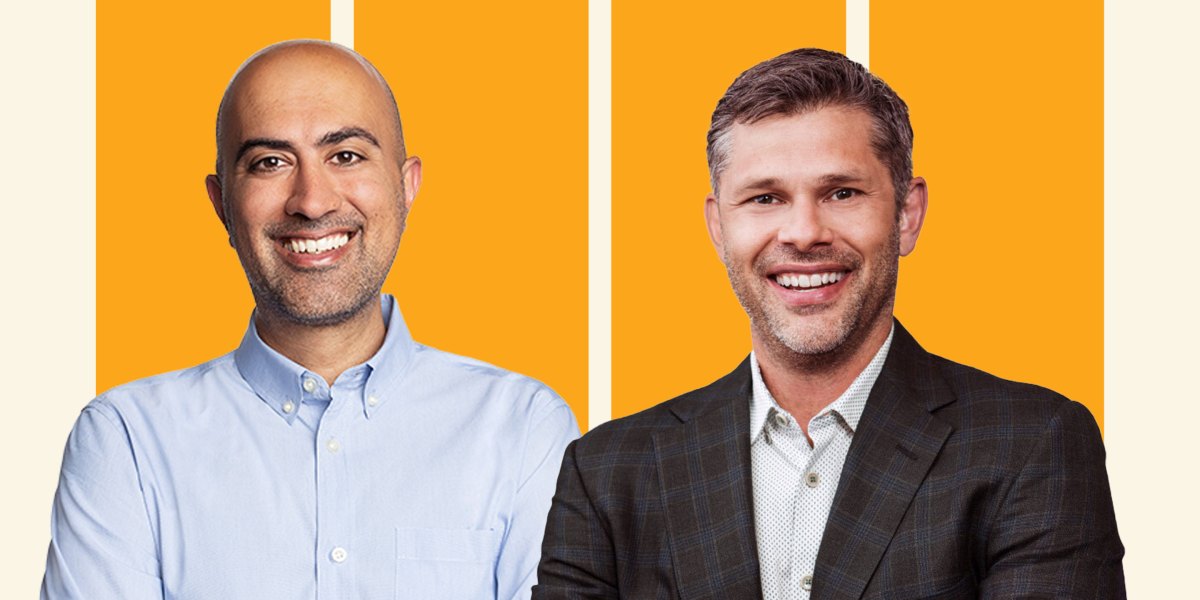
The Menlo Park, Calif.-based fintech and trading platform, which offers traditional asset and cryptocurrency trading, announced in November that CFO Jason Warnick is retiring. He will move into an advisory role in the first quarter of 2026 and remain with the company until Sept. 1, 2026, as Shiv Verma, SVP of finance and strategy and treasurer, steps into the top finance job.​ Fortune recently sat down with the duo at Robinhood’s Washington, D.C., office to delve into how they orchestrated the handoff—and what they learned along the way. 

Today Robinhood has a fully built-out finance organization and a place in the S&P 500. In 2024, the company earned $2.95 billion in total net revenues and annual net income of $1.41 billion. This marked Robinhood’s first year of GAAP profitability year since going public in 2021. Robinhood is growing fast—its revenue is already approaching half the size of mid-tier financial firms like T. Rowe Price and Broadridge.

But when Warnick joined the company in late 2018 after two decades at Amazon, the finance function was barely a dozen people. Verma had been hired as treasurer weeks earlier, plus there were a handful of accountants, and one finance contractor.

In talking with Warnick and Verma, both based on the West Coast, they conveyed a startup-like vibe at the company: informal, not at all stuffy, and open to ideas and debate, and at times, laughter. “I actually told him it’s not too late if he wants to change his mind,” Verma quipped of Warnick’s pending retirement. “I’ll miss him as friend.”

Verma considers himself as super analytical. “I’m a math guy; a former bond trader,” he said. But what he learned from Warnick is the ability to delegate. Otherwise, you can “start at six in the morning and go till midnight,” he said. “And I have a three month old at home.”

“His wife is certainly upset with me, right?” Warnick quipped. “She loves Jason; she’s not such a fan of the timing,” Verma parried back. “Although, she is genuinely happy for both of us,” he added.

The camaraderie between Warnick and Verma began as members of a team, led by Robinhood CEO Vladimir Tenev, that navigated the company through some rough waters. In March 2020, Robinhood suffered a major app outage on one of the biggest up days in market history, leaving users unable to trade as the Dow surged, Warnick recalled. 

“We weren’t engineers, and you can feel kind of helpless,” he said. But he and Verma quickly concluded that their role was not to fix code but to triage stakeholders. That meant calling bankers, investors, and board members in real time and being as transparent as possible, Warnick said. That groundwork, he believes, helped Robinhood raise billions of dollars in early 2021, when meme-stock volatility and surging volumes again stressed the platform. The capital raise was aimed at strengthening the company’s financial position and supporting its rapid growth at the time, Warnick said.

Building a successor by design

This transition was years in the making, something you might expect at a 100 year old Fortune 500 firm but not necessarily a nimble disruptor. “We’ve been joined at the hip for seven years,” Verma quips. But over those seven years, Warnick steadily expanded Verma’s remit—from treasury to finance, then investor relations, corporate development, benchmarking and customer strategy, and partnerships. Along the way, Verma hired a dedicated treasurer and a VP of finance, often at Warnick’s urging, to allow him to step back and concentrate on higher-leverage decisions.​

That deliberate scope expansion mirrored Warnick’s own progression at Amazon, where his responsibilities grew, eventually culminating in oversight of a 500-person finance organization and a role as chief of staff to the CFO. At Robinhood, the same model meant that by the time the transition was announced, Verma was already managing more than half the finance organization and acting as a central node across the business. He has attended every board meeting since Robinhood went public, co-presented earnings, and regularly joined audit and risk committee sessions.

Verma describes the last seven years as a compressed Silicon Valley lifecycle: early buildout, pandemic-era hypergrowth, the GameStop frenzy and IPO, followed by a sharp selloff. In 2022, Robinhood cut roughly 30% of its workforce and shifted to a general manager model. “We’ve come a long way,” Verma said, “to a very skilled public company.”

The most important skill of a CFO

Today CFOs are expected to own the numbers, but also act as core strategist, digital leader, and enterprise change agent. Earlier in his career, Warnick said he was once asked by a mentor, What do you think is the most important aspect of a CFO’s job? He answered, capital allocation. 

“That’s important; that’s what drives future returns for the company,” he recalls his mentor telling him. “But you don’t get to allocate the capital yourself.” The most important skill a CFO has, Warnick said, is influencing the ultimate decision-maker—the CEO. “So our job is to bring data and finance into the discussion and influence the outcome,” he said. “And I think that that is one area where Shiv just shines.”

Verma spends a lot of time with Tenev, the board, and cross-functional leaders in engineering, legal, compliance, and risk, focusing on the decisions that matter most for Robinhood’s long-term trajectory, he said.

For the finance leaders, what looks like succession planning was arguably really the foundation of a solid mentorship. “He’s still my first call when I’m struggling with something,” Verma said of Warnick. 

As for Warnick’s retirement plans, they are still being fleshed out, but will include travel with his wife, as they are now empty nesters. One thing’s for sure: if Verma wants some advice, he’s only a phone call away.


Source link

Continue Reading

Business

Gen Z might avoid the résumé as most firms do skills-based recruitment

Published

on


Trying to summarize every job you’ve ever had and then distill that onto a two-page résumé has been the bane of job hunter’s existence since around the 1950s. Fortunately, for Gen Z, it’s something they might never have to bore themselves with. 

That’s because research shows many companies are moving away from relying on the traditional job application requirement.

In fact, almost three-quarters of companies now use skills-based assessments throughout their hiring process, according to TestGorilla’s The State of Skills-Based Hiring 2023 report which surveyed 3,000 employees and employers around the world. This is up from 56% in the previous year.

Although many of those employers are still also using CVs, it might not be long until they’re a thing of the past because most bosses are already favoring the new hiring practice and reporting big results. 

Skills-based hiring is more effective, the data shows

The employers surveyed who use skills-based hiring—which includes role-specific skills assessments, instead of simply scanning someone’s listed career experience—reported massive gains.

According to TestGorilla’s research, it reduced the number of mis-hires by 88%, total time spent searching for the perfect candidate by 82%, and hiring-related costs by 74%.

Overall, 92% of the employers surveyed reported that skills-based hiring is more effective at identifying talented candidates than a traditional CV. Meanwhile, over 80% said it’s more predictive of on-job success and leads to new hires staying longer in their roles.

By testing candidates on how they would handle the actual day-to-day responsibilities of a role, employers are more likely to hire the best person for the job instead of being drawn by big names and snazzy titles.

As Khyati Sundaram, CEO of the skill-based recruitment platform Applied, previously told Fortune, just because someone has listed on their résumé that they’ve worked with the SEO team at somewhere alluring like Google, it doesn’t actually mean they know the ins and outs of search engine optimization to the extent that’s required for a role. 

“We are trying to make sure the test or the question is as relevant to the job as possible,” Sundaram said, adding, “That’s the reason that candidates love it too.”

Intuitively people may assume that taking multiple skills-based tests would feel like more of a nuisance for job seekers than simply blasting their CV at hundreds of roles—but the data shows otherwise. 

Most of the workers that TestGorilla surveyed think that skills-based hiring levels the playing field and improves their chances of bagging their dream jobs. 

This is especially true for candidates who are often overlooked. In fact, around three-quarters of the Black, Asian, and Arab employees that TestGorilla surveyed have already reportedly gained access to new employment opportunities through skills-based assessments.

Move to scrap CVs comes as firms drop degree requirements

The uptick in skills-based hiring comes as degrees have slidden down the priority list for employers.

Google, Microsoft, IBM, and Apple previously eliminated their long-held degree requirements to remove barriers to entry and recruit more diverse talent. Meanwhile, recruiters globally are five times more likely to search for new hires by skills over higher education.

A former Cisco top executive in the U.K. also said young aspiring workers would be better off skipping out on college to join the world of work straight away.

“In university, you come out with whatever degree you may get, but it’s almost certainly saddled with debt,” David Meads, former Cisco’s U.K. and Ireland CEO, told Fortune. “Is that better than on-the-job experience where you’re rotating through different parts of our organization, and living the reality and not just the theory?”

“For me, attitude and aptitude are more important than whatever letters you have after your name, or whatever qualifications you’ve got on a sheet,” he added.

But research has shown that skeptical Gen Z remain unconvinced: They’re shunning apprenticeship schemes in favor of going down the traditional route of college. So perhaps they will still go through the bore of writing a résumé—even if, like a college degree, it’s no longer needed.

A version of this story originally published on Fortune.com on November 23, 2023.

More on Gen Z careers:

Join us at the Fortune Workplace Innovation Summit May 19–20, 2026, in Atlanta. The next era of workplace innovation is here—and the old playbook is being rewritten. At this exclusive, high-energy event, the world’s most innovative leaders will convene to explore how AI, humanity, and strategy converge to redefine, again, the future of work. Register now.


Source link

Continue Reading

Business

Every year, a billionaire CEO doles out $1,000 checks to local college grads—with a catch: They have to give half the money to charity

Published

on


One of the best gifts you can give a recent college grad is cold, hard cash. It can serve as a launching pad for establishing themselves as an adult, equipping them to get their first apartment, start paying off those sky-high student loans, and maybe enough to get them some well-earned drinks at their favorite local watering hole. 

And one billionaire makes that wish come true each year: Rob Hale, founder and CEO of telecommunications company Granite Communications, annually doles out $1,000 checks to local recent college graduates in Massachusetts. He’s worth about $6 billion and helms the $1.8 billion company that provides voice, data, internet, mobile, and video services for businesses and government clients. 

But these college graduates don’t just get to take the money and run. They have to pledge they’ll give at least half of it away to charity. 

“The turmoil in our country has increased the need for caring, sharing and compassion,” Hale said during a commencement address at Bridgewater State University in May. “Our community needs—needs—your help, your leadership and your empathy more than ever.”

Hale started this annual tradition in 2021, so he’s been able to see how some of his beneficiaries used their gift. His ritual began at Quincy College in 2021, and he’s also donated to students at Roxbury Community College, UMass Boston, and UMass Dartmouth. 

“These are students who are busting their butts to earn a diploma, and I am so proud to be able to support them,” Hale told Leaders Magazine in October.

One beneficiary, now 24, donated half of her cash to Northeast Arc, an organization helping individuals with disabilities.

“There were some pretty significant federal funding cuts right around the time of my graduation,” Gene Symonds told local news publication WBUR. “A lot of the people they serve, they rely on that federal funding. I really wanted to contribute to that.” Others gave back to local schools and youth organizations.

And while students can spend their remaining $500 how they choose, many use it toward paying off student loans. The cost of higher education is rapidly increasing and the average student loan balance amounts to $28,775 (public school) and $42,449 (private school), according to the Education Data Initiative. So being able to make a dent in those can be beneficial for recent grads. 

Why Hale is instilling a philanthropic habit

Hale’s motive isn’t just to get these students to donate to charities once and forget about it. Instead, he told Leaders Magazine he hopes to pass on the spirit of philanthropy.

“When you look at the backdrop of who these kids are, many of them have most likely not had the chance to do this before,” he said. 

And there’s evidence that starting to donate to charity early in one’s career can be habit-forming. A 2013 study by Jonathan Meer at Texas A&M University shows how people who give small, frequent gifts when they’re young make them more likely to keep giving—and giving more—later in life, regardless of gift size.

Connie Collingsworth, former COO and chief legal officer of the Gates Foundation, also said during Fortune’s Most Powerful Women conference in Washington, D.C. this fall role-modeling is important in instilling habits of charitable giving and financial planning.

“[If] we show [our daughters], and we talk to them about these issues, I think they will have a sea change,” Collingsworth said. “They want to listen. They want to be like the women that have independence and the power that comes from knowing what your plans are. The key to all of this really is intentional.”

Storied billionaire philanthropist MacKenzie Scott—who donated billions to charity this year alone—also said she was inspired by her college years to donate the vast majority of her wealth. Her college roommate loaned her $1,000 so she wouldn’t have to drop out, which she says inspired her pattern of philanthropic giving.

“It is these ripple effects that make imagining the power of any of our own acts of kindness impossible,” Scott wrote of giving in an Oct. 15 essay published to her Yield Giving site. “Whose generosity did I think of every time I made every one of the thousands of gifts I’ve been able to give?

“It was the local dentist who offered me free dental work when he saw me securing a broken tooth with denture glue in college. It was the college roommate who found me crying, and acted on her urge to loan me a thousand dollars to keep me from having to drop out in my sophomore year.”


Source link

Continue Reading

Business

The weakest labor market since 2011 has BofA asking, ‘Dude, where’s my job?’

Published

on


The weakest job market since 2011 is increasingly being framed not as a glitch, but as the new normal—one where growth roars and jobs barely move, leaving a generation asking, “Dude, where’s my job?”

Bank of America Research’s “Situation Room” note warned in mid-December that markets are priced for a robust 2026 even as hiring stalls and unemployment rises and recalled a now 25-year-old cult classic stoner comedy starring Ashton Kutcher and Seann William Scott to make its point.

The entry-level worker would be forgiven, in other words, for feeling about the job search the way Kutcher and Scott feel about their stolen wheels. (The screenwriter feels similarly about the show-business labor market, telling The Hollywood Reporter several weeks ago that he’d quit to become a therapist.)

​”The job market has been weak this year,” wrote BofA’s Yuri Seliger and Sohyun Marie Lee, commenting on the double payrolls report showing weak job growth in October and November. “A lack of recovery in the jobs market and a slower U.S. economy are key risks to watch for 2026.”

Seliger and Lee flagged what it called the weakest U.S. job market since at least 2011 (with the notable exception of the mass layoff wave from Covid), with monthly payrolls averaging just 17,000 over the past six months—by far the slowest pace of job creation since the global financial crisis. Private payrolls are only modestly stronger at 44,000 on a six‑month average basis, still at their weakest level in well over a decade, while broader U‑6 underemployment has climbed to 8.7% and job openings per unemployed worker have slumped to 1.0, both the softest since 2017.

​Yet the Situation Room team also noted that credit spreads remain near cyclical tights and stocks near record highs, signaling that investors are still betting on a strong expansion in 2026. “A strong U.S. economy is likely not compatible with the absence of job growth,” they caution, warning that the lack of a labor‑market recovery is now one of the central risks to that bullish market narrative. The surprisingly strong GDP number​ for the third quarter, revealed after the BofA note was written, added new fuel to the fires of this argument.

K‑shaped growth with missing jobs

The headline growth number was eye‑catching: in the third quarter, U.S. GDP grew at a 4.3% annual rate, powered by a consumer spending surge and a $166 billion jump in corporate profits. But real disposable income was flat—literally 0% growth—meaning households did not gain purchasing power and instead relied on savings, credit, and cost‑cutting to keep spending, especially on unavoidable items like healthcare and childcare.

KPMG Chief Economist Diane Swonk previously described this to Fortune as a fully matured K‑shaped economy, where affluent households ride surging equity markets, elevated home values, and AI‑boosted corporate earnings, while lower‑ and middle‑income families are squeezed by affordability pressures and stagnant real income.

Businesses, she argued, have learned how to grow without hiring, squeezing more output from lean teams rather than expanding payrolls to meet demand—a pattern that aligns with BofA’s evidence of historically weak payroll gains in an otherwise solid macro backdrop. “We are seeing most of the productivity gains we’re seeing right now as really just the residual of companies being hesitant to hire and doing more with less,” Swonk told Fortune. “Not necessarily AI yet.”

Her analysis aligned with what BofA’s Savita Subramanian told Fortune in August about a “sea change” in worker productivity, as companies replaced people with process. Companies had learned how to “to do more with fewer people” after the inflation that followed the pandemic, and she predicted this will be a positive for stocks: “A process is almost free and it’s replicable for eternity.”

Goldman’s ‘jobless growth’ and Gen Z

More darkly, Goldman Sachs economists warned about the prospect of “jobless growth.” In an October note, Goldman economists David Mericle and Pierfrancesco Mei found that outside of healthcare, net job creation turned weak, zero, or negative in many sectors even as output keeps rising, with executives increasingly focused on using AI to reduce labor costs—a “potentially long‑lasting headwind to labor demand.” ​

They argued that the modest job gains alongside robust GDP seen recently are “likely to be normal to some degree in the years ahead,” with most growth coming from productivity—especially AI—while aging demographics and lower immigration limit labor‑supply contributions.

Apollo’s Torsten Slok pointed out in a December note that demographic change is now becoming visible: the number of families with children under 18 peaked at around 37 million in 2007 and has declined to approximately 33 million as of 2024, reflecting lower birth rates and an aging population, despite overall population growth continuing.

A fragile equilibrium

Both BofA and Goldman stop short of predicting mass unemployment, but neither sees an easy path back to the old playbook where strong GDP reliably meant plentiful new jobs. Still, Goldman sees a larger shakeout for the economy: “History also suggests that the full consequences of AI for the labor market might not become apparent until a recession hits,” Mericle and Mei wrote in October.​

In the meantime, the mid‑2020s labor market may remain defined less by layoffs than by scarcity of opportunity—especially for Gen Z—an era of job hugging at the top and job hunting in vain at the bottom. Seen in light of the GDP figures and the prospect of jobless growth over the horizon, BofA’s glib, throwback question may only become more pressing in the new year: where are the jobs?


Source link

Continue Reading

Trending

Copyright © Miami Select.