Connect with us

Business

Down Arrow Button Icon

Published

on


Merry Christmas. The economy is recovering. 

In assessing our economy or, really, any economy, you want to know if the economy is growing, that there are enough jobs for people, that people can borrow at reasonable rates and that the dollar you hold today is worth about the same as it did a year ago. If those four metrics are solid, we are good. Using Pareto’s 80/20 principle—the idea that 20% of any set of numbers constitutes 80% of the value of the entire set—we know that real GDP, the unemployment rate, interest rates and inflation drive the vast majority of what is important.

If those four numbers are excellent and all other economic metrics are falling apart, we still get a B grade. If all other numbers are great and those four numbers are bad, we get an F.

These four pillars are the best antidote to the idea of the “vibecession”—a state defined by persistent negative “vibes” and a sense of malaise about the economy due to factors like high grocery prices and housing costs, with no regard to what the hard data says.

When rhetoric gets loud in politics, look at the basic math. First, consider gross domestic product (GDP). GDP is simply the value of all the goods and services a country produces within a time period. Think of GDP as a country’s sales or revenue, just like the top line for a company. After a minus 0.6% growth rate at the start of the year, the second quarter bounced back with a 3.8% increase. New data this week showed third-quarter GDP growth accelerating to 4.3%—the highest rate in two years. Historically, a real GDP growth rate above 3% is outstanding. Real GDP—check.

In contrast, unemployment sits at 4.6%, the highest since 2021. But look at context: Since 1950, the average U.S. unemployment rate has been about 5.7%. In 2020, it spiked to 14.8%. By any historical measure, if you want a job in America today, the math is on your side. Employment—check.

Next, interest rates. The Federal Reserve recently set a target range of 3.5% to 3.75%. Historically, 30-year mortgages run two to three percentage points higher than that rate, and they currently sit around 6.3%. We are in a cooling-off period after mortgage rates peaked near 8% in late 2023. If you are anchored to the sub-3% rates of 2020—a once-in-a-century anomaly—6.3% doesn’t feel so good. But the historical average since 1971 is 7.4%. We are currently borrowing at low rates compared to the last five decades. Interest rates—check.

Finally, the annual inflation rate is currently around 2.7%, higher than the Federal Reserve’s 2% target but well below the 75-year average of 3.5%. Remember, the COVID-era high was 9.1% in June 2022. Things still “feel” bad around inflation because groceries can cost $150 for two bags and because of what has occurred over the past five years. Prices aren’t dropping, but the speed of their increase has significantly slowed. We are still paying for the 24% total price hike endured since 2021, but the bleeding has stopped. At 2.7%, the engine is cooling to a healthy temperature. Inflation—check.

The answer: Despite the “vibecession” narrative, the economy is recovering. I think we get an A-minus, no matter who the teacher is—Democrat or Republican.

One last item. Who drives all these metrics? Certainly not the politicians. It is the small-business person. They create the jobs and the growth. A healthy economy is built by small businesses. They create about 65% of all new jobs and the vast majority of innovation. These businesses have been operating in a fog of mixed information and a quickly changing policy environment. Predictability is the oxygen needed for entrepreneurs because their lives are already upside down with risk. They need the certainty to plan, hire and invest. So, people, let’s not confuse the creators. It is time to move past the noise and get back to business. The math says we’re going to be just fine.

The opinions expressed in Fortune.com commentary pieces are solely the views of their authors and do not necessarily reflect the opinions and beliefs of Fortune.


Source link

Continue Reading

Business

Tricolor paid CEO $30 million in year before alleged fraud

Published

on


Tricolor Holdings founder Daniel Chu collected nearly $30 million in compensation in the year leading up to the subprime auto lender’s collapse amid alleged fraud, according to a lawsuit filed by the trustee overseeing the company’s liquidation.

Chu “defrauded Tricolor by using corporate funds to pay for lavish personal expenses and by forcing the company into paying him tens of millions of dollars in bonuses (on top of his executive salary),” trustee Anne Burns said in a court filing last week. That compensation was “premised on his ability to deliver exceptional financial results — results that were the product of the fraud.”

The payments helped finance what the trustee described as an extravagant lifestyle, including luxury homes in Dallas, Beverly Hills and Miami worth about $38 million combined, as well as private-jet travel and European vacations.

“Many of the allegations that have been made against Mr. Chu in recent days are inaccurate and seriously misguided, as will be clear when the real facts come out,” Matthew Schwartz, an attorney for Chu, said in a statement. “We look forward to a full and fair hearing in the courtroom.” 

US prosecutors charged Chu and the company’s former chief operating officer last week with running Tricolor through “systemic fraud.” Two other former executives have pleaded guilty to fraud charges.

Read More: Tricolor’s Excel Guy Failed to Fix Numbers in Alleged Fraud

Chu charged millions of dollars to his business American Express card over the years, the trustee alleged, including for skin revitalization treatment, vitamin infusions and dental work. He also frequented high-end restaurants including Nobu in New York and Carbone in Dallas, according to the filing.

He continued using corporate funds to pay for personal expenses even after it was clear to him the company was in financial distress, the trustee alleged. For instance, as late as August 2025 Chu charged $18,000 to his American Express card to pay for membership to Core Club, a social club in New York, according to the suit. 

In emails attached to the suit, Chu told an auditor and board members in 2023 that he was experiencing “over the top” stress, when questions arose over his personal spending. “So with respect to expenses for my family to accompany me on travel, household expenses like a nanny, or IV treatments, this is some of my context,” Chu wrote in one email.

“I do feel like I’ve exercised good judgment on these expenses,” Chu said in another email cited in the suit.

Compensation Fight

Chu pitched the board on compensation increases for years, citing the company’s revenue and sales growth since 2018, the trustee alleged.

In 2022, a consultancy retained by Tricolor’s board found Chu’s compensation to be in line with the average for private US companies. But Chu wanted to be paid on par with the 10th percentile of public companies, even though Tricolor wasn’t one.

The board pushed back, according to emails cited in the lawsuit. Chu called the compensation committee process “grossly mismanaged” and referred to one board member as a “top imbecile” for challenging the pay package, filings show.

Chu used his role as the sole manager of Tricolor’s majority shareholder to remove three board members that opposed his compensation requests, the trustee alleged.

Days after the board approved his compensation in February, Chu agreed to buy a ski chalet in Aspen, Colorado, for $25 million, according to the lawsuit. The deal collapsed after Tricolor filed to liquidate, with Chu forfeiting a $1.75 million deposit.

(Updates with detail on Core Club in seventh paragraph.)


Source link

Continue Reading

Business

Down Arrow Button Icon

Published

on


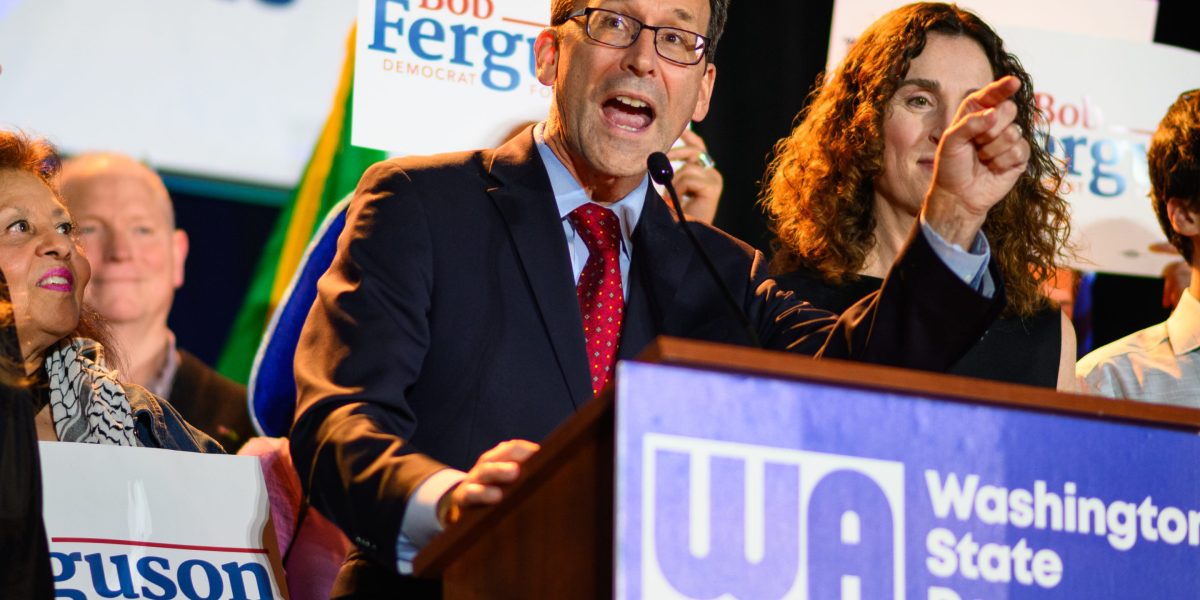
When Washington Governor Bob Ferguson proposed the state’s first income tax in modern history, he said the word “affordability” five times. 

Ferguson on Tuesday asked the legislature to craft a 9.9% tax on personal income over $1 million, which would revolutionize a state revenue system heavily reliant on sales and property tax. Although his fellow Democrats have for decades failed to push through an income tax, Ferguson said it’s “a different time right now.”

“We are facing an affordability crisis,” Ferguson said. “It is time to change our state’s outdated, upside-down tax system. To serve the needs of Washingtonians today, to make our taxes the more fair, millionaires should contribute toward our shared prosperity.”

Democrats across the US are increasingly exploring taxes as a way to capture the populist moment and address the country’s widening wealth gap. If “affordability” was the issue highlighted by Democrats who outperformed expectations in the off-year elections of 2025, the slogan next year could very well be “tax the rich.”

It’s an opening Democrats see as the Trump administration this year paired tax cuts for high earners with reductions in Medicaid and supplemental food assistance. Raising taxes on the wealthy could also help solve a fiscal problem for states dedicating more resources to plug the holes from federal cuts.

“We have a federal government that has gone into super-villain mode, seeming to deliberately take from the poor and middle class to give to the rich,” said Darien Shanske, a tax professor at UC Davis School of Law. “This unnecessary emergency is laying down a gauntlet for states: Will they let this suffering come to pass and, if not, how will they pay for the triage? Taxes on the best-off are not just fair but also efficient.”

Read more: Millionaire Tax That Mamdani Loves Fuels a $5.7 Billion Haul

Progressive tax advocates often point to Massachusetts’ 4% surtax on incomes over $1 million, which brought in roughly $5.7 billion in fiscal 2025, far exceeding revenue projections in its third year of collection. 

New York Mayor-elect Zohran Mamdani campaigned on raising the city’s income tax on millionaires by 2 percentage points to 5.9%, which critics said would lead to an exodus of wealthy people.

Colorado voters this year approved a measure to limit deductions for taxpayers earning at least $300,000. The revenue will fund a program providing free meals for all public school students. Colorado officials also advanced a ballot measure to change the state’s 4.41% flat rate to a graduated income tax, potentially raising more than $4 billion. That will likely go before voters in 2026. 

Michigan residents could also face a ballot initiative next year to change the state’s flat 4.25% tax rate to add a 5% surcharge on individuals earning more than $500,000 and couples making more than $1 million.

Romney’s Call

Even 2012 Republican Presidential candidate Mitt Romney has joined the call. Last week, the former US senator from Utah penned an essay in the New York Times calling for rich people to pay more, mostly in the form of closing loopholes the wealthy use to minimize tax obligations.

“It would help us avoid the cliff ahead,” Romney said, pointing to government funding shortfalls, “and might tend to quiet some of the anger that will surely grow as unemployed college graduates see tax-advantaged multibillionaires sailing 300-foot yachts.”

Most of the populist proposals coming from the states would raise taxes on income. But the tricky thing about some wealth is that it doesn’t come from a paycheck and thus is harder to tax. Even a levy on capital gains depends on a taxpayer selling assets to realize that increased value. 

For example, former Microsoft Chief Executive Officer Steve Ballmer’s net worth increased by $706.5 billion on Monday, according to the Bloomberg Billionaires Index. Even though his mansion sits across the lake from downtown Seattle, those gains wouldn’t be subject to an income tax. 

That’s why some Washington state Democrats are still pushing for the US’s first wealth tax on unrealized gains. Under a proposal passed by the state Senate last year, portfolios of some publicly traded asset classes worth at least $50 million would be taxed at 0.5%. 

Ferguson panned the wealth tax proposal last year, saying it would be irresponsible to balance the budget on a measure that would certainly face legal challenges. 

One of the most common warnings from tax opponents is that once legislators have a new tax mechanism, they’ll either increase the rate or lower the threshold at which it would apply. Ferguson in his income-tax proposal nodded to that concern, saying the $1 million level should increase with inflation and be included in the statute or perhaps even a constitutional amendment.

Read More: Vegas Lures Millionaires Fleeing Wealth Tax in Washington State

State taxes are also easier to avoid than federal taxes, because it’s relatively easy to move a primary residency. Washington used to attract taxpayers fed up with California’s high rates, but that has changed since the Evergreen State started taxing capital gains. Next year could be the year of the millionaire’s tax — in Washington state and across the US. 


Source link

Continue Reading

Business

Southern California in ‘great danger’ from Christmas flooding

Published

on


Residents of Southern California were bracing Wednesday for a powerful winter storm forecast to bring dangerous flooding as well as rock and mudslides to the region, threatening property and snarling holiday travel plans.

Peak rainfall in parts of the region is expected to reach as high as 1.5 inches per hour, according to the National Weather Service. The foothills and mountains south of Point Conception, which include parts of Los Angeles and Santa Barbara, are projected to receive up to nine inches (25 centimeters) of rain by 10 p.m. local time on Christmas Eve. The rain will continue to fall on Thursday, Christmas Day, and a total of 14 inches could soak the region (35 centimeters) by Friday.

“Severe, widespread flash flooding is expected,” the US Weather Prediction Center said in a forecast early Wednesday. “Lives and property are in great danger.”

Coastal regions of Southern California will receive multiple months’ worth of rain in a span of one to three days, according to AccuWeather.

Some Los Angeles County residents have already been ordered to evacuate areas that are vulnerable to mudslides and officials warned of possible road closures, airport delays and flight cancellations.

Read more: Southern California Faces ‘High Risk’ Floods as Storm Hits

Forecasters were also urging Californians to drive with care and never attempt to drive through flooded roadways. 

Join us at the Fortune Workplace Innovation Summit May 19–20, 2026, in Atlanta. The next era of workplace innovation is here—and the old playbook is being rewritten. At this exclusive, high-energy event, the world’s most innovative leaders will convene to explore how AI, humanity, and strategy converge to redefine, again, the future of work. Register now.


Source link

Continue Reading

Trending

Copyright © Miami Select.