Connect with us

Business

Down Arrow Button Icon

Published

on


When Idalia Bisbal moved to this Pennsylvania city synonymous with America’s working class, she hoped for a cheaper, easier life than the one she was leaving behind in her hometown of New York City.

About three years later, she is deeply disappointed.

“It’s worse than ever,” the 67-year-old retiree, who relies on Social Security, said when asked about the economy. “The prices are high. Everything is going up. You can’t afford food because you can’t afford rent. Utilities are too high. Gas is too expensive. Everything is too expensive.”

Bisbal was sipping an afternoon coffee at the Hamilton Family Restaurant not long after Vice President JD Vance rallied Republicans in a nearby suburb. In the Trump administration’s second high-profile trip to Pennsylvania in a week, Vance acknowledged the affordability crisis, blamed it on the Biden administration and insisted better times were ahead. He later served food to men experiencing homelessness in Allentown.

The visit, on top of several recent speeches from President Donald Trump, reflects an increasingly urgent White House effort to respond to the economic anxiety that is gripping both parties. Those worries are a vulnerability for Republicans in competitive congressional districts like the one that includes Allentown, which could decide control of the U.S. House in next year’s midterms.

But in confronting the challenge, there are risks of appearing out of touch.

Only 31% of U.S. adults now approve of how Trump is handling the economy, down from 40% in March, according to a poll from The Associated Press-NORC Center for Public Affairs Research. Yet Trump has called affordability concerns a “ hoax ” and gave the economy under his administration a grade of “A+++++.” Vance reiterated that assessment during his rally, prompting Bisbal to scoff.

“In his world,” Bisbal, a self-described “straight-up Democrat,” responded. “In the rich man’s world. In our world, trust me, it’s not an ‘A.’ To me, it’s an ‘F,’ ‘F,’ ‘F,’ ‘F,’ ‘F,’ ‘F.’”

Agreement that prices are too high

With a population of roughly 125,000 people, Allentown anchors the Lehigh Valley, which is Pennsylvania’s third-largest metro area. In a dozen interviews this week with local officials, business leaders and residents of both parties, there was agreement on one thing: Prices are too high. Some pointed to gas prices while others said they felt the shock more at the grocery store or in their cost of health care or housing.

Few shared Trump’s unbridled boosterism about the economy.

Tony Iannelli, the president and CEO of the Greater Lehigh Valley Chamber of Commerce, called Trump’s grade a “stretch,” saying “we have a strong economy but I think it’s not yet gone to the next stage of what I would call robust.”

Tom Groves, who started a health and benefits consulting firm more than two decades ago, said the economy was at a “B+” as he blamed the Affordable Care Act, widely known as “Obamacare,” for contributing to higher health costs and he noted stock and labor market volatility. Joe Vichot, the chairman of the Lehigh County Republican Committee, referred to Trump’s grade as a “colloquialism.”

Far removed from Washington’s political theater, there was little consensus on who was responsible for the high prices or what should be done about it. There was, however, an acute sense of exhaustion at the seemingly endless political combat.

Pat Gallagher was finishing lunch a few booths down from Bisbal as she recalled meeting her late husband when they both worked at Bethlehem Steel, the manufacturing giant that closed in 2003. Now retired, she, too, relies on Social Security benefits and lives with her daughter, which helps keep costs down. She said she noticed the rising price of groceries and was becoming exasperated with the political climate.

“I get so frustrated with hearing about the politics,” she said.

Allentown has a front-row seat to politics

That feeling is understandable in a place that often gets a front-row seat to the national debate, whether it wants the view or not. Singer Billy Joel’s 1982 song “Allentown” helped elevate the city into the national consciousness, articulating simultaneous feelings of disillusionment and hope as factories shuttered.

In the decades since, Pennsylvania has become a must-win state in presidential politics and the backdrop for innumerable visits from candidates and the media. Trump and his Democratic rival in 2024, Kamala Harris, made several campaign swings through Allentown, with the then-vice president visiting the city on the eve of the election.

“Every race here, all the time,” Allentown’s mayor, Democrat Matt Tuerk, recalled of the frenzied race last year.

The pace of those visits — and the attention they garnered — has not faded from many minds. Some businesses and residents declined to talk this week when approached with questions about the economy or politics, recalling blowback from speaking in the past.

But as attention shifts to next year’s midterms, Allentown cannot escape its place as a political battleground.

Trump’s win last year helped lift other Republicans, like U.S. Rep. Ryan Mackenzie, to victory. Mackenzie, who unseated a three-term Democrat, is now one of the most vulnerable Republicans in Congress. To win again, he must turn out the Republicans who voted in 2024 — many of whom were likely more energized by Trump’s candidacy — while appealing to independents.

Mackenzie’s balancing act was on display when he spoke to the party faithful on Tuesday, bemoaning the “failures of Bidenomics” before Vance took the stage at the rally. A day later, the congressman was back in Washington, where he joined three other House Republicans to rebel against the party’s leadership and force a vote on extending health care subsidies that expire at the end of the year.

Vichot, the local GOP chairman, called Mackenzie an “underdog” in his reelection bid and said the health care move was a signal to voters that he is “compassionate for the people who need those services.”

A swing to Trump in 2024

Lehigh County, home to Allentown and the most populous county in the congressional district, swung toward Trump last year. Harris’ nearly 2.7 percentage point win in the county was the tightest margin for a Democratic presidential candidate since 2004. But Democrats are feeling confident after a strong performance in this fall’s elections when they handily won a race for county executive.

Retaking the congressional seat is now a top priority for Democrats. Gov. Josh Shapiro, who faces reelection next year and is a potential presidential contender in 2028, endorsed firefighter union head Bob Brooks this week for the May primary.

Democrats are just a few seats shy of regaining the House majority and the first midterm after a presidential election historically favors the party that’s out of power. If the focus remains on the economy, Democrats are happy.

The Uline supplies distribution factory where Vance spoke, owned by a family that has made large donations to GOP causes, is a few miles from the Mack Trucks facility where staff was cut by about 200 employees this year. The company said that decision was driven in part by tariffs imposed by Trump. Shapiro eagerly pointed that out in responding to Vance’s visit.

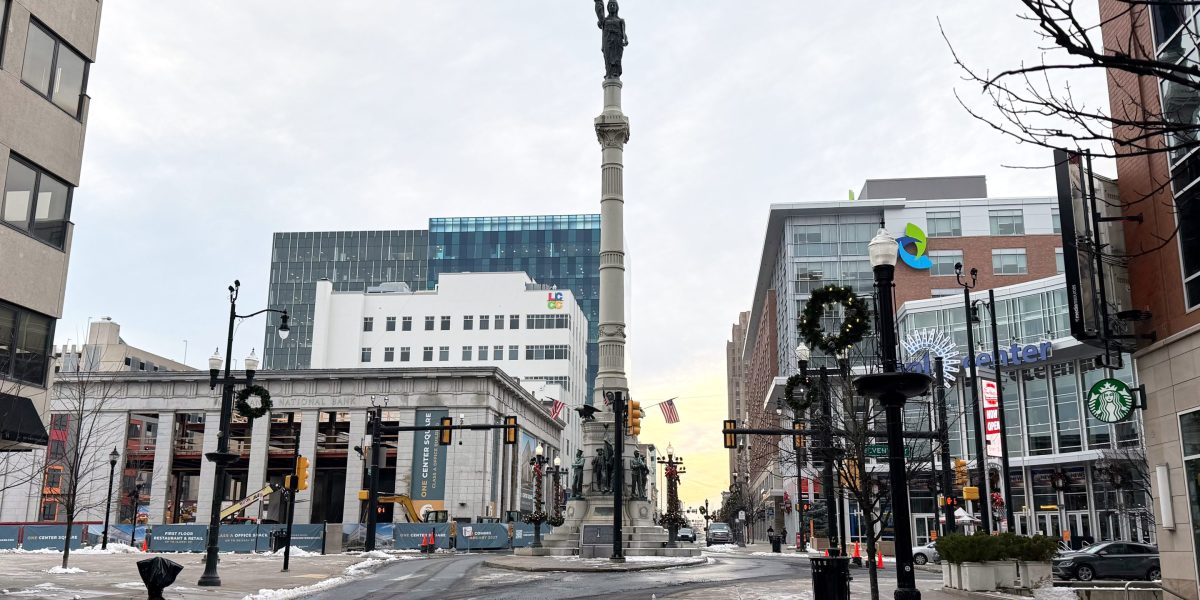
But the image of Allentown as a purely manufacturing town is outdated. The downtown core is dotted by row homes, trendy hotels and a modern arena that is home to the Lehigh Valley Phantoms hockey team and hosts concerts by major artists. In recent years, Latinos have become a majority of the city’s population, driven by gains in the Puerto Rican, Mexican and Dominican communities.

“This is a place of rapid change,” said Tuerk, the city’s first Latino mayor. “It’s constantly changing and I think over the next three years until that next presidential election, we’re going to see a lot more change. It’s going to be an interesting ride.”


Source link

Continue Reading

Business

At least 16 Epstein files have disappeared from DOJ’s site less than a day after they were posted

Published

on


At least 16 files disappeared from the Justice Department’s public webpage for documents related to Jeffrey Epstein — including a photograph showing President Donald Trump — less than a day after they were posted, with no explanation from the government and no notice to the public.

The missing files, which were available Friday and no longer accessible by Saturday, included images of paintings depicting nude women, and one showing a series of photographs along a credenza and in drawers. In that image, inside a drawer among other photos, was a photograph of Trump, alongside Epstein, Melania Trump and Epstein’s longtime associate Ghislaine Maxwell.

The Justice Department did not say why the files were removed or whether their disappearance was intentional. A spokesperson for the department did not immediately respond to a request for comment.

Online, the unexplained missing files fueled speculation about what was taken down and why the public was not notified, compounding long-standing intrigue about Epstein and the powerful figures who surrounded him. Democrats on the House Oversight Committee pointed to the missing image featuring a Trump photo in a post on X, writing: “What else is being covered up? We need transparency for the American public.”

The episode deepened concerns that had already emerged from the Justice Department’s much-anticipated document release. The tens of thousands of pages made public offered little new insight into Epstein’s crimes or the prosecutorial decisions that allowed him to avoid serious federal charges for years, while omitting some of the most closely watched materials, including FBI interviews with victims and internal Justice Department memos on charging decisions.

Scant new insight in the initial disclosures

Some of the most consequential records expected about Epstein are nowhere to be found in the Justice Department’s initial disclosures, which span tens of thousands of pages.

Missing are FBI interviews with survivors and internal Justice Department memos examining charging decisions — records that could have helped explain how investigators viewed the case and why Epstein was allowed in 2008 to plead guilty to a relatively minor state-level prostitution charge.

The gaps go further.

The records, required to be released under a recent law passed by Congress, hardly reference several powerful figures long associated with Epstein, including Britain’s former Prince Andrew, renewing questions about who was scrutinized, who was not, and how much the disclosures truly advance public accountability

Among the fresh nuggets: insight into the Justice Department’s decision to abandon an investigation into Epstein in the 2000s, which enabled him to plead guilty to that state-level charge, and a previously unseen 1996 complaint accusing Epstein of stealing photographs of children.

The releases so far have been heavy on images of Epstein’s homes in New York City and the U.S. Virgin Islands, with some photos of celebrities and politicians.

There was a series of never-before-seen photos of former President Bill Clinton but fleetingly few of Trump. Both have been associated with Epstein, but both have since disowned those friendships. Neither has been accused of any wrongdoing in connection with Epstein and there was no indication the photos played a role in the criminal cases brought against him.

Despite a Friday deadline set by Congress to make everything public, the Justice Department said it plans to release records on a rolling basis. It blamed the delay on the time-consuming process of obscuring survivors’ names and other identifying information. The department has not given any notice when more records might arrive.

That approach angered some Epstein accusers and members of Congress who fought to pass the law forced the department to act. Instead of marking the end of a yearslong battle for transparency, the document release Friday was merely the beginning of an indefinite wait for a complete picture of Epstein’s crimes and the steps taken to investigate them.

“I feel like again the DOJ, the justice system is failing us,” said Marina Lacerda, who alleges Epstein started sexually abusing her at his New York City mansion when she was 14.

Many of the long-anticipated records were redacted or lacked context

Federal prosecutors in New York brought sex trafficking charges against Epstein in 2019, but he killed himself in jail after his arrest.

The documents just made public were a sliver of potentially millions of pages records in the department’s possession. In one example, Deputy Attorney General Todd Blanche said Manhattan federal prosecutors had more than 3.6 million records from sex trafficking investigations into Epstein and Maxwell, though many duplicated material already turned over by the FBI.

Many of the records released so far had been made public in court filings, congressional releases or freedom of information requests, though, for the first time, they were all in one place and available for the public to search for free.

Ones that were new were often lacking necessary context or heavily blacked out. A 119-page document marked “Grand Jury-NY,” likely from one of the federal sex trafficking investigations that led to the charges against Epstein in 2019 or Maxwell in 2021, was entirely blacked out.

Trump’s Republican allies seized on the Clinton images, including photos of the Democrat with singers Michael Jackson and Diana Ross. There were also photos of Epstein with actors Chris Tucker and Kevin Spacey, and even Epstein with TV newscaster Walter Cronkite. But none of the photos had captions and was no explanation given for why any of them were together.

The meatiest records released so far showed that federal prosecutors had what appeared to be a strong case against Epstein in 2007 yet never charged him.

Transcripts of grand jury proceedings, released publicly for the first time, included testimony from FBI agents who described interviews they had with several girls and young women who described being paid to perform sex acts for Epstein. The youngest was 14 and in ninth grade.

One had told investigators about being sexually assaulted by Epstein when she initially resisted his advances during a massage.

Another, then 21, testified before the grand jury about how Epstein had hired her when she was 16 to perform a sexual massage and how she had gone on to recruit other girls to do the same.

“For every girl that I brought to the table he would give me $200,” she said. They were mostly people she knew from high school, she said. “I also told them that if they are under age, just lie about it and tell him that you are 18.”

The documents also contain a transcript of an interview Justice Department lawyers did more than a decade later with the U.S. attorney who oversaw the case, Alexander Acosta, about his ultimate decision not to bring federal charges.

Acosta, who was labor secretary during Trump’s first term, cited concerns about whether a jury would believe Epstein’s accusers.

He also said the Justice Department might have been more reluctant to make a federal prosecution out of a case that straddled the legal border between sex trafficking and soliciting prostitution, something more commonly handled by state prosecutors.

“I’m not saying it was the right view,” Acosta added. He also said that the public today would likely view the survivors differently.

“There’s been a lot of changes in victim shaming,” Acosta said.


Source link

Continue Reading

Business

Bill Gates says misinformation is the burden passed to children, after daughter harassed online

Published

on


There are many problems billionaire tech tycoon Bill Gates is hoping to help solve: eradicating polio, water sanitization, and agricultural development to name a few. But one frontier he worries is being passed on to future generations is misinformation.

Misinformation is a problem, the Microsoft cofounder said, that we are “handing to the younger generation.”

Speaking to CNBC Make It, Gates, worth $118 billion per the Bloomberg Billionaires Index, said he had been naive to assume that “when we made information available, that people would want correct information.”

A high-profile figure himself, Gates has seen scrutiny extend to his family. His daughter Phoebe, in particular, has struggled with being harassed online.

“Hearing my daughter talk about how she’d been harassed online, and how her friends experienced that quite a bit, brought that into focus in a way that I hadn’t thought about before,” Gates—a father of three—continued.

Gates’ youngest daughter—co-founder of AI shopping tool Phia—has previously spoken about misconceptions surrounding her family and relationships, including being “memed for being in an interracial relationship.”

An internet meme is an image or video, usually intended to be humorous, that is spread online.

Despite being aware of how misinformation is spreading online, Gates said he can understand why certain audiences flock to platforms that reflect their views—a phenomenon known as confirmation bias.

“We have context where we want correct information, like hopefully when we want medical advice,” Gates said. “But then we kind of like, in our community and enclave, have these shared views that kind of pull us together.”

He explained: “Even I will wallow. Let’s say there’s a politician I don’t like, and there’s some article online criticizing him a little bit. I’m like, ‘Oh, that’s such a good critique, [and] I enjoyed reading it, even if it was exaggerated.’”

AI could help curb misinformation

Gates’ probing questions about how to control the spread of incorrect information online may be at odds with the take of fellow billionaire Elon Musk.

Gates said in the interview: “We should have free speech. But if you’re inciting violence, if you’re causing people not to take vaccines, where are those boundaries? Even the U.S. should have rules, and then if you have rules, what is it? Is it some AI that encodes those rules? You have billions in activity, and if you catch it a day later the harm is done.”

This isn’t the first time Gates has proposed the emerging technology as a tool against misinformation and deepfakes (images and videos which are incredibly realistic but are not authentic).

In a blog post on his website, GatesNotes, in July 2023, the Bill and Melinda Gates Foundation cofounder wrote: “This will be a cyclical process: Someone finds a way to detect fakery, someone else figures out how to counter it, someone else develops counter-countermeasures, and so on.

“It won’t be a perfect success, but we won’t be helpless either.”

Elon Musk’s take on freedom of speech

Musk, the CEO of Tesla and owner of X—the platform previously known as Twitter—is a free-speech absolutist who is unlikely to appreciate the notion of rules being placed on what he, or others, can say.

Musk believes freedom of speech is the “bedrock of democracy” and has vowed to battle apparent censorship of his platform.

That being said, a debate over how to control misinformation wouldn’t be the first time the views of Musk and Gates have been at odds. In July 2024, for example, Musk threatened Gates would be “obliterated” for apparently holding a bearish position on Tesla stock. Fortune could not confirm whether Gates still owns a short position on the EV maker.

Likewise, Gates has said his management style is better than that of Musk—a boss he believes may push “too hard.” Meanwhile, Musk has claimed Gates doesn’t understand artificial intelligence, saying his insight on the topic is “limited.”

More recently, the tech titans have been at loggerheads over Musk’s work at the Department of Government Efficiency (DOGE.) In January 2025, Gates said he hoped some of the foreign aid and personnel cuts enacted by DOGE would be rolled back: “Elon I think said ‘Yeah, we made a mistake, we went overboard,’ but … what is the equilibrium? How many of those people can be kept so we can continue to save tens of millions of lives?” Gates also accused Musk of some “insane” political interference in 2025.

In November, Musk revived the bad blood between the pair, writing on X that if Gates hadn’t closed out his alleged “crazy short position” against Tesla, “he had better do so soon.”

It seems misinformation may just be another of many topics on which the billionaires will have to agree to disagree.

More on Bill Gates:

  • Bill Gates’ $200 billion moonshot: Inside the biggest bet on humanity a philanthropist has ever made
  • Bill Gates believes Alzheimer’s blood tests should be part of routine medicals—such prevention means you could work into your 90s if you wanted to
  • Bill Gates calls on Congress to ‘show its values’ on foreign aid, or this year will see children’s deaths go up instead of down

A version of this article was first published on September 5, 2024.

Join us at the Fortune Workplace Innovation Summit May 19–20, 2026, in Atlanta. The next era of workplace innovation is here—and the old playbook is being rewritten. At this exclusive, high-energy event, the world’s most innovative leaders will convene to explore how AI, humanity, and strategy converge to redefine, again, the future of work. Register now.


Source link

Continue Reading

Business

Trump cut income taxes on tips and overtime, but many states—even some led by Republicans—haven’t done the same yet

Published

on


To tax tips or not? That is a question that will confront lawmakers in states across the U.S. as they convene for work next year.

President Donald Trump’s administration is urging states to follow its lead by enacting a slew of new tax breaks for individuals and businesses, including deductions for tips and overtime wages, automobile loans and business equipment.

In some states, the new federal tax breaks will automatically apply to state income taxes unless legislatures opt out. But in many other states, where tax laws are written differently, the new tax breaks won’t appear on state tax forms unless legislatures opt in.

In states that don’t conform to the federal tax changes, workers who receive tips or overtime — for example — will pay no federal tax on those earnings but could still owe state taxes on them.

States that embrace all of Trump’s tax cuts could provide hundreds of millions of dollars of annual savings to certain residents and businesses. But that could financially strain states, which are being hit with higher costs because of new Medicaid and SNAP food aid requirements that also are included in the big bill Trump signed.

Most states begin their annual legislative sessions in January. To retroactively change tax breaks for 2025, lawmakers would need to act quickly so tax forms could updated before people begin filing them. States also could apply the changes to their 2026 taxes, a decision requiring less haste.

So far, only a few states have taken votes on whether to adopt the tax breaks.

“States in general are approaching this skeptically,” said Carl Davis, research director at the nonprofit Institute on Taxation and Economic Policy.

Trump’s treasury presses states to `immediately conform’

A bill Trump signed on July 4 contains about $4.5 trillion of federal tax cuts over 10 years.

It creates temporary tax deductions for tips, overtime and loan interest on new vehicles assembled in the U.S. It boosts a tax deduction for older adults. And it temporarily raises cap on state and local tax deductions from $10,000 to $40,000, among other things. The law also provides numerous tax breaks to businesses, including the ability to immediately write off 100% of the cost of equipment and research.

Forty-one states levy individual income taxes on wages and salaries. Forty-four states charge corporate income taxes.

Treasury Secretary Scott Bessent this month called on those states “to immediately conform” to the federal tax cuts and accused some Democratic-led states that haven’t done so of engaging in “political obstructionism.” Though Bessent didn’t mention it, many Republican-led states also have not decided whether to implement the tax deductions.

“By denying their residents access to these important tax cuts, these governors and legislators are forcing hardworking Americans to shoulder higher state tax burdens, robbing them of the relief they deserve and exacerbating the financial squeeze on low- and middle-income households,” Bessent said.

But some tax analysts contend there’s more for states to consider. The tax break on tips, for example, could apply to nearly 70 occupation fields under a proposed rule from the Internal Revenue Service. But that would still exclude numerous low-wage workers, said Jared Walczak, vice president of state projects at the nonprofit Tax Foundation.

“Lawmakers need to consider whether these are worth the cost,” Walczak said.

Only a few states offer tax breaks for tips and overtime

Because of the way state tax laws are written, the federal tax breaks for tips and overtime wages would have carried over to just seven states — Colorado, Idaho, Iowa, Montana, North Dakota, Oregon and South Carolina. But Colorado opted out of the state tax break for overtime shortly before the federal law was enacted.

Michigan this fall became first — and, so far, only — state to opt into the tax breaks for tips and overtime wages, effective in 2026. The overtime tax exemption is projected to cost the state nearly $113 million and the tips tax break about $45 million during its current budget year, according to the state treasury department.

Michigan lawmakers offset that by decoupling from five federal corporate tax changes the state’s treasury estimated would have reduced Michigan tax revenues by $540 million this budget year.

Republican state Rep. Ann Bollin, chair of the Michigan House Appropriations Committee, said the state could not afford to embrace all the tax cuts while still investing in better roads, public safety and education.

“The best path forward is to have more money in people’s pockets and have less regulation — and this kind of moved in that direction,” she said.

Arizona could be among the next states to act. Democratic Gov. Katie Hobbs has called upon lawmakers to adopt the tax breaks for tips, overtime, seniors and vehicle loans, and follow the federal government by also increasing the state’s standard deduction for individual income taxpayers. Republican state House leaders said they stand ready to pass the tax cuts when their session begins Jan. 12.

Several states have rejected corporate tax breaks

In addition to Michigan, lawmakers in Delaware, Illinois, Pennsylvania and Rhode Island have passed measures to block some or all of the corporate tax cuts from taking effect in their states.

A new Illinois law decoupling from a portion of the corporate tax changes could save the state nearly $250 million, said Democratic state Sen. Elgie Sims, chair of the Senate Appropriations Committee. He said that could help ensure continued funding for schools, health care and vital services.

Illinois Gov. JB Pritzker, an outspoken Democratic opponent of Trump, also cited budget concerns for rejecting the corporate tax cut provision. He said states already stand to lose money because of other provisions in Trump’s big bill, such as a requirement to cover more of the costs of running the Supplemental Nutrition Assistance Program.

“The decoupling is an effort to try to hold back the onslaught from the federal government to make sure that we can support programs like the one we’re announcing today,” Pritzker told reporters at a December event publicizing a grant to address homelessness in central Illinois.

This story was originally featured on Fortune.com


Source link

Continue Reading

Trending

Copyright © Miami Select.