Business
Down Arrow Button Icon
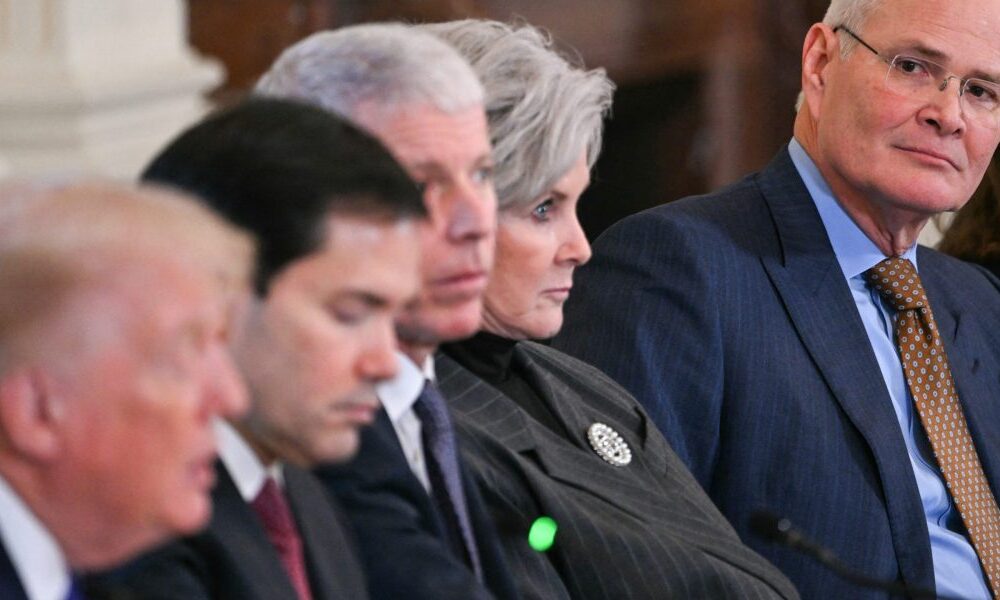
U.S. Big Oil giants Exxon Mobil and Chevron said Jan. 30 they have no plans to increase their capital spending in Venezuela this year while they wait and see how legal and political reforms unfold to make the country more inviting to foreign oil investments.
President Donald Trump has repeatedly insisted U.S. oil companies will spend more than $100 billion in Venezuela to dramatically rebuild its dilapidated infrastructure since forcibly removing leader Nicolás Maduro from power. But Exxon chairman and CEO Darren Woods infamously drew Trump’s ire earlier this month when he told the president that Venezuela is currently “uninvestable” until major reforms are enacted, and the country sees real stability. After all, Exxon had its oil assets expropriated in Venezuela less than 20 years ago.
Trump later said Woods’ remarks were “too cute” and that he may be inclined to keep the world’s largest Big Oil player out of Venezuela.
Woods said Jan. 30 in his fourth-quarter earnings call that he does believe the Trump administration is committed to making the necessary changes to eventually turn Venezuela into a viable investment option. How soon remains to be seen. The country’s National Assembly began approving reforms to its oil and gas laws on Jan. 29.
“Venezuela has those challenges that I mentioned, which I believe in time will get addressed,” Woods said, arguing the other challenge is the high cost of extracting and processing the extra heavy grade of tar-like crude oil in Venezuela.
He said Exxon already has the expertise in producing heavy oil sands in Canada that can translate.
“We think we bring an advantaged approach that will lead to lower-cost production, higher recovery and, therefore, more economic barrels onto the marketplace. That’s I think the opportunity set that will play out over time,” Woods said, adding that Exxon is still committed to sending a small technical team to Venezuela to assess the situation in the near term.
Chevron, on the other hand, is the only U.S. company currently producing oil in Venezuela thanks to a special license. Chevron churns out nearly 250,000 barrels a day of oil—about a quarter of Venezuela’s almost 1 million barrels of daily output.
Chevron chairman and CEO Mike Wirth reiterated it could hike its oil flows by 50% in less than two years, but that would only mean raising Venezuela’s overall output to just more than 1.1 million barrels for a country—with the world’s largest proven oil reserves—that peaked decades ago with an output of nearly 4 million barrels.
Notably, Wirth said Chevron’s Venezuelan activity is self-funded through its joint ventures with the state oil company PDVSA, and there are no current plans to add additional capital spending just yet.
“I think it’s a little early to say what our longer-term outlook is,” Wirth said in his earnings call. “You should expect us to remain focused on value and capital discipline. It’s a large resource that has the opportunity to become a more sizable part of our portfolio in the future, but we also need to see stability in the country. We need to have confidence in the fiscal regime.”
Wirth said Chevron is reviewing the new hydrocarbons law that was tentatively approved and that there are a “number of signposts” Chevron will be watching.
“Like anywhere we invest, fiscal terms, stability, regulatory predictability are important. So it will have to compete in our portfolio versus attractive investments in many other parts of the world,” Wirth added. “With the right changes, we certainly could see our operations and the footprint expand in Venezuela. And we’re working with the U.S. government and the Venezuelan government to try to create circumstances that would enable that.”
Earnings beats
Exxon and Chevron both posted quarterly earnings beats, but they also are both facing declining profits primarily from deflated crude oil prices—the same lower prices that make Venezuelan investments more challenging for now.
In spite of the weaker commodity environment, Chevron reported its largest oil and gas production volumes in its history, while Exxon touted its greatest output in more than 40 years.
Exxon’s stock dipped slightly by 1%, while Chevron stock rose by more than 1%.
More than half of Exxon’s production came from the still-booming Permian Basin in West Texas and its rapidly rising output from offshore Guyana, which borders Venezuela. Chevron, which is the second-largest Permian producer after Exxon, became Exxon’s top partner in Guyana after it closed its $53 billion acquisition of Hess last year.
Woods said Exxon is awaiting an International Court of Justice arbitration ruling under over a border dispute of international waters between Guyana and Venezuela. A favorable ruling could unlock more offshore exploration for Exxon and Chevon.
“Obviously, with the developments in Venezuela, perhaps we’ll see an opportunity with less naval patrols that will make it a little more friendly environment,” Wood said, adding that he’s optimistic. “We will have an opportunity to do what we need to do in that portion of the [exploration] block when it’s available to us.”
Exxon reported fourth-quarter earnings of $6.5 billion, down 15% year-on-year from $7.6 billion. Full-year 2025 earnings came in at $28.8 billion, down 14% from $33.7 billion in 2024.
Chevron reported quarterly earnings of almost $2.8 billion, down year-on-year almost 15% from more than $3.2 billion. Full-year profits were $12.3 billion, down 30% from $17.7 the year prior.