Connect with us

Politics

Donald Trump’s settlement with Columbia could become a model for his campaign to reshape higher education
Published

on


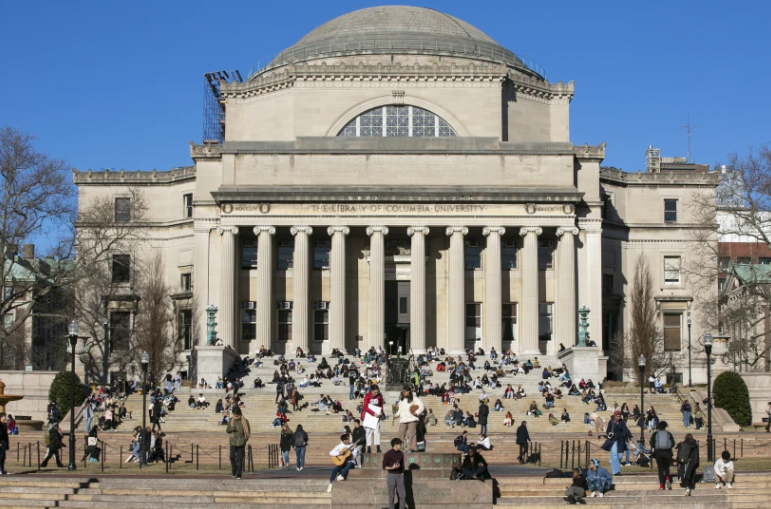
The Trump administration’s milestone settlement with Columbia promises to bring stability to a university in crisis. It also delivers a crucial win to President Donald Trump in his campaign to reshape higher education.

And at colleges around the country, the deal clarifies the stakes for anyone weighing whether to fight the administration’s demands or concede.

Columbia agreed Wednesday to pay more than $220 million to the federal government to restore federal research money that was canceled in the name of combating antisemitism on campus. That decision offers a contrast to the path taken by Harvard University, which has lost billions of dollars in government funding as its legal battle escalates with no end in sight.

Yet the Columbia deal also raises questions about university independence as the school submits to closer federal oversight.

No sooner had Trump announced the deal than he sent a warning: Numerous other universities, he said, “are upcoming.”

The deal is the first to settle a federal antisemitism investigation since Trump returned to office. It’s also the first agreement with a university touching on so many elements of the President’s agenda, from admissions and campus protests to women’s sports and diversity, equity and inclusion programs.

Columbia agreed to some provisions similar to those that Harvard rejected and called a dangerous precedent. The settlement requires the hiring of new faculty in Jewish studies and a review of academics to ensure “balance.” Columbia will be placed under the watch of an independent monitor and ordered to disclose hiring, admission and discipline data to be audited for compliance.

In what Columbia described as a victory for university autonomy, the agreement includes a clause saying the government has no authority to dictate hiring, admissions decisions or the content of academic speech. Acting University President Claire Shipman said it was “carefully crafted to protect the values that define us” while restoring the university’s federal research funding.

Where some see pragmatism, others see capitulation

Some at Columbia called it the best feasible outcome. Some called it capitulation. Democratic U.S. Rep. Jerry Nadler, a Columbia graduate whose district includes the Manhattan campus, called it a “cowardly” agreement.

Columbia has effectively waved “the white flag of surrender in its battle at the heart of the Trump Administration’s war on higher education and academic freedom,” Nadler said.

Columbia had been threatened with the potential loss of billions of dollars in government support, including more than $400 million in research grants canceled earlier this year.

David Pozen, a law professor at Columbia, said the settlement raises legal questions about Trump’s strategy of regulation by dealmaking. Instead of applying a single standard across all of higher education, Pozen said, Trump is relying on one-off deals with individual universities as a condition to regain federal funding.

“In short, the agreement gives legal form to an extortion scheme,” he said.

The American Council on Education, which represents hundreds of university presidents, exhorted the administration to “return to following the rule of law.”

“This cannot be a template for the government’s approach to American higher education,” said Ted Mitchell, the group’s President. “Columbia was put in an untenable position by the outrageous actions of the executive branch of the government.”

Lawrence Summers, a former Treasury Secretary and former President of Harvard, called the settlement an “excellent template” for agreements with Harvard and other universities. He said it preserves Columbia’s independence while addressing antisemitism and renewing a focus on merit.

“This may be the best day higher education has had in the last year,” Summers wrote on the social media platform X.

Dozens of colleges are facing federal investigations

With the deal, Trump has new momentum in his expanding campaign to bring the nation’s universities in line with his vision. Dozens of campuses are under federal investigation for allegations related to antisemitismDEI and transgender athletes in women’s sports. Trump has saved his strongest rebuke for elite private universities, yet his administration has also recently turned attention to big public universities including George Mason University.

Among Trump’s backers, the Columbia agreement is seen as a first step to counteract the liberal bias they say has permeated college campuses.

Education Secretary Linda McMahon called Columbia’s reforms a roadmap for universities looking to regain public trust. “I believe they will ripple across the higher education sector and change the course of campus culture for years to come,” McMahon said in a statement.

The settlement follows smaller wins for the administration, including a recent deal with the University of Pennsylvania over transgender swimmer Lia Thomas. Penn agreed to modify school records held by Thomas and to apologize to female athletes “disadvantaged” by Thomas’ participation.

Just days earlier, the President of the University of Virginia agreed to resign amid a Justice Department investigation over DEI policies.

Many university Presidents have rallied behind Harvard in its fight against the Trump administration, seeing their own independence jeopardized by the government’s sanctions against the Ivy League school. Harvard, the nation’s oldest and wealthiest university, is often seen as a bellwether for other institutions, and some regard it as the best hope to repel the Trump administration’s pressure campaign.

Now even more rides on Harvard’s case. Earlier this month, Trump said a deal with Harvard appeared imminent, only to lash out at the university this week following a court hearing in one of Harvard’s legal battles.

“A big part of it is going to be how much Harvard gets in the future,” Trump told reporters this week. “And they’re not going to get very much.”

More universities are pulling back from DEI

Even before Trump took office, more universities had been pulling back on DEI and taking other steps to backtrack on what some see as a leftward political drift. Yet if the Columbia agreement becomes a model, it could force an even deeper reckoning.

The agreement requires full compliance with the administration’s interpretation of Title IX, the federal law barring sex discrimination in education. Trump officials have used the law to force the removal of transgender athletes from women’s sports. The deal also requires regular reports to ensure Columbia does not “promote unlawful DEI goals.”

On admissions, the settlement pushes Columbia to limit the consideration of race even beyond the Supreme Court’s 2023 decision ending affirmative action. That decision left open the possibility that universities could consider an applicant’s discussion of how their race affected their life, including in college application essays. The Columbia deal appears to bar such considerations.

It also orders the school to take steps to “decrease financial independence” on international students. Columbia has one of the largest international student populations in the nation, making up about 40% of its enrollment.

How much Columbia ceded in exchange may not be clear for years. There’s also no guarantee that the school is fully in the clear — the agreement leaves open the possibility of future “compliance reviews, investigations, defunding or litigation” by the government.

___

Republished with permission of The Associated Press.


Post Views: 0


Source link

Continue Reading

Politics

Debra Tendrich turns ‘pain into policy’ with sweeping anti-domestic violence proposal

Published

on


Florida could soon rewrite how it responds to domestic violence.

Lake Worth Democratic Rep. Debra Tendrich has filed HB 277, a sweeping proposal aimed at modernizing the state’s domestic violence laws with major reforms to prevention, first responder training, court safeguards, diversion programs and victim safety.

It’s a deeply personal issue to Tendrich, who moved to Florida in 2012 to escape what she has described as a “domestic violence situation,” with only her daughter and a suitcase.

“As a survivor myself, HB 277 is more than legislation; it is my way of turning pain into policy,” she said in a statement, adding that months of roundtables with survivors and first responders “shaped this bill from start to finish.”

Tendrich said that, if passed, HB 277 or its upper-chamber analogue (SB 682) by Miami Republican Sen. Alexis Calatayud would become Florida’s most comprehensive domestic violence initiative, covering prevention, early intervention, criminal accountability and survivor support.

It would require mandatory strangulation and domestic violence training for emergency medical technicians and paramedics, modernize the legal definition of domestic violence, expand the courts’ authority to order GPS monitoring and strengthen body camera requirements during investigations.

The bill also creates a treatment-based diversion pathway for first-time offenders who plead guilty and complete a batterers intervention program, mental-health services and weekly court-monitored progress reporting. Upon successful completion, charges could be dismissed, a measure Tendrich says will reduce recidivism while maintaining accountability.

On the victim-safety side, HB 277 would flag addresses for 12 months after a domestic-violence 911 call to give responders real-time risk awareness. It would also expand access to text-to-911, require pamphlets detailing the medical dangers of strangulation, authorize well-check visits tied to lethality assessments, enhance penalties for repeat offenders and include pets and service animals in injunctions to prevent coercive control and harm.

Calatayud called it “a tremendous honor and privilege” to work with Tendrich on advancing policy changes “that both law enforcement and survivors of domestic abuse or relationship violence believe are meaningful to protect families across our communities.”

“I’m deeply committed to championing these essential reforms,” she added, saying they would make “a life-or-death difference for women and children in Florida.”

Organizations supporting HB 277 say the bill reflects long-needed, practical reform. Palm Beach County firefighters union IAFF Local 2928 said expanded responder training and improved dispatch information “is exactly the kind of frontline-focused reform that saves lives.”

The Florida Police Benevolent Association called HB 277 a “comprehensive set of measures designed to enhance protections” and pledged to help advance it through the Legislature.

The Animal Legal Defense Fund praised provisions protecting pets in domestic violence cases, noting research showing that 89% of women with pets in abusive relationships have had partners threaten or harm their animals — a major barrier that keeps victims from fleeing.

Florida continues to see high levels of domestic violence. The National Coalition Against Domestic Violence estimates that 38% of Florida women and 29% of Florida men experience intimate-partner violence in their lifetimes — among the highest rates in the country.

With costs rising statewide, HB 277 also increases relocation assistance through the Crimes Compensation Trust Fund, which advocates say is essential because the current $1,500 cap no longer covers basic expenses for victims fleeing dangerous situations.

Tendrich said survivors who contributed to the bill, which Placida Republican Rep. Danny Nix is co-sponsoring, “finally feel seen.”

“This bill will save lives,” she said. “I am proud that this bill has bipartisan support, and I am even more proud of the survivors whose bravery drives every line of this legislation.”


Source link

Continue Reading

Politics

Ash Marwah, Ralph Massullo battle for SD 11 Special Election

Published

on


Even Ash Marwah knows the odds do him no favors.

A Senate district that leans heavily Republican plus a Special Election just weeks before Christmas — Marwah acknowledges it adds up to a likely Tuesday victory for Ralph Massullo.

The Senate District 11 Special Election is Tuesday to fill the void created when Blaise Ingoglia became Chief Financial Officer.

It pits Republican Massullo, a dermatologist and Republican former four-term House member from Lecanto, against Democrat Marwah, a civil engineer from The Villages.

Early voter turnout was light, as would be expected in a low-key standalone Special Election: At 10% or under for Hernando and Pasco counties, 19% in Sumter and 15% in Citrus.

Massullo has eyed this Senate seat since 2022 when he originally planned to leave the House after six years for the SD 11 run. His campaign ended prematurely when Gov. Ron DeSantis backed Ingoglia, leaving Massullo with a final two years in office before term limits ended his House career.

When the SD 11 seat opened up with Ingoglia’s CFO appointment, Massullo jumped in and a host of big-name endorsements followed, including from DeSantis, Ingoglia, Agriculture Commissioner Wilton Simpson, U.S. Sens. Ashley Moody and Rick Scott, four GOP Congressmen, county Sheriffs in the district, and the Florida Chamber of Commerce.

The Florida LGBTQ+ Democratic Caucus is endorsing Marwah.

Marwah ran for HD 52 in 2024, garnering just 24% of the vote against Republican John Temple

Massullo has raised $249,950 to Marwah’s $12,125. Massullo’s $108,000 in spending includes consulting, events and mail pieces. One of those mail pieces reminded voters there’s an election.

The two opponents had few opportunities for head-to-head debate. The League of Women Voters of Citrus County conducted a SD 11 forum on Zoom in late October, when the two candidates clashed over the state’s direction.

Marwah said DeSantis and Republicans are “playing games” in their attempts to redraw congressional district boundaries.

“No need to go through this expense,” he said. “It will really ruin decades of progress in civil rights. We should honor the rule of law that we agreed on that it’ll be done every 10 years. I’m not sure why the game is being played at this point.”

Massullo said congressional districts should reflect population shifts.

“The people of our state deserve to be adequately represented based on population,” he said. “I personally do not believe we should use race as a means to justify particular areas. I’m one that believes we should be blind to race, blind to creed, blind to sex, in everything that we do, particularly looking at population.”

Senate District 11 covers all of Citrus, Hernando and Sumter counties, plus a portion of northern Pasco County. It is safely Republican — Ingoglia won 69% of the vote there in November, and Donald Trump carried the district by the same margin in 2024.


Source link

Continue Reading

Politics

Miles Davis tapped to lead School Board organizing workshop at national LGBTQ conference

Published

on


Miles Davis is taking his Florida-focused organizing playbook to the national stage.

Davis, Policy Director at PRISM Florida and Director of Advocacy and Communications at SAVE, has been selected to present a workshop at the 2026 Creating Change Conference, the largest annual LGBTQ advocacy and movement-building convention.

It’s a major nod to his rising role in Florida’s LGBTQ policy landscape.

The National LGBTQ Task Force, which organizes the conference, announced that Davis will present his session, “School Board Organizing 101.” His proposal rose to the top of more than 550 submissions competing for roughly 140 slots, a press note said, making this year’s conference one of the most competitive program cycles in the event’s history.

His workshop will be scheduled during the Jan. 21-24 gathering in Washington, D.C.

Davis said his selection caps a strong year for PRISM Florida, where he helped shepherd the organization’s first-ever bill (HB 331) into the Legislature. The measure, sponsored by Tampa Democratic Rep. Dianne Hart, would restore local oversight over reproductive health and HIV/AIDS instruction, undoing changes enacted under a 2023 expansion to Florida’s “Parental Rights in Education” law, dubbed “Don’t Say Gay” by critics.

Davis’ workshop draws directly from that work and aims to train LGBTQ youth, families and advocates in how local boards operate, how public comment can shape decisions and how communities can mobilize around issues like book access, inclusive classrooms and student safety.

“School boards are where the real battles over student safety, book access, and inclusive classrooms are happening,” Davis said. “I’m honored to bring this training to Creating Change and help our community build the skills to show up, speak out, and win — especially as PRISM advances legislation like HB 331 that returns power to our local communities.”

Davis’ profile has grown in recent years, during which he jumped from working on the campaigns and legislative teams of lawmakers like Hart and Miami Gardens Democratic Sen. Shevrin Jones to working in key roles for organizations like America Votes, PRISM and SAVE.

The National LGBTQ Task Force, founded in 1973, is one of the nation’s oldest LGBTQ advocacy organizations. It focuses on advancing civil rights through federal policy work, grassroots engagement and leadership development.

Its Creating Change Conference draws thousands for four days of training and strategy-building yearly, a press note said.


Source link

Continue Reading

Trending

Copyright © Miami Select.