Connect with us

Politics

Donald Trump vetoes plan to protect Miccosukee Tribe’s Osceola Camp
Published

on


President Donald Trump has vetoed a bipartisan bill calling for safeguarding the Osceola Camp in South Florida from flooding.

In a veto message, he cited the Miccosukee Tribe’s position on immigration after the Tribe sued earlier this year over Alligator Alcatraz. Trump also characterized the legislation as a misguided pursuit started under Democratic President Joe Biden.

“The previous administration developed a plan to protect and replace unauthorized infrastructure at the Osceola Camp, which could cost up to $14 million. But despite seeking funding and special treatment from the Federal Government, the Miccosukee Tribe has actively sought to obstruct reasonable immigration policies that the American people decisively voted for when I was elected,” reads a statement from Trump.

“My Administration is committed to preventing American taxpayers from funding projects for special interests, especially those that are unaligned with my Administration’s policy of removing violent criminal illegal aliens from the country.  Ending the massive cost of taxpayer handouts and restoring fiscal sanity is vital to economic growth and the fiscal health of the Nation.”

The action killed a bill (HR 504) sponsored by U.S. Rep. Carlos Giménez, a Miami-Dade Republican. The legislation passed in the House on a voice vote in July before being approved in the Senate through unanimous consent. U.S. Sen. Rick Scott, a Naples Republican, had sponsored a companion bill in the Senate.

Florida Politics has reached out to Giménez for comment about the veto.

In July, he spoke on the floor about the bill before it passed.

“This bipartisan legislation ensures that the Miccosukee Tribe has the legal authority to manage, protect and preserve their land — and continue their traditional way of life,” he said.

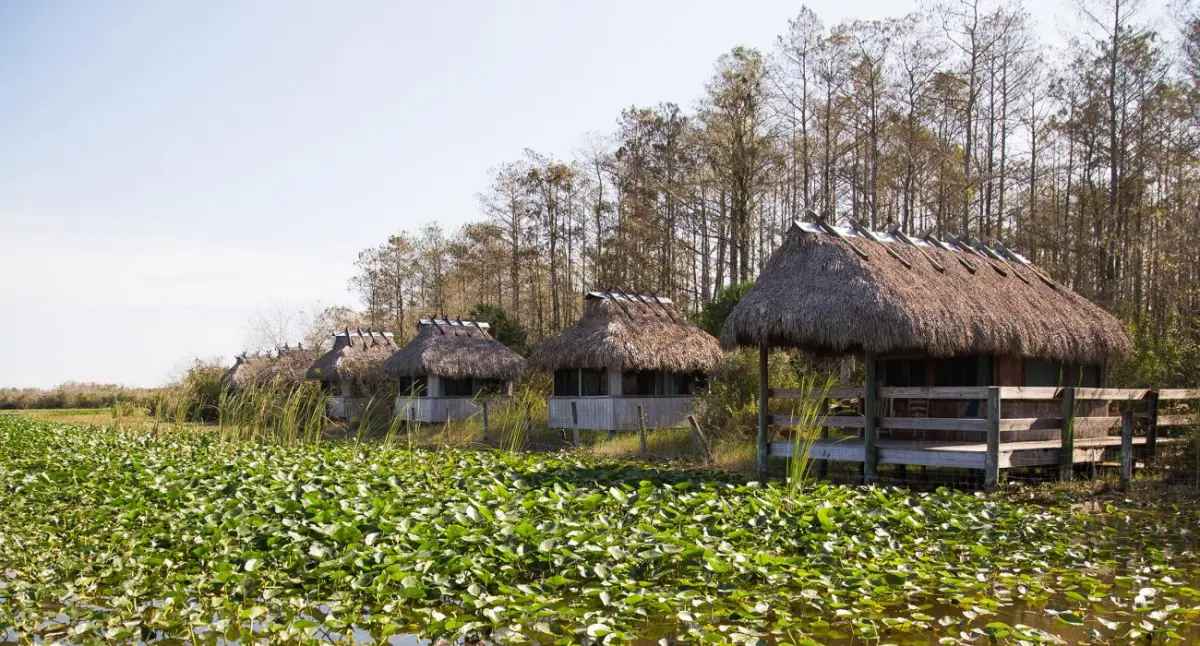
The bill would have amended the Miccosukee Reserved Area act to include the Osceola Camp, an inhabited tribal village located in the Everglades. As approved, the legislation would have directed the Interior Department to consult with the Miccosukee Tribe on the best ways to protect structures from flooding events.

“The Osceola Camp is not only home to tribal members, but it is also a site of historical and cultural importance. Including this land in the reserved area will empower the tribe to protect their community, manage water flow into Everglades national park, and raise structures within the Camp to prevent catastrophic flooding,” Giménez said on the floor.

“The Everglades is the largest subtropical wilderness in the continental United States, and one of the most unique ecosystems on the planet. For generations, the Miccosukee Tribe has served as a responsible steward of the fragile environment. Their leadership in conservation, water management and environmental protection has helped preserve the natural beauty, biodiversity and the cultural heritage of South Florida.”

But Trump, whose Mar-a-Lago home sits less than a two-hour drive from Osceola Camp, said the bill would offer unwarranted special treatment to the Tribe.

“This principle carries especially heavy weight here; it is not the Federal Government’s responsibility to pay to fix problems in an area that the Tribe has never been authorized to occupy,” he said. “For these reasons, I cannot support the Miccosukee Reserved Area Amendments Act.”

The Miccosukee Tribe has not released a statement about the veto on social media.

Earlier this year, Miccosukee Tribe Chair Talbert Cypress legally challenged the opening of the Alligator Alcatraz immigrant detention center in the Everglades. That resulted in a temporary halt of work there, though an appellate court overturned that decision in September.

“This is not the first fight for our land and our rights,” Cypress said in a statement in the Fall. “The Miccosukee Tribe remains steadfast in our commitment to protect our ancestral lands in Big Cypress from development as a permanent detention center. … We will always stand up for our culture, our sovereignty, and for the Everglades. When it comes to our homeland, there is no compromise.”


Source link

Continue Reading

Politics

CFP quarterfinals get started with defending champion Ohio State against Miami in Cotton Bowl

Published

on


Defending national champion Ohio State is back in a familiar spot at the Cotton Bowl, taking on College Football Playoff first-timer Miami in the first of the four quarterfinal games.

The third-ranked Buckeyes (12-1, CFP No. 2 seed), again without a Big Ten title but still with a first-round bye, had 3 1/2 weeks between their 13-10 loss to undefeated No. 1 Indiana in the conference championship game and the Cotton Bowl on Wednesday night.

No. 10 Miami (11-2, CFP No. 10 seed) didn’t even make the Atlantic Coast Conference championship game, but the Hurricanes have a five-game winning streak since an overtime loss Nov. 1 at SMU, less than 25 miles from AT&T Stadium, the home of the NFL’s Dallas Cowboys where the Cotton Bowl is played. They also made their CFP debut in the Lone Star State, winning 10-3 at No. 7 Texas A&M in the first round on Dec. 20.

Ohio State is in its third consecutive Cotton Bowl. The Buckeyes lost the first of those to Missouri when the bowl wasn’t a playoff game in 2023, but they beat Texas 28-14 in a CFP semifinal there last January. They then beat Notre Dame for the national title.

It was also at AT&T Stadium where Ohio State won the first national championship game of the CFP era, over Oregon at the end of the 2014 season when there were only four playoff teams. When the field expanded to 12 last season, all four teams that had first-round byes lost in the quarterfinal round after their extended breaks.

The other three quarterfinal games this postseason — the Orange, Rose and Sugar bowls — are Thursday.

Next for the Cotton Bowl winner is a CFP semifinal at the Fiesta Bowl on Jan. 8 against No. 3 seed Georgia or No. 6 seed Ole Miss, the SEC teams in the Sugar Bowl.

There are five first-team AP All-Americans in the Cotton Bowl, four from Ohio State: Miami native and sophomore receiver Jeremiah Smith, defensive lineman Kayden McDonald, linebacker Arvell Reese and safety Caleb Downs, who was a CFP starter for Alabama in 2023 before being part of Ohio State’s title last season. Miami’s first-team All-America pick was offensive tackle Francis Mauigoa.

Both quarterbacks have been part of national championships but neither as a starter. Heisman Trophy finalist Julian Sayin was a freshman backup behind Will Howard for Ohio State last season. Miami QB Carson Beck, the transfer from Georgia, was part of the Bulldogs’ back-to-back national titles in 2021 and 2022.

___

Republished with permission of The Associated Press.


Source link

Continue Reading

Politics

Donald Trump says he’s dropping push for National Guard in Chicago, LA and Portland, Oregon, for now

Published

on


Trump’s push to deploy the troops has been met with legal challenges at nearly every turn.

President Donald Trump said he’s dropping — for now — his push to deploy National Guard troops in Chicago, Los Angeles and Portland, Oregon, a move that comes after legal roadblocks hung up the effort.

Trump said in a social media post Wednesday that he’s removing the Guard troops for now. “We will come back, perhaps in a much different and stronger form, when crime begins to soar again — Only a question of time!” he wrote.

Troops had already left Los Angeles after the President deployed them earlier this year as part of a broader crackdown on crime and immigration. They had been sent to Chicago and Portland but were never on the streets as legal challenges played out.

Trump’s push to deploy the troops in Democrat-led cities has been met with legal challenges at nearly every turn.

The Supreme Court in December refused to allow the Trump administration to deploy National Guard troops in the Chicago area as part of its crackdown on immigration. The order was not a final ruling but was a significant and rare setback by the high court for the president’s efforts.

In the nation’s capital, District of Columbia Attorney General Brian Schwalb sued to halt the deployments of more than 2,000 guardsmen.

In Oregon, a federal Judge permanently blocked the deployment of National Guard troops there.

California National Guard troops had already been removed from the streets of Los Angeles by Dec. 15 after a court ruling. But an appeals court had paused a separate part of the order that required control of the Guard to return to Gov. Gavin Newsom.

In a Tuesday court filing, the Trump administration said it was no longer seeking a pause in that part of the order. That paves the way for the California National Guard troops to fully return to state control after Trump federalized the Guard in June.

___

Republished with permission of The Associated Press.


Source link

Continue Reading

Politics

Department of Justice is reviewing more than 5.2 million documents related to Jeffrey Epstein

Published

on


The Department of Justice (DOJ) has expanded its review of documents related to the convicted sex offender Jeffrey Epstein to 5.2 million as it also increases the number of attorneys trying to comply with a law mandating release of the files, according to a person briefed on a letter sent to U.S. Attorneys.

The figure is the latest estimate in the expanding review of case files on Epstein and his longtime girlfriend Ghislaine Maxwell that has run more than a week past a deadline set in law by Congress.

The Justice Department has more than 400 attorneys working on the review, but does not expect to release more documents until Jan. 20 or 21, according to the person briefed on the letter who spoke on the condition of anonymity because they were not authorized to discuss it.

The White House did not dispute the figures laid out in the email, and pointed to a statement from Todd Blanche, the Deputy Attorney General who said the administration’s review was an “all-hands-on-deck approach.”

Blanche said Wednesday that lawyers from the Justice Department in Washington, the FBI, the Southern District of Florida, and the Southern District of New York are working “around the clock” to review the files. The additional documents and lawyers related to the case was first reported by The New York Times.

“We’re asking as many lawyers as possible to commit their time to review the documents that remain,” Blanche said. “Required redactions to protect victims take time but they will not stop these materials from being released.”

Still, Attorney General Pam Bondi is facing pressure from Congress after the Justice Department’s rollout of information has lagged behind the Dec. 19 deadline to release the information.

“Should Attorney General Pam Bondi be impeached?” U.S. Rep. Thomas Massie, a Kentucky Republican who helped lead the effort to pass the law mandating the document release, asked on social media this week.

Democrats also are reviewing their legal options as they continue to seize on an issue that has caused cracks in the Republican Party and at times flummoxed President Donald Trump’s administration.

Senate Democratic Leader Chuck Schumer said on social media that the latest figures from the Department of Justice “shows Bondi, Blanche, and others at the DOJ have been lying to the American people about the Epstein files since day one” and pointed out that the documents released so far represented a fraction of the total.

___

Republished with permission of The Associated Press.


Source link

Continue Reading

Trending

Copyright © Miami Select.