Connect with us

Politics

Donald Trump signs executive order that could reclassify marijuana as a less dangerous drug
Published

on


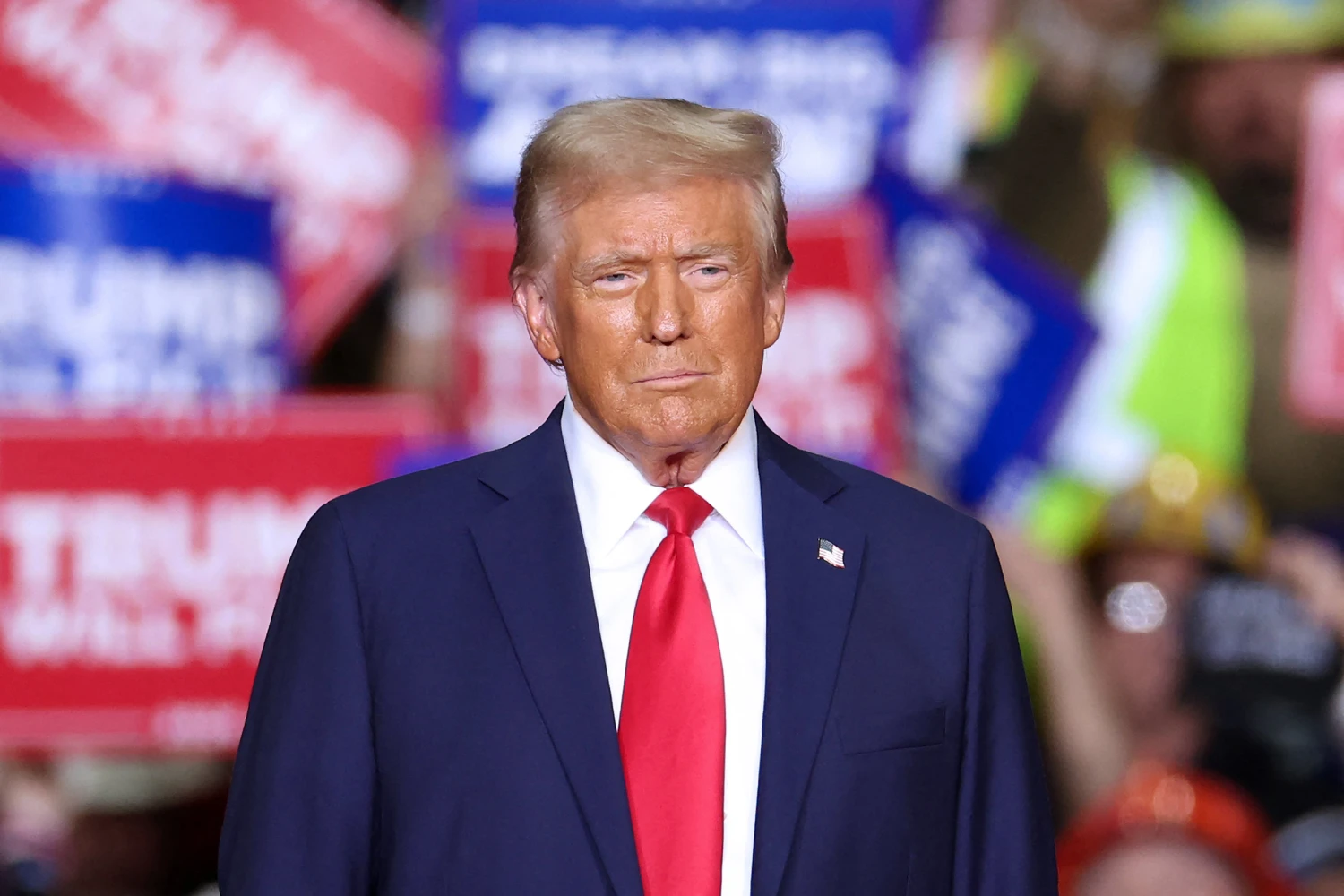
President Donald Trump signed an executive order Thursday that could reclassify marijuana as a less dangerous drug and open new avenues for medical research, a major shift in federal drug policy that inches closer to what many states have done.

The switch would move marijuana away from its current classification as a Schedule I drug, alongside heroin and LSD. Cannabis would instead be a Schedule III substance, like ketamine and some anabolic steroids.

Reclassification by the Drug Enforcement Administration would not make it legal for recreational use by adults nationwide, but it could change how the drug is regulated and reduce a hefty tax burden on the cannabis industry.

The Republican President said he had received a deluge of phone calls supporting the move and its potential to help patients. “We have people begging for me to do this. People that are in great pain,” he said.

Medical marijuana is now allowed by 40 states and Washington, D.C., and many states have also legalized it for recreational use. But U.S. laws have remained stricter, potentially leaving people subject to federal prosecution.

The Justice Department under Trump’s Democratic predecessor, Joe Biden, previously proposed reclassifying marijuana to a Schedule III substance. Unlike Biden, Trump did not have open encouragement from across his party for the move. Some Republicans have spoken out in opposition to any changes and urged Trump to maintain current standards.

Such a switch typically requires an arduous process, including a public comment period that has drawn tens of thousands of reactions from across the U.S. The DEA was still in the review process when Trump took office in January. Trump ordered that process to move along as quickly as legally possible, though an exact timeline remained unclear.

Polling from Gallup shows Americans largely back a less restrictive approach: Support for marijuana legalization has grown from just 36% in 2005 to 64% this year. Yet that’s down slightly from a couple of years ago, primarily because of declining support among Republicans, Gallup said.

Trump’s order also calls for expanded research and access to CBD, a legal and increasingly popular hemp-derived product whose benefits to treat things like pain, anxiety and sleep issues are debated by experts.

A new Medicare pilot program would allow older adults to access legal hemp-derived CBD at no cost, if recommended by a doctor, said Dr. Mehmet Oz, who heads the Centers for Medicare and Medicaid Services.

Still, the marijuana changes are not universally welcomed. More than 20 Republican senators, several of them staunch Trump allies, signed a letter this year urging the President to keep marijuana a Schedule I drug.

Led by North Carolina Sen. Ted Budd, the group argued that marijuana continues to be dangerous and that a shift would “undermine your strong efforts to Make America Great Again.” They argued, too, that marijuana negatively affects users’ physical and mental health, as well as road and workplace safety.

“The only winners from rescheduling will be bad actors such as Communist China, while Americans will be left paying the bill,” the letter said, referring to China’s place in the cannabis market.

In the early days of the second Trump administration, the Justice Department showed little interest in discussing marijuana rescheduling, which had encountered strong resistance from inside the DEA under Biden, according to a former U.S. official who spoke on the condition of anonymity in an effort to avoid retaliation.

Trump has made his crusade against other drugs, especially fentanyl, a feature of his second term, ordering U.S. military attacks on Venezuelan and other boats the administration insists are ferrying drugs. He signed another executive order declaring fentanyl a weapon of mass destruction.

Jack Riley, a former deputy administrator of the DEA, backed the focus on the drug war as a national security priority, but said marijuana rescheduling sends a conflicting message.

“He’s blowing up boats in Latin America that he says are full of fentanyl and cocaine but on the other hand loosening the restrictions that will allow wider exposure to a first-level drug,” said Riley, who was in the running to lead the DEA upon Trump’s return to the White House. “That is clearly a contradiction.”

Opponents like the group Smart Approaches to Marijuana vowed to sue if the reclassification goes through.

On the other end of the spectrum, some pro-marijuana advocates want to see the government go further and treat cannabis more like alcohol. Trump hasn’t committed to bigger steps like decriminalizing marijuana, and said Thursday that he encouraged his own children not to use drugs.

Still, he said “the facts compel” the government to recognize that marijuana can have legitimate medical applications. And it has become a part of the health care environment in many states.

Currently, 30,000 licensed health care practitioners are authorized to recommend its use for more than 6 million patients for at least 15 medical conditions, the U.S. Department of Health and Human Services found.

The Food and Drug Administration has found credible scientific support for its use to treat anorexia-related medical conditions, nausea, vomiting and pain. Older adults, in particular, are using it for chronic pain, which afflicts 1 in 3 from that age group.

___

Republished with permission of The Associated Press.


Source link

Continue Reading

Politics

Miami Beach Commission censures Fabián Basabe, prompting heated exchange at City Hall

Published

on


After months of public criticism by Rep. Fabián Basabe that culminated in the approval of a state audit of Miami Beach’s government operations, the City Commission has formally censured the lawmaker.

The seven-member panel unanimously approved a resolution denouncing Basabe’s allegations of corruption, mismanagement, favoritism, unethical behavior, improper contracting and cronyism — claims that city officials say are unsupported by evidence.

“Unsubstantiated allegations made by public officials undermine public trust, harm the City’s reputation, disparage City employees and elected officials, and create unnecessary doubt in the integrity of municipal governance,” the resolution states.

The item passed Wednesday as part of the Commission’s consent agenda, but not before a heated exchange during public comment between Basabe and Mayor Steven Meiner, who at one point threatened to have the lawmaker removed from the chamber.

Basabe used his remarks to reiterate criticism of the city’s homelessness ordinance, which he has argued is weaker than state law. City officials dispute that claim, citing census data from the Miami-Dade Homeless Trust and noting that Miami Beach’s ordinance prohibits public camping at all times, while state law bans it only overnight.

Basabe also claimed several people had privately told him Miami Beach needs to be audited, including “the Mayor’s most trusted adviser.” While the city already has an independent Inspector General, Basabe has argued internal oversight mechanisms are compromised by local influence.

Meiner said he welcomes the state audit and any corrective findings it may produce, but argued Basabe’s broader accusations go far beyond legitimate oversight.

“The reason why this item is on the agenda is because you move from issue to issue, saying things that are completely fabricated, untrue and have no basis in any evidence whatsoever,” Meiner said. “That is intolerable.”

Meiner accused Basabe of seeking headlines to distract from what he characterized as a weak legislative record. “You’re a failed legislator,” the Mayor said.

Of 36 bills Basabe has been the prime sponsor of since winning office in 2022, he has passed 10, nine of which passed in the 2025 Session. He has also brought millions in state appropriations back to his district.

Asked to provide evidence of poor fiscal or operational oversight, Basabe cited a 2021 city contract with FPI Security Services, alleging the company was not in good standing at the time. City Attorney Richard Dopico later said city and state records show that assertion is incorrect.

A brief shouting match followed, during which Basabe challenged Meiner to a public debate. Commissioner Alex Fernandez dismissed the idea as a “waste of time.”

“I spent two hours trying to find peace with the Representative, extending yet another olive branch,” Fernandez said. “It’s not about the public. It’s all about him and elevating himself.”

Fernandez said that during their meeting, Basabe airdropped him an endorsement from an elected official from another municipality and asked for a similar one from him. Fernandez said he refused.

“Two weeks later, we’re getting audited,” he said. “Let that sink in.”

Basabe denied ever seeking Fernandez’s endorsement. “I would never take it unless you give the city an apology,” he said.

Commissioner Tanya Bhatt — a co-sponsor of the resolution along with Meiner, Fernandez and Commissioner Laura Dominguez, whom Basabe has also accused of impropriety — said she rarely responds to comments Basabe makes in public and online because they are “so fallacious.”

“It’s really disappointing to see an elected Representative who’s supposed to represent all of us attacking the city, its leadership and its residents,” Bhatt said, adding that while she welcomes the audit, she takes exception with what she called “one-sided and vitriolic on our policies, the truth (and) individuals with no backup. It’s exhausting.”

Commissioner Joseph Magazine said he remains open to dialogue with Basabe, but objected to the lawmaker blaming the City Commission for a pair of attacks by homeless people on Miami Beach residents in the past two years.

“These were people (who) were arrested … and released numerous times, people that had no business whatsoever being on our streets, and I don’t mean in a homeless fashion; I mean outside the prison system,” he said. “If we want to make our region better, let’s work with our partners at the state, at all levels, to try and fix that broken criminal justice system.”

Basabe has accused the resolution’s sponsors of turning a routine oversight issue into a political fight and criticized placing the item on the consent agenda.

“This alone tells you how uncomfortable they are with transparency,” he said.

Several residents spoke in Basabe’s defense. Larry Shafer urged Commissioners to defer the resolution until after the audit, while Sharon Weiss said the state review could produce constructive reforms rather than punishment.

Hotelier Mitch Novick questioned consent agenda items approving large incentives — including $800,000 over four years for Playboy — and utility rate increases, noting the city’s budget has more than doubled in 12 years.

Wayne Roberts raised concerns about city spending, citing a Fire Department contract he claimed boosted average annual salaries to “$350,000 with benefits.”

City Manager Eric Carpenter disputed that figure, saying the average firefighter salary is roughly half that amount.

___

Editor’s note: This report was updated to include information about Basabe’s legislative record.


Source link

Continue Reading

Politics

Paul Renner launches Flagler County Leadership Committee

Published

on


Gubernatorial candidate Paul Renner became House Speaker while representing people in Flagler County. Now, he’s emphasizing those local connections with his newly launched Flagler County Leadership Committee.

The coalition of elected officials, faith leaders and members of the business community will help with grassroots outreach as Renner pursues the Republican nomination.

“Flagler County is my home. It is a growing and vibrant community, and I’m incredibly grateful and honored for the leadership, trust, and support of these men and women,” Renner said “This committee represents the best of Flagler County.”

Renner added that these locals “are hardworking Floridians who understand the values that make our state strong — faith, freedom, economic opportunity, and safe communities.”

The committee launches with these members:

James Gardner Jr., Flagler County Property Appraiser

Greg Hansen, Flagler County Board of County Commissioners, District 2

Christy Chong, Flagler County School Board Chair

Donald O’Brien, former Chair of Flagler County Board of County Commissioners

David Ayres, civic leader and radio personality

Michael Chiumento, lawyer and Flagler County business leader

Sharon Demers, Republican grassroots leader

Ed Fuller, civic leader and Flagler Tiger Bay Board member

Patrick Juliano, first responder union leader

Samuel Royer, U.S. Marine Corps veteran and community advocate

Lacy Martin, marketing strategist and community advocate

Greg Peters, co-founder and lead pastor at Parkview Church

Denise Peters, co-founder of Parkview Church

Randy Stapleford, retired U.S. Navy Captain and civic leader


Source link

Continue Reading

Politics

Senator Geraldine F. Thompson Way to be unveiled Friday in Orlando

Published

on


Officials are scheduled Friday to officially recognize Senator Geraldine F. Thompson Way — a renamed portion of South Street in downtown Orlando honoring the late Senator who died this year.

Sen. LaVon Bracy Davis and Orlando Mayor Buddy Dyer are expected to attend the 10:30 a.m. ceremony to unveil the new road sign.

Bracy Davis, who won a Special Election to finish the remainder of Thompson’s term, said on social media that the event is paying tribute to Thompson to “honor her decades of leadership, her dedication to preserving African American history, and her unwavering service to the people of Florida.”

Thompson died at age 76 in February from knee replacement surgery complications.

Thompson was the Director of the Wells’Built Museum of American-American History in Orlando’s Parramore district. Fittingly, Senator Geraldine F. Thompson Way will be renamed on West South Street between South Division Avenue and U.S. 441, which passes by the museum.

“Sen. Geraldine Thompson was a force — a trailblazer, a historian, a fierce advocate, and a devoted mother and grandmother who worked every day to uplift all Floridians, ensuring that no one was left behind,” U.S. Rep. Maxwell Frost said in a statement at the time of her death.

Other lawmakers, both Republicans and Democrats, put out statements of support and tributes after her death.

Thompson, a Democrat, had represented Orlando in the Legislature for two decades. At one point, the Orlando Sentinel described her as the “epicenter of Black history in Orlando.”

She took people on bus tours of the city’s Black history, wrote a book on Orlando’s African American community, hosted Juneteenth events and helped launch Orlando’s early celebrations to honor Martin Luther King Jr. 

Last month, officials gathered to open Harris Rosen Way, the honorary roadway on International Drive between State Road 528 and Sand Lake Road.

Rosen, the CEO of the largest independent hotel chain in Florida, died at age 85 in 2024.


Source link

Continue Reading

Trending

Copyright © Miami Select.