Connect with us

Politics

Donald Trump sets off for the Mideast to mark a ceasefire deal and urge Arab leaders to seize the moment
Published

on


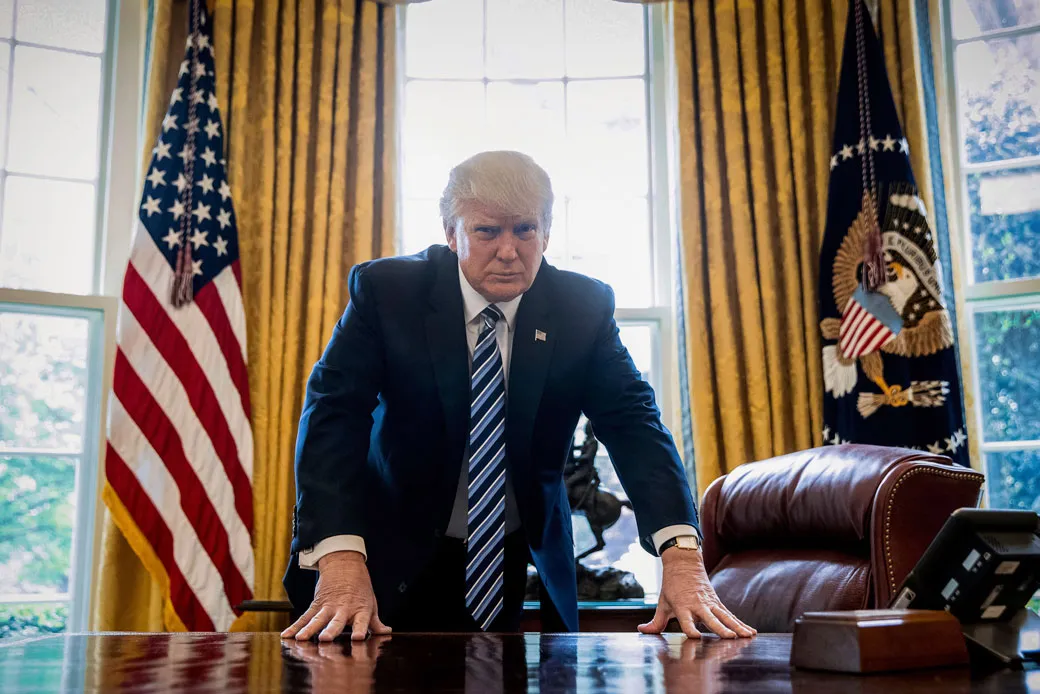
President Donald Trump is setting off for Israel and Egypt on Sunday to celebrate the U.S.-brokered ceasefire and hostage deal between Israel and Hamas and urge Middle East allies to seize the opportunity to build a durable peace in the volatile region.

It’s a fragile moment with Israel and Hamas only in the early stages of implementing the first phase of the Trump agreement designed to bring a permanent end to the war sparked by the Oct. 7, 2023, attack on Israel by Hamas-led militants.

Trump thinks there is a narrow window to reshape the Mideast and reset long-fraught relations between Israel and its Arab neighbors.

It is a moment, the Republican president says, that has been helped along by his administration’s support of Israel’s decimation of Iranian proxies, including Hamas in Gaza and Hezbollah in Lebanon.

The White House says momentum is also building because Arab and Muslim states are demonstrating a renewed focus on resolving the broader, decades-long Israeli-Palestinian conflict and, in some cases, deepening relations with the United States

“I think you are going to have tremendous success and Gaza is going to be rebuilt,” Trump said Friday. “And you have some very wealthy countries, as you know, over there. It would take a small fraction of their wealth to do that. And I think they want to do it.”

The first phase of the ceasefire agreement calls for the release of the final 48 hostages held by Hamas, including about 20 believed to be alive; the release of hundreds of Palestinian prisoners held by Israel; a surge of humanitarian aid to Gaza; and a partial pullback by Israeli forces from Gaza’s main cities.

Israeli troops on Friday finished withdrawing from parts of Gaza, triggering a 72-hour countdown under the deal for Hamas to release the Israeli hostages, potentially while Trump is on the ground there. He said he expected their return to be completed on Monday or Tuesday.

Trump said he will first visit Israel, where he has been invited to address Israel’s parliament, the Knesset, an honor last extended to President George W. Bush during a visit in 2008. Trump then will travel to Egypt, where he and Egyptian President Abdel-Fattah el-Sissi will lead a summit in Sharm el-Sheikh with leaders from more than 20 countries to discuss peace in Gaza and the broader Middle East.

It is a tenuous truce and it is unclear whether the sides have reached any agreement on Gaza’s postwar governance, the territory’s reconstruction and Israel’s demand that Hamas disarm. Negotiations over those issues could break down, and Israel has hinted it may resume military operations if its demands are not met.

“I think the chances of (Hamas) disarming themselves, you know, are pretty close to zero,” H.R. McMaster, a national security adviser during Trump’s first term, said at an event hosted by the Foundation for the Defense of Democracies on Thursday. He said he thought what probably would happen in the coming months is that the Israeli military “is going to have to destroy them.”

Israel continues to rule over millions of Palestinians without basic rights as settlements expand rapidly across the occupied West Bank. Despite growing international recognition, Palestinian statehood appears exceedingly remote because of Israel’s opposition and actions on the ground.

The war has left Israel isolated internationally and facing allegations of genocide, which it denies. International arrest warrants against Israeli Prime Minister Benjamin Netanyahu and his former defense minister are in effect, and the United Nations’ highest court is considering allegations of genocide brought by South Africa.

Hamas has been militarily decimated and has given up its only bargaining chip with Israel by releasing the hostages. But the Islamic militant group is still intact and could eventually rebuild if there’s an extended period of calm.

Netanyahu reiterated that Israel would continue with its demilitarization of Hamas after the hostages are returned.

“Hamas agreed to the deal only when it felt that the sword was on its neck — and it is still on its neck,” Netanyahu said Friday as Israel began to pull back its troops.

Much of Gaza has been reduced to rubble and rebuilding is expected to take years. The territory’s roughly 2 million residents continue to struggle in desperate conditions.

Under the deal, Israel agreed to reopen five border crossings, which will help ease the flow of food and other supplies into Gaza, parts of which are experiencing famine.

Trump is also standing up a U.S.-led civil-military coordination center in Israel to help facilitate the flow of humanitarian aid as well as logistical and security assistance into Gaza.

Roughly 200 U.S. troops will be sent to help support and monitor the ceasefire deal as part of a team that includes partner nations, nongovernmental organizations and private-sector players.

The White House has signaled that Trump is looking to quickly return attention to building on a first-term effort known as the Abraham Accords, which forged diplomatic and commercial ties between Israel and the United Arab Emirates, Bahrain and Morocco.

A permanent agreement in Gaza would help pave the path for Trump to begin talks with Saudi Arabia as well Indonesia, the most populous Muslim country, toward normalizing ties with Israel, according to a senior Trump administration official who briefed reporters on the condition of anonymity.

Such a deal with Saudi Arabia, the most powerful and wealthy Arab state, has the potential to reshape the region and boost Israel’s standing in historic ways.

But brokering such an agreement remains a heavy lift as the kingdom has said it won’t officially recognize Israel before a resolution to the Israeli-Palestinian conflict.

___

Republished with permission of The Associated Press.


Source link

Continue Reading

Politics

Florida TaxWatch analysis offers recommendations to stabilize local Sheriff’s Offices

Published

on


A government watchdog group has conducted an analysis of Florida’s Sheriff’s Offices, proposing recommendations to make the local law enforcement agencies more financially efficient and help with hiring.

Florida TaxWatch published its Florida Sheriff’s Staffing Analysis, which looks at staffing and hiring challenges facing the law enforcement departments. The study, conducted in a partnership with the Florida Sheriff’s Association, concluded there are serious challenges facing Sheriff’s Offices in Florida.

“Law enforcement is struggling to overcome wage competition amid a limited talent pool. Looking ahead, local and state government must consider ways to expand the talent pool and more accurately align staffing needs with local demand,” stated the report, which was based on surveys with local Sheriff’s Offices throughout the state.

TaxWatch issued five key findings and suggested responses by state government, including:

— The Florida Department of Law Enforcement should develop a standardized approach to compare staffing needs and better target supporting areas that need the most help.

— The state of Florida should work with stakeholders in developing Career and Professional Education programs at high schools and career services at Florida state colleges that encourage new workforce entrants to consider law enforcement as a potential career path.

— Local Sheriff’s Offices should consider utilizing regional collaboration to develop regional law enforcement recruitment efforts and help their purchasing power.

— Small counties should consider whether consolidation of services is the best way to optimize their available resources.

— Florida’s Department of Governmental Efficiency team should be tasked with assisting local governments in identifying the level of funding appropriate for Sheriff’s Offices.

TaxWatch President and CEO Dominic Calabro said the rapidly growing population in Florida is outpacing the ability of local Sheriff’s Offices to handle the demands.

“Here in Florida, the number of employed full-time law enforcement officers has not kept pace with growing demand. From 2014 to 2023, Florida’s population grew by 15.6%, but the number of employed sworn law enforcement officers only grew by 5.6%. Moreover, in 2024, the vacancy rates for deputy sheriffs ranged from 0% to 19% among Florida sheriff’s offices,” Calabro said.

“The results of the joint survey suggest that even though recent legislation improved recruitment efforts, a shortage of officers is still felt statewide. The difficulties imposed by a limited talent pool and the resulting wage competition are not sustainable. Ultimately, Florida taxpayers risk longer response times to calls for service in the absence of a long-term solution.”

TaxWatch Executive Vice President and General Counsel Jeff Kottkamp said Sheriff’s Offices aren’t the only law enforcement agencies operating in Florida and the need for funding by multiple agencies is straining resources.

“It is important to note that sheriffs’ offices are not only competing with each other for law enforcement officers but also with law enforcement agencies operated by national, state, and local governments. In fact, nearly three quarters of our survey respondents say they struggle to maintain their staffing level, with about 30% of all respondents struggling to reach anywhere near their desired staffing level,” Kottkamp said.


Source link

Continue Reading

Politics

Trulieve ‘grateful’ for ‘bold and historic’ marijuana rescheduling

Published

on


President Donald Trump’s push to reschedule pot from Schedule I to Schedule III is drawing praise from Florida’s biggest cannabis company.

“This bold and historic direction from President Trump represents long overdue change and a major milestone in cannabis reform,” said Trulieve CEO Kim Rivers.

“Trulieve is grateful for the decisive action taken by the Administration that acknowledges the medical benefits of cannabis, supports licensed and regulated operators, and allows law enforcement agencies to prosecute bad actors. We are committed to supporting the Administration throughout this process.”

Rivers has been central in encouraging Trump to move forward on a policy change that the industry has wanted for years.

Trump’s decision to urge Attorney General Pam Bondi to change policy would mean marijuana will be treated less like a dangerous drug and more like something with medical benefits.

Schedule I includes hard drugs, such as heroin, lysergic acid diethylamide (LSD), marijuana (cannabis), 3,4-methylenedioxymethamphetamine (ecstasy), methaqualone, and peyote.

Schedule III includes drugs with a “moderate to low potential for physical and psychological dependence,” like products containing less than 90 milligrams of codeine per dosage unit (Tylenol with codeine), ketamine, anabolic steroids, and testosterone.

For Trulieve, the move is significant. The company describes rescheduling as “an important first step in achieving practical common sense cannabis reform.”

“Moving marijuana to Schedule III opens the door for more robust research of medical marijuana, removes the punitive tax burden imposed by Section 280E of the tax code, and retains flexibility for law enforcement to target and punish illicit operators,” Trulieve said in a press release.

Section 280E is especially significant, given that cannabis companies have been frustrated in banking due to the plant’s Schedule I designation. Securities for Trulieve and other multi-state operators are traded over the counter currently, forcing many retail investors to have to buy ETFs for exposure to these historically volatile stocks.


Source link

Continue Reading

Politics

National rural health initiative that could help Florida partners with several key players

Published

on


Gainwell Technologies, a Texas-based provider of digital and cloud-enabled health and human services program solutions, has added several strategic partners to its Rural Health Transformation Collaborative.

The nationwide initiative aims to stabilize rural hospitals, expand access to care and build long-term sustainability in underserved communities by connecting data, systems, and partners to interoperate and enable better coordination and decision-making across rural health ecosystems.

The collaborative brings together state agencies, health care providers and technology and community partners in a connected model that supports the Centers for Medicare & Medicaid Services (CMS) Rural Health Transformation Program (RHTP). Gainwell serves as the data integrator and information broker, enabling collaboration among participants to support program design, funding, and outcomes reporting.

Now, four partners will add to the effort, including Abacus Insights, Certilytics, Databricks and Findhelp, expanding an initiative that could help Florida improve its rural health access and outcomes.

Abacus unifies clinical, consumer and third-party administrative and financial data into a secure HITRUST-certified data foundation. Its services enable states and Medicaid stakeholders to leverage better data and existing tools for care program design, reporting and program measurement.

Certilytics provides states with advanced, next-generation analytic intelligence to assess rural health and plan accordingly to improve outcomes. Using predictive insights into health risk factors, chronic disease progression and care gaps, the company helps states anticipate future needs to implement targeted programs and address provider and service gaps. Additionally, the company allows states to track the effectiveness and impacts of the new rural health programs.

Databricks’ data intelligence platform, delivered by Gainwell, uses diverse data sources such as clinical records, claims and social determinants of health into a single source, using advanced analytics and artificial intelligence to turn raw data into actionable insights.

And Findhelp supports social care coordination for more than 70% of Medicaid managed care plans, which reaches more than 91% of Medicaid beneficiaries nationwide. States, health systems and payers use its network to manage health referrals, track health outcomes and document volunteer and job-training activities for community engagement attestation.

“Rural hospitals are the lifeblood of their communities, yet too many are at risk,” said Kathy Bristow, Senior Vice President for Population Health Management at Gainwell. “By serving as the data hub and connector, and with the strength of our new partners, we’re helping states and providers not only survive, but thrive—creating a sustainable future for rural health care.”

By partnering with other companies, Gainwell will be able to simplify planning, align with CMS guidelines and enable outcome measurement.

“As the backbone of the Collaborative, Gainwell is ensuring that data becomes the catalyst for stronger networks, smarter policy, and healthier rural populations,” Bristow added. “When data drives decisions, rural hospitals and communities can thrive.”

The collaborative is working to equip rural hospitals with the technology and information to improve operations and maintain or establish financial resilience. Rather than delivering care or funding operations, Gainwell enables state agencies to use data insights to strengthen operations, model financial performance, and identify sustainability strategies.

Through the Gainwell Rural Health Transformation Collaborative, the company is building data infrastructure to drive measurable clinical and economic improvements—supporting initiatives that reduce maternal mortality, expand access to behavioral health, and improve chronic disease management —while empowering rural partners to act on insights.

Gainwell is a leader in digital and cloud-enabled health and human services program solutions. It has more than 50 years of experience modernizing Medicaid and public health programs through operational efficiency and enhanced provider experiences.


Source link

Continue Reading

Trending

Copyright © Miami Select.