Connect with us

Politics

Donald Trump administration releases FBI records on Martin Luther King Jr. despite his family’s opposition
Published

on


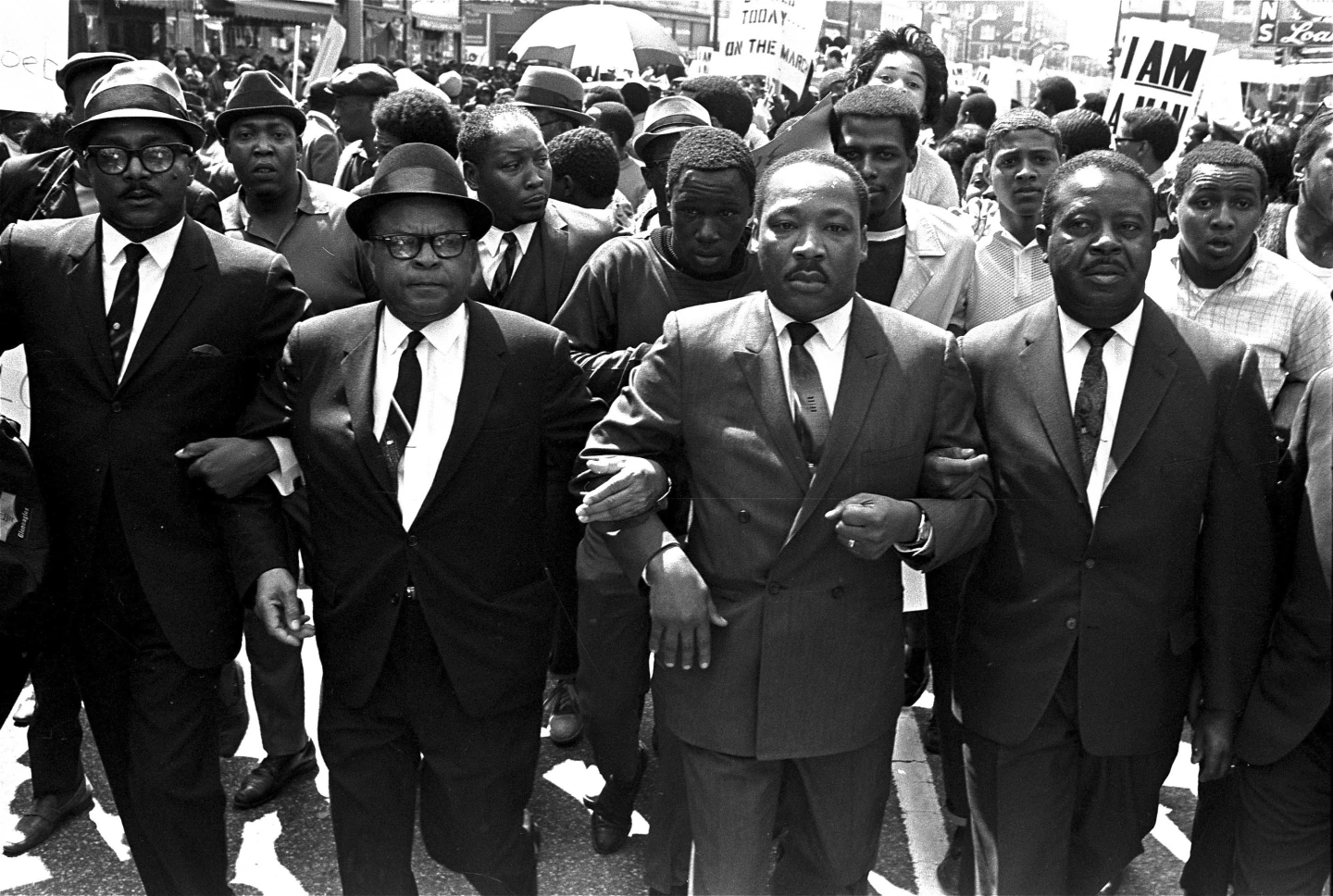
The Donald Trump administration on Monday released records of the FBI’s surveillance of Martin Luther King Jr., despite opposition from the slain Nobel laureate’s family and the civil rights group that he led until his 1968 assassination.

The digital document dump includes more than 240,000 pages of records that had been under a court-imposed seal since 1977, when the FBI first gathered the records and turned them over to the National Archives and Records Administration.

In a lengthy statement released Monday, King’s two living children, Martin III, 67, and Bernice, 62, said their father’s killing has been a “captivating public curiosity for decades.” But the pair emphasized the personal nature of the matter and urged that the files “be viewed within their full historical context.”

The Kings got advance access to the records and had their own teams reviewing them. Those efforts continued even as the government granted public access. Among the documents are leads the FBI received after King’s assassination and details of the CIA’s fixation on King’s pivot to international anti-war and anti-poverty movements in the years before he was killed. It was not immediately clear whether the documents shed new light on King’s life, the Civil Rights Movement or his murder.

“As the children of Dr. King and Mrs. Coretta Scott King, his tragic death has been an intensely personal grief — a devastating loss for his wife, children, and the granddaughter he never met — an absence our family has endured for over 57 years,” they wrote. “We ask those who engage with the release of these files to do so with empathy, restraint, and respect for our family’s continuing grief.”

They also repeated the family’s long-held contention that James Earl Ray, the man convicted of assassinating King, was not solely responsible, if at all.

Bernice King was 5 years old when her father was killed at the age of 39. Martin III was 10.

A statement from the office of Director of National Intelligence Tulsi Gabbard called the disclosure “unprecedented” and said many of the records had been digitized for the first time. She praised President Donald Trump for pushing the issue.

‘Transparency’ to some, ‘distraction’ for others

Trump promised as a candidate to release files related to President John F. Kennedy’s 1963 assassination. When Trump took office in January, he signed an executive order to declassify the JFK records, along with those associated with Robert F. Kennedy’s and MLK’s 1968 assassinations.

The government unsealed the JFK records in March and disclosed some RFK files in April.

The announcement from Gabbard’s office included a statement from Alveda King, Martin Luther King Jr.’s niece, who is an outspoken conservative and has broken from King’s children on various topics — including the FBI files. Alveda King said she was “grateful to President Trump” for his “transparency.”

Separately, Attorney General Pam Bondi’s social media account featured a picture of the Attorney General with Alveda King.

Besides fulfilling Trump’s order, the latest release means another alternative headline for the president as he tries to mollify supporters angry over his administration’s handling of records concerning the sex trafficking investigation of Jeffrey Epstein, who killed himself behind bars while awaiting trial in 2019, during Trump’s first presidency. Trump last Friday ordered the Justice Department to release grand jury testimony but stopped short of unsealing the entire case file.

Bernice King and Martin Luther King III did not mention Trump in their statement Monday. But Bernice King later posted on her personal Instagram account a black-and-white photo of her father, looking annoyed, with the caption “Now, do the Epstein files.”

And some civil rights activists did not spare the president.

“Trump releasing the MLK assassination files is not about transparency or justice,” said the Rev. Al Sharpton. “It’s a desperate attempt to distract people from the firestorm engulfing Trump over the Epstein files and the public unraveling of his credibility among the MAGA base.”

The King Center, founded by King’s widow and now led by Bernice King, reacted separately from what Bernice said jointly with her brother. The King Center statement framed the release as a distraction — but from more than short-term political controversy.

“It is unfortunate and ill-timed, given the myriad of pressing issues and injustices affecting the United States and the global society,” the King Center, linking those challenges to MLK’s efforts. “This righteous work should be our collective response to renewed attention on the assassination of a great purveyor of true peace.”

Records mean a new trove of research material

The King records were initially intended to be sealed until 2027, until Justice Department attorneys asked a federal judge to lift the sealing order early. Scholars, history buffs and journalists have been preparing to study the documents for new information about his assassination on April 4, 1968, in Memphis, Tennessee.

The Southern Christian Leadership Conference, which King co-founded in 1957 as the Civil Rights Movement blossomed, opposed the release. The group, along with King’s family, argued that the FBI illegally surveilled King and other civil rights figures, hoping to discredit them and their movement.

It has long been established that then-FBI Director J. Edgar Hoover was intensely interested if not obsessed with King and others he considered radicals. FBI records released previously show how Hoover’s bureau wiretapped King’s telephone lines, bugged his hotel rooms and used informants to gather information, including evidence of King’s extramarital affairs.

“He was relentlessly targeted by an invasive, predatory, and deeply disturbing disinformation and surveillance campaign orchestrated by J. Edgar Hoover through the Federal Bureau of Investigation,” the King children said in their statement.

“The intent … was not only to monitor, but to discredit, dismantle and destroy Dr. King’s reputation and the broader American Civil Rights Movement,” they continued. “These actions were not only invasions of privacy, but intentional assaults on the truth — undermining the dignity and freedoms of private citizens who fought for justice, designed to neutralize those who dared to challenge the status quo.”

The Kings said they “support transparency and historical accountability” but “object to any attacks on our father’s legacy or attempts to weaponize it to spread falsehoods.”

Opposition to King intensified even after the Civil Rights Movement compelled Congress and President Lyndon B. Johnson to enact the Civil Rights Act of 1964 and the Voting Rights Act of 1965. After those victories, King turned his attention to economic justice and international peace. He criticized rapacious capitalism and the Vietnam War. King asserted that political rights alone were not enough to ensure a just society. Many establishment figures like Hoover viewed King as a communist threat.

King’s children still don’t accept the original explanation

King was assassinated as he was aiding striking sanitation workers in Memphis, part of his explicit turn toward economic justice.

Ray pleaded guilty to King’s murder. Ray later renounced that plea and maintained his innocence until his death in 1998.

aKing family members and others have long questioned whether Ray acted alone, or if he was even involved. Coretta Scott King asked for the probe to be reopened, and in 1998, then-Attorney General Janet Reno ordered a new look. Reno’s Justice Department said it “found nothing to disturb the 1969 judicial determination that James Earl Ray murdered Dr. King.”

In their latest statement, Bernice King and Martin Luther King III repeated their assertions that Ray was set up. They pointed to a 1999 civil case, brought by the King family, in which a Memphis jury concluded that Martin Luther King Jr. had been the target of a conspiracy.

“As we review these newly released files,” the Kings said, “we will assess whether they offer additional insights beyond the findings our family has already accepted.”

——

Republished with permission of The Associated Press.


Post Views: 0


Source link

Continue Reading

Politics

Debra Tendrich turns ‘pain into policy’ with sweeping anti-domestic violence proposal

Published

on


Florida could soon rewrite how it responds to domestic violence.

Lake Worth Democratic Rep. Debra Tendrich has filed HB 277, a sweeping proposal aimed at modernizing the state’s domestic violence laws with major reforms to prevention, first responder training, court safeguards, diversion programs and victim safety.

It’s a deeply personal issue to Tendrich, who moved to Florida in 2012 to escape what she has described as a “domestic violence situation,” with only her daughter and a suitcase.

“As a survivor myself, HB 277 is more than legislation; it is my way of turning pain into policy,” she said in a statement, adding that months of roundtables with survivors and first responders “shaped this bill from start to finish.”

Tendrich said that, if passed, HB 277 or its upper-chamber analogue (SB 682) by Miami Republican Sen. Alexis Calatayud would become Florida’s most comprehensive domestic violence initiative, covering prevention, early intervention, criminal accountability and survivor support.

It would require mandatory strangulation and domestic violence training for emergency medical technicians and paramedics, modernize the legal definition of domestic violence, expand the courts’ authority to order GPS monitoring and strengthen body camera requirements during investigations.

The bill also creates a treatment-based diversion pathway for first-time offenders who plead guilty and complete a batterers intervention program, mental-health services and weekly court-monitored progress reporting. Upon successful completion, charges could be dismissed, a measure Tendrich says will reduce recidivism while maintaining accountability.

On the victim-safety side, HB 277 would flag addresses for 12 months after a domestic-violence 911 call to give responders real-time risk awareness. It would also expand access to text-to-911, require pamphlets detailing the medical dangers of strangulation, authorize well-check visits tied to lethality assessments, enhance penalties for repeat offenders and include pets and service animals in injunctions to prevent coercive control and harm.

Calatayud called it “a tremendous honor and privilege” to work with Tendrich on advancing policy changes “that both law enforcement and survivors of domestic abuse or relationship violence believe are meaningful to protect families across our communities.”

“I’m deeply committed to championing these essential reforms,” she added, saying they would make “a life-or-death difference for women and children in Florida.”

Organizations supporting HB 277 say the bill reflects long-needed, practical reform. Palm Beach County firefighters union IAFF Local 2928 said expanded responder training and improved dispatch information “is exactly the kind of frontline-focused reform that saves lives.”

The Florida Police Benevolent Association called HB 277 a “comprehensive set of measures designed to enhance protections” and pledged to help advance it through the Legislature.

The Animal Legal Defense Fund praised provisions protecting pets in domestic violence cases, noting research showing that 89% of women with pets in abusive relationships have had partners threaten or harm their animals — a major barrier that keeps victims from fleeing.

Florida continues to see high levels of domestic violence. The National Coalition Against Domestic Violence estimates that 38% of Florida women and 29% of Florida men experience intimate-partner violence in their lifetimes — among the highest rates in the country.

With costs rising statewide, HB 277 also increases relocation assistance through the Crimes Compensation Trust Fund, which advocates say is essential because the current $1,500 cap no longer covers basic expenses for victims fleeing dangerous situations.

Tendrich said survivors who contributed to the bill, which Placida Republican Rep. Danny Nix is co-sponsoring, “finally feel seen.”

“This bill will save lives,” she said. “I am proud that this bill has bipartisan support, and I am even more proud of the survivors whose bravery drives every line of this legislation.”


Source link

Continue Reading

Politics

Ash Marwah, Ralph Massullo battle for SD 11 Special Election

Published

on


Even Ash Marwah knows the odds do him no favors.

A Senate district that leans heavily Republican plus a Special Election just weeks before Christmas — Marwah acknowledges it adds up to a likely Tuesday victory for Ralph Massullo.

The Senate District 11 Special Election is Tuesday to fill the void created when Blaise Ingoglia became Chief Financial Officer.

It pits Republican Massullo, a dermatologist and Republican former four-term House member from Lecanto, against Democrat Marwah, a civil engineer from The Villages.

Early voter turnout was light, as would be expected in a low-key standalone Special Election: At 10% or under for Hernando and Pasco counties, 19% in Sumter and 15% in Citrus.

Massullo has eyed this Senate seat since 2022 when he originally planned to leave the House after six years for the SD 11 run. His campaign ended prematurely when Gov. Ron DeSantis backed Ingoglia, leaving Massullo with a final two years in office before term limits ended his House career.

When the SD 11 seat opened up with Ingoglia’s CFO appointment, Massullo jumped in and a host of big-name endorsements followed, including from DeSantis, Ingoglia, Agriculture Commissioner Wilton Simpson, U.S. Sens. Ashley Moody and Rick Scott, four GOP Congressmen, county Sheriffs in the district, and the Florida Chamber of Commerce.

The Florida LGBTQ+ Democratic Caucus is endorsing Marwah.

Marwah ran for HD 52 in 2024, garnering just 24% of the vote against Republican John Temple

Massullo has raised $249,950 to Marwah’s $12,125. Massullo’s $108,000 in spending includes consulting, events and mail pieces. One of those mail pieces reminded voters there’s an election.

The two opponents had few opportunities for head-to-head debate. The League of Women Voters of Citrus County conducted a SD 11 forum on Zoom in late October, when the two candidates clashed over the state’s direction.

Marwah said DeSantis and Republicans are “playing games” in their attempts to redraw congressional district boundaries.

“No need to go through this expense,” he said. “It will really ruin decades of progress in civil rights. We should honor the rule of law that we agreed on that it’ll be done every 10 years. I’m not sure why the game is being played at this point.”

Massullo said congressional districts should reflect population shifts.

“The people of our state deserve to be adequately represented based on population,” he said. “I personally do not believe we should use race as a means to justify particular areas. I’m one that believes we should be blind to race, blind to creed, blind to sex, in everything that we do, particularly looking at population.”

Senate District 11 covers all of Citrus, Hernando and Sumter counties, plus a portion of northern Pasco County. It is safely Republican — Ingoglia won 69% of the vote there in November, and Donald Trump carried the district by the same margin in 2024.


Source link

Continue Reading

Politics

Miles Davis tapped to lead School Board organizing workshop at national LGBTQ conference

Published

on


Miles Davis is taking his Florida-focused organizing playbook to the national stage.

Davis, Policy Director at PRISM Florida and Director of Advocacy and Communications at SAVE, has been selected to present a workshop at the 2026 Creating Change Conference, the largest annual LGBTQ advocacy and movement-building convention.

It’s a major nod to his rising role in Florida’s LGBTQ policy landscape.

The National LGBTQ Task Force, which organizes the conference, announced that Davis will present his session, “School Board Organizing 101.” His proposal rose to the top of more than 550 submissions competing for roughly 140 slots, a press note said, making this year’s conference one of the most competitive program cycles in the event’s history.

His workshop will be scheduled during the Jan. 21-24 gathering in Washington, D.C.

Davis said his selection caps a strong year for PRISM Florida, where he helped shepherd the organization’s first-ever bill (HB 331) into the Legislature. The measure, sponsored by Tampa Democratic Rep. Dianne Hart, would restore local oversight over reproductive health and HIV/AIDS instruction, undoing changes enacted under a 2023 expansion to Florida’s “Parental Rights in Education” law, dubbed “Don’t Say Gay” by critics.

Davis’ workshop draws directly from that work and aims to train LGBTQ youth, families and advocates in how local boards operate, how public comment can shape decisions and how communities can mobilize around issues like book access, inclusive classrooms and student safety.

“School boards are where the real battles over student safety, book access, and inclusive classrooms are happening,” Davis said. “I’m honored to bring this training to Creating Change and help our community build the skills to show up, speak out, and win — especially as PRISM advances legislation like HB 331 that returns power to our local communities.”

Davis’ profile has grown in recent years, during which he jumped from working on the campaigns and legislative teams of lawmakers like Hart and Miami Gardens Democratic Sen. Shevrin Jones to working in key roles for organizations like America Votes, PRISM and SAVE.

The National LGBTQ Task Force, founded in 1973, is one of the nation’s oldest LGBTQ advocacy organizations. It focuses on advancing civil rights through federal policy work, grassroots engagement and leadership development.

Its Creating Change Conference draws thousands for four days of training and strategy-building yearly, a press note said.


Source link

Continue Reading

Trending

Copyright © Miami Select.