Connect with us

Business

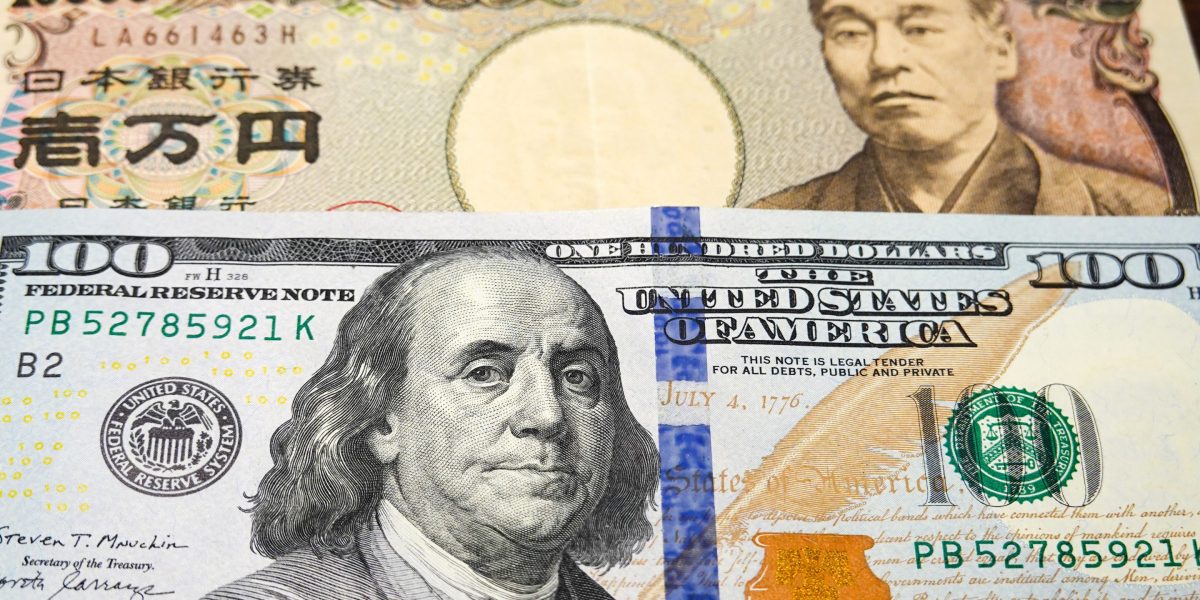
Dollar vs yen: Surprise in Japan’s leadership race to roil financial markets

Published

on


An unexpected result in Japan’s leadership contest over the weekend is poised to ripple through global financial markets with the yen already sinking against the dollar on Sunday.

On Saturday, the ruling Liberal Democratic Party tapped Sanae Takaichi, positioning the conservative lawmaker to become Japan’s first female prime minister.

Markets had expected the more fiscally cautious Shinjiro Koizumi to win. But the LDP’s decision to go with Takaichi, who favors looser fiscal and monetary policies, could jolt the bond market as expectations rise that Tokyo will issue more debt while the central bank rethinks rate hikes.

With Japan’s debt burden already more than 200% of its GDP, the prospect of more debt-fueled stimulus spending could cause investors to demand higher rates on long-term bonds.

That in turn could add more upward pressure on bond yields elsewhere, like the U.S., which relies heavily on Japanese investors as top buyers of Treasury debt.

The yield on the 10-year Treasury was flat at 4.121%. The U.S. dollar was up 1.2% against the yen and up 0.2% against the euro.

Futures tied to the Dow Jones Industrial Average rose 37 points, or 0.1%. S&P 500 futures were up 0.1%, and Nasdaq futures added 0.1%.

U.S. oil prices rose 0.9% to $61.44 per barrel, and Brent crude added nearly 1% to $65.15. Gold edged up 0.1% to $3,911.60 per ounce.

Takaichi is expected to formally become prime minister in a parliamentary vote later this month, and her approach to President Donald Trump will also be scrutinized.

While she previously suggested Japan renegotiate the trade deal it struck with the U.S. this summer, Takaichi toned down her rhetoric after securing the LDP leadership spot on Saturday, saying that’s not on the table now.

Meanwhile, financial markets must continue to grapple with the ongoing government shutdown, which shows no signs of ending anytime soon and will keep key economic indicators under wraps.

That leaves Wednesday’s release of minutes from the Federal Reserve’s last policy meeting as the main economic report to watch in the coming week as the central bank is self-funded and unaffected by the shutdown.

Several Fed officials are also scheduled to speak throughout the coming week, including Chairman Jerome Powell on Thursday.

Because the government shutdown prevented the Bureau of Labor Statistics from issuing its jobs report for September on Friday, Wall Street is turning to alternate gauges from the private sector.

On Sunday, Moody’s Analytics chief economist Mark Zandi warned there was essentially no job growth in September, citing data from Revelio Labs and ADP.

“The bottom line is that not having the BLS jobs data is a serious problem for assessing the health of the economy and making good policy decisions,” he said in a series of posts on X. “But the private sources of jobs data are admirably filling the information gap, at least for now. And this data shows that the job market is weak and getting weaker.”

Fortune Global Forum returns Oct. 26–27, 2025 in Riyadh. CEOs and global leaders will gather for a dynamic, invitation-only event shaping the future of business. Apply for an invitation.


Source link

Continue Reading

Business

Binance accepts BlackRock’s BUIDL as collateral

Published

on


Institutional trading of digital assets is already big business. Now, it’s set to get even bigger as Binance, the world’s largest cryptocurrency exchange, announced on Friday that it will now accept collateral in the form of a popular token issued by BlackRock. The token, known as BUIDL, trades at $1 and is backed by a reserve of Treasury bills and other safe, short-term assets.

The news of the Binance tie-up is significant because it will likely further increase the popularity of BUIDL, which the world’s largest asset manager launched last year. Since then, its market cap has grown to over $2.5 billion.

BUIDL operates much like a stablecoin, and is often used as collateral for trading crypto derivatives. It is available, though, only to large institutional investors, including private equity firms and hedge funds, that invest at least $5 million into the BlackRock USD Institutional Digital Liquidity Fund.

The token is especially attractive to big investors since, unlike stablecoins like Tether and USDC, it pays out the yield it collects from its reserves. The current yield is roughly around 4%, with BlackRock charging a management fee of 0.2% to 0.5%.

To create the token, BlackRock works with a firm called Securitize that specializes in issuing digital assets. In an interview with Fortune, Securitize CEO Carlos Domingo said BUIDL is attractive to institutional traders because of the yield it pays, but also because it is viewed by exchanges as high value collateral that can allow its holders to borrow more.

Domingo also said that tokenized assets are gaining popularity more broadly because they offer a quick and efficient way to settle trades.

“In capital markets, every transaction involves updating a ledger. Right now, the ledgers are built on software from the 1970s, and the process is siloed,” said Domingo. In contrast, he noted, blockchains are easy to access and can settle trades almost instantly.

As part of its latest push deeper into crypto, BlackRock will also issue a new class of shares of BUIDL on the BNB chain, a blockchain launched by Binance that is today largely decentralized.

Binance’s decision to add BUIDL comes at a time when the exchange giant is increasing ties to the traditional financial sector. In a statement, the company’s Head of VIP & Institutional, Catherine Chen, said adding BUIDL came partly in response to customer requests.

“Integrating BUIDL with our banking triparty partners and our crypto-native custody partner, Ceffu, meets their needs and enables our clients to confidently scale allocation while meeting compliance requirements,” said Chen.

Friday’s BUIDL news comes after other big crypto derivative platforms, including Coinbase-owned Deribit, did the same in recent months.


Source link

Continue Reading

Business

Anthropic says its latest model scores a 94% political ‘even-handedness’ rating

Published

on


Anthropic highlighted its political neutrality as the Trump administration intensifies its campaign against so-called “woke AI,” placing itself at the center of an increasingly ideological fight over how large language models should talk about politics. 

In a blog post Thursday, Anthropic detailed its ongoing efforts to train its Claude chatbot to behave with what it calls “political even-handedness,” a framework meant to ensure the model treats competing viewpoints “with equal depth, engagement, and quality of analysis.”

 The company also released a new automated method for measuring political bias and published results suggesting its latest model, Claude Sonnet 4.5, outperforms or matches competitors on neutrality.

The announcement comes in the midst of unusually strong political pressure. In July, President Donald Trump signed an executive order barring federal agencies from procuring AI systems that “sacrifice truthfulness and accuracy to ideological agendas,” explicitly naming diversity, equity and inclusion initiatives as threats to “reliable AI.” 

And David Sacks, the White House’s AI czar, has publicly accused Anthropic of pushing liberal ideology and attempting “regulatory capture.”

To be sure, Anthropic notes in the blog post that it has been training Claude to have character traits of “even-handedness” since early 2024. In previous blog posts, including one from February 2024 on the elections, Anthropic mentions that they have been testing their model for how it holds up against “election misuses,” including “misinformation and bias.”

However, the San Francisco firm has now had to prove its political neutrality and defend itself against what Anthropic CEO Dario Amodei called “a recent uptick in inaccurate claims.”

In a statement to CNBC, he added: “I fully believe that Anthropic, the administration, and leaders across the political spectrum want the same thing: to ensure that powerful AI technology benefits the American people and that America advances and secures its lead in AI development.”

The company’s neutrality push indeed goes well beyond the typical marketing language. Anthropic says it has rewritten Claude’s system prompt—its always-on instructions—to include guidelines such as avoiding unsolicited political opinions, refraining from persuasive rhetoric, using neutral terminology, and being able to “pass the Ideological Turing Test” when asked to articulate opposing views. 

The firm has also trained Claude to avoid swaying users in “high-stakes political questions,”  implying one ideology is superior, and pushing users to “challenge their perspectives.”

Anthropic’s evaluation found Claude Sonnet 4.5 scored a 94% “even-handedness” rating, roughly on par with Google’s Gemini 2.5 Pro (97%) and Elon Musk’s Grok 4 (96%), and higher than OpenAI’s GPT-5 (89%) and Meta’s Llama 4 (66%). Claude also showed low refusal rates, meaning the model was typically willing to engage with both sides of political arguments rather than declining out of caution.

Companies across the AI sector—OpenAI, Google, Meta, xAI—are being forced to navigate the Trump administration’s new procurement rules and a political environment where “bias” complaints can become high-profile business risks. 

But Anthropic in particular has faced amplified attacks, due in part to its past warnings about AI safety, its Democratic-leaning investor base, and its decision to restrict some law-enforcement use cases.

“We are going to keep being honest and straightforward, and will stand up for the policies we believe are right,” Amodei wrote in a blog post. “The stakes of this technology are too great for us to do otherwise.”

Correction, Nov. 14, 2025: A previous version of this article mischaracterized Anthropic’s timeline and impetus for political bias training in its AI model. Training began in early 2024.


Source link

Continue Reading

Business

Trump responds to appearance in new Epstein emails by pushing DOJ probe of Clinton, Larry Summers, Reid Hoffman

Published

on


President Donald Trump moved aggressively to deflect scrutiny on Friday after a new batch of Jeffrey Epstein’s private emails — released this week by the House Oversight Committee — resurfaced his own long-scrutinized relationship with the disgraced financier.

Hours after the documents circulated widely online, Trump took to Truth Social with a sweeping demand: he said he will ask Attorney General Pam Bondi, the Department of Justice, and the FBI to investigate Epstein’s ties to “Bill Clinton, Larry Summers, Reid Hoffman, J.P. Morgan, Chase, and many other people and institutions,” claiming that “all arrows point to the Democrats.”

Bondi quickly agreed, posting on X Friday afternoon that she had assigned Attorney Jay Clayton to the case. Clayton is a high-profile figure among Republicans, having chaired the SEC during Trump’s first term and now acting U.S. attorney for the Southern District of New York. 

Clinton has strongly denied that he had knowledge of Epstein’s crimes. In the emails, Epstein mentioned several times that Clinton was “never on the island.” However, the two knew each other in the early 2000s. Clinton did not immediately respond to a request for comment. 

On the other hand, Summers had a seemingly close and unusually personal relationship with the disgraced financier who at times acted as his informal relationship coach. Newly released emails from 2017 to 2019 show the former Treasury secretary corresponding with Epstein regularly, sometimes multiple times a day, seeking advice about his interactions with a woman in London.

In one exchange, Summers lamented that the woman had grown distant: “I said what are you up to. She said ‘I’m busy.’ I said awfully coy u are,” he wrote. Epstein replied within minutes, offering reassurance and strategy: “she’s smart. making you pay for past errors. ignore the daddy im going to go out with the motorcycle guy … annoyed shows caring, no whining showed strength.”

Other emails show Summers forwarding Epstein notes from the woman and asking whether he should respond. “Think no response for a while probably appropriate,” Summers wrote in one case. Epstein encouraged the silence, replying, “She’s already begining to sound needy 🙂 nice.”

Summers has previously said he regrets his past ties to Epstein. Summers did not immediately respond to a request for comment. 

Hoffman, the LinkedIn co-founder, billionaire investor and major Democratic donor, had an established relationship with Epstein, according to documents reviewed by the Wall Street Journal. Schedules show Epstein planned multiple trips with him—including two visits to Epstein’s island, Little St. James in 2014—and arranged for Hoffman to stay overnight at his Manhattan townhouse before attending a “breakfast party” with Bill Gates and others the next morning.

Hoffman now says he deeply regrets the interactions. “It gnaws at me that, by lending my association, I helped his reputation, and thus delayed justice for his survivors,” he told the Journal. “Ultimately I made the mistake, and I am sorry for my personal misjudgment.”

Hoffman could not be reached for comment.

Trump’s inclusion of JPMorgan comes after the bank paid out more than $450 million in 2023 across multiple settlements related to its historic relationship with Epstein — including a $290 million agreement with a class of victims and a $75 million deal with the U.S. Virgin Islands. The bank has repeatedly said it “deeply regrets any association” with Epstein and would not have kept him as a client had it known of his crimes.

JPMorgan did not immediately respond to a request for comment. 

Epstein repeatedly described Trump in blunt, often hostile terms

The release of the files — which Trump framed as an effort to expose an “Epstein Hoax” that he claims Democrats are weaponizing to distract from the shutdown– show Epstein repeatedly discussing Trump. They contradict Trump’s own account of their split, and Epstein offers his private, often caustic assessments of the man who would become president.

Across messages with lawyers, acquaintances, reporters, academics, and political figures, Epstein invoked Trump constantly, often bragging that he possessed insider insight into Trump’s private world. In one 2017 exchange, Epstein dismissed him sharply: “your world does not understand how dumb he really is. he will blame everyone around him.” A year later, he described Trump as “evil beyond belief, mad… nuts!!!” 

The emails also directly challenge one of Trump’s most frequently repeated claims: that he expelled Epstein from Mar-a-Lago for inappropriate behavior. 

In a 2019 message to author Michael Wolff, Epstein flatly rejected the story: “Trump said he asked me to resign, never a member ever.”In another email, Epstein claimed a woman who worked at the club had been involved with him and wrote, “Trump knew of it, and came to my house many times during that period.” The documents do not substantiate these assertions, and the White House has denied them.

One of the most explosive lines appears in a 2011 note to Ghislaine Maxwell: “that dog that hasn’t barked is trump.. [Victim] spent hours at my house with him ,, he has never once been mentioned.” During a press conference, the White House pointed to the testimony of Virginia Giuffre, a prominent Epstein accuser who committed suicide earlier this year and said Trump did not participate “in anything.”

Epstein also imagined himself as holding leverage over Trump. In a December 2018 exchange, after someone suggested Trump’s critics were simply trying to “take down” the president, Epstein replied: “yes thx. its wild. because i am the one able to take him down.” 

The White House did not immediately respond to a request for comment. 


Source link

Continue Reading

Trending

Copyright © Miami Select.