Connect with us

Business

DOGE isn’t dead—it’s been absorbed into the bloodstream of the government, federal employees say

Published

on


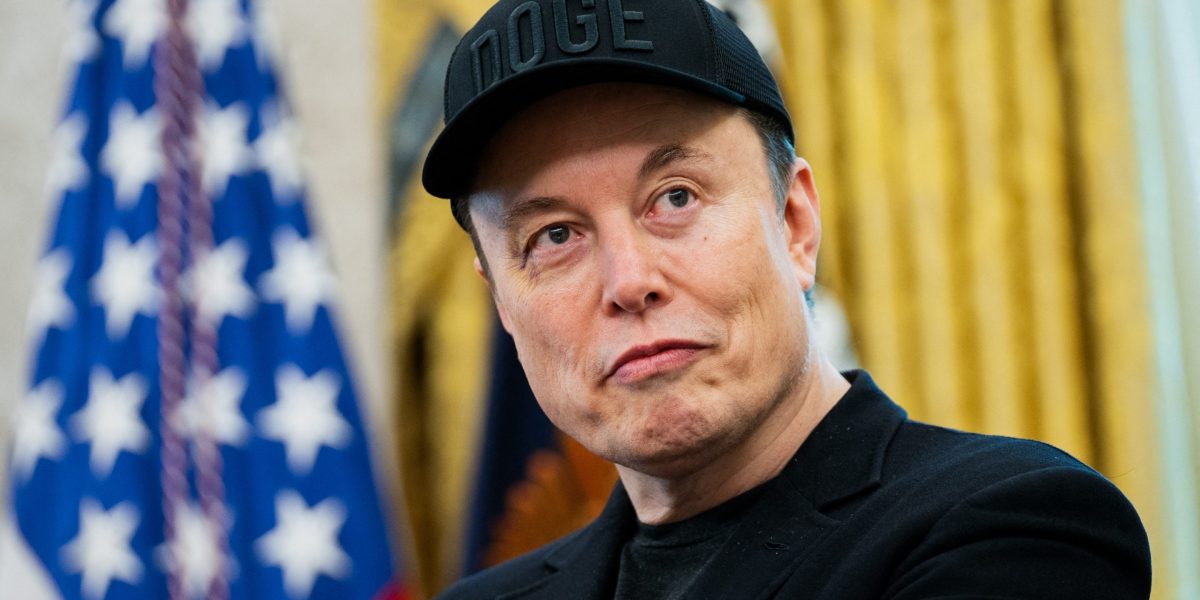
DOGE may no longer be helmed by Elon Musk or even considered an official government entity anymore, but the reports of its death are greatly exaggerated. The special advisory intended to eliminate government “waste, fraud, and abuse,” is still up to something, two federal employees told Fortune.

Last month, Office of Personnel Management Director Scott Kupor told Reutersthat DOGE “doesn’t exist,” and is no longer a “centralized entity.” According to an executive order signed on President Donald Trump’s first day in office, DOGE as a temporary organization had been scheduled to end on July 4, 2026, suggesting the agency disbanded about eight months ahead of schedule.

Kupor later clarified DOGE’s current role in the federal government in an X post, saying, “The truth is: DOGE may not have centralized leadership under the [U.S. DOGE Service] But, the principles of DOGE remain alive and well: de-regulation; eliminating fraud, waste and abuse; re-shaping the federal workforce; making efficiency a first-class citizen.”

Federal employees interviewed by Fortune, who spoke on the condition of anonymity as they are not authorized to speak to the press, said it was not apparent to them that DOGE had been disbanded.

An Internal Revenue Services (IRS) employee told Fortune that DOGE “became a shell company” as more and more operatives from the temporary group became tangled in the oversight of individual government agencies.

“It’s like taking the dust jacket off of the book and saying, ‘We’ve got rid of the book,’” he said.

DOGE is still barking

The IRS employee confirmed to Fortune that the agency has been administering “coding tests” over the last few weeks, first reported by Wired, an addition to mandatory training required for certain employees. Per Wired, the tests were a directive from the Treasury Department’s chief information officer and DOGE operative Sam Corcos, and were administered through HackerRank, a tool used by private sector tech companies to assess coding and programming skills of prospective hires.

“The business case could be made that you want people who know their job thoroughly,” the IRS employee told Fortune of the purpose of the tests. “However, given the treatment that we’ve received over the past eight, nine months, I would say it’s more of another screening out of more people.”

Court documents from October indicate the Treasury Department has terminated approximately 1,446 employees since the start to Trump’s second term.

A National Institutes of Health (NIH) employee told Fortune the Department of Health and Human Services (HHS), which oversees the NIH, still has plenty of DOGE personnel, though they are now employees of the agency. Amy Gleason, whom Trump named acting administrator of DOGE, was appointed as an expert/consultant to the HHS’s Office of the Secretary in March. 

The HHS likewise lists Clark Minor, DOGE operative and former Palantir software engineer, as the agency’s chief information officer and acting chief artificial intelligence officer. The agency announced earlier this month a Minor-led effort to integrate AI the HHS’s internal operations and research, in order to fulfill a directive from the Office of Management and Budget led by director and DOGE partner Russell Vought, to integrate technology for “improving internal operations, efficiency, and federal use.”

The NIH and IRS did not respond to Fortune’s requests for comment.

DOGE’s lasting impact

DOGE’s sweeping changes have continued to impact the government’s productivity. For the IRS, December is usually a quiet month, when taxpayer call volumes are so low the agency’s servers can be shut down for routine maintenance, the agency employee said. This year, however, offices are so short-staffed as a result of DOGE-led layoffs that employees have been overwhelmed balancing taking calls with their other responsibilities. The IRS employee said his office has one-third of the workers it had about a year ago.

“This is going to be probably the roughest filing season we’ve had since the pandemic,” he said.

He said ongoing burnout from increased workloads has the potential to impact the quality of internal reviews.

“When we look back historically, we’re going to see that the gutting of the bureaucracy that keeps the government running, that keeps the country functional, will be the trigger that collapses America,” the employee said.

Musk, who was DOGE’s de facto leader as a special government employee earlier this year, had his own reservations about the group’s effectiveness. In an interview with conservative influencer Katie Miller, Musk said DOGE was only “somewhat successful,” claiming it saved the government between $100 billion and $200 billion in annual “zombie payments,” or spending on expired programs.

When Miller asked if Musk would go back and run DOGE all over again, Musk said, “I don’t think so.”

“Instead of doing DOGE, I would have, basically…worked on my companies,” he said.

If you’re a federal worker with a tip, or if you’d like to share your experience, please contact Sasha Rogelberg on Signal @sashrogel.13.


Source link

Continue Reading

Business

‘The question is really just how long it will take’: Over 2,000 gather at Humanoids Summit to meet the robots who may take their jobs someday

Published

on


Robots have long been seen as a bad bet for Silicon Valley investors — too complicated, capital-intensive and “boring, honestly,” says venture capitalist Modar Alaoui.

But the commercial boom in artificial intelligence has lit a spark under long-simmering visions to build humanoid robots that can move their mechanical bodies like humans and do things that people do.

Alaoui, founder of the Humanoids Summit, gathered more than 2,000 people this week, including top robotics engineers from Disney, Google and dozens of startups, to showcase their technology and debate what it will take to accelerate a nascent industry.

Alaoui says many researchers now believe humanoids or some other kind of physical embodiment of AI are “going to become the norm.”

“The question is really just how long it will take,” he said.

Disney’s contribution to the field, a walking robotic version of “Frozen” character Olaf, will be roaming on its own through Disneyland theme parks in Hong Kong and Paris early next year. Entertaining and highly complex robots that resemble a human — or a snowman — are already here, but the timeline for “general purpose” robots that are a productive member of a workplace or household is farther away.

Even at a conference designed to build enthusiasm for the technology, held at a Computer History Museum that’s a temple to Silicon Valley’s previous breakthroughs, skepticism remained high that truly humanlike robots will take root anytime soon.

“The humanoid space has a very, very big hill to climb,” said Cosima du Pasquier, founder and CEO of Haptica Robotics, which works to give robots a sense of touch. “There’s a lot of research that still needs to be solved.”

The Stanford University postdoctoral researcher came to the conference in Mountain View, California, just a week after incorporating her startup.

“The first customers are really the people here,” she said.

Researchers at the consultancy McKinsey & Company have counted about 50 companies around the world that have raised at least $100 million to develop humanoids, led by about 20 in China and 15 in North America.

China is leading in part due to government incentives for component production and robot adoption and a mandate last year “to have a humanoid ecosystem established by 2025,” said McKinsey partner Ani Kelkar. Displays by Chinese firms dominated the expo section of this week’s summit, held Thursday and Friday.

In the U.S., the advent of generative AI chatbots like OpenAI’s ChatGPT and Google’s Gemini has jolted the decades-old robotics industry in different ways. Investor excitement has poured money into ambitious startups aiming to build hardware that will bring a physical presence to the latest AI.

But it’s not just crossover hype — the same technical advances that made AI chatbots so good at language have played a role in teaching robots how to get better at performing tasks. Paired with computer vision, robots powered by “visual-language” models are trained to learn about their surroundings.

One of the most prominent skeptics is robotics pioneer Rodney Brooks, a co-founder of Roomba vacuum maker iRobot who wrote in September that “today’s humanoid robots will not learn how to be dexterous despite the hundreds of millions, or perhaps many billions of dollars, being donated by VCs and major tech companies to pay for their training.” Brooks didn’t attend but his essay was frequently mentioned.

Also missing was anyone speaking for Tesla CEO Elon Musk’s development of a humanoid called Optimus, a project that the billionaire is designing to be “extremely capable” and sold in high volumes. Musk said three years ago that people can probably buy an Optimus “within three to five years.”

The conference’s organizer, Alaoui, founder and general partner of ALM Ventures, previously worked on driver attention systems for the automotive industry and sees parallels between humanoids and the early years of self-driving cars.

Near the entrance to the summit venue, just blocks from Google’s headquarters, is a museum exhibit showing Google’s bubble-shaped 2014 prototype of a self-driving car. Eleven years later, self-driving cars full of passengers operated by Google affiliate Waymo are constantly plying the streets nearby.

Some robots with human elements are already being tested in workplaces. Oregon-based Agility Robotics announced shortly before the conference that it is bringing its tote-carrying warehouse robot Digit to a Texas distribution facility run by Mercado Libre, the Latin American e-commerce giant. Much like the Olaf robot, it has inverted legs that are more birdlike than human.

Industrial robots performing single tasks are already commonplace in car assembly and other manufacturing. They work with a level of speed and precision that’s difficult for today’s humanoids — or humans themselves — to match.

The head of a robotics trade group founded in 1974 is now lobbying the U.S. government to develop a stronger national strategy to advance the development of homegrown robots, be they humanoids or otherwise.

“We have a lot of strong technology, we have the AI expertise here in the U.S.,” said Jeff Burnstein, president of the Association for Advancing Automation, after touring the expo Thursday. “So I think it remains to be seen who is the ultimate leader in this. But right now, China has certainly a lot more momentum on humanoids.”


Source link

Continue Reading

Business

Top healthcare exec: insurance will spike to subsidize a tax cut to millionaires and billionaires

Published

on


Top healthcare executive John Driscoll calls the looming expiration of enhanced Affordable Care Act subsidies “a tragedy in the making,” warning that millions of Americans are about to be hit with higher premiums, lost coverage, and rising medical debt as Washington gridlock hardens.

Driscoll, who is currently the chairman of UConn Health after a 25-year career in health care including a previous position as Walgreens Boots Alliance president, said the policy reversal amounts to “a self‑inflicted wound” that will push costs up for both low‑income families and the affluent professionals who thought they were insulated.​

Driscoll cited CBO estimates that if Congress allows the subsidies to lapse, premiums will jump for roughly 24 million marketplace enrollees, and around 2 million people will lose coverage entirely in the near term. 

“You don’t solve higher health care costs with fewer people getting insured,” he told Fortune, arguing that the system will simply reprice risk and shift costs onto everyone else. “Whenever you reduce coverage at the bottom, everybody pays more in the middle.”​​

Enhanced premium tax credits, introduced during the pandemic and extended through 2025, have helped double marketplace enrollment and kept average subsidized premiums under about $900 a year. When they expire, KFF News projects a roughly 114% increase in average premium payments for subsidized enrollees in 2026. Older adults and rural residents would be especially exposed, with KFF also warning that adults ages 50 to 64 could see average premium hikes of 75% or more.

The invisible tax on everyone else

Driscoll argued that the real story is a giant cost shift from government to households and employers, driven by simultaneous Medicaid cuts, work requirements, and subsidy rollbacks. When people lose coverage, he notes, they “don’t stop getting covered by the health care system.” Instead, they show up later and sicker, so hospitals and insurers respond by raising prices to anticipate uncompensated care.

When you consider that this is being done to “effectively subsidize a tax deduction for millionaires and billionaires, that’s going to shift health care costs to all of us when people lose coverage,” he added, referring to the One Big Beautiful Bill Act that extended President Donald Trump’s previous tax cuts and introduced new ones.

For Driscoll, the subsidy cliff exposes a deeper “tribal dysfunction” in health policy that has frozen the Affordable Care Act in place instead of improving it. He called Obamacare “a very good but imperfect solution” that cut the uninsured rate roughly in half and slowed healthcare inflation, but he said both parties have refused to engage in the hard work of updating it. “We really aren’t prioritizing the patient,” he said, “we’re prioritizing the politics,” leaving millions facing the choice of dropping coverage or postponing care for serious conditions.

The political situation

​​He had a warning for Republicans, calling this looming mass expiration of health insurance subsidies a “self-inflicted wound” for the party. “They were elected on solving affordability,” he pointed out, and now they’re going to accelerate the problem. But Driscoll said no side is blameless. “The tragic thing is, neither side really wants to have a sensible conversation about how do you really care for more people and get them better care earlier.”

It’s true that Democrats drove the ACA, but Driscoll said that by and large they are committed to defending something that was itself a compromise, and the other side is playing offense. “The danger is that some Democrats don’t want to have a conversation on evolving [the ACA] because they feel like they have to defend it and the Republicans don’t ever don’t want to have a conversation about evolving it because they want to destroy it.” The result is you end up here, in “this sort of ridiculous no progress zone.” (Driscoll did disclose that he is serving as Connecticut Governor Ned Lamont’s special advisor on health care.)

From his vantage point now, Driscoll argued that the reason America is bedevilled with constant healthcare issues is a mismatch of incentives. “Healthcare is a team sport that keeps getting undermined by individual incentives,” he said, noting that U.S. costs are twice as expensive as the average industrialized country and not nearly as productive, he pointed out.

In similar countries, roughly 50%-60% of doctors are primary care, but it’s only one in four in the U.S. The problem is that every doctor wants to be a specialist or a surgeon because they’ll roughly double the salary of a pediatrician or internist that way. “Until you change those incentives people are going to keep going towards those higher compensated areas.”

There’s no one fix to this, but there are steps we could take, Driscoll said. He pointed to expanded drug‑price negotiation, immigration reforms to ease shortages of primary‑care doctors and nurses, “site‑neutral” payment so patients aren’t charged more for identical hospital‑based care, and broader use of value‑based and bundled payment models. But we don’t even seem to be capable of engagement, he argued.

“If the two sides could talk,” Driscoll said, “there probably is a way that they could agree on how to to bridge the difference between what Biden and Trump want to do on drug costs. If we could talk, we could probably agree on how to bring back value-based care that would balance the interests of doctors and hospitals and and patients’ outcomes and the government’s obligation.” If only.


Source link

Continue Reading

Business

Judge tells notorious crypto scammer ‘you have been bitten by the crypto bug’ in handing down 15 year sentence

Published

on


First Sam Bankman-Fried was sentenced to prison for his crypto crime. Now, it’s the turn of Do Kwon, who is widely regarded as crypto’s most infamous fraudster after Bankman-Fried. On Thursday, the 34 year-old was sentenced to 15 years in prison, after being charged with misleading investors and inflating the value of his company’s cryptocurrencies known as Terra and Luna. 

At his sentencing hearing in New York, the judge chastised Kwon, suggesting he had succumbed to the worst elements of an industry known for get-rich-quick swindles. “You have been bitten by the crypto bug and I don’t think that’s changed. You must be incapacitated. If not for your guilty plea, my sentence would have been higher,” said U.S. District Judge Paul Engelmayer, according to a tweet from Inner City Press, which provides reliable reporting on court proceedings. 

The sentencing is the final fallout from 2022, when Kwon’s stablecoins TerraUSD and Luna both suddenly collapsed in value, which led to massive losses for investors. Kwon was charged with committing wire fraud and conspiring to commit securities fraud and commodities fraud, according to a statement by the Department of Justice. 

After his company went bankrupt in 2022, Kwon was on the run for months. He fled South Korea and later Singapore after he was wanted by both the United States and South Korea. He was arrested in March 2023 in Montenegro after he was found in possession of a fake Costa Rican passport. Late last year, Montenegro extradited Kwon to the United States. 

In a 2024 suit by the Securities and Exchange Commission, the regulator found Terraform and Kwon liable for civil fraud. A jury then determined that Kwon and Terraform misled investors. Kwon and Terraform lied about how the company’s blockchain technology was using Chai, a Korean payment application, to make transactions. Kwon and Terraform had also claimed that the stablecoin was algorithmically pegged to the US dollar, which jurors found to be misleading to investors. 

Kwon agreed to pay more than $200 million and Terraform agreed to pay more than $3.5 billion in order to wind down the firm. 

In August, Kwon pleaded guilty to conspiracy and wire fraud. “I knowingly agreed with others to defraud, and did in fact defraud, purchasers of cryptocurrencies issued by my company, Terraform Labs,” Kwon said at the time. “What I did was wrong and I want to apologize for my conduct. I take full responsibility.” 

Kwon is one of several high profile crypto figures sentenced to jail in the last couple of years. Sam Bankman-Fried, the founder of FTX, was sentenced to 25 years in prison in March of last year. A month later, Changpeng Zhao, co-founder Binance, was sentenced to four months in prison. President Donald Trump has since pardoned Zhao, while Bankman-Fried remains behind bars. 


Source link

Continue Reading

Trending

Copyright © Miami Select.