Connect with us

Politics

Disney World, SeaWorld and Legoland have plenty in store for 2026
Published

on


Central Florida’s theme parks will be debuting brand new family-friendly rides and reopening favorite attractions with different looks in 2026.

SeaWorld Orlando is opening SEAQuest: Legends of the Deep, an indoor dark ride that the park pitched as the first of its kind.

The ride will take riders on a submersible to explore sunken shipwrecks and the ocean depths.

“SEAQuest: Legends of the Deep redefines what a family attraction can be,” said Conner Carr, vice president of rides and engineering for the park. “By blending cutting-edge ride technology with the mystery of the deep sea, we’re creating an experience that inspires curiosity and brings explorers of all ages along for the adventure.”

Legoland Florida is also opening up another first for its park: an indoor space-themed roller coaster coming Feb. 27.

“This new ride marks the first indoor coaster built inside the main park since Legoland Florida opened in 2011,” the Winter Haven park said. Galacticoaster will take families on a customizable LEGO space adventure from Briefing Room to blast-off!”

Another added perk is that riders can play before they board and design their craft using interactive touchscreens and RFID wristbands capable of creating 625 possible design combinations, Legoland said.

“As guests board, their personalized spacecraft becomes part of a dynamic interstellar journey powered by synchronized lighting, projection, an immersive LEGO solar system, projection sequences, and character-driven story moments,” the park said in a press release, adding the new attraction comes with a Duplo play area and Lego Galaxy gift shop.

Disney World, which is in the process of building major expansions in the next few years, isn’t planning any major openings in 2026 but is refurbishing some beloved rides.

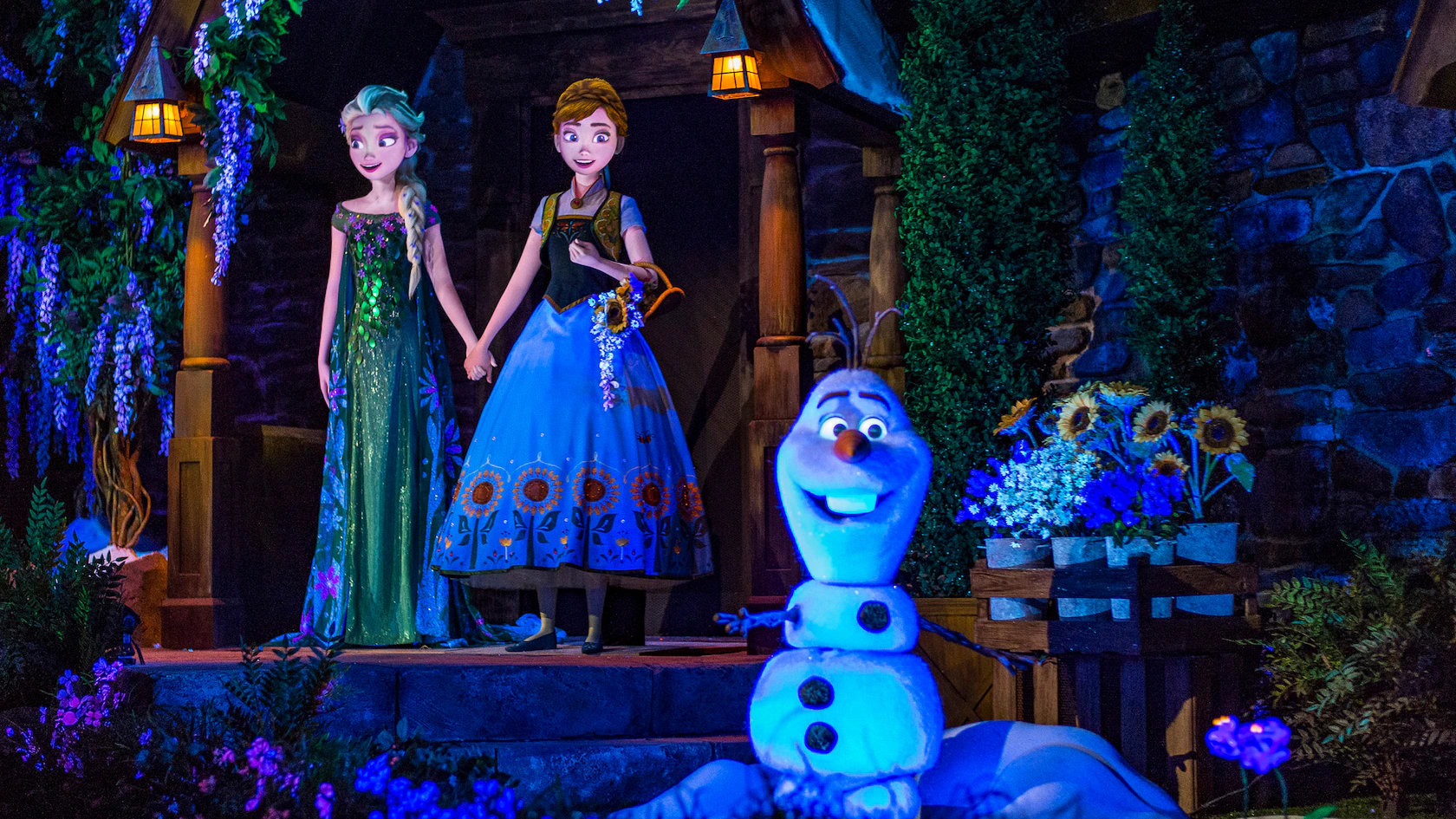
Epcot’s Frozen Ever After is shutting down Jan. 26 and then reopening in February 2026 with Anna, Elsa and Kristoff Audio-Animatronics figures getting an update, Disney said.

“This investment will bring a more true-to-film look for these beloved characters,” Disney wrote on its park blog, adding that the figures will be more advanced like the ones at World of Frozen in Hong Kong Disneyland.

Epcot will also change its Soarin’ Across the World to Soarin’ Across America by Memorial Day 2026 to celebrate America’s 250th anniversary. The Soarin’ flight simulator attraction will get new scenes starring famous U.S. cities and natural wonders.

Big Thunder Mountain Railroad and Buzz Lightyear’s Space Ranger Spin are also getting refreshments and reopening at the Magic Kingdom in 2026, Disney said.

At Hollywood Studios, the final day to ride Rock ‘n’ Roller Coaster Starring Aerosmith is March 1.

The indoor coaster will reopen sometime in the Summer 2026 with a new Muppets theme.

And watch what happens at Universal Orlando, which opened a new theme park built from the ground in 2025. New permits filed at the end of 2025 are fueling a buzz that the theme park is looking to add something new already.


Source link

Continue Reading

Politics

Danny Alvarez proposes statewide counterterrorism unit with teams across Florida

Published

on


The teams would be able to operate independently or in coordination with existing law enforcement.

Riverview Republican Rep. Danny Alvarez wants to create a statewide counterintelligence and counterterrorism unit within the Florida Department of Law Enforcement (FDLE).

Alvarez has filed a bill (HB 945) that would require FDLE to establish and administer a Statewide Counterintelligence and Counterterrorism Unit to “detect, identify, neutralize, and exploit” adversary intelligence entities, terrorists, insider threats, corporate threats and other foreign adversaries.

The bill directs FDLE to establish a 10-person leadership and organizational team by July 1, 2027, and to build out seven regional teams over time.

The statewide unit would be housed at FDLE’s regional operational center, and the seven dedicated teams would be aligned with each of Florida’s regional domestic security task forces. The teams would be able to operate independently or in coordination with existing law enforcement. Each team would include supervisory agents, intelligence analysts and designated federal, state and local liaison officers.

The legislation, filed Tuesday, authorizes the unit to conduct counterintelligence and counterterrorism operations by “analyzing patterns of life, gathering actionable intelligence, and formulating effective plans of action, and by executing arrests.”

The bill also contains language setting minimum experience requirements for team members, limiting eligibility to individuals with backgrounds in military service, intelligence agencies, law enforcement or counterintelligence and counterterrorism work.

FDLE would also need to request funding annually until the unit reaches full capacity no later than Dec. 30, 2033.

The bill would take effect July 1 if approved by the Legislature and signed by Gov. Ron DeSantis.


Source link

Continue Reading

Politics

A rough year for journalists in 2025, with a little hope for things to turn around

Published

on


By nearly any measure, 2025 has been a rough year for anyone concerned about freedom of the press.

It’s likely to be the deadliest year on record for journalists and media workers. The number of assaults on reporters in the U.S. nearly equals the last three years combined. The President of the United States berates many who ask him questions, calling one woman piggy.” And the ranks of those doing the job continues to thin.

It’s hard to think of a darker time for journalists. So say many, including Tim Richardson, a former Washington Post reporter and now program director for journalism and disinformation at PEN America. “It’s safe to say this assault on the press over the past year has probably been the most aggressive that we’ve seen in modern times.”

Tracking killings and assaults against journalists

Worldwide, the 126 media industry people killed in 2025 by early December matched the number of deaths in all of 2024, according to the Committee to Protect Journalists, and last year was a record-setter. Israel’s bombing of Gaza accounted for 85 of those deaths, 82 of them Palestinians.

“It’s extremely concerning,” said Jodie Ginsberg, CEO of the Committee to Protect Journalists. “Unfortunately, it’s not just, of course, about the sheer numbers of journalists and media workers killed, it’s also about the failure to obtain justice or get accountability for those killings.

“What we know from decades of doing this work is that impunity breeds impunity,” she said. “So a failure to tackle journalists’ killings creates an environment where those killings continue.”

The committee estimates there are at least 323 journalists imprisoned worldwide.

None of those killed this year were from the United States. But the work on American soil has still been dangerous. There have been 170 reports of assaults on journalists in the United States this year, 160 of them at the hands of law enforcement, according to the U.S. Press Freedom Tracker. Many of those reports came from coverage of immigration enforcement efforts.

It’s impossible to look past the influence of President Donald Trump, who frequently seethes with anger at the press while simultaneously interacting with journalists more than any president in memory — frequently answering their cellphone calls.

“Trump has always attacked the press,” Richardson said. “But during the second term, he’s turned that into government action to restrict and punish and intimidate journalists.”

Journalists learn quickly they have a fight on their hands

The Associated Press learned that quickly, when Trump limited the outlet’s access to cover him after it refused to follow his lead to rename the Gulf of Mexico. It launched a court fight that has remained unresolved. Trump has also extracted settlements from ABC and CBS News in lawsuits over stories that displeased him, and is suing The New York Times and The Wall Street Journal.

Long angry about a perceived bias against conservatives on PBS and NPR newscasts, Trump and his allies in Congress successfully cut funding for public broadcasting as a whole. The President has also moved to shut down government-run organizations that beam news to all parts of the world.

“The U.S. is a major investor in media development, in independent media outlets in countries that have little or no independent media, or as a source of information for people in countries where there is no free media,” Ginsberg said. “The evisceration of Radio Free Europe, Radio Free Asia and the Voice of America is another blow to press freedom globally.”

Others in his administration take Trump’s lead, like when his press office chose the day after Thanksgiving to launch a web portal to complain about outlets or journalists being unfair.

“It’s part of this overall strategy that we’re seeing from certain governments, notably the United States, to paint all journalists who don’t simply (repeat) the narrative put out by the government as fake news, as dubious, as dodgy, as criminal,” Ginsberg said.

Trump’s Defense Secretary, Pete Hegseth, has portrayed journalists as dark figures skulking around Pentagon halls to uncover classified secrets as his rationale for putting in restrictive rules for coverage.

That’s led to the most notable example of journalists fighting back: most mainstream news outlets gave up their credentials to work in the Pentagon rather than agree to these rules, and are still breaking stories while working off site. The New York Times has sued to overturn the rules. The newspaper also publicly defends itself when attacked by the President, such as when he complained about its coverage of his health.

Despite the more organized effort against the press, the public has taken little notice. The Pew Research Center said that 36% of Americans reported earlier this year hearing about the Trump administration’s relationship with the press, compared to 72% who said that at the same point in his first term.

Polls consistently show that journalists have never been popular, and are likely to elicit little sympathy when their work becomes harder.

“Really the harm falls on the public with so much of this because the public depends on this independent reporting to understand and scrutinize the decisions that are being made by the most powerful office in the world,” Richardson said.

Some reasons for optimism

The news industry as a whole is more than two decades in to a retrenchment caused largely by a collapse in the advertising market, and every year brings more reports of journalists laid off as a result. One of the year’s most sobering statistics came in a report by the organizations Muck Rack and Rebuild Local News: in 2002, there were 40 journalists for every 100,000 people in the United States and by this year, it was down to just over eight.

Asked if they could find reasons for optimism, both Ginsberg and Richardson pointed to the rise of some independent local news organizations, shoots of growth of growth in a barren landscape, places like the Baltimore BannerCharlottesville Tomorrow in Virginia and Outlier Media in Michigan.

As much as they are derided in Trump’s America, influential Axios CEO Jim VandeHei noted in a column recently that reporters at mainstream media outlets are still working hard and able to set the nation’s agenda with their reporting.

As he told the AP: “Over time, people will hopefully come to their senses and say, ‘Hey, the media like anything else is imperfect but, man, it’s a nice thing to have a free press.’”

___

Republished with permission of The Associated Press.


Source link

Continue Reading

Politics

Gov. DeSantis continues imprint on State Board of Education with new appointments

Published

on


The Governor also reappointed one familiar face to the Board.

Gov. Ron DeSantis is making changes to the State Board of Education, naming two new members to the panel while also keeping a familiar face in place.

The Governor announced the appointment of Erika Fritz-Ochs and Luis Fuste, along with the reappointment of Dr. Grazie Christie, to the Board.

Fritz-Ochs has a background in education policy and also has classroom experience. She currently serves as Program Manager at the University of Florida’s Lastinger Center for Learning, a research hub focused on improving teaching and learning across the state.

Her résumé also includes work as an Educational Policy Consultant for the Florida Department of Education, a Research and Training Specialist for the Florida Department of Law Enforcement, and a teacher with Leon County and Pasco County schools.

She holds a master’s degree in educational leadership from Saint Leo University and a master’s degree in elementary education from Nova Southeastern University.

Fuste holds legal and regulatory experience, along with a track record of civic involvement. A lawyer at Fuste Law, P.A., he has previously served on a range of boards and commissions, including the Florida Commission on Ethics and the Board of Chiropractic Medicine.

His community roles have also included positions with Little Bear Big Heart, Inc. and the Doral College Board of Trustees. Fuste earned his bachelor’s degree from Barry University and his law degree from Florida International University.

Christie, who is being reappointed, is a Miami-area radiologist with more than two decades of experience in diagnostics. She has been a conservative voice on education and cultural issues and is affiliated with Americans United for Life. Christie holds a bachelor’s degree from Columbia University and a medical degree from the University of Miami.

The Senate must also confirm all three selections.

The State Board of Education plays a central role in overseeing Florida’s K-12 system and some higher education governance, setting various rules and policies.


Source link

Continue Reading

Trending

Copyright © Miami Select.