Connect with us

Fashion

Diamond selling processes are outdated and hurting producers, trader says

Published

on


By

Reuters

Published


September 18, 2025

The sale of diamonds through tenders and auctions is opaque and inefficient and should be revamped for producers to earn more and to survive the current price slump, a leading gem trader said on Thursday.

Reuters

Oded Mansori, co-founder and managing partner of Belgian gem trader HB Antwerp, said the impact on producers could be reduced by doing away with inefficiencies in the industry.

The diamond market is currently going through a prolonged downturn with demand hurt by global economic uncertainty and the rising popularity of lab-grown stones.

Producer countries such as Botswana have been hard hit by lower revenues, while miners such Burgundy and Lesotho’s biggest diamond mine Letseng have had to lay off workers.

“For years, miners relied on tenders and auctions, systems that look efficient on paper but in practice resemble a casino,” Mansori said in a statement, as the industry battles a crisis considered to be its deepest in history.

“Rough stones are pushed into opaque markets where value is anyone’s guess. When global demand softens, as it has in cycles over the last decade, producers are left exposed. Workers pay the price, while shareholders watch assets decline,” he added.

Rough diamonds are typically sold through a competitive bidding system where buyers place confidential bids on individual stones or parcels.

Mansori, whose company operates a profit-sharing model with miner Lucara Diamond Corp, says producers’ revenues should be tied to the eventual polished value of its stones “rather than gambling on rough sales in opaque auctions”.

Under its partnership with Lucara, HB Antwerp buys stones of 10.8 carat quality and above from the Toronto-listed company’s Karowe Mine in central Botswana at prices based on the estimated polished value of each diamond.

HB Antwerp accounted for 72% of Lucara’s $74 million diamond revenue in the six months to June 30, up from 65% the year before.
The trader says producers can earn up to 40% more revenue if they sell through this model.

© Thomson Reuters 2025 All rights reserved.


Source link

Continue Reading

Fashion

Second-hand retailer Cash Converters strengthens Portugal presence with new shop at UBBO Amadora

Published

on


Published


December 16, 2025

Australian multinational Cash Converters, a leading brand in the purchase and sale of second-hand items, founded in Perth, Australia, in 1984 by Brian Cumins and present in Portugal since 2003, has just opened a new store at the UBBO shopping centre in Amadora, the company said in a statement, adding that this new unit covers 72 square metres and features “an updated and distinctive concept,” broadening categories and focusing on “unique pieces, collectors’ items and discontinued products given a new lease of life”. This is the sixth opening in the Portuguese market.

Cash Converters

The main highlights are second-hand luxury items, “such as watches, bags, and jewellery from leading brands, as well as a space dedicated to the exclusive ‘Jewellery with a Soul’ collection, created by Cash Converters from 100% recycled gold and designed for those who value pieces with history and identity. Customers will also find IT, TV and audio equipment, consoles and video games, photography and video, sports, DIY and small domestic appliances,” the statement notes.

According to Francisco Parra, CEO of Cash Converters in Spain and Portugal: “The Portuguese market has shown a clear commitment to buying and selling second-hand products, and the results bear this out. In 2025, the average monthly number of items purchased in our stores in Portugal grew by 9% on the previous year, while the average ticket increased by 12%. These indicators reinforce our expansion strategy in the country for the coming years, with the aim of bringing more and more people closer to the circular economy through quality products.”

Cash Converters

The arrival at UBBO of the Australian chain specialising in the purchase and sale of second-hand items, which operates brick-and-mortar stores in Lisbon and Porto as well as through its official online store, “marks another step towards the democratisation of sustainable consumption in Portugal and the valuing of objects that deserve to continue to be used and appreciated,” the note stresses, adding that Cash Converters “now has 83 stores across the Iberian Peninsula, reinforcing its expansion strategy based on proximity and convenience.”

In Portugal, the brand currently has physical stores in Lisbon and Porto, located at Rua Pinheiro Chagas, 101B (near Lisbon’s El Corte Inglés), Rua José Rodrigues Migueis, 1, and Rua António Pereira Carrilho, 5 (central Lisbon); Rua Quinta do Paizinho, 2, Alfragide/Carnaxide, and at the UBBO Shopping Centre, Pontinha (Greater Lisbon); and Rua de Fernandes Tomás, 432 (downtown Porto).

Cash Converters

This article is an automatic translation.
Click here to read the original article.

Copyright © 2025 FashionNetwork.com All rights reserved.


Source link

Continue Reading

Fashion

Farida Khelfa vintage auction raises €330,000, half for charity

Published

on


Published


December 16, 2025

The sale of the fashion collection belonging to Paris socialite, filmmaker, and former runway star Farida Khelfa has raised €330,000 at auction, half  of it for charity, confirming how buoyant the vintage market remains.

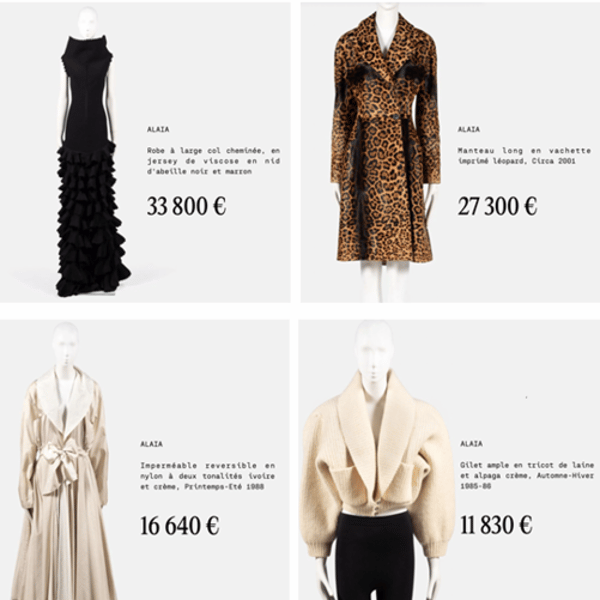
Pieces by Azzedine Alaïa and the prices they fetched at the auction – Maurice Auction

 
Organised by Maurice Auction, a Paris firm focusing on art and luxury, the sale, entitled Garde-Robe Iconique de Farida Khelfa, raked in €332,343.
 
A notably elegant figure, Khelfa ran away from her family in Lyons at 15 to begin a career in modelling in Paris, where she walked in shows by such legends as Azzedine Alaïa and Jean-Paul Gaultier. In later life she was named brand ambassador for Schiaparelli. Designs by all three fashion houses made up the majority of the auction which also included creations by Saint Laurent, Jean Charles de Castelbajac, Prada, Pierre Cardin, and Christian Louboutin.

Sold online, these personal archives of Farida came to approximately 200 pieces, comprising outfits, shoes, and accessories worn by the model in her storied career. During this, Khelfa was also the witness at the 2008 wedding of Carla Bruni to then French president Nicolas Sarkozy.
 
“I thank the buyers: their gesture shows as much elegance as generosity. These resonate particularly well with RIACE, and I am sincerely grateful to them,” said Farida after the auction,  half of whose profits will be donated to the RIACE Fund, engaged in solidarity actions.
 
The Alaïa lots sparked intense competition, achieving a world record for an Alaïa piece from a private collection. A 1996 ensemble of a flared skirt and gilet by Alaïa reached €50,700, while an epic calfskin Alaïa trench printed in leopard went for €27,300.
 
The sale attracted international collectors, another confirmation of Farida Khelfa’s status and the market’s interest in these archives.

Copyright © 2025 FashionNetwork.com All rights reserved.


Source link

Continue Reading

Fashion

Passport for fashion aims to end industry greenwashing

Published

on


By

Reuters

Published


December 16, 2025

Clothes destined for Europe could soon require digital passports to prove their green credentials, opening a new era of transparency for the world’s $1.7-trillion fashion industry.

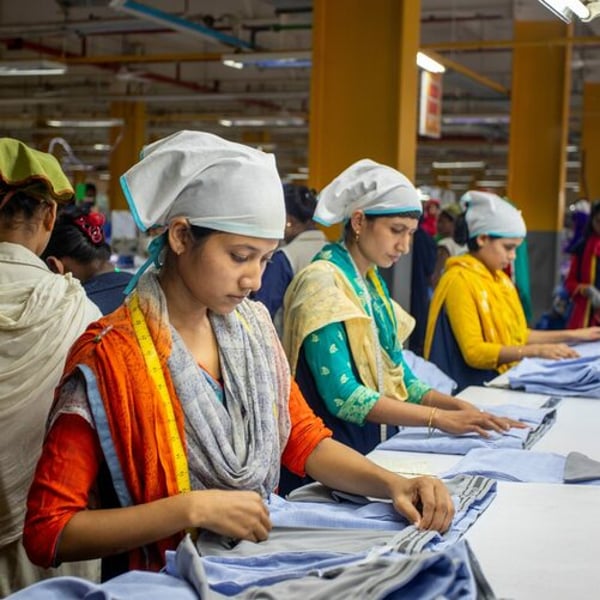
Digital product passports could transform the textile industry in Bangladesh – Shutterstock

Consumers will be able to scan QR codes or electronic tags to see the garments’ digital product passports (DPPs) and check if a fashion brand’s green claims are true. The passports will tell consumers what the clothes are made of, how much energy, water and chemicals were used to make them, and who took part in each stage of their production.

Textile suppliers from Bangladesh, the world’s second largest apparel exporter, may need to implement an initial version ⁠of the passport as early as 2027, according to analysis by the European Parliamentary Research Service.

“As consumers place a higher premium on sustainability and transparency, the digital product passport could be a key tool to provide granular records about the ⁠environmental footprint of each piece of cloth- starting from the cotton field to finished garment,” said Asif Ibrahim, vice chairman of the Dhaka-based apparel manufacturing company Newage Group of Industries. But Ibrahim said smaller manufacturers were far from ready to fulfil the stringent, new European Union (EU) needs, which aim to stop manufacturers overclaiming their green credentials.

From payroll information to material certifications, fashion makers already provide reams of ‍data about labour ‌and environmental standards to meet buyers’ requirements and audits. Yet a 2023 report by the British-based NGO Greenpeace said some brands and suppliers had misled ⁠consumers- for instance highlighting their recycling record, even if ‌most of the ‘recycled’ fibre came from plastic bottles not textile scraps.

“Providing authentic and traceable data from across the supply chain ‌is key to stop the problem of greenwashing,” said Rezwan Ahmed, CEO of Aus Bangla Jutex Ltd, a company producing bags, caps and aprons from recycled and organic cotton.

Bangladeshi suppliers have already started working with technology companies to get ready for the changes. Ahmed has partnered with Aware, a Dutch firm working with several fashion suppliers, using decentralised blockchain to record relevant data as fabric becomes a finished garment.

A manufacturer inputs key pieces ‍of data- perhaps yarn count, water consumption or colour- and Aware’s blockchain-based platform then generates a QR code for consumers. “The manufacturers will have control over what they disclose to their brands and consumers- as we want to give the manufacturers ownership of data,” said Md. Muyeed Hasan, Bangladesh country manager at Aware.

Cotton ginners, ‌washers and dye factories, as well ⁠as ​the makers of finished garments, will all upload any relevant data and certificates to their digital profiles, then must add details ⁠about each batch ​of production in real time. Claims about energy and water usage will be verified by third parties, he told the Thomson Reuters Foundation.

The passport may require Bangladesh’s smaller garment makers to upgrade their hardware and software capacity as well as how they manage their data, said Ibrahim from the ​Newage Group. Smaller manufacturers make up a large share of Bangladesh’s roughly 3,320 export-oriented apparel factories, according to Mapped in Bangladesh, a project developed by BRAC University in the Bangladeshi capital.

British-based DigiProdPass has partnered with Bangladesh’s garment manufacturers’ association BGMEA to ⁠help smaller producers meet the new passport requirements. Salauddin Sohag, managing director of DigiProdPass, said ⁠his company is rolling out pilot studies and plans to train smaller businesses to help them adapt.

“Suppliers will need support from global fashion brands and development organisations to upgrade their capacity- while the government should incentivise the early adopters,” said Ibrahim. 

© Thomson Reuters 2025 All rights reserved.


Source link

Continue Reading

Trending

Copyright © Miami Select.