
Fashion
Despite a 3.1% contraction in 2025, Italy’s footwear sector sees the light at the end of the tunnel


Published
December 23, 2025
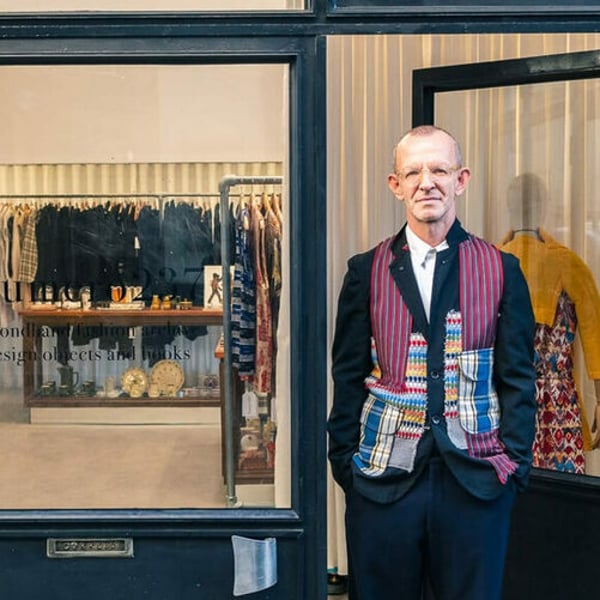
new vintage store specialising in designer fashion, ceramics, and photography books, called Numero237, takes its name from its location on Rua de Miguel Bombarda in Porto, famed for its concentration of art galleries, cultural spaces, independent designer fashion boutiques, decorative arts, architecture and much more. Although Numero237 specialises in second-hand designer fashion, focusing on pieces by young, daring designers, it also carries Portuguese ceramics from iconic brands such as Vista Alegre and Sepal, as well as photography books.
A post on the store’s Instagram account reads: “There’s a new place of discovery in Bombarda- Numero237, an archive specialising in second-hand designer fashion, now with a physical space on the street that lends it its name. A place where clothing, photography, vintage ceramics, and design coexist with sensitivity and good taste.”
“Numero237 brings together pre-owned pieces by Comme des Garçons, Issey Miyake, Helmut Lang, Jean Paul Gaultier, Walter Van Beirendonck, Yohji Yamamoto, among others, as well as fashion books and objects that bridge art and everyday life,” the post continues.

After opening one of Porto’s first vintage stores in 1997, Gonçalo Velosa has returned to the concept he honed in the British capital, where he lived for years, now in the heart of the Porto Art District: “I wanted this to be a space which, although it sells brands that can sometimes be a little elitist, also offers more accessible pieces,” he told Time Out.
“I’ve tried to create an environment where no one is afraid to explore, touch and try things on, because there are certain spaces where you think twice before going in, because they’re so controlled and formal,” says the entrepreneur, who has since settled in London to study Fashion Design, going on to open House of Liza, a space in the Hoxton neighbourhood with a rigorously curated selection of iconic pieces. At Miguel Bombarda, major names in fashion and design also stand out, such as Alexander McQueen, Comme des Garçons, Dior, Dolce & Gabbana, Helmut Lang, Issey Miyake, Jean-Paul Gaultier, and Valentino, to name a few.

Numero237 opened in September, focusing on the categories and styles of women’s and men’s fashion that Gonçalo Velosa sources on trips abroad, never neglecting quality as a point of difference.
“Everything on sale here is free from defects; it goes through a cleaning process,” he also told the local edition of the London-based magazine founded by Tony Elliott in 1968. “I don’t buy anything just because it carries a particular brand label, but because I see aesthetic or cultural interest in it.”
This article is an automatic translation.
Click here to read the original article.
Copyright © 2025 FashionNetwork.com All rights reserved.
Published
December 23, 2025
Morocco: a red carpet for traditional African attire? The host of the 2025 Africa Cup of Nations (CAN) has seen numerous national teams dressed in traditional outfits, not just their jerseys. Fashion brands such as Daily Paper and Puma have also marked the occasion with collaborations honouring African cultures.
Embroidered green kaftans and matching hats for Nigeria’s Super Eagles, black and gold or blue and white bogolans for Mali’s Eagles, colourfully detailed suits for Zimbabwe’s Warriors… Though not all the designers of these traditional outfits were credited, their success has been unanimous on social media. The CAN, which stirs passions every two years, shines a powerful spotlight on African craftsmanship and fashion.
Craftsmanship and cultures in the spotlight
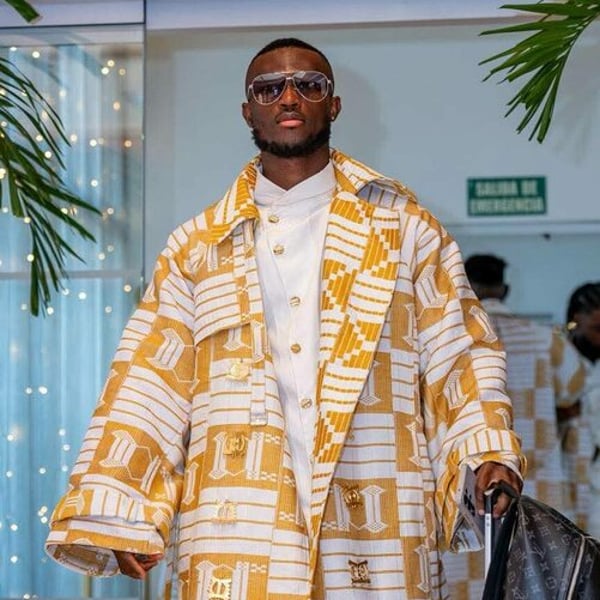
The team most in the spotlight, both for their title as 2024 African champions and for their dazzling traditional attire, is Côte d’Ivoire. Nicknamed the Elephants, the Ivorian players arrived in Morocco in Kita cloth trench coats adorned with Adinkra motifs in white and gold thread (symbols drawn from the heritage of the Akan people), worn over white shirts and trousers. The outfit is by Elie Kuame, an Ivorian-Lebanese designer based in Abidjan (Côte d’Ivoire) since 2017. His “prêt-à-couture” brand, created in 2006, showcases African fashions in all their diversity, positioning them as luxury pieces.

Another designer in the spotlight is the creator behind the Democratic Republic of Congo (DRC) outfits, Alvin Junior Mak. Born in the DRC and having moved to Paris in childhood, the designer produced the pieces directly in the Democratic Republic of Congo, working with local artisans. The result is sculpted jackets featuring the leopard motif that characterises the DR Congo national team, bearing the JmakxParis name, his sustainable ready-to-wear label.
Brands seize on the event
Finally, Burkina Faso and the Étalons called on a Burkinabé brand, Free Design, to create their outfits. Its designer, Ahmed Ouedraogo, opted for a white tunic with green and red stripes, the colours of the national flag, with symbols on the collar and chest. The outfit is completed by white trousers and a hat.

Some global brands have also seized on the event, starting with Daily Paper. The label is collaborating with Moroccan artist Hassan Hajjaj on his Kech United project, a cultural programme organised in Marrakech during the Africa Cup of Nations. The event brings together football, art, fashion, and music, and Daily Paper presents a series of flagship events highlighting its connection to African culture and global youth communities.
Streetwear and sport celebrate diasporas
For this CAN, Arte Antwerp and Adidas have joined forces to create a joint collection in the colours of Morocco’s Atlas Lions. Worn by two players from the squad before their opening match against the Comoros, it includes a beige knitted jumper with green Adidas stripes and red Adidas and Arte logos, a red sweatshirt with white piping, several red, white or black tops with details in the same colours, and a black leather jacket.

Finally, the German brand Puma is distinguishing itself in several ways on the sidelines of Africa’s biggest football gathering. As the CAN’s ball supplier, it has unveiled a model called Itri, featuring stars as a nod to Morocco and geometric motifs drawn from zellige, a Moroccan mosaic art. Puma has also released, in collaboration with Olympique de Marseille, a raft of jerseys in the colours of seven African diasporas present in the city, whose countries of origin- such as Senegal, the Comoros and Algeria—are participating in the 2025 Africa Cup of Nations.
This article is an automatic translation.
Click here to read the original article.
Copyright © 2025 FashionNetwork.com All rights reserved.


Numero237 opens in Porto, Portugal with vintage fashion and more

Hallmark holiday movie fans are flocking to Connecticut’s quaint filming locations

Larry Ellison’s $40 billion pledge to son’s Paramount deal shows a shift in billionaire giving
-

 Politics8 years ago
Congress rolls out ‘Better Deal,’ new economic agenda
-
Entertainment8 years ago
New Season 8 Walking Dead trailer flashes forward in time
-
Politics8 years ago
Poll: Virginia governor’s race in dead heat
-
Entertainment8 years ago
The final 6 ‘Game of Thrones’ episodes might feel like a full season
-
Politics8 years ago
Illinois’ financial crisis could bring the state to a halt
-
Entertainment8 years ago
Meet Superman’s grandfather in new trailer for Krypton
-
Business8 years ago
6 Stunning new co-working spaces around the globe
-
Tech8 years ago
Hulu hires Google marketing veteran Kelly Campbell as CMO