
Politics
Democrats’ broad ‘Affordability Agenda’ bill slate shut out by GOP-led Legislature
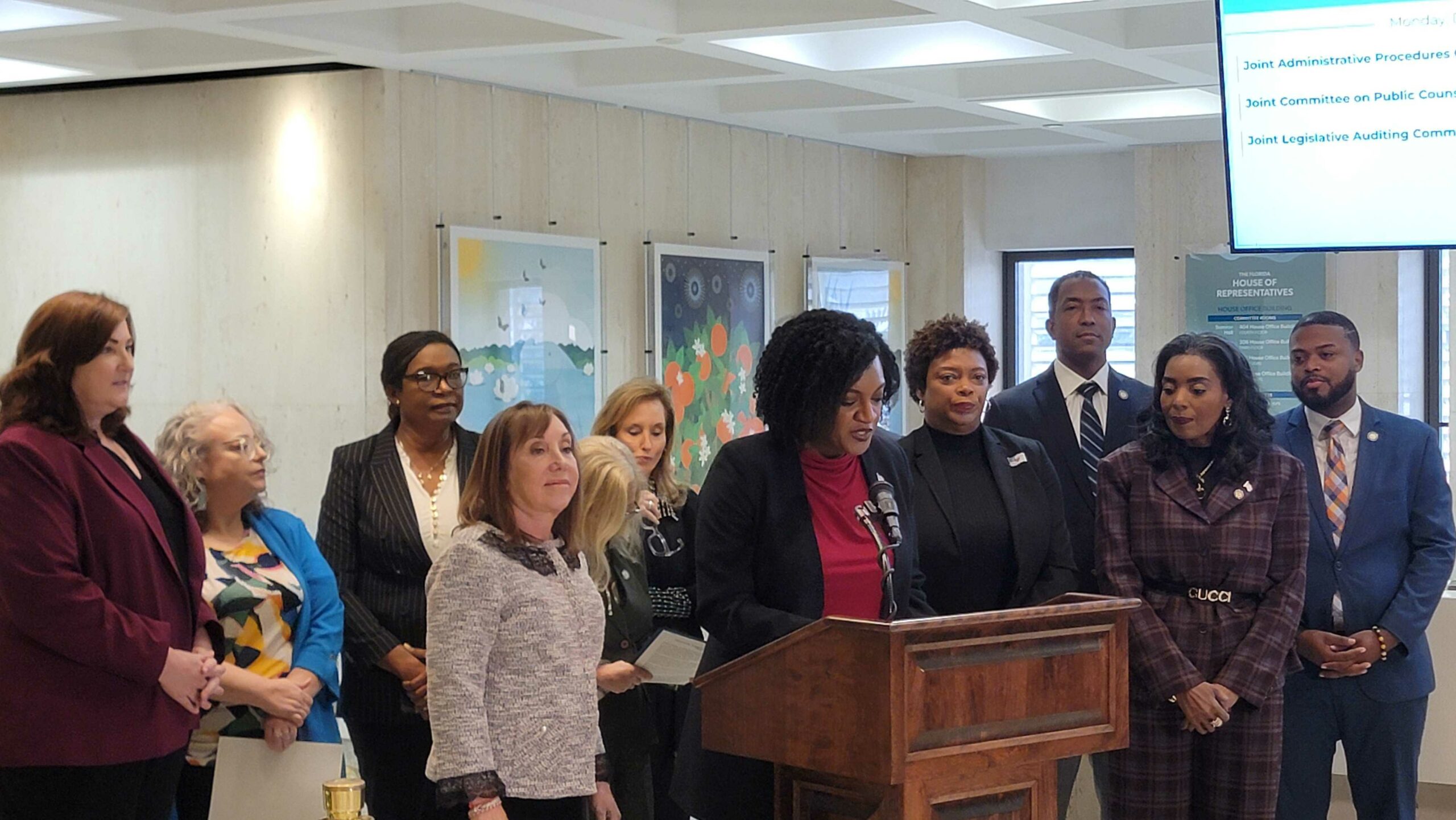
Before the regular Session this year, Democratic lawmakers unveiled two bill slates as part of their “Affordability Agenda” — a counterprogram to their Republican colleagues’ plans to help Sunshine State residents stretch their dollars amid continued inflation.
Of nine proposals Democrats highlighted, not one passed. Only two received hearings. One made it to the floor but never saw a final vote.
Senate Democratic Leader Lori Berman and House Democratic Leader Fentrice Driskell expressed frustration with the outcome, which they said will only hurt Floridians struggling to make ends meet.
“We had an entire 60-day Session, and not only were our affordability bills not heard, hardly any discussion took place,” Berman told Florida Politics.
“We did not discuss making it easier for first-time homebuyers to purchase a home. We did not discuss making it easier for seniors to continue to live in their properties. We did not discuss lowering insurance premiums or anything to help people be able to afford groceries, gas or utilities. It’s extraordinarily upsetting.”
Driskell said affordability is the top issue for Florida voters, but despite Democrats’ best efforts, Republicans failed to deliver.
“We’re watching as Florida is literally becoming too expensive for too many Floridians, but this Session was marked by a lot of talk and not a lot of action,” she said in a Saturday morning phone interview. “In the last two years, Republicans have been so focused on fighting within their own ranks that the people of Florida got left behind.”
The first wave of bills from the left side of the aisle came in October, when Berman and the chamber’s other Democrats presented six proposals to help property insurance costs.
“We want you to keep more of your hard-earned money and we want you to get what you pay for,” Berman said at the time.
There was SB 30 and HB 1493 by Sen. Barbara Sharief and Rep. Dotie Joseph to limit annual property insurance rate increases, SB 78 and HB 185 by Sen. Rosalind Osgood and Rep. Lisa Dunkley to make certain home-hardening sales taxes permanent, and SB 84 and HB 343 by Berman and Rep. Leonard Spencer to create a panel that would study and advise lawmakers on how to improve Florida’s insurance market.

Another proposal (SB 108, HB 341) by Sen. Tina Scott Polsky and Spencer would have required mediation as the first step for disputed residential property claims, with the goal of keeping homeowners out of court and free of costly legal expenses.
SB 128 by Sen. LaVon Bracy Davis would have required insurers to inform homeowners of a right to an inspection and reimbursement before dropping their coverage over an aging roof. There was also SB 140 by Sen. Darryl Rouson, which would have expanded whistleblower protections for insurance company employees and contractors.
Exactly two months later, Berman, Driskell and others held another press conference at the Capitol to announce more bills.
The expanded “Agenda” included SB 366 and HB 319 by Sen. Mack Bernard and Rep. Kelly Skidmore, which would have laid the foundation for a potential insurance compact through which Florida and other states could share risk, increase bargaining power and potentially stabilize their respective insurance markets.
Another pair of twin bills (SB 756, HB 675) by Davis and Driskell would have augmented the Live Local Act to require all its incentives to be used for affordable housing, lower the price point for what could be considered affordable and eliminate documentary stamp taxes for first-time homebuyers who use the property as their primary residence.
Berman and Driskell teamed up on another bill couplet (SB 780, HB 687) to require a sweeping review of state spending with the goal of identifying the kind of waste, fraud and abuse Gov. Ron DeSantis and CFO Blaise Ingoglia say they’ve uncovered at the local level — to the tune of roughly $2 billion as of mid-February.
The review could have scrutinized everything from Hope Florida contracts, state litigation costs, education materials and college expenditures like high per-student spending at New College of Florida to migration-related spending, such as the Governor’s relocation flights and Alligator Alcatraz.
SB 78 advanced through one committee to which it was referred, while its House counterpart (HB 185) made it all the way to the floor but didn’t get a vote by the full chamber.
And while SB 756 went ignored in the Senate, the House version (HB 675) got one hearing before stalling out.
Driskell called HB 675’s demise “particularly disappointing.”
“What I’ve seen during my time in the Legislature is that it feels so easy for Republicans to give direct relief to corporations and industries,” she said. “But average Floridians don’t get a lot of direct relief. This would have been a way to do that and boost homeownership, which we know is better for the economy overall.”