
Politics
Debra Tendrich files bill to treat politically motivated attacks as hate crimes


In the wake of politically motivated attacks that shook communities nationwide, Democratic Rep. Debra Tendrich has filed legislation to expand Florida’s hate-crime statute to include political ideology.
The measure (HB 143) would add “political ideology of the victim” to the list of factors that trigger tougher penalties when a crime is committed with prejudice.
Under current law, those factors include race, color, ancestry, ethnicity, religion, sexual orientation, national origin, homeless status or advanced age of the victim.
If passed, HB 143 would require courts to reclassify politically motivated crimes to higher offense levels.
For instance, a first-degree misdemeanor punishable by up to a year in jail would be elevated to a third-degree felony carrying a penalty of up to five years, and a third-degree felony would be upgraded to a second-degree felony, for which 15 years behind bars is the maximum.
Affected infraction levels range from a second-degree misdemeanor to a first-degree felony, the latter of which would rise to a life felony, with life imprisonment as punishment upon conviction.
“Political violence is on the rise,” Tendrich said in a statement. “I want Floridians to know I will always defend their right to speak freely and safely, no matter what party or ideology they support, even if we disagree.”
She pointed to the May killing of Israeli embassy workers Sarah Milgrim and Yaron Lischinsky by a Palestine-aligned gunman, the June murder of Minnesota Democratic Leader Melissa Hortman and her husband, Mark, at their home, and the assassination last month of conservative activist Charlie Kirk at a Utah college campus.
While political violence remains relatively rare compared with other forms of violent crime, experts say threats and targeted acts have increased nationwide. A PBS NewsHour analysis of federal data found that politically motivated attacks, particularly those tied to extremist movements, have become more frequent and, in some cases, deadlier.
Tendrich said constituents on both sides of the aisle have told her they now feel less safe publicly expressing their opinions and, in some cases, have censored themselves rather than face a risk of violence. That tracks with recent polling that found half of voters in Miami-Dade, Florida’s largest county by population, believe sharing their political views online and in public could draw retaliation.

“Violence fueled by political hatred is still hate, and it must be treated that way,” Tendrich said. “Florida must send a clear message: we will not tolerate intimidation or violence against anyone for their beliefs. In our state, we protect freedom, not fear.”
HB 143, which pends a Senate companion, would make Florida one of a handful of states and Washington, D.C., to explicitly classify politically motivated offenses as hate crimes. Others include California, Iowa, Louisiana, South Carolina and West Virginia, according to the U.S. Bureau of Justice Statistics.
The bill would go into effect Oct. 1.
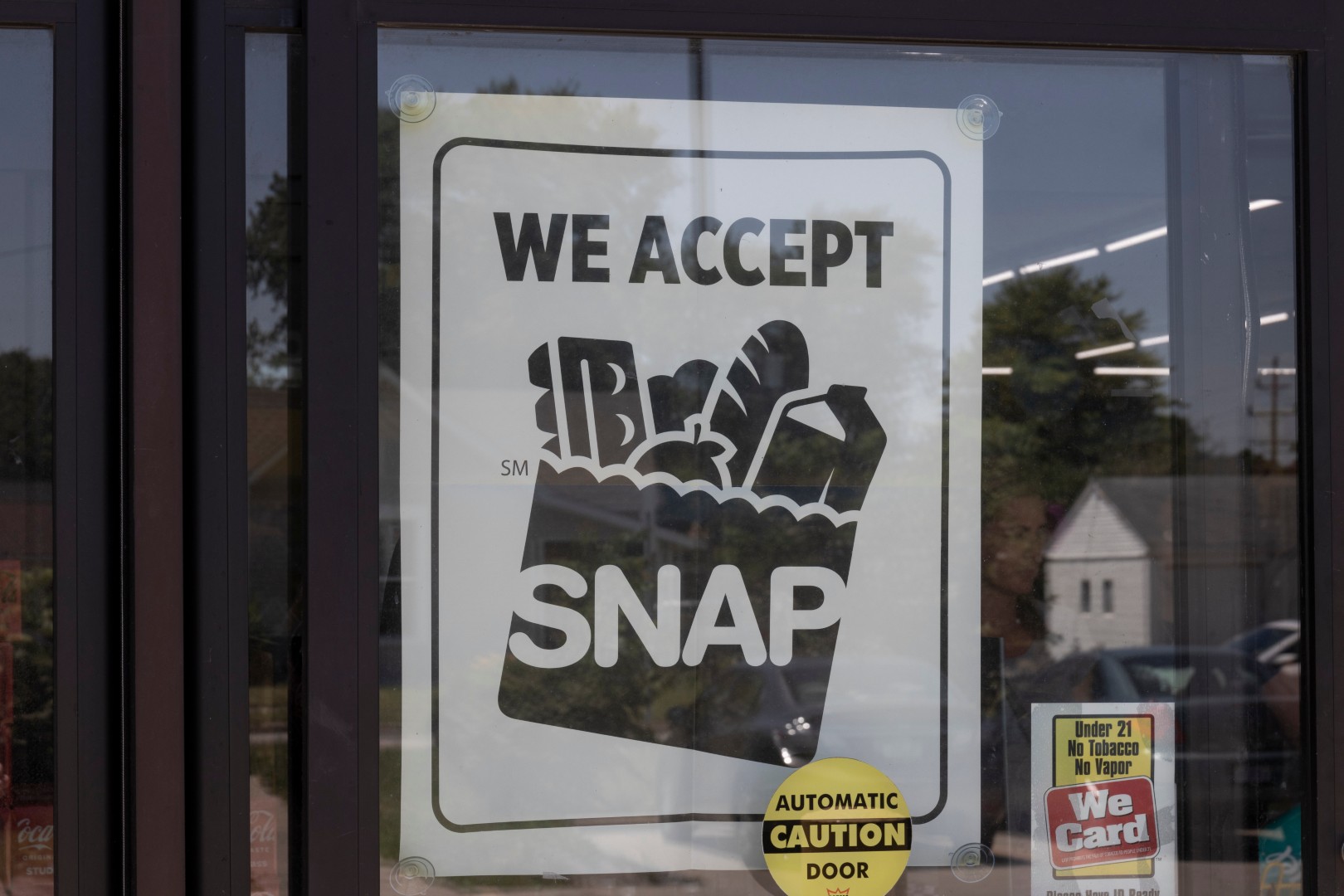
Health care tech firm Gainwell Technologies has launched a SNAP (Supplemental Nutrition Assistance Program) Integrity solution to help states strengthen the program’s accuracy and integrity and unlock new efficiencies.
The new tech combines predictive analytics, intelligent data matching, and artificial intelligence to empower agencies to deliver benefits more reliably while also safeguarding budgets.
With the passage of H.R. 1, President Donald Trump’s token “One Big Beautiful Bill,” states face new accountability standards for SNAP payment accuracy. While these changes introduce additional financial responsibility, they also create an opportunity for agencies to modernize operations, reduce errors, and build greater trust with the communities they serve, the company said.
Under federal legislation, states that have not reduced error rates to less than 6% by fiscal year 2026 will be required to repay a portion of SNAP federal funding and establish corrective action plans. Additionally, in fiscal year 2028, states will be required to pay between 5% and 15% of SNAP benefit costs, with the total amount based on payment error rates.
The implications could be significant for affected states.
In FY2024 alone, SNAP payment errors averaged 10.93% nationally, according to the U.S. Department of Agriculture, including $9.3 billion in overpayments.
And more than 40 states currently have error rates above 6% — with more than 20 states above 10% and facing the highest level of financial risk.
With those timelines approaching and federal funding tied to current fiscal-year performance, states have an incentive to reduce error rates quickly.
“States are under growing pressure to improve SNAP payment accuracy, and the stakes have never been higher,” said Bill Allison, Gainwell Chief Client Officer. “Our SNAP Integrity solution delivers the intelligence, speed and scalability agencies need to protect funding, reduce administrative strain, and restore public trust in essential benefit programs.”
Gainwell’s technology enables states to proactively reduce error rates and improve eligibility accuracy. The technology leverages decades of experience enhancing Medicaid integrity — a core Gainwell function — and is designed to coexist with states’ current systems and processes.

Its features include automated error prevention using predictive AI models and machine learning that flags high-risk cases early to prevent costly errors. It also uses streamlined interventions through people, processes and technology interventions and integrated data management to process massive datasets accurately and efficiently.
The features are meant to reduce overpayments, accelerate eligibility decisions, and strengthen compliance with federal quality control requirements.

An Alabama woman is suing Universal in federal court after she said she was hurt riding Hollywood Rip Ride Rockit in 2021.
Annie Parrish moved her lawsuit from the Orange Circuit Court to the U.S. District Court this week.
She claims she got whiplash and had three herniated discs in her cervical spine after riding the Universal Studios roller coaster known for playing music while riders whizzed up to 65 mph. Universal shut down the ride earlier this year to make way for something new.
Parrish demanded $1 million from Universal to settle the lawsuit last year after incurring $18,500 in medical bills, court records showed.
Parrish’s attorney insisted the $1 million demand “is not mere puffery.”
The demand letter said Parrish went to the emergency room the same day she rode the coaster, complaining of severe neck pain.
“She described the pain as throbbing and 10/10 in severity,” according to the demand letter that was included in court records and detailed her list of treatments and medical visits.
Parrish said she “boarded the ride and secured her lap restraint,” but Universal employees “did not check the restraint and/or otherwise failed to fully secure Plaintiff into the ride,” according to her lawsuit initially filed in October 2025 in state court. “As a result of that failure, she was launched forward and unable to reposition her neck and head, causing significant injuries.”
Universal denied many of the allegations in her lawsuit.
“If Plaintiff was injured as alleged, she was fully aware of the risk,” Universal said in response to her lawsuit. “She expressly assumed all risk and is barred from recovery by express assumption of the risk.”
Universal also said Parrish “negligently and carelessly failed to follow the instructions and warnings for the ride and her own negligence caused or contributed to her injury.”
Universal and Parrish’s attorneys did not respond to a request for comment Friday for this story.
Universal has been in the headlines over ride safety after a man with disabilities died after riding a roller coaster at the new Epic Universe theme park in September.
New media reports this week detailed the tragic circumstances of Kevin Rodriguez Zavala’s death.
His head had slammed into the seat in front of him repeatedly with blood splattering on his girlfriend who tried in vain to call for help as the ride went on. Rodriguez Zavala’s femur had been broken in half, according to the Orlando Sentinel.
The Orange County Sheriff’s Office investigated and said the 32-year-old’s death was accidental and no criminal charges will be filed.
Universal Orlando President Karen Irwin previously said Stardust Racers was operating properly at the time of his death and employees followed proper protocols.
“In addition, the ride system manufacturer of record and an independent, third-party roller coaster engineering expert conducted their own on-site testing and validated our findings,” Irwin wrote in a memo to employees this Fall.



DOGE isn’t dead—it’s been absorbed into the bloodstream of the government, federal employees say

Jeffrey Epstein’s Freaky Sex Toys Seen in New Photo Dump

John Lewis aims to lure shoppers with new hospitality spaces
-

 Politics8 years ago
Congress rolls out ‘Better Deal,’ new economic agenda
-
Entertainment8 years ago
New Season 8 Walking Dead trailer flashes forward in time
-
Politics8 years ago
Poll: Virginia governor’s race in dead heat
-
Entertainment8 years ago
The final 6 ‘Game of Thrones’ episodes might feel like a full season
-
Entertainment8 years ago
Meet Superman’s grandfather in new trailer for Krypton
-
Politics8 years ago
Illinois’ financial crisis could bring the state to a halt
-
Business8 years ago
6 Stunning new co-working spaces around the globe
-
Tech8 years ago
Hulu hires Google marketing veteran Kelly Campbell as CMO