Connect with us

Politics

Deadly strike marks moment in Marco Rubio’s long desire to confront Venezuela
Published

on


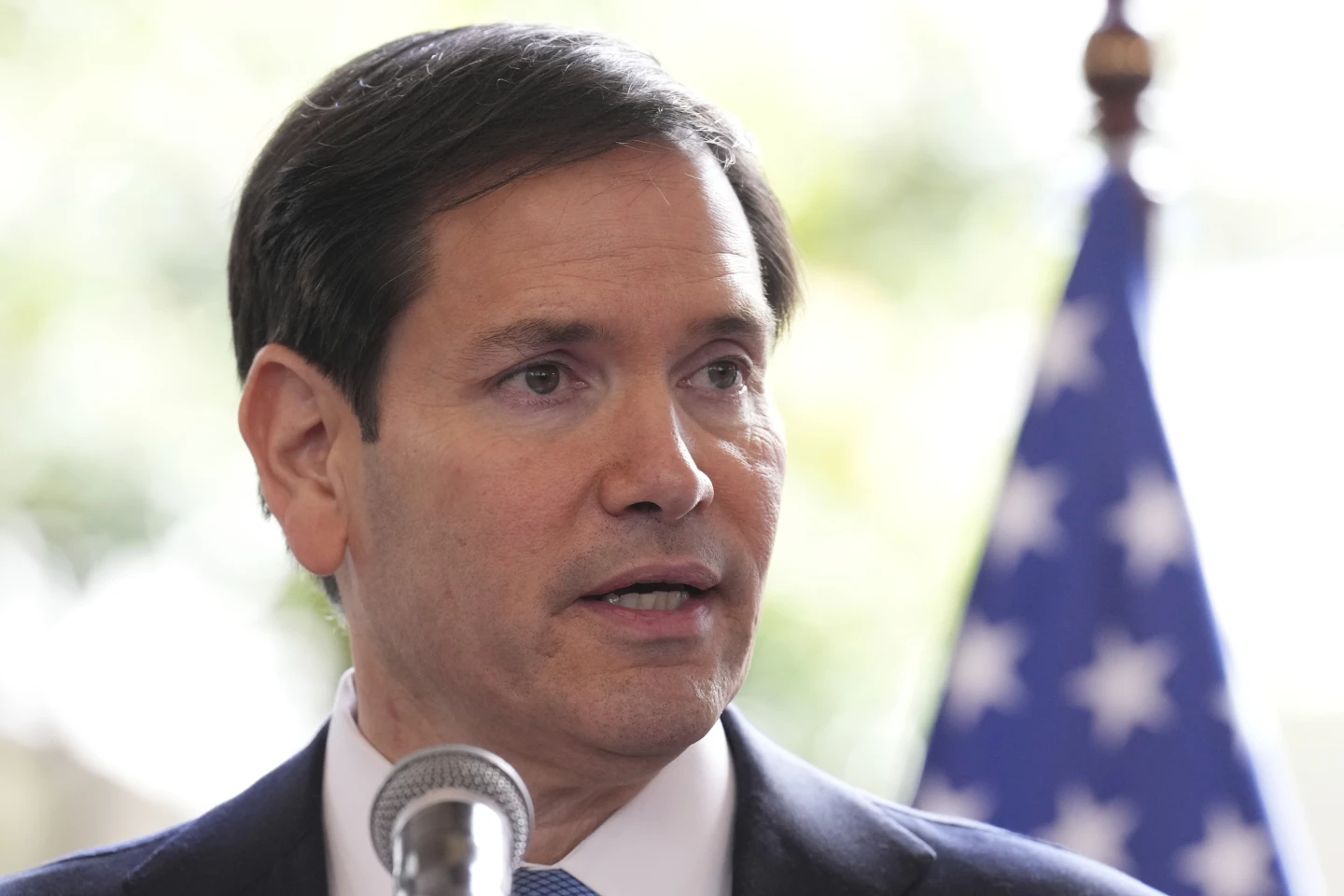
The deadly strike on a boat U.S. officials say was carrying drugs from Venezuela may have marked a stunning shift in the countries’ relations, but escalating pressure on the South American nation has defined much of Secretary of State Marco Rubio’s quarter-century in politics.

President Donald Trump’s top diplomat, a former Florida Senator, has depicted Venezuela as a vestige of the communist ideology in the Western Hemisphere. Rubio has consistently pushed for the ouster of its leader, Nicolás Maduro, advocated for economic sanctions and even argued for American military intervention.

“I think that U.S. armed forces should only be used in cases of national security threats,” he said in a 2018 interview with Univision. “I think there is a strong argument that can be made right now that Venezuela and Maduro’s regime have become a threat to the region and to the U.S.”

Before joining the administration, Rubio had represented a more interventionist wing of the Republican Party that at times seemed at odds with Trump’s “America First” ethos. While Trump has promised no more foreign wars, Rubio and other administration officials have warned of more operations against drug traffickers in Latin America, escalating pressure on an adversary Rubio has long sought to confront.

“The President has said he wants to wage war on these groups because they’ve been waging war on us for 30 years and no one has responded,” Rubio told reporters Thursday.

Advertisement

Rubio’s track record on Venezuela

Before being tapped as secretary of state and national security adviser, the Florida Senator had already exerted influence over U.S. policy toward Latin America during Trump’s first term.

For Rubio, his interest in targeting leftist Latin American leaders has been personal. His parents are Cuban immigrants who arrived in Miami in 1956, a few years before Fidel Castro’s 1959 communist revolution. He grew up in Miami, where many Cubans sought refuge after Castro’s rise to power.

His consistent criticism of communism has helped win him support from thousands of members of the Venezuelan diaspora who made Florida their new home to escape crime, economic deprivation and unrest under Maduro and his predecessor, the late Hugo Chávez, who took power in 1999 and began his self-described socialist revolution.

While the U.S. has tried to move past its Cold War-era legacy of interfering and destabilizing governments in Latin America, Rubio frequently advocated for more action, going against Chávez and then Maduro. He tied the struggle of the opposition movement there to that of Cuban exiles.

Now, “he sees an opportunity to move forward a much more aggressive U.S. policy toward Latin America,” said Geoff Ramsey, a senior analyst on Venezuela at the Atlantic Council in Washington.

Rubio shared some of the first details about the strike Tuesday despite it being a military operation, posting on social media as Trump briefly announced it in the Oval Office. The White House says 11 people were killed.

A day later, he said “it’ll happen again” and said Trump had authority “under exigent circumstances to eliminate imminent threats to the United States.”

“What will stop them is when you blow them up, when you get rid of them,” Rubio said Wednesday while visiting Mexico.

The Defense Department said late Thursday that two Venezuelan military aircraft flew near a U.S. Navy vessel, calling it “a highly provocative move” and warning Maduro’s government against further actions.

The reaction within Trump’s Make America Great Again base to the U.S. strike has been fairly muted, even supportive of it as a drug trafficking effort, unlike the divide that emerged over U.S. intervention in the Israel-Iran conflict.

Trump rival to adviser

After Trump bested Rubio in the 2016 GOP primary and later took office in 2017, Rubio became a shadow adviser and was the main driver of sanctions against top-level Venezuelan officials for human rights abuses and ties to drug trafficking.

In the Senate, many of Rubio’s televised floor speeches and official statements focused on Venezuela. In 2019, he said there was a “compelling argument” that the situation in Venezuela presented a national security threat to the United States, citing the presence of Russian President Vladimir Putin’s military.

“The enormous majority of Americans do not want Vladimir’s military anywhere in our hemisphere, and that’s precisely what will happen if Maduro remains in power,” he said. “That alone is a national security threat to the United States.”

Many believed Rubio was among the voices that urged Trump to back an opposition leader to unseat Maduro.

In 2019, as Venezuelan forces were quelling unrest and an opposition leader urged other countries to intervene, Rubio posted a series of tweets showing before-and-after images of toppled leaders such as Libya’s Moammar Gadhafi, who was killed by opposition fighters in 2011, and Panama’s Manuel Noriega, who was ousted in a U.S. invasion in 1989.

“History is full of examples of tyrants who believe they are invulnerable & then face sudden collapse,” he tweeted afterward.

The U.S. is among several countries that do not recognize Maduro as Venezuela’s president, with credible evidence that he lost last year’s election.

The bounty on Maduro’s head also has surged. After he was indicted in Manhattan federal court in 2020 on charges of narcoterrorism and conspiracy to import cocaine, the U.S. offered a $15 million reward for his arrest. Former President Joe Biden’s administration later raised it to $25 million — the same amount offered for the capture of Osama bin Laden.

The Trump administration has doubled that reward to $50 million.

“Maduro is NOT the President of Venezuela and his regime is NOT the legitimate government,” Rubio posted on X shortly before that Aug. 7 announcement.

How Maduro sees Rubio\

Maduro has described Rubio as the direct architect of the U.S. buildup of warships in the region before this week’s strike.

“Mr. President Donald Trump, you have to be careful because Marco Rubio wants your hands stained with blood, with South American blood, Caribbean blood, Venezuelan blood,” Maduro told reporters this week.

The Venezuelan leader said his government maintains two lines of communication with the Trump administration, one with the State Department and another with Trump’s envoy for special missions, Richard Grenell.

Grenell’s side appears to take a more conciliatory approach, seen when the U.S. allowed oil producer Chevron to resume drilling in Venezuela and in the coordination of prisoner exchanges and deportation flights with Maduro’s government.

“I think the administration is internally divided about Venezuela,” said Elliott Abrams, who served as special representative for Venezuela under Trump’s first term and said Grenell is advocating for a softer stance. “I think Rubio is pushing for a hard line against Maduro, and he wins some, and he loses some.”

___

Republished with permission of The Associated Press.


Post Views: 0


Source link

Continue Reading

Politics

Early voting underway for Miami Mayor’s runoff between Eileen Higgins, Emilio González

Published

on


Early voting is underway in Miami as former County Commissioner Eileen Higgins and former City Manager Emilio González enter the final stretch of a closely watched Dec. 9 mayoral runoff.

The two candidates rose from a 13-person field Nov. 4, with Higgins winning about 36% of the vote and González taking 19.5%. Because neither surpassed 50%, Miami voters must now choose between contrasting visions for a city grappling with affordability, rising seas, political dysfunction and rapid growth.

Both promise to bring more stability and accountability to City Hall. Both say Miami’s permitting process needs fixing.

Higgins, a mechanical engineer and eight-year county commissioner with a broad, international background in government service, has emphasized affordable housing — urging the city to build on public land and create a dedicated housing trust fund — and supports expanding the City Commission from five to nine members to improve neighborhood representation.

She also backs more eco-friendly and flood-preventative infrastructure, faster park construction and better transportation connectivity and efficiency.

She opposes Miami’s 287(g) agreement with U.S. Immigration and Customs Enforcement, calling recent enforcement “inhumane and cruel,” and has pledged to serve as a full-time mayor with no outside employment while replacing City Manager Art Noriega.

González, a retired Air Force colonel, former Director of U.S. Citizenship and Immigration Services and ex-CEO of Miami International Airport, argues Miami needs an experienced administrator to fix what he calls deep structural problems.

He has made permitting reform a top priority, labeling the current system as barely functioning, and says affordability must be addressed through broader tax relief rather than relying on housing development alone.

He supports limited police cooperation with ICE and wants Miami to prepare for the potential repeal of homestead property taxes. Like Higgins, he vows to replace Noriega but opposes expanding the commission.

He also vows, if elected, to establish a “Deregulation Task Force” to unburden small businesses, prioritizing capital investments that protect Miamians, increasing the city’s police force, modernizing Miami services with technology and a customer-friendly approach, and rein in government spending and growth.

Notably, Miami’s Nov. 4 election this year might not have taken place if not for González, who successfully sued in July to stop officials from delaying its election until 2026.

The runoff has drawn national attention, with major Democrats like Democratic National Committee Chair Ken Martin, Arizona U.S. Rep. Ruben Gallego and Orange County Mayor-turned-gubernatorial candidate Jerry Demings and his wife, former Congresswoman Val Demings, backing Higgins and high-profile Republicans like President Donald Trump, Gov. Ron DeSantis and U.S. Sen. Rick Scott lining up behind González.

For both parties, Miami’s outcome is seen as a bellwether heading into a volatile 2026 cycle, in a city where growth, climate challenges and governance failures remain top concerns for nearly 500,000 residents.

Higgins, a 61-year-old Democrat who was born in Ohio and grew up in New Mexico, entered the race as the longest-serving current member of the Miami-Dade Commission. She won her seat in a 2018 Special Election and coasted back into re-election unopposed last year.

She chose to vacate her seat three years early to run for Mayor.

She worked for years in the private sector, overseeing global manufacturing in Europe and Latin America, before returning stateside to lead marketing for companies such as Pfizer and Jose Cuervo.

In 2006, she took a Director job with the Peace Corps in Belize, after which she served as a foreign service officer for the U.S. State Department under President Barack Obama, working in Mexico and in economic development areas in South Africa.

Since filing in April, Higgins raised $386,500 through her campaign account. She also amassed close to $658,000 by the end of September through her county-level political committee, Ethical Leadership for Miami. Close to a third of that sum — $175,000 — came through a transfer from her state-level PC.

She also spent about $881,000.

If elected, Higgins would make history as Miami’s first woman Mayor.

González, a 68-year-old born in Cuba, brought the most robust government background to the race. A U.S. Army veteran who rose to the rank of colonel, he served as Miami City Manager from 2017 to 2020, CEO of Miami International Airport (MIA) from 2013 to 2017 and as Director of Citizenship and Immigration Services at the U.S. Department of Homeland Security under President George W. Bush.

In private life, he works as a partner at investment management firm RSMD Investco LLC. He also serves as a member of the Treasury Investment Council under the Florida Department of Financial Services.

Since filing to run for Mayor in April, he raised nearly $1.2 million and spent about $1 million.

Election Day is Tuesday.


Source link

Continue Reading

Politics

Paul Renner doubles down on Cory Mills critique, urges more Republicans to join him

Published

on


Mills was a day-one Byron Donalds backer in the gubernatorial race.

A former House Speaker and current candidate for Governor is leading the charge for Republicans as scandal swirls around a Congressman.

Saying the “evidence is mounting” against Rep. Cory MillsPaul Renner says other candidates for Governor should “stand up and be counted” and join him in the call for Mills to leave Congress.

Renner made the call earlier this week.

But on Friday, the Palm Coast Republican doubled down.

He spotlighted fresh reporting from Roger Sollenberger alleging that Mills’ company “appears to have illegally exported weapons while he serves in Congress, including to Ukraine,” that Mills failed to disclose conflicts of interest, “tried to fistfight other Republican members of Congress, and lied about his party stature to bully other GOP candidates out of primaries that an alleged romantic interest was running in,” and lied about his conversion to Islam.

The House Ethics Committee is already probing Mills, a New Smyrna Beach Republican, over allegations of profiting from federal defense contracts while in Congress. More recently, the Committee expanded its work to review allegations that he assaulted one ex-girlfriend and threatened to share intimate photos of another.

Other candidates have been more reticent in addressing the issue, including Rep. Byron Donalds.

“When any other members have been involved and stuff like this, my advice is the same,” said Donalds, a Naples Republican. “They need to actually spend a lot more time in the district and take stock of what’s going on at home, and make that decision with their voters.”

The response came less than a year after Mills, a New Smyrna Beach Republican, spoke at the launch of Donalds’ gubernatorial campaign.

___

Staff writer Jacob Ogles contributed reporting.


Source link

Continue Reading

Politics

Eileen Higgins brings out starpower as special election campaign nears close

Published

on


Prominent Democrats will be on hand at a number of stops.

Former Miami-Dade Commissioner Eileen Higgins is enlisting more big names as support at early vote stops ahead of Tuesday’s special election for Mayor, including a Senate candidate, a former Senate candidate, and a current candidate for Governor.

During her canvass kickoff at 10 a.m at Elizabeth Virrick Park, Higgins will appear with U.S. Senate Candidate Hector Mujica.

Early vote stops follow, with Higgins solo at the 11 a.m. show-up at Miami City Hall and the 11:30 at the Shenandoah Library.

From there, big names from Orlando will be with the candidate.

Orange County Mayor and candidate for Florida Governor Jerry Demings and former Congresswoman Val Demings will appear with Higgins at the Liberty Square Family & Friends Picnic (2 p.m.), Charles Hadley Park (3 p.m.), and the Carrie P. Meek Senior and Cultural Center (3:30 p.m.)

Higgins, who served on the County Commission from 2018 to 2025, is competing in a runoff for the city’s mayoralty against former City Manager Emilio González. The pair topped 11 other candidates in Miami’s Nov. 4 General Election, with Higgins, a Democrat, taking 36% of the vote and González, a Republican, capturing 19.5%.

To win outright, a candidate had to receive more than half the vote. Miami’s elections are technically nonpartisan, though party politics frequently still play into races.


Source link

Continue Reading

Trending

Copyright © Miami Select.