
Politics
David Smith renews effort to fully legalize naturopathy in Florida


Rep. David Smith has refiled a bill that aims to repeal Florida’s long-standing restrictions on naturopathy.
Smith, a Winter Springs Republican, filed a measure (HB 223) that seeks to establish regulatory frameworks to ensure naturopathic doctors are well-trained, officially licensed and closely monitored, much like other health care professions.
Naturopathic medicine involves diagnosis, prevention, and treatment using natural remedies, including botanical extracts, nutrition, homeopathy and physical medicine.
According to the bill, naturopathy has been almost completely banned in Florida since 1959, following its initial regulation by the state in 1927. The legislative intent stated in the measure aims to “free naturopathy” in Florida by removing the outright ban and modernizing regulations.
The bill clarifies that naturopathic doctors are prohibited from prescribing pharmaceutical drugs, performing surgery, anesthesia, or spinal adjustments unless licensed, or from practicing as a Doctor of Medicine (MD), Doctor of Osteopathic Medicine (DO), chiropractors, acupuncturists or other regulated professions that require a separate licensure.
A seven-member Board of Naturopathic Medicine within the Department of Health (DOH) would be created, consisting of at least four licensed naturopathic doctors, two MD or DO physicians, and one public member. Board members would be required to complete disciplinary training to participate in enforcement decisions.
Licensure requirements would include a bachelor’s degree, a naturopathic doctoral degree from an accredited program, passing a national board exam, and fingerprinting and background checks. It would further allow licensure endorsements for qualified out-of-state practitioners.
Unlicensed individuals would be prohibited from using protected titles like “Naturopathic Doctor” or “N.D.,” and violations would be classified as a second-degree misdemeanor.
The bill outlines a disciplinary framework for naturopathic doctors, which would empower DOH and the created board to investigate complaints and enforce any sanctions.
Grounds for disciplinary action include fraud, criminal convictions, malpractice, unprofessional conduct, and practicing beyond the authorized scope, such as prescribing prohibited substances.

Sanctions can include reprimands, fines, license suspension or revocation, mandatory remedial education, or permanent disqualification from exemption programs. The department could also seek injunctions to prevent unauthorized or unsafe practice.
Exemptions exist and would include students, out-of-state practitioners, religious practices and domestic remedies, and sellers of dietary supplements that are providing information. The term “traditional naturopath” could also be used as long as they are not misrepresenting themselves as licensed doctors.
If passed, the bill would take effect on July 1, 2026.
Smith filed an identical measure (HB 533) in the House during the 2025 Legislative Session. Doral Republican Sen. Ana Maria Rodriguez filed a similar measure (SB 470) in the Senate, which was cosponsored by St. Petersburg Democratic Sen. Darryl Rouson. Both measures stalled in committee.
The 2025 version of the bill was supported by the Florida chapter of the Children’s Health Defense, which said that it’s time for Florida to formally and legally recognize the profession.
“Unfortunately, too many Floridians are facing the burden of our growing chronic disease epidemic,” the group said in a statement. “To heal, so many of us must address the lifestyle factors that create the conditions for chronic diseases. Traditional Naturopaths and NDs are critical to addressing this epidemic as Naturopathy focuses on identifying and addressing the root cause of disease through lifestyle changes.”
Politics
SBA urges Florida businesses and nonprofits hit by April drought to apply for loan assistance
Politics
James Fishback is registered to vote in 2 states. Does that make him ineligible for Governor?
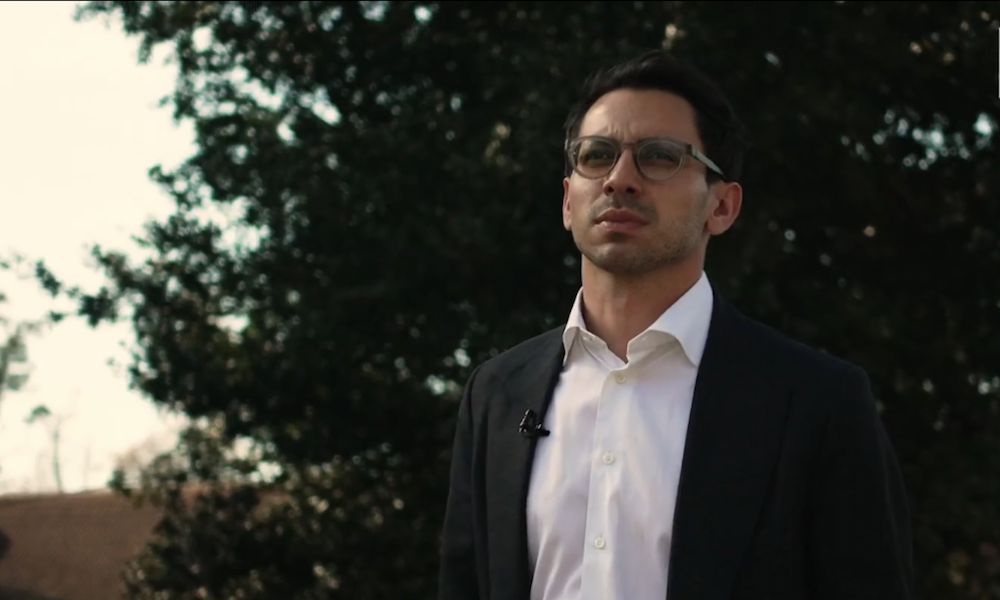
Gubernatorial candidate James Fishback has been registered to vote in two states since around 2020. While he never cast a ballot in both states in the same year, the issue raises questions about whether the Madison Republican meets eligibility requirements for Governor.
The 30-year-old has been registered to vote in Florida since 2012. He transferred his residence from Davie in Broward County to Madison County in 2023, according to the Madison County Supervisor of Elections Office.
But the D.C. Board of Elections confirms Fishback remains an active voter in Washington, where he registered in 2020.
That could complicate Fishback’s campaign for Governor, which he launched last month. Florida’s eligibility requirements for Governor require candidates to be registered to vote in Florida and to be residents of the state for at least seven years.
Of note, state law also requires a candidate for partisan office to be a registered member of the party for 365 days before an election. While Fishback is registered as a Republican in Florida, he is registered without party affiliation in Washington.
Fishback dismissed concerns about his eligibility to run for the GOP nomination for Governor.
“I’m a fourth generation Floridian and have lived here my entire life, and meet all of the constitutional requirements to serve as Governor if the voters entrust me with this awesome responsibility,” he said in a text to Florida Politics.
But despite being a Florida native, Fishback’s residency could be called into question. Fishback owns a property in Washington on 42nd Street, and records show he claimed a homestead exemption on it.
That’s notably a different address than the Davis Place residence where he is registered to vote. That property is owned by Aydee Fishback, according to Washington records, and Florida records show Jay Fishback as a primary owner of the Washington property.
James Fishback is the primary owner of a Pinkney Street home in Madison on property he purchased in 2022, according to Madison County property records. No homestead exemption is held on that property.

___
Jesse Scheckner of Florida Politics contributed to this report.
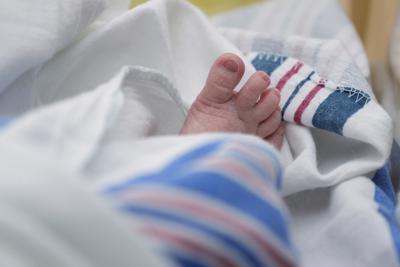
The policy expansion is retroactive through November 2024.
The House is expanding its paid parental leave policy when employees have a baby or adopt a child, House Speaker Daniel Perez announced.
The policy takes effect immediately and applies retroactively for parents who took leave from Nov. 19, 2024, onward.
Going forward, full-time salaried employees will get up to seven consecutive weeks of paid parental leave for maternity leave after childbirth.
The House will also offer mothers and fathers paid care and bonding leave for up to two weeks within one year after a child’s birth or adoption. The care and bonding leave “may be granted on an intermittent basis” and can’t be taken during the 60-day Legislative Session. It requires supervisor approval as well, Perez’s memo said.
It’s an expansion from the current policy, which Perez explained in the memo.
“As has been the policy of the House, an employee who is the father or mother of a natural born or adopted child will continue to be granted parental leave for a period not to exceed three months total,” Perez’s memo said.
“The employee may include in the request for parental leave one or all of the following types of leave: (new) paid parental leave when allowable; up to 240 hours of accrued sick leave; annual leave; compensatory leave; personal holiday; and leave without pay.”
To help retroactively, the House Office of Administration and Professional Development will be contacting employees to talk about their situations.
The majority of Americans don’t get paid time off for childbirth, according to a 2019 Kaiser Foundation study.
A few major employers in Florida are offering the benefit to new parents.

Publix, for instance, began offering full- and part-time employees paid parental leave in 2022.
“We frequently review our benefits to continually offer a comprehensive package to our associates,” Publix spokesperson Maria Brous told Florida Politics at the time the policy was unveiled.


SBA urges Florida businesses and nonprofits hit by April drought to apply for loan assistance

What’s the top concern among billionaires? Not a financial crash or debt crisis. It’s tariffs

Wrestling Star ‘Mr. Electricity’ Steve Regal Dead at 73
-

 Politics8 years ago
Congress rolls out ‘Better Deal,’ new economic agenda
-
Entertainment8 years ago
New Season 8 Walking Dead trailer flashes forward in time
-
Politics8 years ago
Poll: Virginia governor’s race in dead heat
-
Entertainment8 years ago
The final 6 ‘Game of Thrones’ episodes might feel like a full season
-
Entertainment8 years ago
Meet Superman’s grandfather in new trailer for Krypton
-
Politics8 years ago
Illinois’ financial crisis could bring the state to a halt
-
Business8 years ago
6 Stunning new co-working spaces around the globe
-
Tech8 years ago
Hulu hires Google marketing veteran Kelly Campbell as CMO