
Politics
Darryl Campbell, Shevrin Jones file proposal for independent redistricting commission
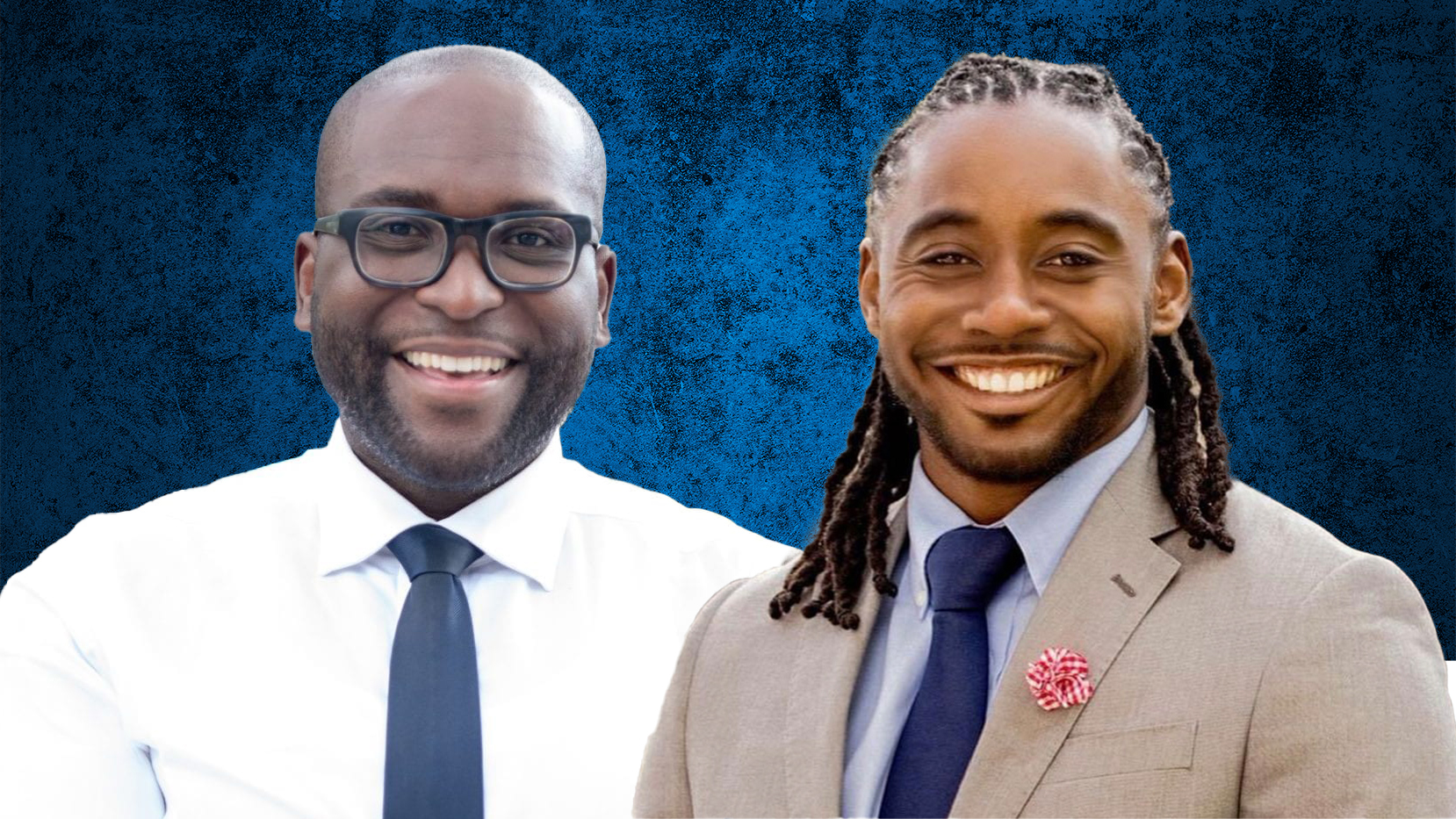
As Republicans in the Legislature set out on mid-decade redistricting, Democrats filed legislation aimed at reducing the amount of politics in drawing lines.
Sen. Shevrin Jones, a Miami Gardens Democrat, and Rep. Daryl Campbell, a Fort Lauderdale Democrat, filed twin bills (SJR 728, HJR 619) to strip elected officials of their power to draw political boundaries and hand that authority to independent citizen commissions.
“It creates a system, allowing an independent commission to take over redistricting while creating checks and balances among the Legislature — the House and Senate — and the Governor’s Office, making sure no one party is tipping the scale,” Campbell said.
The plan also would forbid mid-decade redistricting, something the Legislature intends to kick off with a meeting Thursday.
The resolution proposed a constitutional amendment that would appear on the 2026 statewide ballot if the Legislature approves it. That’s an unlikely scenario, considering the Legislature’s partisan composition.
The plan would create three separate citizen-led redistricting panels, one each to draft lines for the Senate, the House and Florida’s congressional districts. Commissioners on the panels would be Florida residents selected through a nonpartisan screening process meant to ensure ideological balance and independence.
Strict eligibility rules would bar anyone who has recently made money in politics from serving. That includes any current or former elected official; anyone who has worked as a lobbyist, campaign staffer or party officer in the past 14 years; and anyone who has worked for the Legislature in the past 18 years.
Family members and roommates of those people would be prohibited from serving as well.
The only involvement for political leadership would be that the Senate President and Minority Leader and the House Speaker and Minority Leader would evenly appoint 36 members of the screening panel, with the Chief Justice of the Florida Supreme Court appointing one more.
“The system is not a perfect system, but what it does, it adds a big improvement in checks and balances so no one side is tipping the scale,” Campbell said. “Even if someone is all the way biased to a political side, it takes three-quarters of a body vote to do the maps. Politicians won’t be able to rig this game.”

One person left out of the process? The Governor.
That decision was made after Gov. Ron DeSantis in 2022 effectively took over the drawing of congressional lines.
Campbell notably took office as that fight was reaching a fever pitch. He compared that to trying to learn about redistricting “drinking from a firehose.” But he said the focus now is on forcing those issues everyone agrees on about redistricting to take center stage.
He said the commission would still be governed by court oversight and by restrictions like the Fair Districts amendments in the state constitution.
Under the proposal, Florida voters who cast ballots in two of the past three elections could apply to be on each “Independent Redistricting Commission.” Screening panels filled by the majority and minority leaders in the Senate and House, and the Florida Supreme Court’s Chief Justice would screen and whittle down the list of applicants, with winning panel members being randomly drawn from the final pool.
Terms would run for 10 years, after which panel members could not immediately serve again. Further, anyone who served on one of the three panels could not run for office for a decade or within 10 years after the promulgation of the maps they helped to draw.
All deliberations of the panels must occur in public and be livestreamed on the Florida Channel. All map data, including census numbers, shapefiles, drafts and comments must be posted online within three days.
___
Jesse Scheckner of Florida Politics contributed to this report.