Connect with us

Politics

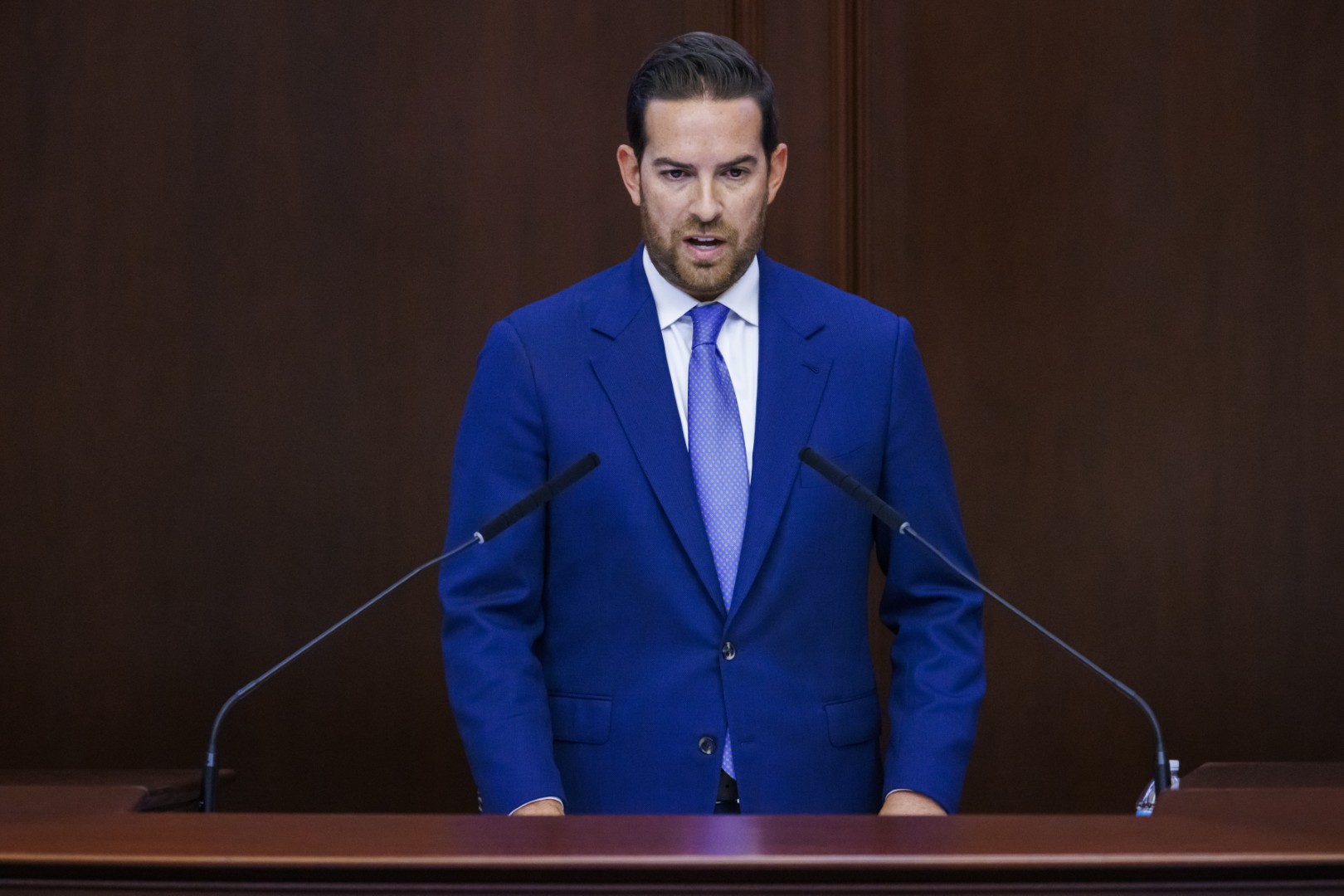
Daniel Perez warns of tough choices in 2026 as House braces for tax, insurance, drug-cost battles
Published

on


House Speaker Daniel Perez opened the 2026 Legislative Session by casting the chamber’s activities last year as a part of a necessary transition shaped by internal fights, bruising negotiations and a public rupture with Gov. Ron DeSantis.

When he took the gavel in November 2024, he said, House lawmakers entered the subsequent Session “believing that our service here could matter.”

“In the weeks and months that followed,” he continued, “our story took several surprising twists and turns.”

Perez’s message, while reflective, was largely a presaging of what lies ahead this year: a Session dominated by affordability pressures, property tax politics and a budget outlook that could force lawmakers to choose between trimming recurring spending and sustaining popular programs. “Affordability and insurance. Taxes and the economy. Prescription drug prices and the rising cost of public benefits,” Perez said.

“We must ensure Florida stays at the center of our planet’s race for the stars, and that our infrastructure keeps pace with our growth. Every child in Florida, from the unborn to our college graduates, deserves a fair shot at finding their own American Dream.”

The Miami Republican also used the moment to reflect on the volatility of the 2025 Session, when, in his telling, the House “found (its) voice” and “insisted on our independence.”

That included overrides of DeSantis’ budget vetoes, the investigation and dismantling of First Lady Casey DeSantis’ questionable Hope Florida charity, replacing DeSantis’ Special Session on immigration enforcement with one the Legislature devised and, ahead of the 2026 Session, introducing a fleet of bills with concrete property tax proposals while the Governor stalled on issuing his own.

When DeSantis fumed at the House’s open attempt to regain a coequal footing with the executive branch, Perez called the Governor “emotional” and prone to “temper tantrums” while stressing, “I consider him a friend. I consider him a partner.”

Under Perez, the House has also set to follow through on President Donald Trump’s call for mid-decade redistricting — an effort DeSantis and Senate President Ben Albritton also support, but have been slower to act on.

Perez framed the House’s comparative expeditiousness as an alternative to Tallahassee’s transactional culture.

“We learned that words without truth have no meaning. We learned that actions without humility lack consequence,” he said. “We learned that issues we tackle are not easily reducible to a slogan or an idea. … But difficult doesn’t mean impossible, and hard isn’t an excuse for cowardice.”

Those lines land in a Capitol still feeling the aftershocks of 2025, when budget and tax disputes between the House and Senate pushed the 60-day Regular Session into extended overtime. Perez’s friction with Albritton, whom he embraced before the Governor’s State of the State address Tuesday, remains a live factor. The Senate is again pushing Albritton’s “Rural Renaissance” package after it fell apart in the House last year, and Albritton has said he may prefer tackling major property tax relief after the Regular Session, which could collide with House urgency.

Hovering above it all is Perez’s feud with DeSantis, a rivalry that hardened last year and has since only been betrayed by a veneer of civility and common causes. On the most recent flashpoint, redistricting, the Governor this month called for a Special Session in April to redraw congressional lines — markedly later than when Perez views as ideal.

As for what will happen with that undertaking and many other hot-button issues the Legislature faces this year, it’s anyone’s guess, the Speaker said.

“Honestly, I don’t know what is going to happen,” he said. “That’s OK, because the journey is the best part.”


Source link

Continue Reading

Politics

Florida Democrats fault Gov. DeSantis for misplaced priorities in final State of the State

Published

on


Florida Democrats criticized Gov. Ron DeSantis’ State of the State address, saying he carries a legacy of misplaced priorities into his final year in office.

Democratic leaders argued that DeSantis’ portrayal of Florida’s condition does not align with the financial pressures facing residents — particularly rising housing and insurance costs — and amounted to a retread of his “greatest hits” without outlining a clear vision for the year ahead.

In an official video response, Senate Democratic Leader Lori Berman said DeSantis remains “completely out of touch with reality,” arguing that Floridians have seen costs rise across the board while the administration has focused on politics and patronage. She accused the Governor of prioritizing political ambition over governing, saying his leadership has left Florida “less affordable and more corrupt.”

In his State of the State address, DeSantis painted Florida as a national model for economic growth, fiscal restraint and conservative governance, arguing the state has delivered results where other states have faltered.

He acknowledged rising property taxes and housing pressures, but argued those challenges stem largely from local government decisions and called for property tax relief.

DeSantis said recent legislative actions have helped stabilize insurance markets, while also emphasizing his administration’s record on immigration enforcement, public safety and cultural issues. He defended policies targeting diversity, equity and inclusion programs and pandemic-era restrictions and warned against the unchecked influence of artificial intelligence.

House Democratic Leader Fentrice Driskell said the address was overwhelmingly retrospective, focused more on defending and celebrating past actions than laying out a governing agenda for the coming Session.

“I didn’t hear too many new ideas; it sounded like he was dredging up some of his greatest hits,” she said.

“I never expected to hear about the time of COVID; there were so many quotes and weird historical references. It was kind of hard to keep track. I just expected more from the Governor’s last State of the State address.”

She pointed to what she described as a disconnect between the Governor’s rhetoric and everyday realities, arguing that Floridians continue to face underfunded schools, rising grocery and utility bills, congested roads and expensive health care.

Driskell also criticized DeSantis for attacking local government spending while proposing a 2026 budget that is roughly $24 billion larger than his first budget, calling it further evidence that the administration’s priorities are misaligned.

Berman echoed that criticism, arguing that the Governor’s focus on property tax cuts misses the core affordability problem facing homeowners and renters alike. She said lowering insurance costs would deliver more direct relief without hollowing out local services.

“We heard in his press conference this week that he said insurance is solved and that rates are going down, but we know Florida is twice the national average and rates going down, even 8% or 10%, are not solving the issue,” Berman said.

“We don’t think the Legislature has done enough on insurance and we’re going to continue to push. When you lower insurance rates you put money in people’s pockets directly, and that’s what we think should be the answer, not this property tax issue.”

Both Berman and Driskell highlighted Democratic proposals aimed at affordability that may not see the light of day during a Session likely to be dominated by Republican calls for property tax cuts — a move they argue will not provide meaningful relief.

Those proposals include a national insurance compact to spread hurricane risk, the Housing Options Made For Everyone (HOME) Act to preserve affordable housing and reduce costs for first-time homebuyers, and efforts to rein in wasteful or politically connected state spending.

“For eight years, he’s been focused on culture wars, grabbing headlines and an ever-growing list of grievances meant to keep people distracted and angry so that we don’t notice that Florida is becoming too expensive for too many Floridians,” Driskell said. “That’s his legacy: division, meanness and a growing affordability crisis.”

The two Democratic leaders also criticized DeSantis for pursuing a mid-decade redistricting effort, calling it a partisan gerrymander that violates Florida’s Fair Districts Amendments and undermines voters’ ability to choose their representatives.

Driskell criticized the Governor’s rhetoric on immigration and said the public lacks transparency to evaluate enforcement claims. She pointed to heightened national tensions and referenced a recent incident where an Immigration and Customs Enforcement agent shot and killed an American in Minneapolis, arguing that political escalation has gone too far and underscoring the need for accountability and restraint.

Driskell also challenged DeSantis’ portrayal of progress on education and public safety, arguing that many Floridians are still grappling with underfunded schools and other realities like rising utility and grocery bills, congested roads and costly health care that were largely absent from the Governor’s address.

Both leaders said the speech reinforced their view that DeSantis’ final year agenda is more focused on defending his political record and positioning himself nationally than on outlining solutions for Florida’s affordability crisis. With Republicans controlling the governor’s office and both chambers of the Legislature, they said the responsibility for delivering relief — or failing to do so — rests squarely on their shoulders.

“There is absolutely no excuse,” Driskell said. “Any failures in this Legislative Session, it’s on them.”


Source link

Continue Reading

Politics

Gov. DeSantis boots José Oliva, a former ally, off state university Board

Published

on


Gov. Ron DeSantis has declined to renominate his once loyal ally, former House Speaker José Oliva, to an influential state Board that oversees Florida’s public university system.

In a press release sent out just before his State of the State address started Tuesday, DeSantis named four new appointments and two reappointments to the State University System’s Board of Governors (BOG). Missing in the press release was any mention of Oliva, whose prior term ended Jan. 6.

Oliva was a DeSantis defender who had even been rumored to be on DeSantis’ list of Lieutenant Governor choices before DeSantis picked Jay Collins.

But Oliva clashed with DeSantis as the BOG voted on a new Chair in November.

The BOG elected Alan Levine as Chair instead of allowing Brian Lamb to remain for a third term. Influential University of Florida Board of Trustees Chair Mori Hosseini, a DeSantis supporter, had been pushing for Lamb. Hosseini had also loudly backed UF hiring Santa Ono as President, but the BOG rejected Ono’s bid in June.

“Insiders say DeSantis’ office lobbied the Board of Governors in November to block anyone who voted against Ono from ascending to board leadership. Oliva ended up nominating Alan Levine, then the vice chair, to be chair — bucking the governor’s demands,” Miami Herald reporter Garrett Shanley wrote on X.

The new members of the BOG, subject to Florida Senate approval, will be: Ashley Lukis, Michael Okaty, Keith Perry and Nick Sinatra. Ashley Bell Barnett and Charles Lydecker were also reappointed.

One of the new Board members is a former state lawmaker. Another has ties to national politics.

Perry, now President and Owner of Perry Roofing Contractors, previously was a Senator representing Senate Districts 8 and 9 as well as a Representative for House Districts 21 and 22.

Sinatra, founder of Sinatra and Company, was the Associate Political Director for The White House under President George W. Bush.

Meanwhile, DeSantis said “Lukis is a Shareholder at GrayRobinson, P.A., where she represents public entities and private clients alike in complex state, federal, and administrative litigation.”

Okaty “is a Partner at Foley & Lardner, LLP,” DeSantis said, who “was recognized as the 2023 Lawyer of the Year in business organizations law by The Best Lawyers in America.”


Source link

Continue Reading

Politics

Modernizing health care rules to expand access for Florida patients

Published

on


Florida’s health care system is at a crossroads. The state is growing rapidly, the population is aging, and families across Florida are struggling to access timely, affordable care.

In many cases, the challenge is not a shortage of skilled providers. Instead, outdated laws limit competition, restrict who can provide care, and reduce patient choices.

Rep. Mike Redondo has filed legislation to remove these government barriers and modernize Florida’s health care delivery system. HB 693 is designed to expand access to care by addressing multiple structural obstacles that prevent services from reaching patients who need them most.

Rather than relying on a single narrow reform, the bill addresses several long-standing issues simultaneously. When providers have greater flexibility to serve patients and patients have more options, care becomes more accessible and more affordable.

HB 693 eliminates remaining Certificate-of-Need requirements for nursing homes, hospice services, and intermediate care facilities for individuals with developmental disabilities. It also allows Florida to join interstate compacts for physician assistants and emergency medical services professionals, making it easier for qualified providers to move to Florida and meet growing demand without unnecessary delays.

The legislation expands independent practice authority for advanced registered nurse practitioners, including psychiatric nurse practitioners, nurse anesthetists, and clinical nurse specialists. These highly trained professionals already play a critical role in patient care, particularly in mental health and underserved communities.

HB 693 also removes the supervisory cap on physician assistants, allowing physicians to oversee more PAs and increase patient capacity. This reflects modern, team-based care models and helps ensure patients are seen sooner without sacrificing quality.

Importantly, the bill includes commonsense transparency protections. Patients would receive notice of out-of-network referrals, and payments made for cost-effective care would count toward deductibles, helping families avoid surprise expenses and make informed decisions.

Together, these reforms promote a patient-centered approach that prioritizes access, choice, and transparency. At a time when families are feeling the pressure of rising health care costs, HB 693 offers a path toward a more responsive and modern system.

Rep. Redondo’s bill puts patients first, and lawmakers should support its passage.

___

Skylar Zander is the State Director of Americans for Prosperity-Florida.


Source link

Continue Reading

Trending

Copyright © Miami Select.