Connect with us

Business

Dan Ives slams Apple’s tech showcase as ‘an episode out of ‘Back to the Future” and turns up the heat on Tim Cook over ‘elephant in the room’

Published

on


Apple’s annual Worldwide Developers Conference (WWDC) in June left some of Wall Street’s most prominent voices feeling oddly nostalgic—and not in a good way. According to Dan Ives, a top tech analyst at Wedbush Securities known for his prescient, albeit oft-times bullish, calls on Silicon Valley’s giants, was bearish about Apple. The atmosphere at this year’s WWDC, he wrote in a July 30 research note, “felt like an episode out of ‘Back to the Future’”—especially when it came to Apple’s treatment of artificial intelligence.

While fellow tech titans are racing to put AI front and center, Apple’s WWDC presentation was notable for its near silence on the subject. “Barely no mention of AI,” Ives remarked in his latest report, calling it “the elephant in the room.” He noted this was a stark contrast to the fever pitch seen at rival developer events. Analysts, investors, and developers tuned in with expectations of a grand reveal that would clarify Apple’s ambitions for the “AI Revolution.” Instead, they watched as the company leaned on traditional strengths—hardware updates and a strong services story—leaving the future of Siri and Apple’s broader AI roadmap conspicuously vague.

This omission has become a growing concern for analysts like Ives, who believe Apple is at a crossroads. “It’s becoming crystal clear that any innovation around AI at Apple is not coming from inside the walls of Apple Park,” he wrote, referencing the company’s famed Cupertino headquarters. While Apple has historically prided itself on building transformative technology in-house, Ives argues those days may be over.

Time for an acquisition?

“The time has come” for a big acquisition, he wrote, singling out Perplexity as a “no brainer” acquisition target—even if it costs upwards of $40 billion. According to Ives, such a move could instantly supercharge Apple’s lagging AI platform and help reposition Siri as the “next AI gateway for consumers.”

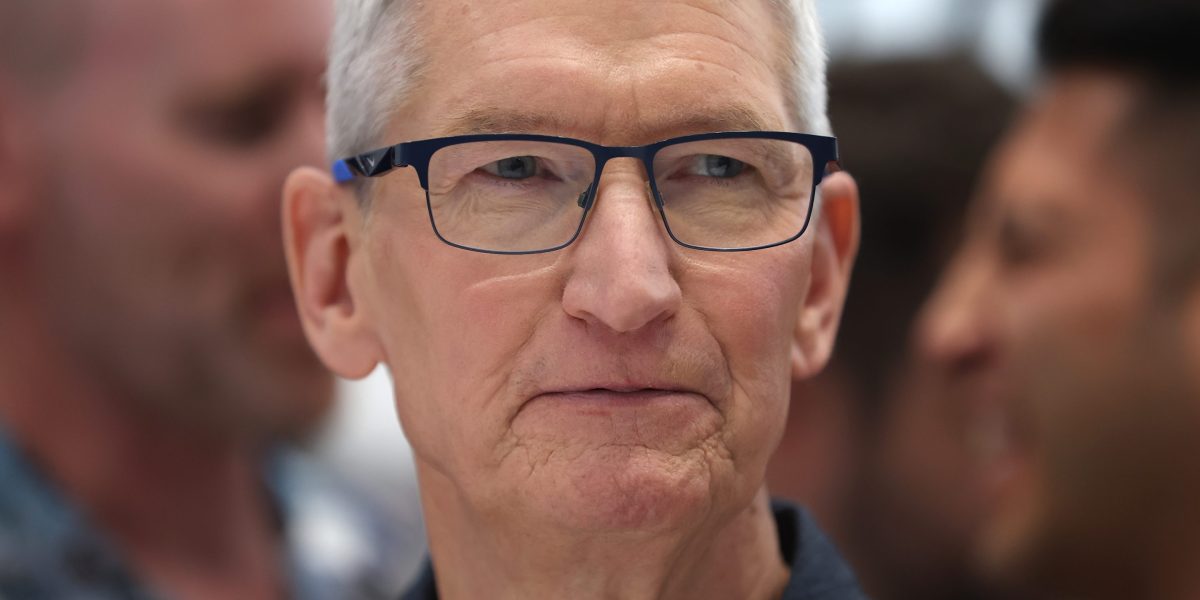
To date, Apple’s biggest acquisition remains Beats, a $3 billion deal in 2014—an order of magnitude smaller than the types of deals transforming the AI sector today. Apple’s traditionally cautious approach to M&A, Ives suggests, may be holding it back at a time when speed is everything. “AI technology on the enterprise and consumer landscape is happening at such a rapid pace Apple will not be able to catch up with an internally built solution,” he warned. The stakes, Ives estimates, are high: A successful AI monetization strategy could add as much as $75 per share to Apple’s valuation. “We believe [CEO Tim] Cook needs to rip the band-aid off and finally do an M&A deal,” he wrote.

The muted AI narrative at WWDC comes during a broader period of transition for Apple. While demand for iPhones—a bellwether for the company—remains globally robust, with particular improvement in China after a year of tough competition, the company faces mounting headwinds. Trade tensions, evolving supply chain risks, and increasing pressure from lower-priced rivals in Asia have stressed Apple’s core markets.

For now, analysts are keeping faith with Apple’s near-term performance. Wedbush maintains its “Outperform” rating, with a 12-month price target of $270 per share, citing expected growth driven by the upcoming iPhone 17 and continued strength in services. The stock was trading at $211.27 at the time of writing. But Ives is steadfast: the next chapter—centered on AI—will define Apple’s future.

Cook’s extraordinary record—and mounting criticism

To be clear, Cook has had a legendary run after succeeding Steve Jobs in 2011. Over the ensuing 14 years, Cook has led Apple through a period of extraordinary shareholder value creation—transforming a $300 billion company into a $3.2 trillion titan. Under his stewardship, Apple refined its operational efficiency, reinvigorated its services division, and delivered massive profits through established hits like the iPhone, AirPods, and Apple Watch. But as Fortune‘s Geoff Colvin reported, “suddenly his weaknesses are on display in the AI era.”

A chorus of analysts has joined Ives in arguing that Cook’s operational excellence and supply-chain mastery may not be enough to win the future, as the AI era upends the tech industry’s priorities. The first half of 2025, furthermore, has been bruising. The company’s stock is down about 16%, while rivals like Microsoft and Alphabet have soared on aggressive bets in generative AI. Apple’s “Apple Intelligence” initiative, which was supposed to position Siri and other features at the forefront of consumer AI, has failed to capture investor or developer enthusiasm. Meanwhile, key AI executives have left: Apple’s top AI executive Ruoming Pang recently defected to Meta, just weeks after another top Apple AI scientist, Tom Gunter, resigned. Simultaneously, Chief Operating Officer Jeff Williams—a long-touted Cook successor—is set to retire, forcing a broader management overhaul.

These departures have intensified debate about Apple’s innovation pipeline. Critics argue that under Cook, Apple has not delivered any genuinely transformative new product since the Jobs era, with most recent hits—like AirPods or the Apple Watch—refining rather than redefining product categories. The risk, analysts warn, is existential: If smart devices shift into new AI-centric paradigms and Apple fails to respond forcefully, the company’s platform risks obsolescence.

Research firm LightShed Partners rocked investors and the tech press in July by calling for a regime change. Analysts Walter Piecyk and Joe Galone insisted Apple needs a product-focused CEO, not one centered on logistics. They warned Apple’s lack of compelling innovation in AI and the relatively stagnant progression of Siri could irreversibly erode its competitive edge as Google, Microsoft, and OpenAI press forward

Cook’s defenders argue Apple has a unique position: its platform lock-in gives it time to execute a measured AI response. And historically the company has rarely been first-mover—its success derives from perfecting existing technologies, not inventing them. Nevertheless, with AI’s foundational impact compared to the internet or electricity, allowing the competition to set the pace could be dangerous.

Ives is still backing Cook, with reservations. “Patience is wearing thin among investors and importantly developers,” he warned. The coming months, particularly as Apple’s product cycle heats up in September and beyond, may prove pivotal—not just for the company’s balance sheet. Ives said Wedbush believes Cook will be Apple CEO for another five years, at least, but there are mounting challenges, from the “tariff iPhone quagmire,” with Apple’s manufacturing operations in China directly exposed to trade uncertainty, to President Donald Trump’s displeasure with India as an alternate supply chain solution, to “missing the AI foundational strategy.” He concluded, “this chapter will define Cook’s legacy.”

“It’s time for Cook and Cupertino to face the new reality of this quickly morphing AI-driven tech landscape,” Ives wrote. “Because if they do not change, it will be a historic strategic black eye for Apple in our view.”

For this story, Fortune used generative AI to help with an initial draft. An editor verified the accuracy of the information before publishing. 


Source link

Continue Reading

Business

Mark Zuckerberg renamed Facebook for the metaverse. 4 years and $70B in losses later, he’s moving on

Published

on


In 2021, Mark Zuckerberg recast Facebook as Meta and declared the metaverse — a digital realm where people would work, socialize, and spend much of their lives — the company’s next great frontier. He framed it as the “successor to the mobile internet” and said Meta would be “metaverse-first.”

The hype wasn’t all him. Grayscale, the investment firm specializing in crypto, called the Metaverse a “trillion-dollar revenue opportunity.” Barbados even opened up an embassy in Decentraland, one of the worlds in the metaverse. 

Five years later, that bet has become one of the most expensive misadventures in tech. Meta’s Reality Labs division has racked up more than $70 billion in losses since 2021, according to Bloomberg, burning through cash on blocky virtual environments, glitchy avatars, expensive headsets, and a user base of approximately 38 people as of 2022.

For many people, the problem is that the value proposition is unclear; the metaverse simply doesn’t yet deliver a must-have reason to ditch their phone or laptop. Despite years of investment, VR remains burdened by serious structural limitations, and for most users there’s simply not enough compelling content beyond niche gaming.

A 30% budget cut 

Zuckerberg is now preparing to slash Reality Labs’ budget by as much as 30%, Bloomberg said. The cuts—which could translate to $4 billion to $6 billion in reduced spend—would hit everything from the Horizon Worlds virtual platform to the Quest hardware unit. Layoffs could come as early as January, though final decisions haven’t been made, according to Bloomberg. 

The move follows a strategy meeting last month at Zuckerberg’s Hawaii compound, where he reviewed Meta’s 2026 budget and asked executives to find 10% cuts across the board, the report said. Reality Labs was told to go deeper. Competition in the broader VR market simply never took off the way Meta expected, one person said. The result: a division long viewed as a money sink is finally being reined in.

Wall Street cheered. Meta’s stock jumped more than 4% Thursday on the news, adding roughly $69 billion in market value.

“Smart move, just late,” Craig Huber of Huber Research told Reuters. Investors have been complaining for years that the metaverse effort was an expensive distraction, one that drained resources without producing meaningful revenue.

Metaverse out, AI in

Meta didn’t immediately respond to Fortune’s request for comment, but it insists it isn’t killing the metaverse outright. A spokesperson told the South China Morning Post that the company is “shifting some investment from Metaverse toward AI glasses and wearables,” point­ing to momentum behind its Ray-Ban smart glasses, which Zuckerberg says have tripled in sales over the past year.

But there’s no avoiding the reality: AI is the new obsession, and the new money pit.

Meta expects to spend around $72 billion on AI this year, nearly matching everything it has lost on the metaverse since 2021. That includes massive outlays for data centers, model development, and new hardware. Investors are much more excited about AI burn than metaverse burn, but even they want clarity on how much Meta will ultimately be spending — and for how long.

Across tech, companies are evaluating anything that isn’t directly tied to AI. Apple is revamping its leadership structure, partially around AI concerns. Microsoft is rethinking the “economics of AI.” Amazon, Google, and Microsoft are pouring billions into cloud infrastructure to keep up with demand. Signs point to money-losing initiatives without a clear AI angle being on the chopping block, with Meta as a dramatic example.

On the company’s most recent earnings call, executives didn’t use the word “metaverse” once.


Source link

Continue Reading

Business

Robert F. Kennedy Jr. turns to AI to make America healthy again

Published

on


HHS billed the plan as a “first step” focused largely on making its work more efficient and coordinating AI adoption across divisions. But the 20-page document also teased some grander plans to promote AI innovation, including in the analysis of patient health data and in drug development.

“For too long, our Department has been bogged down by bureaucracy and busy-work,” Deputy HHS Secretary Jim O’Neill wrote in an introduction to the strategy. “It is time to tear down these barriers to progress and unite in our use of technology to Make America Healthy Again.”

The new strategy signals how leaders across the Trump administration have embraced AI innovation, encouraging employees across the federal workforce to use chatbots and AI assistants for their daily tasks. As generative AI technology made significant leaps under President Joe Biden’s administration, he issued an executive order to establish guardrails for their use. But when President Donald Trump came into office, he repealed that order and his administration has sought to remove barriers to the use of AI across the federal government.

Experts said the administration’s willingness to modernize government operations presents both opportunities and risks. Some said that AI innovation within HHS demanded rigorous standards because it was dealing with sensitive data and questioned whether those would be met under the leadership of Health Secretary Robert F. Kennedy Jr. Some in Kennedy’s own “Make America Health Again” movement have also voiced concerns about tech companies having access to people’s personal information.

Strategy encourages AI use across the department

HHS’s new plan calls for embracing a “try-first” culture to help staff become more productive and capable through the use of AI. Earlier this year, HHS made the popular AI model ChatGPT available to every employee in the department.

The document identifies five key pillars for its AI strategy moving forward, including creating a governance structure that manages risk, designing a suite of AI resources for use across the department, empowering employees to use AI tools, funding programs to set standards for the use of AI in research and development and incorporating AI in public health and patient care.

It says HHS divisions are already working on promoting the use of AI “to deliver personalized, context-aware health guidance to patients by securely accessing and interpreting their medical records in real time.” Some in Kennedy’s Make America Healthy Again movement have expressed concerns about the use of AI tools to analyze health data and say they aren’t comfortable with the U.S. health department working with big tech companies to access people’s personal information.

HHS previously faced criticism for pushing legal boundaries in its sharing of sensitive data when it handed over Medicaid recipients’ personal health data to Immigration and Customs Enforcement officials.

Experts question how the department will ensure sensitive medical data is protected

Oren Etzioni, an artificial intelligence expert who founded a nonprofit to fight political deepfakes, said HHS’s enthusiasm for using AI in health care was worth celebrating but warned that speed shouldn’t come at the expense of safety.

“The HHS strategy lays out ambitious goals — centralized data infrastructure, rapid deployment of AI tools, and an AI-enabled workforce — but ambition brings risk when dealing with the most sensitive data Americans have: their health information,” he said.

Etzioni said the strategy’s call for “gold standard science,” risk assessments and transparency in AI development appear to be positive signs. But he said he doubted whether HHS could meet those standards under the leadership of Kennedy, who he said has often flouted rigor and scientific principles.

Darrell West, senior fellow in the Brooking Institution’s Center for Technology Innovation, noted the document promises to strengthen risk management but doesn’t include detailed information about how that will be done.

“There are a lot of unanswered questions about how sensitive medical information will be handled and the way data will be shared,” he said. “There are clear safeguards in place for individual records, but not as many protections for aggregated information being analyzed by AI tools. I would like to understand how officials plan to balance the use of medical information to improve operations with privacy protections that safeguard people’s personal information.”

Still, West, said, if done carefully, “this could become a transformative example of a modernized agency that performs at a much higher level than before.”

The strategy says HHS had 271 active or planned AI implementations in the 2024 financial year, a number it projects will increase by 70% in 2025.


Source link

Continue Reading

Business

Construction workers are earning up to 30% more in the data center boom

Published

on


Big Tech’s AI arms race is fueling a massive investment surge in data centers with construction worker labor valued at a premium. 

Despite some concerns of an AI bubble, data center hyperscalers like Google, Amazon, and Meta continue to invest heavily into AI infrastructure. In effect, construction workers’ salaries are being inflated to satisfy a seemingly insatiable AI demand, experts tell Fortune.

In 2026 alone, upwards of $100 billion could be invested by tech companies into the data center buildout in the U.S., Raul Martynek, the CEO of DataBank, a company that contracts with tech giants to construct data centers, told Fortune.

In November, Bank of Americaestimated global hyperscale spending is rising 67% in 2025 and another 31% in 2026, totaling a massive $611 billion investment for the AI buildout in just two years.

Given the high demand, construction workers are experiencing a pay bump for data center projects.

Construction projects generally operate on tight margins, with clients being very cost-conscious, Fraser Patterson, CEO of Skillit, an AI-powered hiring platform for construction workers, told Fortune.

But some of the top 50 contractors by size in the country have seen their revenue double in a 12-month period based on data center construction, which is allowing them to pay their workers more, according to Patterson.

“Because of the huge demand and the nature of this construction work, which is fueling the arms race of AI… the budgets are not as tight,” he said. “I would say they’re a little more frothy.”

On Skillit, the average salary for construction projects that aren’t building data centers is $62,000, or $29.80 an hour, Patterson said. The workers that use the platform comprise 40 different trades and have a wide range of experience from heavy equipment operators to electricians, with eight years as the average years of experience.

But when it comes to data centers, the same workers make an average salary of $81,800 or $39.33 per hour, Patterson said, increasing salaries by just under 32% on average.

Some construction workers are even hitting the six-figure mark after their salaries rose for data center projects, according to The Wall Street Journal. And the data center boom doesn’t show any signs it’s slowing down anytime soon.

Tech companies like Google, Amazon, and Microsoft operate 522 data centers and are developing 411 more, according to The Wall Street Journal, citing data from Synergy Research Group. 

Patterson said construction workers are being paid more to work on building data centers in part due to condensed project timelines, which require complex coordination or machinery and skilled labor.

Projects that would usually take a couple of years to finish are being completed—in some instances—as quickly as six months, he said.

It is unclear how long the data center boom might last, but Patterson said it has in part convinced a growing number of Gen Z workers and recent college grads to choose construction trades as their career path.

“AI is creating a lot of job anxiety around knowledge workers,” Patterson said. “Construction work is, by definition, very hard to automate.”

“I think you’re starting to see a change in the labor market,” he added.


Source link

Continue Reading

Trending

Copyright © Miami Select.