Connect with us

Business

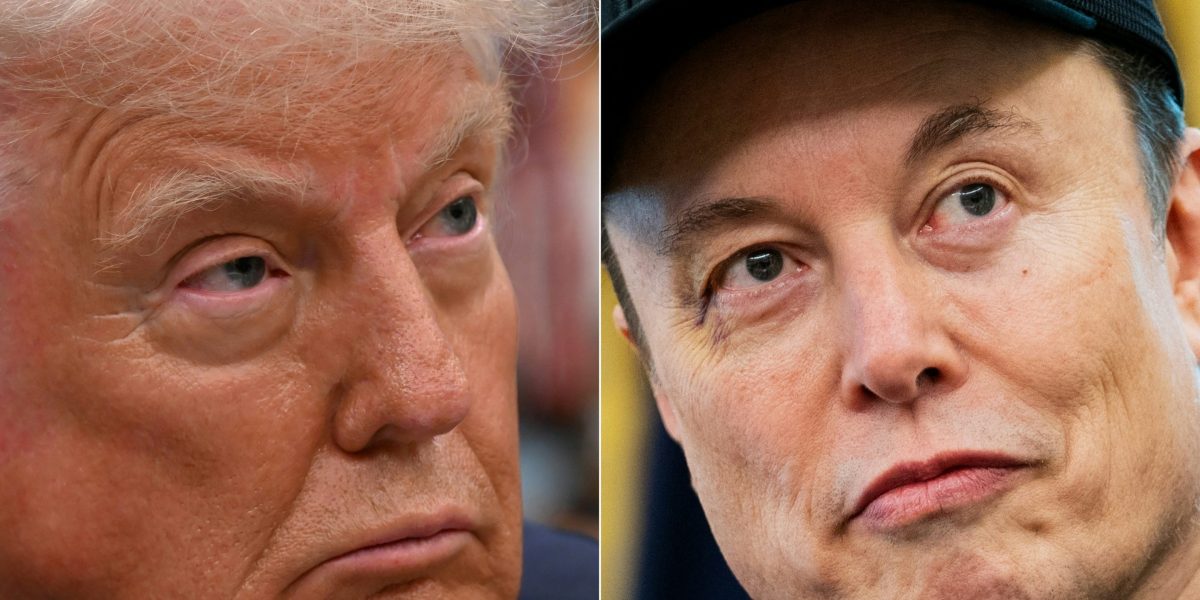
Damage Elon Musk faces from his Trump feud is just getting started

Published

on


Some political pundits have portrayed last week’s blowup as merely yet another exit by a disgruntled Trump ally. But the president’s anger toward Musk seems worse than his temper tantrums following the departures of other hand-picked loyalists, such as Vice President Mike Pence, Attorneys General Jeff Sessions and Bill Barr, Secretaries of State Rex Tillerson and Mike Pompeo, or Secretaries of Defense James Mattis and Mark Esper.

And it’s not a faux morality play about business leaders facing punishment for straying outside their lane. Musk, given his stature, is different than other CEOs who have taken pro-Trump or anti-Trump stances, whether from Papa John’s, Goya Foods, MyPillow, Coca-Cola, Delta, or Amazon. And this is not about Musk taking a principled stand on the soaring national debt or any other political issue. Instead, the blowup reflects two unrestrained top-down leaders fighting it out in a struggle for supremacy. 

‘First buddy’

Musk’s biggest mistake was about the nature of his role—as an advisor to Trump, not the primary character he believed himself to be. Even now, he continues to overestimate his own importance and indispensability. 

Trump, who relies on a hub-and-spokes model of leadership—where all power is centralized in himself while he divides and conquers his warring subordinates—has always been deeply resentful of consiglieres who try to outmaneuver or constrain him. Trump will never tolerate business leaders who believe they are bigger than the big boss. 

Musk apparently believed that his money and largesse insulated him and entitled him to a greater role as “first buddy.” But that was misguided if not delusional.

Consider advisors with grandiosity who threatened to undermine sovereign bosses, including the Russian mystic Grigori Rasputin, who engineered creeping control over Czar Nicholas II; Mark Hanna, portrayed in his time as the grand puppeteer controlling President William McKinley; and President Woodrow Wilson’s close advisor Colonel Edward House, who undermined Wilson’s Versailles negotiations after World War I. All these audacious advisors found their presumption punctured by icing out or even execution.  

Lessons from Russia

A look at recent Russian history is illustrative here. Consider Yukos boss Mikhail Khodorkovsky and Wagner chief Yevgeny Prigozhin after they dared challenge the power of Vladimir Putin, a strongman Trump has expressed admiration for.

We hosted Mikhail Khodorkovsky at our Yale CEO summits during the height of his power at Yukos in the early 2000s, when he controlled virtually all of Russia’s oil and gas reserves. He didn’t hesitate to criticize Putin at our events, openly presenting a different path for Russia’s future. When he started bringing his show on the road within Russia—thinking that Putin needed his money and support too much to whack him—he learned his money didn’t buy him the protection he thought it did. Putin quickly moved to nationalize Khodorkovsky’s assets, forming an alliance with his business rivals to divvy up his once-great wealth. 

More recently, Wagner boss Prigozhin believed his mercenary group had become so indispensable—thanks to its battlefield triumphs, raw military might, and global wealth—that he could challenge the authority of Putin’s top lieutenants, blasting them in videos posted on Telegram for mishandling the Urkaine invasion. When Prigozhin failed to sway them with this bullying, he thought he could get away with marching on Moscow with his forces and starting an insurrection within Russia against Putin’s rule. The full delusion of this folly was revealed when little of the domestic support Prigozhin expected materialized. Not long after he died when his plane plunged out of the skies, the victim of sabotage—one wonders by who. 

Prigozhin was among at least 60 prominent Russians who have met suspicious deaths since the start of Putin’s invasion of Ukraine in 2022. USA Today documented around 40 such cases prior to then as well, and the actual number is likely to be even higher. 

Musk’s vulnerability

Musk and his defenders, emboldened by his status as the world’s wealthiest person, apparently have either forgotten such lessons or don’t think they apply to Musk. Last week, Musk taunted on X, “Trump has 3.5 years left as president, but I will be around for 40+ years.” He also called for Trump’s impeachment and accused him of being illicitly connected to the late pedophile and accused rapist Jeffrey Epstein. 

Musk did all this despite his companies depending on government support in one way or another. That includes Tesla via EV tax credits, SpaceX via contracts, and Neuralink and the Boring Company via regulatory clearances. Given that Trump held up regulatory clearances of the AT&T-TimeWarner deal—which involved less personal animus than his feud with Musk—one wonders how long he could gum up the works for Musk now. Musk might be well served to remember the lessons embodied by Khodorkovsky and Prigozhin, however different the contexts.  

Meanwhile, with Trump insinuating Musk’s government interest is motivated by commercial self-gain and Musk accusing Trump of entanglement with Epstein—and having the resources to fund an anti-Trump counterrevolution—the news media might be a better investment than AI or cryptocurrency.

The opinions expressed in Fortune.com commentary pieces are solely the views of their authors and do not necessarily reflect the opinions and beliefs of Fortune.

Read more:


Source link

Continue Reading

Business

Female libido pill gets expanded approval for menopause by FDA

Published

on


U.S. health officials have expanded approval of a much-debated drug aimed at boosting female libido, saying the once-a-day pill can now be taken by postmenopausal women up to 65 years old.

The announcement Monday from the Food and Drug Administration broadens the drug’s use to older women who have gone through menopause. The pill, Addyi, was first approved 10 years ago for premenopausal women who report emotional stress due to low sex drive.

Addyi, marketed by Sprout Pharmaceuticals, was initially expected to become a blockbuster drug, filling an important niche in women’s health. But the drug came with unpleasant side effects including dizziness and nausea, and it carries a safety warning about the dangers of combining it with alcohol.

The boxed warning cautions that drinking while consuming the pill can cause dangerously low blood pressure and fainting. If patients have several drinks, the label recommends waiting a few hours before taking the drug, or skipping one dose.

Sales of Addyi, which acts on brain chemicals that affect mood and appetite, fell short of Wall Street’s initial expectations. In 2019, the FDA approved a second drug for low female libido, an on-demand injection that acts on a different set of neurological chemicals.

Sprout CEO Cindy Eckert said in a statement the approval “reflects a decade of persistent work with the FDA to fundamentally change how women’s sexual health is understood and prioritized.” The company, based in Raleigh, North Carolina, announced the FDA update in a press release Monday.

The medical condition for a troublingly low sexual appetite, called hypoactive sexual desire disorder, has been recognized since the 1990s and is thought to affect a significant portion of American women, according to surveys. After the blockbuster success of Viagra for men in the 1990s, drugmakers began pouring money into research and potential therapies for sexual dysfunction in women.

But diagnosing the condition is complicated because of how many factors can affect libido, especially after menopause, when falling hormone levels trigger a number of biological changes and medical symptoms. Doctors are supposed to rule out a number of other issues, including relationship problems, medical conditions, depression and other mental disorders, before prescribing medication.

The diagnosis is not universally accepted, and some psychologists argue that low sex drive should not be considered a medical problem.

The FDA rejected Addyi twice prior to its 2015 approval, citing the drug’s modest effectiveness and worrisome side effects. The approval came after a lobbying campaign by the company and its supporters, Even the Score, which framed the lack of options for female libido as a women’s rights issue.

___

This story has been updated to correct the age range of the FDA approval update. The agency approved the drug for postmenopausal women up to age 65, not older than 65.

___

The Associated Press Health and Science Department receives support from the Howard Hughes Medical Institute’s Department of Science Education and the Robert Wood Johnson Foundation. The AP is solely responsible for all content.


Source link

Continue Reading

Business

Gavin Newsom hires former CDC officials to work as public health consultants for state of California

Published

on


Two former senior officials from the Centers for Disease Control and Prevention, including one fired by the Trump administration, will join California as public health consultants, Gov. Gavin Newsom announced Monday.

California joined Washington and Oregon — two other states with Democratic governors — to launch an alliance in September to establish their own public health guidance and vaccine recommendations, as the Trump administration makes sweeping changes to vaccine and health policy.

Susan Monarez was fired as the CDC’s director and Dr. Debra Houry resigned as the agency’s chief medical officer and deputy director over disputes about changes at the agency. The two will work with California’s public health department to help build trust in “science-driven decision-making,” Newsom’s office said.

“By bringing on expert scientific leaders to partner in this launch,” Newsom said in a statement, “we’re strengthening collaboration and laying the groundwork for a modern public health infrastructure that will offer trust and stability in scientific data not just across California, but nationally and globally.”

California has increasingly positioned itself as a counterweight to federal health policy, and Newsom has amped up his criticisms of President Donald Trump and challenged the Republican’s policies in court. The governor’s final term ends in just over a year and he’s gearing up for a possible presidential run in 2028.

California state Sen. Tony Strickland, a Republican, said the new initiative is an example of Newsom prioritizing his national political ambitions over the state.

“California has serious problems, and we need serious solutions from a serious leader,” Strickland said in a statement.

The White House and U.S. Department of Health and Human Services did not respond to emails seeking comment on the hirings.

Trump and Health Secretary Robert F. Kennedy Jr. have repeated falsehoods about vaccines, and the administration has given health recommendations this year that experts say were not backed by science.

Trump in September urged pregnant women not to take Tylenol, saying it could pose a risk of autism to their babies, remarks medical experts said were irresponsible. The CDC website was changed last month to contradict the longtime scientific conclusion that vaccines do not cause autism. A federal vaccine advisory panel voted earlier this month to reverse decades-old guidance recommending that all U.S. babies get immunized against the liver infection hepatitis B on the day they’re born. The vaccine is credited with preventing thousands of illnesses.

Monarez, a former director of a federal biomedical research agency, was named acting director of the CDC in January. Trump later nominated her to to serve as director. She was confirmed by the Senate in July, making her the first nonphysician to serve in the role. But she was fired by the Trump administration in August after less than a month in the post.

Kennedy has said Monarez was fired after she told him she was untrustworthy. But Monarez said that was false in congressional testimony and that she was fired after refusing to endorse new vaccine recommendations that weren’t backed by science.

Houry, who spent more than a decade at the CDC, was among a handful of top officials at the agency who resigned around the time Monarez was fired. Houry said in August she was concerned about the rise of vaccine misinformation during the Trump administration, as well as planned budget cuts, reorganization and firings at the CDC.

She said she’s excited to join California’s new initiative.

“California will advance practical, scalable solutions that strengthen public health within the state and across states —showing how states can modernize data, share capacity, and work together more efficiently, while remaining focused on protecting people and communities,” Houry said in a statement.

___

Associated Press writer Trân Nguyễn contributed.

This story was originally featured on Fortune.com


Source link

Continue Reading

Business

Down Arrow Button Icon

Published

on


Dealmakers are heading into the final weeks of 2025 on a $100 billion cliffhanger.

Paramount Skydance Corp.’s hostile bid to snatch Warner Bros. Discovery Inc. from under the nose of Netflix Inc. encapsulates the themes that have shaped a banner year for mergers and acquisitions: renewed desire for transformative tie-ups, massive checks from Wall Street, the flow of Middle East money and US President Donald Trump’s role as both disruptor and dealmaker.

Global transaction values have risen around 40% to about $4.5 trillion this year, data compiled by Bloomberg show, as companies chase ultra-ambitious combinations, emboldened by friendlier regulators. That’s the second-highest tally on record and includes the biggest haul of deals valued at $30 billion or more.

“There’s a sentiment in boardrooms and among CEOs that this is a potential multi-year window where it’s possible to dream big,” said Ben Wallace, co-head of Americas M&A at Goldman Sachs Group Inc. “We’re at the beginning of a rate-cutting cycle so there’s anticipation that there will be more liquidity.”

Beyond Netflix’s purchase of Warner Bros., this year’s blockbusters include Union Pacific Corp.’s acquisition of rival railroad operator Norfolk Southern Corp. for more than $80 billion including debt, the record leveraged buyout of video game maker Electronic Arts Inc., and Anglo American Plc’s takeover of Teck Resources Ltd. to reshape global mining. 

“When you look around and you see your peers doing these big deals and taking advantage of the tailwinds, you don’t want to be left out,” said Maggie Flores, partner at law firm Kirkland & Ellis LLP in New York. “The regulatory environment is in a position that is very conducive to dealmaking and people are taking advantage of it.”

The tally also shows a level of exuberance in certain pockets that some advisers and analysts worry is unsustainable. Global trade tensions are ongoing, and market observers are increasingly warning of a selloff in the white-hot equity markets that have underpinned the M&A resurgence.

Top executives at Goldman Sachs, JPMorgan Chase & Co. and Morgan Stanley have all flagged the risk of a correction in the months ahead, in part tied to concerns about an overheated artificial intelligence ecosystem, where huge amounts of investment have juiced technology stocks.

“These equity returns are really coming out of AI, and AI spend is not sustainable,” said Charlie Dupree, global chair of investment banking at JPMorgan. “If that pulls back, then you are going to see a broader market that isn’t really advancing.”

The AI buzz led to some the year’s standout transactions. Sam Altman’s OpenAI took in major investments from the likes of SoftBank Group Corp., Nvidia Corp. and Walt Disney Co., and a consortium led by BlackRock Inc.’s Global Infrastructure Partners agreed to pay $40 billion for Aligned Data Centers. In March, Google parent Alphabet Inc. framed its $32 billion acquisition of cybersecurity startup Wiz Inc. as a way to provide customers with new safeguards in the AI era.

“Everyone needs to be an AI banker now,” said Wally Cheng, head of global technology M&A at Morgan Stanley. “Just as software began eating the world 15years ago, AI is now eating software. You have to be conversant in AI and understand how it will affect every company.”

The technology sector more broadly has already notched a record year for deals, thanks to a series of big-ticket takeovers across public and private markets. The trend extended to the White House over the summer, when the US government took a roughly 10% stake in Intel Corp. in an unconventional move aimed at reinvigorating the company and boosting domestic chip manufacturing.

It was one of the clearest indications of Trump’s willingness to blur the lines between state and industry and insert himself into M&A situations during his second term, particularly in sectors deemed mission critical. His administration also acquired a stake in rare-earth producer MP Materials Corp. and Commerce Secretary Howard Lutnick has hinted at similar deals in the defense sector.

Trump has separately been positioning himself as kingmaker on high-profile transactions. The government secured a so-called golden share in United States Steel Corp. as a condition for approving its takeover by Japan’s Nippon Steel Corp., and the president recently signaled he’ll oppose any acquisition of Warner Bros. that doesn’t include new ownership of CNN.

“The Trump administration’s approach to merger regulation today is markedly different compared to the first time around,” said Brian Quinn, a professor at Boston College Law School. Quinn said he couldn’t think of a member of the Republican Party from 15 to 20 years ago who would now believe the US government “is involved in the business of picking winners.”

To be sure, bankers will be wondering if they could have achieved more in 2025 had it not been for the chaotic period earlier in the year, when deals were put on hold after Trump’s trade war hobbled markets. And in a sign that persistent economic challenges are still impacting some parts of M&A, the number of deals being announced globally remains flat.

Many small and mid-cap companies have lagged the broader stock market and are opting to pursue their own strategic plans instead of weighing inorganic options, according to Jake Henry, global co-leader of the M&A practice at consultancy McKinsey & Co.

“They’re thinking ‘I’m better off just operating my business and getting there.’ It has to be an explosive offer for them to come to the table,” he said.

Meanwhile, private equity firms, whose buying and selling is a key barometer for M&A, are still having a harder time offloading certain assets because of valuation gaps with buyers. This has had a knock-on effect on their ability to raise funds and spend on new acquisitions. But bankers are starting to see a recovery here too as interest rates come down and bring more potential acquirers to the table.

“What’s motivating sponsors more than anything is their need to return cash to investors,” said Saba Nazar, chair of global financial sponsors at Bank of America Corp. “We have been in bake-off frenzy for the last couple of months.”

Road to Record

Dealmakers began the year whispering of M&A records under Trump’s pro-business administration. While they will just miss out on the milestone in 2025, there is a strong sense on Wall Street that those early bumps only delayed the inevitable. 

Brian Link, co-head of North America M&A at Citigroup Inc., said that after ‘Liberation Day’ in April, he expected to spend more time figuring out the impact of tariffs on different business and how to adjust around that. 

“That has not been the case,” he said. “Unless fear creeps back into the market, there doesn’t seem to be anything in the near term that’s going to change the dynamic here.”


Source link

Continue Reading

Trending

Copyright © Miami Select.