Connect with us

Business

Cybersecurity upstart Legion emerges from stealth with $38 million from Accel, Coatue, and others

Published

on


Hey there, it’s tech reporter Alexandra Sternlicht filling in for Allie.

It seems there’s not a week that goes by without a major firm announcing a cyberattack. Last week it was Microsoft who shared that a China-sponsored cyberattack compromised over 8,000 servers worldwide, including major banks, government entities, and health care companies that stored works in the software giant’s Sharepoint product.

To combat attacks of this ilk, one upstart has raised a combined $38 million seed and Series A and is now emerging from stealth. Today, I’m sharing the news that alums of Microsoft cyber protection product Sentinel have launched cybersecurity company Legion with $38 million in funding co-led by Accel and Picture Capital, with participation from Coatue and angel investors who work at companies including Google, Crowdstrike, and Wiz. 

Also, you’ve probably never heard of Picture Capital. That’s because this also marks the first public U.S. announcement of the venture capital firm helmed by cybersecurity heavyweights Michael Fey and Dan Amiga (cofounders of $4.8 billion cybersecurity tech company Island) as well Mickey Boodaei (CEO and cofounder of Transmit Security). The firm’s founders have pooled their capital together (they’re not saying exactly how much) to invest in cybersecurity companies. 

Legion, among Picture’s first investments, is a security operations center (SOC) that uses AI to detect threats within users’ computer browsers. This is different from the most popular SOC technologies on the market like Palo Alto Networks, Microsoft Sentinel, and CrowdStrike that largely detect threats via network, server, or other computing endpoint layers. 

“The problem was staring right at me every day,” Legion CEO and cofounder Ely Abramovitch told me via Zoom, reflecting on his nearly five years managing Microsoft Sentinel. “My customers had very little automation in place and were struggling…this was getting worse with AI at the hands of attackers with the scale and complexity of attack rising exponentially.”

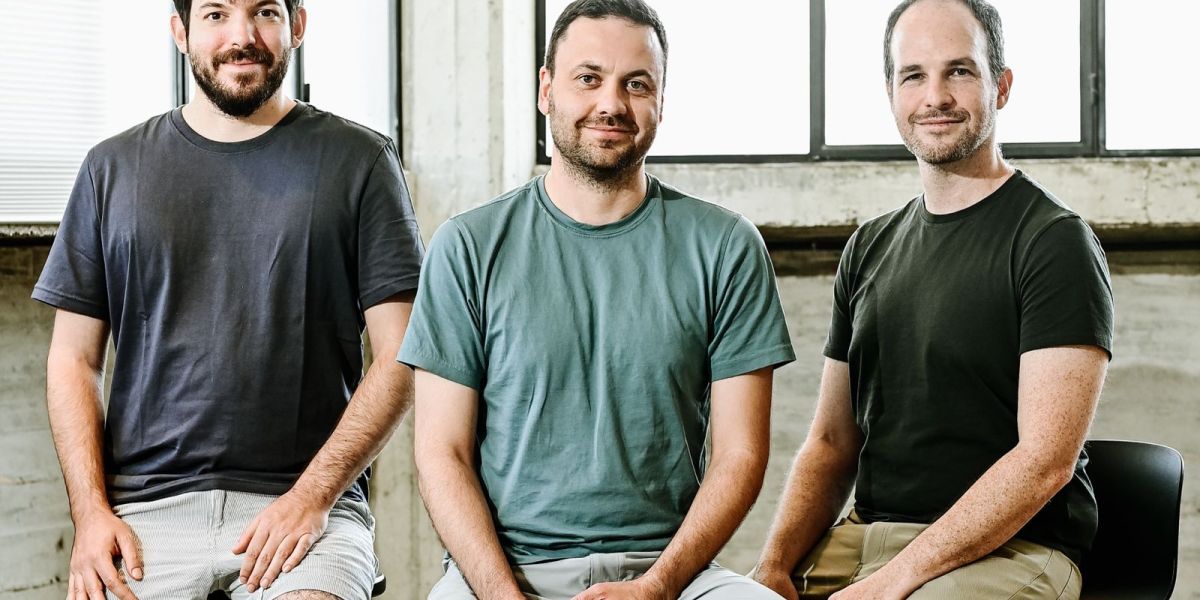
Seeing the failure of Microsoft and other enterprise technologies to meet the new crop of sophisticated and enormous attacks motivated Abramovitch and his Sentinel colleague Michael Gladishev to leave Microsoft, enlist machine learning expert Eyal Fisher, and start Legion in 2024. 

Though the startup is emerging from stealth with this announcement, Legion already has dozens of customers that include a major financial institution and other “Fortune 20” companies, for whom Legion responds to threats 90% faster than existing players, according to Abramovitch. 

For Picture Capital investor Fey, who was the chief operating officer at Symantec and chief technology officer at McAfee before founding Island, Legion’s technology is unparalleled. “Large companies do amazing things, but it’s hard to beat a well-funded startup on a specific problem,” he says of Legion. “I haven’t seen any real innovation on this out of the larger players. Not because they can’t, but because the reality is that this takes a specific set of technologists, a specific set of engineers, and it’s an expensive problem to solve.”

Alexandra Sternlicht
X:
@iamsternlicht
Email: alex.sternlicht@fortune.com

Submit a deal for the Term Sheet newsletter here.

Joey Abrams curated the deals section of today’s newsletter. Subscribe here.

VENTURE DEALS

Ambience Healthcare, a San Francisco-based AI platform for documentation, coding, and clinical workflow, raised $243 million in Series C funding. Oak HC/FT and Andreessen Horowitz led the round and were joined by existing investors OpenAI Startup Fund, Kleiner Perkins, and Optum Ventures.

Salient, a San Francisco-based provider of AI-powered financial services technology, raised $60 million in funding. Andreessen Horowitz led the round and was joined by Matrix Partners, Michael Ovitz, and Y Combinator.

Teramount, a Jerusalem, Israel-based high-speed data transfer company, raised $50 million in funding. Koch Disruptive Technologies led the round and was joined by AMD Ventures, Hitachi Ventures, and others.

Lumana, a Los Gatos, Calif.-based AI video security company, raised $40 million in Series A funding. Wing Venture Capital led the round and was joined by Norwest and S Capital.

Calo, a Riyadh, Saudi Arabia-based personalized meal subscription company, raised $39 billion in a Series B extension. AlJazira Capital led the round and was joined by Oraseya Capital and existing investors Nuwa Capital, Al Faisaliah Group, and Khwarizmi Ventures.

Sparrow, a San Francisco-based employee leave management platform, raised $35 million in Series B funding. SLW led the round.

Arbital Health, a San Francisco, Calif.-based health care technology company that provides critical infrastructure for providers and payers to successfully manage risk-based contracts, raised $31 million in Series B funding. Valtruis led the round and was joined by existing investors Transformation Capital, Shaper Capital, and Healthy Ventures.

Reveal Technology, a Bozeman, Mont.-based defense technology company, raised $30 million in Series B funding. Ballistic Ventures led the round and was joined by defy.vc, Booz Allen Ventures, Shield Capital, Next Frontier Capital, and Madison Valley Partners.

Wingspan, a New York City-based payroll platform for managing independent contractors, raised $24 million in Series B funding. Touring Capital led the round and was joined by existing investors Andreessen Horowitz, Long Journey Ventures, Distributed Ventures, Company Ventures, and 186 Ventures.

Promptfoo, a San Francisco-based platform for AI red-teaming and security testing, raised $18.4 million in Series A funding. Insight Partners led the round and was joined by Andreessen Horowitz.

Seal Security, a Tel Aviv, Israel-based application security solutions provider, raised $13 million in Series A funding. Vertex Israel led the round and was joined by More Investments, SBI Group, and CCL.

ARX Robotics, a Munich, Germany-based defense technology company, raised €11 million ($12.7 million) in funding. Speedinvest led the round and was joined by HV Capital.

Trustfull, a Milan, Italy-based provider of frictionless fraud prevention technology, raised €6 million ($6.9 million) in funding. Seaya Ventures and Elevator Ventures led the round and were joined by United Ventures.

Caspian, a San Francisco-based AI-powered customs compliance company, raised $5.4 million in seed funding. Primary Venture Partners led the round and was joined by Blank Ventures

JotPsych, a Pepper Pike, Ohio-based medical AI scribe, raised $5 million in seed funding. Base10 Partners led the round.

Retab, a San Francisco-based AI agent that builds document extraction pipelines, raised $3.5 million in pre-seed funding from VentureFriends, Kima Ventures, K5 Global, and angel investors.

EXITS

CRH agreed to acquire Eco Material Technologies, a South Jordan, Utah-based supplier of sustainable cement alternatives, from Warburg Pincus, One Equity Partners, and Green Cement Investments for $1.2 billion.

Clinisys acquired Orchard Software Corporation, a Carmel, Ind.-based provider of laboratory informatics solutions, from Francisco Partners. Financial terms were not disclosed.

GTCR agreed to acquire FMG Suite, a San Diego, Calif.-based provider of marketing automation software, from Aurora Capital Partners. Financial terms were not disclosed.

Integrum Holdings acquired Stout, a Chicago, Ill.-based advisory firm specializing in corporate finance, accounting and transaction advisory, valuation, financial disputes, claims, and investigations, from Audax Private Equity. Financial terms were not disclosed.

IPOS

WhiteFiber, a New York City-based AI infrastructure company, plans to raise up to $132.6 million in an offering of 7.8 million shares priced between $15 and $17 on the Nasdaq. The company posted $56 million in revenue for the year ending March 31, 2025. 

PEOPLE

645 Ventures, a New York City-based venture capital firm, promoted Vardan Gattani to investment partner. 

Stellex Capital, a New York City-based private equity firm, appointed Matthew Kajfez as Operating Partner – Supply Chain Transformation Lead.


Source link

Continue Reading

Business

The rise of AI reasoning models comes with a big energy tradeoff

Published

on


Nearly all leading artificial intelligence developers are focused on building AI models that mimic the way humans reason, but new research shows these cutting-edge systems can be far more energy intensive, adding to concerns about AI’s strain on power grids.

AI reasoning models used 30 times more power on average to respond to 1,000 written prompts than alternatives without this reasoning capability or which had it disabled, according to a study released Thursday. The work was carried out by the AI Energy Score project, led by Hugging Face research scientist Sasha Luccioni and Salesforce Inc. head of AI sustainability Boris Gamazaychikov.

The researchers evaluated 40 open, freely available AI models, including software from OpenAI, Alphabet Inc.’s Google and Microsoft Corp. Some models were found to have a much wider disparity in energy consumption, including one from Chinese upstart DeepSeek. A slimmed-down version of DeepSeek’s R1 model used just 50 watt hours to respond to the prompts when reasoning was turned off, or about as much power as is needed to run a 50 watt lightbulb for an hour. With the reasoning feature enabled, the same model required 7,626 watt hours to complete the tasks.

The soaring energy needs of AI have increasingly come under scrutiny. As tech companies race to build more and bigger data centers to support AI, industry watchers have raised concerns about straining power grids and raising energy costs for consumers. A Bloomberg investigation in September found that wholesale electricity prices rose as much as 267% over the past five years in areas near data centers. There are also environmental drawbacks, as Microsoft, Google and Amazon.com Inc. have previously acknowledged the data center buildout could complicate their long-term climate objectives

More than a year ago, OpenAI released its first reasoning model, called o1. Where its prior software replied almost instantly to queries, o1 spent more time computing an answer before responding. Many other AI companies have since released similar systems, with the goal of solving more complex multistep problems for fields like science, math and coding.

Though reasoning systems have quickly become the industry norm for carrying out more complicated tasks, there has been little research into their energy demands. Much of the increase in power consumption is due to reasoning models generating much more text when responding, the researchers said. 

The new report aims to better understand how AI energy needs are evolving, Luccioni said. She also hopes it helps people better understand that there are different types of AI models suited to different actions. Not every query requires tapping the most computationally intensive AI reasoning systems.

“We should be smarter about the way that we use AI,” Luccioni said. “Choosing the right model for the right task is important.”

To test the difference in power use, the researchers ran all the models on the same computer hardware. They used the same prompts for each, ranging from simple questions — such as asking which team won the Super Bowl in a particular year — to more complex math problems. They also used a software tool called CodeCarbon to track how much energy was being consumed in real time.

The results varied considerably. The researchers found one of Microsoft’s Phi 4 reasoning models used 9,462 watt hours with reasoning turned on, compared with about 18 watt hours with it off. OpenAI’s largest gpt-oss model, meanwhile, had a less stark difference. It used 8,504 watt hours with reasoning on the most computationally intensive “high” setting and 5,313 watt hours with the setting turned down to “low.” 

OpenAI, Microsoft, Google and DeepSeek did not immediately respond to a request for comment.

Google released internal research in August that estimated the median text prompt for its Gemini AI service used 0.24 watt-hours of energy, roughly equal to watching TV for less than nine seconds. Google said that figure was “substantially lower than many public estimates.” 

Much of the discussion about AI power consumption has focused on large-scale facilities set up to train artificial intelligence systems. Increasingly, however, tech firms are shifting more resources to inference, or the process of running AI systems after they’ve been trained. The push toward reasoning models is a big piece of that as these systems are more reliant on inference.

Recently, some tech leaders have acknowledged that AI’s power draw needs to be reckoned with. Microsoft CEO Satya Nadella said the industry must earn the “social permission to consume energy” for AI data centers in a November interview. To do that, he argued tech must use AI to do good and foster broad economic growth.


Source link

Continue Reading

Business

SpaceX to offer insider shares at record-setting valuation

Published

on


SpaceX is preparing to sell insider shares in a transaction that would value Elon Musk’s rocket and satellite maker at a valuation higher than OpenAI’s record-setting $500 billion, people familiar with the matter said.

One of the people briefed on the deal said that the share price under discussion is higher than $400 apiece, which would value SpaceX at between $750 billion and $800 billion, though the details could change. 

The company’s latest tender offer was discussed by its board of directors on Thursday at SpaceX’s Starbase hub in Texas. If confirmed, it would make SpaceX once again the world’s most valuable closely held company, vaulting past the previous record of $500 billion that ChatGPT owner OpenAI set in October. Play Video

Preliminary scenarios included per-share prices that would have pushed SpaceX’s value at roughly $560 billion or higher, the people said. The details of the deal could change before it closes, a third person said. 

A representative for SpaceX didn’t immediately respond to a request for comment. 

The latest figure would be a substantial increase from the $212 a share set in July, when the company raised money and sold shares at a valuation of $400 billion.

The Wall Street Journal and Financial Times, citing unnamed people familiar with the matter, earlier reported that a deal would value SpaceX at $800 billion.

News of SpaceX’s valuation sent shares of EchoStar Corp., a satellite TV and wireless company, up as much as 18%. Last month, Echostar had agreed to sell spectrum licenses to SpaceX for $2.6 billion, adding to an earlier agreement to sell about $17 billion in wireless spectrum to Musk’s company.

Subscribe Now: The Business of Space newsletter covers NASA, key industry events and trends.

The world’s most prolific rocket launcher, SpaceX dominates the space industry with its Falcon 9 rocket that launches satellites and people to orbit.

SpaceX is also the industry leader in providing internet services from low-Earth orbit through Starlink, a system of more than 9,000 satellites that is far ahead of competitors including Amazon.com Inc.’s Amazon Leo.

SpaceX executives have repeatedly floated the idea of spinning off SpaceX’s Starlink business into a separate, publicly traded company — a concept President Gwynne Shotwell first suggested in 2020. 

However, Musk cast doubt on the prospect publicly over the years and Chief Financial Officer Bret Johnsen said in 2024 that a Starlink IPO would be something that would take place more likely “in the years to come.”

The Information, citing people familiar with the discussions, separately reported on Friday that SpaceX has told investors and financial institution representatives that it is aiming for an initial public offering for the entire company in the second half of next year.

A so-called tender or secondary offering, through which employees and some early shareholders can sell shares, provides investors in closely held companies such as SpaceX a way to generate liquidity.

SpaceX is working to develop its new Starship vehicle, advertised as the most powerful rocket ever developed to loft huge numbers of Starlink satellites as well as carry cargo and people to moon and, eventually, Mars.


Source link

Continue Reading

Business

U.S. consumers are so strained they put more than $1B on BNPL during Black Friday and Cyber Monday

Published

on


Financially strained and cautious customers leaned heavily on buy now, pay later (BNPL) services over the holiday weekend.

Cyber Monday alone generated $1.03 billion (a 4.2% increase YoY) in online BNPL sales with most transactions happening on mobile devices, per Adobe Analytics. Overall, consumers spent $14.25 billion online on Cyber Monday. To put that into perspective, BNPL made up for more than 7.2% of total online sales on that day.

As for Black Friday, eMarketer reported $747.5 million in online sales using BNPL services with platforms like PayPal finding a 23% uptick in BNPL transactions.

Likewise, digital financial services company Zip reported 1.6 million transactions throughout 280,000 of its locations over the Black Friday and Cyber Monday weekend. Millennials (51%) accounted for a chunk of the sizable BNPL purchases, followed by Gen Z, Gen X, and baby boomers, per Zip.

The Adobe data showed that people using BNPL were most likely to spend on categories such as electronics, apparel, toys, and furniture, which is consistent with previous years. This trend also tracks with Zip’s findings that shoppers were primarily investing in tech, electronics, and fashion when using its services.

And while some may be surprised that shoppers are taking on more debt via BNPL (in this economy?!), analysts had already projected a strong shopping weekend. A Deloitte survey forecast that consumers would spend about $650 million over the Black Friday–Cyber Monday stretch—a 15% jump from 2023.

“US retailers leaned heavily on discounts this holiday season to drive online demand,” Vivek Pandya, lead analyst at Adobe Digital Insights, said in a statement. “Competitive and persistent deals throughout Cyber Week pushed consumers to shop earlier, creating an environment where Black Friday now challenges the dominance of Cyber Monday.”

This report was originally published by Retail Brew.


Source link

Continue Reading

Trending

Copyright © Miami Select.