Connect with us

Business

Crystal Ball: Where venture capital and private equity are headed in 2026

Published

on


As I was wading through the waters of all our predictions, readers painted a picture of possibilities and pressure in the private markets.

AI, on one hand, is a force multiplier—on the other, it will be unevenly impactful and the losses as the industry consolidates will be staggering. Liquidity, meanwhile, is making a comeback, albeit with a new normal. Velocity is increasing, but so is fragility. 

There was also an echo of “bigger, fewer, and with more power,” that the wave of capital concentrating at the largest firms across the private markets is undeniable—and that the middle of the pack is in danger. The message from many of you: Only stark differentiation and scale will survive. Here’s what Term Sheet readers believe 2026 and beyond hold for the various corners of the private markets.

Note: Answers have been edited for clarity and brevity.

Private equity

2026 will be a year where private equity accelerates their pace of deal making. Four years of capital deployment exceeding distributions has created an environment where firms will need to focus on a return of capital rather than a return on capital. This will translate to more M&A, more IPOs and more continuation vehicles. —Jason Greenberg, global co-head of technology, media, and telecommunications investment banking, Jefferies

Private equity transaction volume will rise roughly 20% in 2026 versus 2025, building on late-2025 momentum as investors take advantage of more attractive entry valuations. —Gil Mermelstein, West Monroe CEO

The current steady decline in interest rates is meaningful, since over the last few years, the private equity market has been operating in a tighter regime. As the cost of capital falls, the entire stack improves, liquidity increases, and activity across markets tends to pick up. —Andrejka Bernatova, founder and CEO, Dynamix

Improving exit markets, strong secondary demand and the growing use of continuation vehicles point to a private equity ecosystem that is becoming structurally more liquid. In 2026, we believe LPs and GPs will have greater flexibility to manage pacing and fundraising, rebalance portfolios and extend ownership of high-conviction assets, which should support a more stable market environment and long-term value creation. —Shane Feeney, managing director and head of secondaries, Northleaf Capital Partners

While macro uncertainty persists into 2026, sectors characterized by defensive demand and operational upside will increasingly attract capital. In this environment, private equity returns are driven less by multiple expansion and more by execution, scale efficiencies, and mission-critical relevance. —Aditya Govil, vice president, VSS Capital Partners

Looking ahead to 2026, there is a growing expectation that inflation, tariffs, and geopolitical uncertainty could contribute to slower economic growth. For private equity, persistently higher interest rates, valuation pressure, and a challenging fundraising landscape may elevate firms that have deeper operational capabilities and a clear strategy for creating value over time. —Greg Fine, member and cochair, private equity practice, Mintz

Venture capital 

One of the ‘venture firms’ that raises $10B at a time will launch a mutual fund in 2026 to gather more assetsit’s just what they do. It’s the same logic as why bank robbers rob banks: that’s where the big money is. With the loosening of 401(k) regulations, they may even be able to tap into retirement funds. The simple truth is that fees are easier to collect than carry, so the biggest firms will keep finding ways to get bigger. —Greg Sands, founder and managing partner, Costanoa 

The “generalist middle” is collapsing. Capital is consolidating around mega-funds (like Sequoia, Andreessen, Thrive) and niche specialists, leaving generalist firms without a clear edge struggling to survive. —Bobby Ocampo, cofounder and managing partner, Blueprint Equity

The LP base will continue to consolidate around fewer, larger institutional backers. As newer LP entrants retreat from the market, managers will rely more heavily on long-standing institutions writing bigger, fewer checks. This will make fundraising significantly harder for emerging managers and increase pressure to experiment with alternative fee and carry structures to stay competitive. —Peter Walker, head of insights, Carta 

Another generation of newer VCs will get stuck with report cards showing they invested at the top and have no hopes of seeing anything but a W2 paycheck. —Ilya Sukhar, general partner, Matrix

LP negotiating power will remain unusually high in 2026, driven by the structural reality that there are fewer allocators actively deploying into venture. Negotiating leverage will accrue to LPs who provide certainty: certainty of capital, pacing, and follow-on participation. Large institutions will continue to influence terms, but selective family offices and UHNW platforms that can write meaningful checks and bring incremental LPs will have as much, if not more, influence. —Vienna Poiesz, director of investor relations, Strut Consulting

By 2026, family offices and sovereign wealth funds will increasingly fill the catalytic-capital gap that venture isn’t structured to support. —Tenzin Seldon, general partner, Pulse Fund

Startups

Copycat AI startups hit a wall. Many founders are building the same idea with the same model and the same underlying foundation models. These markets turn into price wars with thin margins. Very few will break out. The real upside is in categories people are ignoring. If you are the 10th company in a hot space, you are signing up for a tough road. —Immad Akhund, cofounder and CEO, Mercury

The toughest challenge for founders next year will be leading with discipline in a market that’s still resetting. Founders should prepare by tightening fundamentals, including margin, retention, and cash management. The best stories in 2026 will be about smart execution, not just vision.  —Robin Tsai, general partner, VMG Partners

We will see the term du jour in AI startups shift from agentic to super-intelligent. Correspondingly, there will be many more startups using “.si” instead of “.ai” domains.” —Chris Eng, principal, Sands Capital

In 2025, we’ve seen the best startups grow from $0 to $100 million revenue in record time. In 2026, we expect the trend to accelerate and may even see a $0 to $1 billion club emerge, especially as we continue to project an increase in AI adoption from companies and consumers alike. —Michael Paulus, founder and CEO, PCM Encore

At least a dozen companies will raise billion-dollar seed rounds in 2026 — not companies being valued at a billion, but companies raising a billion at seed stage. Maybe we can call one a pegasus? —Richard Socher, cofounder and CEO, You.com, and cofounder and managing partner, AIX Ventures

In 2026, for better or worse, the startups already drawing disproportionate reporter interest will start to dominate headlines and create buzz, including: ad tech for AI search, religion tech, science-trained foundation models (physics, chemistry, biology—not language), and AI for dating and companionship. —Emilie Gerber, founder and CEO, Six Eastern

In 2026, we will see a surge in startup formation and new product releases at a scale the industry has never witnessed, driven by the unprecedented fluidity from idea to software product, now possible even without technical knowledge. —Aaron Holiday, cofounder and managing partner, 645 Ventures

See you tomorrow, 

Allie Garfinkle
X:
@agarfinks
Email: alexandra.garfinkle@fortune.com
Submit a deal for the Term Sheet newsletter here.

Joey Abrams curated the deals section of today’s newsletter. Subscribe here.

VENTURE CAPITAL

xAI, the Palo Alto, Calif.-based developer of the Grok AI model, raised $20 billion in Series E funding from Valor Equity Partners, Stepstone Group, Fidelity Management & Research Company, Qatar Investment Authority, and others.

LMArena, a San Francisco-based developer of an open platform designed for comparing and testing new AI models, raised $150 million in funding. Felicis and UC Investments led the round and were joined by Andreessen Horowitz, The House Fund, LDVP, Kleiner Perkins, and others.

PRIVATE EQUITY

Hg agreed to acquire OneStream, a Birmingham, Mich.-based enterprise finance management platform, for approximately $6.4 billion. General Atlantic and Tidemark are taking minority stakes.

Artis BioSolutions, backed by Oak HC/FT, agreed to acquire Syngoi Technologies, a Zamudio, Spain-based biotech company looking to manufacture synthetic DNA technologies. Financial terms were not disclosed.

Coalesce Capital announced a majority recapitalization of Marshall & Stevens, a Los Angeles, Calif.-based valuation and appraisal company. Financial terms were not disclosed.

FormativGroup, backed by Rockbridge Growth Equity, acquired Eon Collective, a Boise, Idaho-based data integration modernization, and governance services company. Financial terms were not disclosed.

Howden, backed by General Atlantic, La Caisse, and Hg, agreed to acquire Atlantic Group, a New York City-based independent transaction liability insurance broker. Financial terms were not disclosed.

PPC acquired NaturPak, a Janesville, Wis.-based manufacturer of bone broths, soups, sauces, and wet pet food. Financial terms were not disclosed.

Windjammer Capital acquired MFG Chemical, a Chattanooga, Tenn.-based manufacturer of polymers, surfactants, and other specialty chemicals. Financial terms were not disclosed.

EXITS

Flexera, backed by Thoma Bravo, acquired ProsperOps, an Austin, Texas-based cost optimization platform designed for Amazon Web Service, Azure, & Google Cloud, from H.I.G. Capital. Flexera also acquired Chaos Genius, a Palo Alto, Calif.-based developer of AI agents designed for data & cost optimization on Snowflake and Databricks. Financial terms were not disclosed.

OTHERS

Amgen acquired Dark Blue Therapeutics, an Oxford, U.K.-based developer of oncology medicines, for up to $840 million.

IPOS

PicPay, a Sao Paolo, Brazil-based digital bank, filed to go public on the Nasdaq. The company posted $1.7 billion in revenue for the year ended September 30. J&F International and Banco Original back the company.

FUNDS + FUNDS OF FUNDS

BV Investment Partners, a Boston, Mass.-based private equity firm raised $2.5 billion for its seventh fund focused on companies in the business services and information technology services sectors.

PEOPLE

Gamut Capital Management, a New York City-based private equity firm, promoted Noah Leichtling as Chief Operating Officer. The firm also promoted Michael Jordan and Drew Kobasa to Principal. 

TSG Consumer, a Larkspur, Calif.-based private equity firm, promoted Alec Fogarty and Sam Pritzker to Managing Director. The firm also promoted Kelly Pease to Principal.



Source link

Continue Reading

Business

Down Arrow Button Icon

Published

on


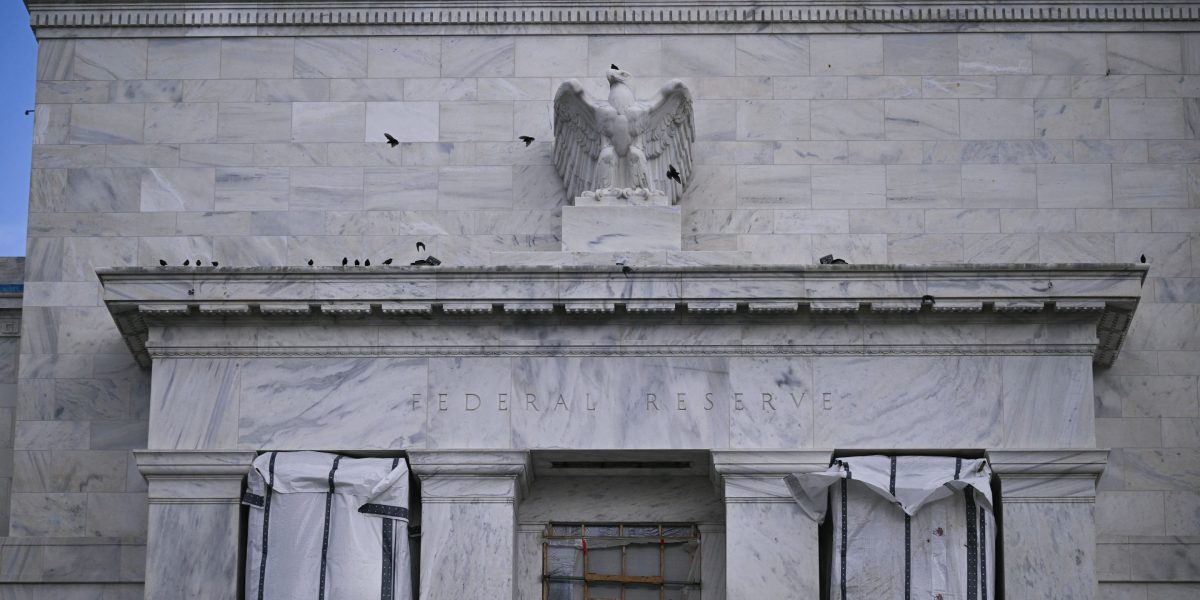
Lawmakers sounded the alarm on the Justice Department’s criminal inquiry into Federal Reserve Chairman Jerome Powell, putting at risk President Donald Trump’s efforts to name a new central bank leader.

On Sunday, Powell revealed that the DOJ served the Fed with grand jury subpoenas, threatening a criminal indictment over his testimony before the Senate last June related to renovations on the headquarters, which has seen cost overruns.

He called the allegations a pretext and said the investigation was really aimed at the Fed’s ability to set interest rates without political pressure. Trump has attacked Powell for much of the last year over his reluctance to cut rates, though the president said he didn’t know about the DOJ probe.

But Republican Sen. Them Tillis agreed with Powell’s assessment and instead pointed the finger at the DOJ.

“If there were any remaining doubt whether advisers within the Trump Administration are actively pushing to end the independence of the Federal Reserve, there should now be none,” he wrote in a post on X. “It is now the independence and credibility of the Department of Justice that are in question.”

Tillis sits on the Senate Banking Committee, which oversees the Fed and would vote on anyone Trump tries to put on the central bank.

Powell’s term as chair expires in May, and Trump has said he already has someone in mind to replace him who will lower rates further. But the DOJ investigation into Powell could blow up that process.

“I will oppose the confirmation of any nominee for the Fed—including the upcoming Fed Chair vacancy—until this legal matter is fully resolved,” Tillis said.

While Powell’s term as chair expires in May, his term as a member of the Fed board of governors expires in 2028. When prior Fed chairs have stepped down, they typically have resigned from the board as well. Powell could choose to stay to preserve the Fed’s independence.

Sen. Elizabeth Warren, a Democrat who also sits on the Senate Banking Committee, accused Trump of trying to force Powell off the Fed board “to complete his corrupt takeover of our central bank.”

“He is abusing the law like a wannabe dictator so the Fed serves him and his billionaire friends,” she added. “The Senate must not move ANY Trump Fed nominee.”


Source link

Continue Reading

Business

Down Arrow Button Icon

Published

on


U.S. equity futures fell sharply Sunday night after Federal Reserve Chair Jerome Powell confirmed that he is under investigation related to testimony he gave last June concerning the renovation of Federal Reserve buildings. 

The New York Times report breaking news of the investigation and Powell’s subsequent disclosure rattled markets, reviving fears that years of President Donald Trump pressuring the Federal Reserve could now be realized into a direct assault on its independence.

Futures tied to the Nasdaq 100 led the decline, falling about 0.8%, as interest-rate-sensitive technology stocks bore the brunt of the selloff. S&P 500 futures were down roughly 0.5%, while Dow Jones Industrial Average futures fell about 0.4%, according to late-evening pricing.

Investors sought protection in the traditional safe-haven assets. Gold futures rose 1.7% to around $4,578 an ounce, while silver jumped more than 4%, reflecting renewed demand for protection against political and monetary instability. The U.S. dollar weakened modestly against several major currencies, including the Swiss franc and Japanese yen.

After years of largely staying silent while Trump repeatedly mocked and threatened him, Powell appeared to have reached a breaking point, issuing a rare and pointed statement. 

He wrote that while “No one—certainly not the chair of the Federal Reserve—is above the law,” the attack should be seen in the “the broader context of the administration’s threats and ongoing pressure.” 

“This new threat is not about my testimony last June or about the renovation of the Federal Reserve buildings…Those are pretexts. The threat of criminal charges is a consequence of the Federal Reserve setting interest rates based on our best assessment of what will serve the public, rather than following the preferences of the President.”

Economists warn that if the executive branch successfully co-opts the Fed, it could create a “self-fulfilling prophecy” of higher long-term inflation.

As Oxford Economics recently noted, any “cracks in the Fed’s independence” could spread rapidly through markets and ultimately raise borrowing costs for the businesses the administration seeks to protect with low interest rates. 

In a note published last July, when Trump publicly threatened to fire Powell, Deutsche Bank warned that such a move could spark severe market disruption.

“Both the currency and the bond market can collapse,” the bank wrote, citing heightened risks of inflation and financial instability. “The empirical and academic evidence on the impact of a loss of central-bank independence is fairly clear.”

Wall Street executives have echoed those concerns. Brian Moynihan, chief executive of Bank of America, said recently the erosion of Fed independence would carry serious consequences.

“The market will punish people if we don’t have an independent Fed,” Moynihan said.


Source link

Continue Reading

Business

Magnificent 7’s stock market dominance shows signs of cracking

Published

on


To beat the market in recent years, many investors applied a simple strategy: Load up on the biggest US technology stocks. 

It paid handsomely for a long time. But last year, it didn’t. For the first time since 2022, when the Federal Reserve started raising interest rates, the majority of the Magnificent 7 tech giants performed worse than the S&P 500 Index. While the Bloomberg Magnificent 7 Index rose 25% in 2025, compared with 16% for the S&P 500, that was only because of the enormous gains by Alphabet Inc. and Nvidia Corp.

Many Wall Street pros see that dynamic continuing in 2026, as profit growth slows and questions about payoffs from heavy artificial intelligence spending rise. So far they’ve been right, with the Magnificent 7 index up just 0.5% and the S&P 500 climbing 1.8% to start the year. Suddenly stock picking within the group is crucial. 

“This isn’t a one-size-fits-all market,” said Jack Janasiewicz, lead portfolio strategist at Natixis Investment Managers Solutions, which has $1.4 trillion in assets. “If you’re just buying the group, the losers could offset the winners.”

The three-year bull market has been led by the tech giants, with Nvidia, Alphabet, Microsoft Corp. and Apple Inc. alone accounting for more than a third of the S&P 500’s gains since the run began in October 2022. But enthusiasm for them is cooling as interest in the rest of the S&P 500 rises.

With Big Tech’s earnings growth slowing, investors are no longer content with promises of AI riches — they want to start seeing a return. Profits for the Magnificent 7 are expected to climb about 18% in 2026, the slowest pace since 2022 and not much better than the 13% rise projected for the other 493 companies in the S&P 500, according to data compiled by Bloomberg Intelligence.

“We’re already seeing a broadening of earnings growth and we think that’s going to continue,” said David Lefkowitz, head of US equities at UBS Global Wealth Management. “Tech is not the only game in town.”

One source of optimism is the group’s relatively subdued valuations. The Magnificent 7 index is priced at 29 times profits projected over the next 12 months, well below the 40s multiples earlier in the decade. The S&P 500 is trading at 22 times expected earnings, and the Nasdaq 100 Index is at 25 times. 

Here’s a look at expectations for the year ahead.

Nvidia

The dominant AI chipmaker is under pressure from rising competition and concerns about the sustainability of spending by its biggest customers. The stock is up 1,165% since the end of 2022, but it has lost 11% since its Oct. 29 record.

Rival Advanced Micro Devices Inc. has won data center orders from OpenAI and Oracle Corp., and Nvidia customers like Alphabet are increasingly deploying their own custom made processors. Still, its sales continue to race ahead as demand for chips outstrips supply. 

Wall Street is bullish, with 76 of the 82 analysts covering the chipmaker holding buy ratings. The average analyst price target implies a roughly 39% gain over the next 12 months, best among the group, according to data compiled by Bloomberg.

Microsoft

For Microsoft, 2025 was the second consecutive year it underperformed the S&P 500. One of the biggest AI spenders, it’s expected to invest nearly $100 billion in capital expenditures during its current fiscal year, which ends in June. That figure is projected to rise to $116 billion the following year, according to the average of analyst estimates.

The data center buildout is fueling a resurgence in revenue growth in Microsoft’s cloud-computing business, but the company hasn’t had as much success in getting customers to pay for the AI services infused into its software products. Investors want to start seeing returns on those investments, according to Brian Mulberry, client portfolio manager at Zacks Investment Management.

“What you’re seeing is some people looking for a little bit more quality management in terms of that cash flow management and a better idea on what profitability really looks like when it comes to AI,” Mulberry said.

Apple

Apple has been far less aggressive with its AI ambitions than the rest of the Magnificent 7. The stock was punished for it last year, falling almost 20% through the start of August. 

But then it caught on as an “anti-AI” play, soaring 34% through the end of the year as investors rewarded its lack of AI spending risk. At the same time, strong iPhone sales reassured investors that the company’s most important product remains in high demand. 

Accelerating growth will be the key for Apple shares this year. Its momentum has slowed recently, the stock closed higher on Friday, narrowly avoiding matching its longest losing streak since 1991. However, revenue is expected to expand 9% in fiscal 2026, which ends in September, the fastest pace since 2021. With the stock valued at 31 times estimated earnings, the second highest in the Magnificent 7 after Tesla, it will need the push to keep the rally going.

Alphabet

A year ago, OpenAI was seen as leading the AI race and investors feared Alphabet would get left behind. Today, Google’s parent is a consensus favorite, with dominant positions across the AI landscape. 

Alphabet’s latest Gemini AI model received rave reviews, easing concerns about OpenAI. And its tensor processing unit chips are considered a potential significant driver of future revenue growth, which could eat into Nvidia’s commanding share of the AI semiconductor market. 

The stock rose more than 65% last year, the best performance in the Magnificent 7. But how much more can it run? The company is approaching $4 trillion in market value, and the shares trade at around 28 times estimated earnings, well above their five-year average of 20. The average analyst price target projects just a 3.9% gain this year. 

Amazon.com

The e-commerce and cloud-computing giant was the weakest Magnificent 7 stock in 2025, its seventh straight year in that position. But Amazon has charged out of the gate in early 2026 and is leading the pack.

Much of the optimism surrounding the company is based on Amazon Web Services, which posted its fastest growth in years in the company’s most recent results. Concerns that AWS was falling behind its rivals has pressured the stock, as has the company’s aggressive AI spending, which includes efforts to improve efficiency at its warehouses, in part by using robotics. Investors expect the efficiency push to start paying off before long, which could make this the year the stock goes from laggard to leader. 

“Automation in warehouses and more efficient shipping will be huge,” said Clayton Allison, portfolio manager at Prime Capital Financial, which owns Amazon shares. “It hasn’t gotten the love yet, but it reminds me of Alphabet last year, which was sort of left behind amid all the concerns about competition from OpenAI, then really took off.”

Meta Platforms

Perhaps no stock in the group shows how investors have turned skeptical about lavish AI spending more than Meta. Chief Executive Officer Mark Zuckerberg has pushed expensive acquisitions and talent hires in pursuit of his AI ambitions, including a $14 billion investment in Scale AI in which Meta also hired the startup’s CEO Alexandr Wang to be its chief AI officer.

That strategy was fine with shareholders — until it wasn’t. The stock tumbled in late October after Meta raised its 2025 capital expenditures forecast to $72 billion and projected “notably larger”spending in 2026. When the shares hit a record in August they were up 35% for the year, but they’ve since dropped 17%. Demonstrating how that spending is boosting profits will be critical for Meta in 2026.

Tesla

Tesla’s shares were the worst performers in the Magnificent 7 through the first half of 2025, but then soared more than 40% in the second half as Chief Executive Officer Elon Musk shifted focus from slumping electric vehicle sales to self-driving cars and robotics. The rally has Tesla’s valuation at almost 200 times estimated profits, making it the second most expensive stock in the S&P 500 behind takeover target Warner Bros. Discover Inc.

After two years of stagnant revenue, Tesla is expected to start growing again in 2026. Revenue is projected to rise 12% this year and 18% next year, following an estimated 3% contraction in 2025, according to data compiled by Bloomberg.

Still, Wall Street is pessimistic about Tesla shares this year. The average analyst price target projects a 9.1% decline over the next 12 months, data compiled by Bloomberg show. 


Source link

Continue Reading

Trending

Copyright © Miami Select.