Connect with us

Business

Crude oil prices rise after Maduro ouster as Wall Street braces for jobs data

Published

on


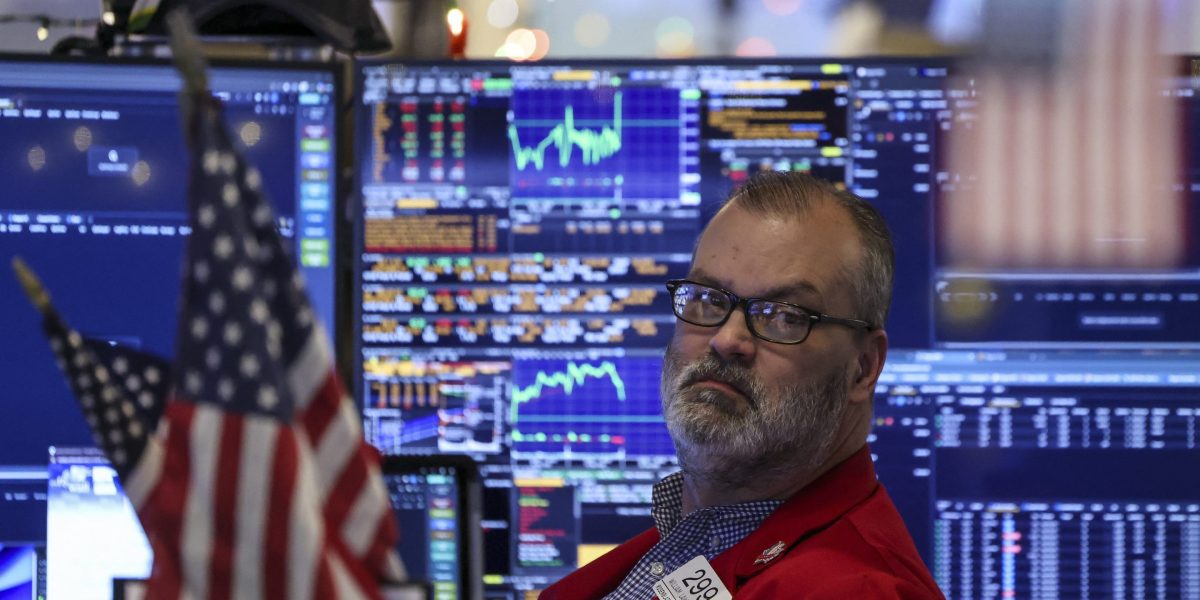
Stock futures and oil prices edged higher on Sunday evening as investors began to digest the implications of the U.S. military raid on Venezuela that captured Nicolas Maduro.

While the country has the world’s largest proven oil reserves, production has been waning for years amid U.S. sanctions, mismanagement by the Maduro regime, and underinvestment.

President Donald Trump said Saturday that Maduro’s removal will unleash a surge of investment in Venezuela’s oil industry and revive output, though analysts have said that could take years.

Meanwhile, Venezuela’s shrinking influence in the world’s oil landscape has Wall Street downplaying much near-term effects from U.S. intervention there.

“The physical global oil market situation remains the same. Oil prices have declined due to an oversupplied global oil market,” said Rob Hummel, senior portfolio manager at Tortoise Capital Management, said in a note. “The current events in Venezuela don’t change this dynamic.”

U.S. oil futures rose 0.19% to $57.43 a barrel, and Brent crude climbed 0.28% to $60.92 a barrel, with both benchmarks reversing earlier losses.

OPEC+ also backed plans to keep production steady through the first quarter and hold off on any further hikes, as oil markets still face a supply glut.

Futures tied to the Dow Jones industrial average were essentially flat, down 5 points. S&P 500 futures were up 0.10%, and Nasdaq futures added 0.32%.

The yield on the 10-year Treasury was unchanged at 4.191%. The U.S. dollar was up 0.14% against the euro and up 0.22% against the yen. 

Gold rallied 1.7% to $4,403.70 per ounce, and silver jumped 5.4% to $74.86. Bitcoin edged up 2.3% to $92,265.

After the successful Venezuela raid, Trump said he is still eyeing Greenland and warned Cuba is “very similar” to the Maduro regime.

But the economic calendar may bring his focus back on the U.S. economy rather than more foreign adventures. The upcoming batch of numbers is also highly anticipated as they will largely be free from distortions related to the government shutdown.

On Monday, the Institute for Supply Management will release its manufacturing activity index. On Wednesday, ADP puts out its private-sector payroll report, and the Labor Department publishes job opening and turnover report.

And on Friday, the Labor Department will issue its monthly jobs report, with Wall Street expecting a gain of just 54,000 and another increase in the unemployment rate to 4.7%.


Source link

Continue Reading

Business

Trump warns he’ll be impeached if Republicans lose midterms

Published

on


President Donald Trump implored Republicans to turn around their political fortunes ahead of November’s midterm elections, warning that if Democrats retake control of Congress, he would be impeached for a third time.

“You got to win the midterms,” Trump said Tuesday at a retreat for the party’s House caucus in Washington. “They’ll find a reason to impeach me. I’ll get impeached.”

Trump offered a familiar blueprint for majority parties, which historically have lost seats in off-year elections: blaming their troubles on messaging problems and insisting that voters just aren’t seeing their achievements.

Trump predicted the GOP would pull off an “epic” victory and defy those trends. Yet polls showing Americans’ dissatisfaction with his leadership and the state of the economy bode poorly for Republicans’ chances of keeping control of Congress.

Trump at times expressed exasperation with voters who have given him low marks on his stewardship of the country.

“I wish you could explain to me what the hell’s going on with the mind of the public, because we have the right policy,” he said.

Trump touted his migrant crackdown, sweeping tariffs, efforts to lower drug costs and his landmark tax-and-spending bill. He also offered pointed advice to his party’s lawmakers over their message, urging them to aggressively tout his policy priorities and overhaul the nation’s health insurance system.

“You have so much ammunition, all you have to do is sell it,” Trump said. “You want to turn this thing? You work on favored nations, you work on borders, you work on all of the things that we talked about, but now you take the health care issue away from them.” 

As for his tax law, Trump said “there are so many goodies” that “you have to get the word out.”

Pivotal Year

Trump’s pep talk comes at the start of a pivotal year for the president, with elections that will determine control of both the House and Senate.

Trump’s first year back in office saw him flex his executive powers, circumventing Congress to achieve a number of his policy goals. 

Where Trump has sought to enlist lawmakers, he has faced little resistance from Republicans. Still, a loss of either chamber would dramatically undercut the president’s ability to further his agenda in the second half of his term. Major legislation already faces a tougher path this year thanks to GOP divisions and their slim majority.

It would also open him up to fresh investigations from a Democrat-run Congress. During his first term, Trump was impeached twice: once over his pressure campaign on Ukraine to probe Democratic rival Joe Biden and then again for his role in the Jan. 6, 2021 attack on the US Capitol.

Despite Trump’s exhortations to lawmakers, surveys indicate the president himself is among his party’s biggest albatrosses. Approval of his job performance stood at 36% in a year-end Gallup poll. The overall figure was just barely above his personal low of 34% in January 2021. The high cost of living, an issue Trump ran on in 2024, remains at the top of voters’ minds.

Republicans in Congress start the year facing immediate challenges, including averting a shutdown after Jan. 30 when funds for much of the federal government run out. They’re also grappling with questions about Trump’s capture of Venezuelan leader Nicolas Maduro in a brazen military raid over the weekend, as well as a looming vote on Obamacare subsidies only days before open enrollment is set to close. 

Health-Care Fight

Trump highlighted the fight over health coverage, reiterating his opposition to extending those subsidies and insisting to his party’s lawmakers that his stance would be embraced by voters.

“I came out with a statement, let the money go not to the big fat cats in the insurance companies,” Trump said. “Let the money go directly to the people where they can buy their own health care.”

House Democrats are planning to force a vote on reviving expired subsidies under the health-care law. Trump’s proposal to deliver that money directly to consumers to make their own health coverage choices has raised questions about how such an arrangement would work and whether it would deliver better outcomes. 

Some GOP lawmakers have questioned whether the party is taking advantage of their hold on both chambers to move aggressively enough to pass their legislative priorities. Others fret that the party has not done enough to promote their wins, such as the landmark tax-and-spending package passed last summer.

GOP Challenges

Trump’s One Big Beautiful Bill extended tax cuts passed during his first term along with other new measures the president had promised on the 2024 campaign trail, including exempting taxes on tips and overtime pay. The White House has said Americans will see its benefits in the coming year, and urged voters to give the administration more time to demonstrate that its economic policies are working.

Republicans have struggled to get that message to break through with voters. Democrats pulled off a series of significant victories in off-year 2024 elections in which worries about affordability were front and center, with voters expressing anxiety over high costs for groceries and housing and the pace of wage growth.

Democrats have pointed the finger at Trump’s sweeping tariff agenda, the end of expanded health-care subsidies and growing energy demands from the artificial intelligence sector the president has sought to boost as contributing to the rise in consumer costs. Inflation, has eased from a four-decade high seen in 2022, but prices overall continued to climb last year.

Intraparty tensions among Republicans have been evident, with a number of prominent lawmakers announcing plans to retire. That includes Representatives Elise Stefanik of New York and Marjorie Taylor Greene of Georgia, whose final day in office was Monday. While Stefanik has been a staunch Trump loyalist, Greene is a onetime ally who transformed into one of his sharpest GOP critics, splitting with the president over the administration’s handling of files pertaining to the late, disgraced sex offender Jeffrey Epstein and his focus on foreign policy.

This story was originally featured on Fortune.com


Source link

Continue Reading

Business

Mark Cuban has a solution for the $38 trillion national debt: Fine health insurers

Published

on


Mark Cuban has an idea for how to stop the runaway train that is the $38 trillion national debt, and it has a lot to do with the online pharmacy company he founded in January 2022. On Christmas Eve, the billionaire investor posted on X about his frustrations with the insurance market.

Insurers and providers, according to Cuban, “play on the fear and information asymmetry that exists in healthcare.” He advocated for them to be broken up, so as to “make the markets efficient again.”

While Cuban’s proposal focused on $100 fines for insurers that over-bill or deny care, the broader thrust of his argument is dismantling opaque middlemen and forcing transparent pricing—as he does with his Cost Plus Drugs pharmacy—could help tame one of the biggest drivers of America’s fiscal strain.

America’s national debt surged past $38 trillion in October, adding roughly $1 trillion in just over two months in 2025—twice the pace of typical growth since 2000, according to the Peter G. Peterson Foundation, a leading fiscal watchdog. Annual interest payments are already around $1 trillion and could total as much as $14 trillion over the coming decade, a trajectory the watchdog warns is “no way for a great nation like America to run its finances.” A closer look at health insurance and over-billing doesn’t exactly find fixing the issue would fix the debt or deficit​, but Cuban is right that something is definitely off in this space.

How Cost Plus Drugs fits in

Cost Plus Drugs sells medications at their manufacturing cost, plus a flat 15% markup, a small pharmacy fee, and a posted shipping charge. The company cuts out traditional pharmacy benefit managers and negotiates directly with manufacturers, publishing acquisition costs and formulas so customers can see exactly how their prices are built.

Fortune and other outlets have reported Cost Plus Drugs can slash the price of some generics from thousands of dollars a month to double‑digit sums, especially for patients who are uninsured or stuck with high deductibles. Cuban argues if similar transparency and direct‑to‑consumer models were applied across health care—combined with rules like letting cash prices count toward insurance deductibles—the country could strip out layers of waste that burden both families and, ultimately, public budgets.

​As a direct-to-consumer company, Cost Plus cuts out the pharmacy benefit managers, or PBMs, who negotiate prices with drug-makers on behalf of health insurance companies. This sector has come under criticism from players far beyond Cuban, such as former Federal Trade Commission Chair Lina Khan, who led an aggressive, multi-year crackdown on what she called “prescription drug middlemen.” The FTC’s ​Section 6(b) inquiry into the PBM industry ordered the largest firms in the space to turn over extensive data and documents about their business practices, and a January 2025 interim report from the FTC claimed that PBMs marked up drugs by $7.3 billion in excess of their acquisition costs. While that’s substantial, even a much larger overcharging estimate on the part of PBMs would be a far cry from the $38 trillion national debt.

When contacted by email, Cuban agreed that “of course” the national debt is so gigantic that even billions of inefficiencies being fixed are just the start. “And obviously those being fined would change their behavior,” he added, but he said he thinks abuse in the system is “far more than $7.3 billion.”

If brand medication moved to net pricing, Cuban offered as an example, then millions of insurance plan holders would pay the net price during their deductible phase, rather than the full retail price they currently pay. “Can you imagine if a Pringles distributor paid full retail to Pringles and then sold to grocer stores for full retail, and then the grocery stores had to wait for a rebate that may or may not cover their cost to buy the Pringles? That’s how pharmacy works. It makes no sense.” He argued this would save patients tens of billions a year across specialty and brand medications.  

Khan’s public criticisms of PBMs as “gatekeepers” gave the companies ammunition to argue she was biased and should recuse herself from the investigation. The FTC filed lawsuits against several prominent PBMs while Khan was chair and those are still pending, even though Khan is no longer serving at the agency.

Heading into crunch midterm elections in 2026, and following a rout of Republicans in 2025 elections that unified around the theme of “affordability,” millions of Americans are dealing with a spike in their insurance costs as a result of federal government policy. Subsidies for insurance under the Affordable Care Act expired in December, and many Americans are choosing to go uninsured, The New York Times reported. (The mandate to require people to buy health insurance under the ACA has survived several Supreme Court rulings as constitutional, but the penalty was reduced to $0 in the first Trump term, as part of the 2019 tax cut law.)

The economy consistently polls at voters’ top concern heading into the midterms, but that may include health insurance costs, as “cost of living” is regularly cited as a main economic concern, with health care typically coming in second, per an AP voter poll in November 2025. An October 2025 poll for Families USA conducted by Hart Research Associates found health care costs were the top priority for American voters, with 43% saying that lowering costs was the most important issue for Congress and the President to address, above housing, jobs, immigration and crime.

Economists and health‑policy experts counter that even aggressive savings in prescription drugs and billing reform would only touch part of what is driving a $38 trillion debt built on structural deficits, rising interest costs and political gridlock. They say Cuban’s pharmacy is a powerful example of how to lower prices and expose middlemen, but warn it is unlikely to be the silver bullet for a debt problem fueled by far broader tax and spending choices.

“Right now,” Cuban told Fortune, “the biggest players in healthcare, the insurance companies, the PBMs they own … are all Too Big %pp Care.”


Source link

Continue Reading

Business

New Haven mayor says police chief admitted to stealing money from department, accepts retirement

Published

on


New Haven’s police chief abruptly retired following allegations he stole money from a department account, Mayor Justin Elicker announced Monday.

The Democrat said Chief Karl Jacobson admitted he took money from a city fund that compensates confidential informants for helping police solve crimes.

He said the chief acknowledged taking the funds for personal use when three of his deputies confronted him Monday morning over the financial irregularities.

Elicker called the allegations “shocking” and a “betrayal of public trust.”

“No one is above the law,” he said in an evening press conference at the police station. “We put our trust in law enforcement to uphold the law, not to violate the law themselves.”

Jacobson didn’t immediately return an email seeking comment Monday. He had served as police chief in one of Connecticut’s largest cities and home to Yale University for more than three years.

The mayor said he was set to meet with Jacobson and place him on administrative leave when the chief instead submitted his paperwork to retire, effective Monday.

Elicker said it’s unclear how much and for how long Jacobson had been taking money from the informants’ account and that it doesn’t appear others were involved. He said city officials are cooperating with state investigators looking into the matter.

Elicker said he has tapped Assistant Police Chief David Zannelli, who was among the officers to confront Jacobson over the funds, to serve as interim chief.

Jacobson took office in July 2022, just weeks after a Black man was paralyzed in the back of a police van in an incident that roiled the police department and the city.

Five officers were arrested in connection with the mistreatment of Richard “Randy” Cox, who suffered a neck injury and was left paralyzed from the chest down when the police van with no seat belts he was in braked hard to avoid an accident and sent him flying into a metal partition.

Jacobson recommended firing four of the officers, and the city’s police commissioners terminated them. The fifth officer retired before he could be disciplined. One of the fired officers won his job back after an appeal.

Jacobson had been with the department for 15 years before being named chief. He previously served in the East Providence Police Department in Rhode Island for nine years.

Join us at the Fortune Workplace Innovation Summit May 19–20, 2026, in Atlanta. The next era of workplace innovation is here—and the old playbook is being rewritten. At this exclusive, high-energy event, the world’s most innovative leaders will convene to explore how AI, humanity, and strategy converge to redefine, again, the future of work. Register now.


Source link

Continue Reading

Trending

Copyright © Miami Select.