Connect with us

Business

Credit fuels the AI boom — and fears of a bubble

Published

on


Credit investors are pouring billions of dollars into artificial intelligence investments, just as industry executives and analysts are raising questions about whether the new technology is inflating another bubble.

JPMorgan Chase & Co. and Mitsubishi UFJ Financial Group are leading the sale of a more than $22 billion loan to support Vantage Data Centers’ plan to build a massive data-center campus, people with knowledge of the matter said this week. Meta Platforms Inc., the parent of Facebook, is getting $29 billion from Pacific Investment Management Co. and Blue Owl Capital Inc. for a massive data center in rural Louisiana, Bloomberg reported this month. 

And plenty more of these deals are coming. OpenAI alone estimates it will need trillions of dollars over time to spend on the infrastructure required to develop and run artificial intelligence services. 

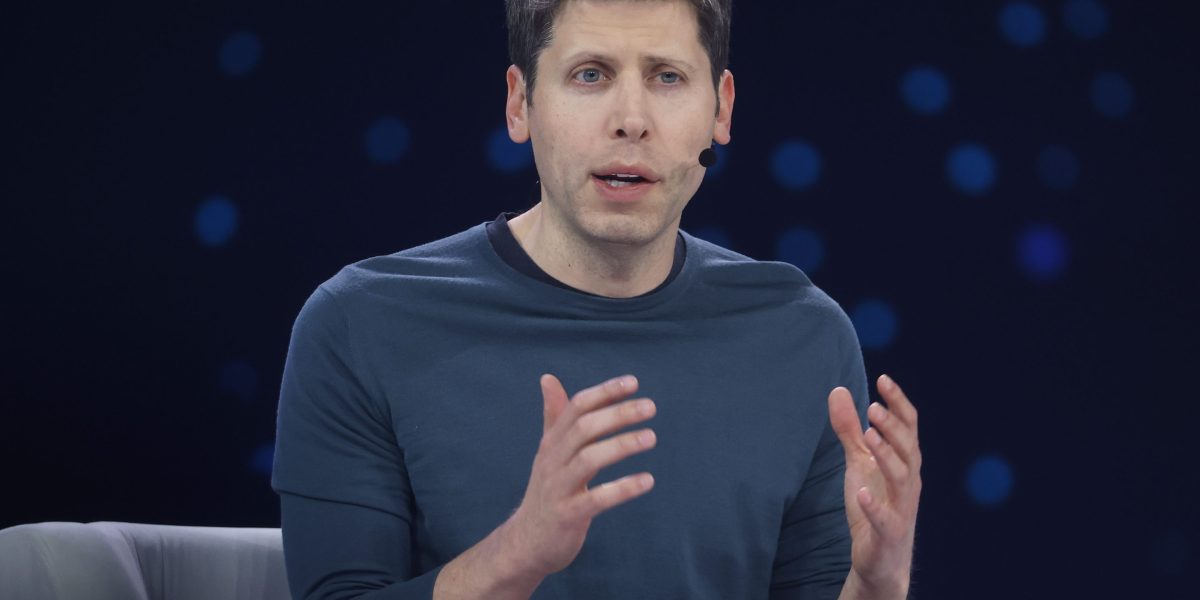
At the same time, key players in the industry acknowledge there is probably pain ahead for AI investors. OpenAI Chief Executive Officer Sam Altman said this week that he sees parallels between the current investment frenzy in artificial intelligence and the dot-com bubble in the late 1990s. When discussing startup valuations he said, “someone’s gonna get burned there.” And a Massachusetts Institute of Technology initiative released a report indicating that 95% of generative AI projects in the corporate world have failed to yield any profit. 

Altogether, it’s enough to make credit watchers nervous.

“It’s natural for credit investors to think back to the early 2000s when telecom companies arguably overbuilt and over borrowed and we saw some significant writedowns on those assets,” said Daniel Sorid, head of U.S. investment grade credit strategy at Citigroup. “So, the AI boom certainly raises questions in the medium term around sustainability.”

The early build-out of the infrastructure needed to train and power the most advanced AI models was largely funded by the AI companies themselves, including tech giants like Alphabet Inc.’s Google and Meta Platforms Inc. Recently, though, the money has been increasingly coming from bond investors and private credit lenders.

The exposure here comes in many shapes and sizes, with varying degrees of risk. Many large tech companies — the so-called AI hyperscalers — have been paying for new infrastructure with gold-plated corporate debt, which is likely safe due to the existing cash flows that secure the debt, according to recent analysis from Bloomberg Intelligence.

Much of the debt funding now is coming from private credit markets.  

“Private credit funding of artificial intelligence is running at around $50 billion a quarter, at the low end, for the past three quarters. Even without factoring in the mega deals from Meta and Vantage, they are already providing two to three times what the public markets are providing,” said Matthew Mish, head of credit strategy at UBS. 

And many new computing hubs are being funded through commercial mortgage-backed securities, tied not to a corporate entity, but to the payments generated by the complexes. The amount of CMBS backed by AI infrastructure is already up 30%, to $15.6 billion, from the full year total in 2024, JPMorgan Chase & Co. estimated this month.

Sorid and a colleague at Citi put out a report on Aug. 8 focusing on the particular risks for the utility firms that have boosted borrowing to build the electrical infrastructure needed to feed the power-hungry data centers. They and other analysts share a commonly held concern about spending so much money right now, before AI projects have shown their ability to generate revenue over the long term. 

“Data center deals are 20 to 30 year tenor fundings for a technology that we don’t even know what they will look like in five years,” said Ruth Yang, global head of private market analytics at S&P Global Ratings. “We are conservative in our assessment of forward cash flows because we don’t know what they will look like, there’s no historical basis.”

The stress has begun to appear in the rise of payment-in-kind loans to tech-oriented private credit lenders, UBS Group noted. In the second quarter, PIK income in BDCs reached the highest level since 2020, climbing to 6%, according to UBS.

But the fire hose of money is unlikely to stop anytime soon. 

“Direct lenders are constantly raising capital, and it has to go somewhere,” said John Medina, senior vice president in Moody’s Global Project and Infrastructure Finance Team. “They see these hyperscalers, with this massive capital need, as the next long-term infrastructure asset.” 

Introducing the 2025 Fortune Global 500, the definitive ranking of the biggest companies in the world. Explore this year’s list.


Source link

Continue Reading

Business

I’m a leader in private equity and see a simple fix for America’s job-quality crisis: actually give workers a piece of the business

Published

on


My dad spent 40 years operating heavy machinery on construction sites around Chicago. He was proud of his work and of his union card, but I wouldn’t call what he had a quality job. No one listened to him. He didn’t feel respected. He could never get ahead financially. Around the dinner table, he’d tell stories about fighting over wages or whether the lunch hour was paid or unpaid. What stayed with me wasn’t just the frustration; it was how obviously bad that dynamic was for everyone involved. I remember wondering why work had to feel like a fight.

Decades later, I see those same tensions playing out across the U.S. economy. The new American Job Quality Study, conducted by Gallup and developed by Jobs for the Future, The Families & Workers Fund, and the W.E. Upjohn Institute for Employment Research, aims to measure what makes a job “good.” It looks at five things: financial security, safety and respect, opportunities to grow, a voice in decisions, and a manageable schedule. By that definition, only around 40 percent of American workers have quality jobs.

As an investor, I evaluate hundreds of companies every year, and this data squares with what we see on the ground.  Many companies don’t even measure employee engagement or quit rates.  And what isn’t measured certainly isn’t managed. We routinely see companies that have such high turnover that they rehire their entire frontline every few years.  Inevitably, the impact of all this churn spills into other areas like safety, given that less experienced workers are far more likely to get hurt.  In one particularly ironic case, a safety equipment manufacturer had injury rates that were triple the OSHA benchmark.

For workers, the consequences are obvious. People in quality jobs are healthier, happier, and more satisfied with their lives. But it matters just as much for companies. Every “human” statistic has a business consequence. When you’re replacing your entire frontline every few years, you’re wasting resources on recruiting, training, and onboarding.  If you have a safety problem, that’s clearly horrible for workers, but you’re also wasting money on workers’ comp and missed days of work.  And if safety is poor, product quality usually is too because both are the direct result of weak processes and disengaged colleagues.  

This new study puts all these elements together in one clear, data-driven picture.  And it shines a light on reality: we’re stuck in a perilous cycle.  High turnover discourages investment in people – things like upskilling, cross-training, and career development. Workers sense that and give the bare minimum in return. Leaders start to see employees as “heads” – interchangeable units of labor.  Empathy erodes. Companies focus their attention on the next quarter, and workers keep their eyes open for a better offer. Everyone gets trapped in short-termism.

How to break the cycle?  Change the way companies operate; empower workers to think and act like owners.

That’s why my work as an investor has increasingly focused on broad-based employee ownership as a tool to both lift up workers and shift corporate cultures. Over the past fifteen years at KKR, we’ve partnered with more than eighty companies to give equity ownership to about 180,000 frontline employees. When done well, it changes everything.

I’ve seen factory workers start tracking quality yields with the intensity of CFOs.  Engagement scores rise, quit rates fall, and productivity climbs because people finally feel respected, trusted, and included. They have a stake and a voice. They can see how the business works, and how their effort moves the numbers.

Just last month, we completed our investment in an insurance services company called Integrated Specialty Coverages.  Employees who had been there at least three years earned stock worth 100 percent of their annual income – a reward that didn’t replace any of their regular pay.  More tenured workers did even better, some earning three years of wages.  In addition to significantly enhancing its growth rate and profitability, the company was rewarded with engagement scores reaching the top decile of its peer group and quit rates dropping by more than half.

Sharing equity isn’t a magic wand. Employee ownership only works when paired with education, transparent communication, financial literacy training, and worker voice. It’s also not a replacement for wages or other benefits – and it’s not charity.  It’s a tool for cultural alignment and improved performance. And it’s one of the few structural levers we have to shift incentives away from short-termism and toward shared success.

The American Job Quality Study matters because it gives us a data-backed picture of what too many Americans already know from experience: most jobs don’t offer dignity, stability, or a path forward – and we all reap the consequences. Let’s take the lessons from this study and apply them.  It’s time to start rethinking how value is shared, so that the people creating it can share in it. I’ve seen what happens when they do. My dad would’ve called that a quality job.

The opinions expressed in Fortune.com commentary pieces are solely the views of their authors and do not necessarily reflect the opinions and beliefs of Fortune.


Source link

Continue Reading

Business

Kushner, Ellison and Apollo back hostile Warner Bros. bid

Published

on


The US president’s son-in-law. One of the largest alternative-asset managers. The CEO’s father who fleetingly commanded a fortune exceeding Elon Musk’s.

Paramount Skydance Corp.’s hostile takeover bid Monday for Warner Bros. Discovery Inc. brought together an array of banks, billionaires and sovereign-wealth funds, all with the aim of torpedoing Netflix Inc.’s deal last week.

Bank of America Corp., Citigroup Inc. and Apollo Global Management Inc. are providing the debt commitment, according to filings. RedBird Capital Partners and Larry Ellison — at one point this year the world’s richest person — will backstop the $40.7 billion of equity which will in part be provided by Saudi Arabia’s Public Investment Fund, the Qatar Investment Authority, Abu Dhabi’s L’imad Holding Company PJSC and Jared Kushner’s Affinity Partners.

The names are notable as much for their size as well as their proximity to President Donald Trump, who even before Paramount went public with its bid warned of potential antitrust concerns around Netflix’s planned $72 billion acquisition of Warner Bros. Trump, speaking to reporters on Sunday, said he would be personally involved in the decision-making process that now includes a close family member and wealth funds in countries he’s courted to make investments in America. On Monday, he downplayed that involvement, saying neither Paramount nor Netflix were “great friends” of his. Play Video

In a letter to the Warner Bros. board, Paramount Chief Executive Officer David Ellison said the financing partners his firm had lined up — which agreed to forgo governance rights — should help assure of its ability to clinch the deal. 

“We are providing you with funds certain from one of the wealthiest families in the world, a domestic counterparty, while also eliminating any cross-conditionality, which should give WBD’s board complete comfort and certainty as to our ability to close in a timely fashion,” he wrote. 

The latest financing package follows months of negotiations and reworked proposals as Paramount sought to win over Warner Bros. In all, Paramount made six overtures over 12 weeks. In one case, Ellison went to the Beverly Hills home of Warner Bros. CEO David Zaslav, the filing showed. 

The iteration now on the table, submitted Dec. 4, includes a $54 billion so-called bridge loan split equally between Bank of America, Citigroup and Apollo. For the equity portion, the entirety will be guaranteed by the Ellison family and New York investment firm RedBird in “a radical simplification” of a previous plan after the Warner Bros. board expressed concerns, according to the filing. 

Larry Ellison, the 81-year-old father of David and founder of Oracle Corp. who counts Trump as a friend, briefly became the world’s richest person in September after his fortune rose by an unprecedented $89 billion in a day, according to the Bloomberg Billionaires Index. Oracle shares have since slid, and he’s worth $277 billion, according to the wealth index.

His trust “has financial resources well in excess of what would be required to meet its commitments,” according to Paramount’s filing, citing 1.16 billion shares of Oracle worth about $252 billion. As of September he had already pledged about one-quarter of those as collateral against personal debt, according to the index.

Paramount had made other salvos to Warner Bros. too: The cast of financing partners no longer includes China’s Tencent Holdings Ltd. — which an earlier proposal listed as providing $1 billion — after the Warner Bros. board raised questions about the involvement of another non-US equity financing source. 

That proposal from Dec. 1 also specified an $11.8 billion commitment from the Ellison family, a combined $24 billion from three Gulf-based sovereign wealth funds as well as pledges from RedBird and Affinity Partners. It wasn’t immediately clear from the filings on Monday whether those allocations had changed. 

Kushner, PIF

The Paramount bid marks the second time this year that Saudi Arabia’s Public Investment Fund has partnered with Kushner on an eye-catching deal. Affinity Partners was part of the consortium that agreed to buy Electronic Arts Inc. in September in a $55 billion transaction. Kushner brokered the initial connection between the video game maker and PIF, and for months acted as a central figure in the talks, Bloomberg reported at that time. 

In addition to the Qatar Investment Authority, a relative newcomer is joining the melee — L’imad. The company — wholly owned by the Abu Dhabi government — has only publicly disclosed one major deal: It agreed in late October to buy a controlling stake in Modon Holding PSC, an Emirati property developer with a $15 billion market value.

The PIF, Affinity Partners, L’imad and QIA have agreed to forgo any governance rights or board seats, which Paramount said would eliminate potential scrutiny from the US Committee on Foreign Investment in the United States.

Credit Ratings

Paramount’s bid at $30 a share in cash comes after Netflix agreed to buy Warner Bros. for $27.75 in cash and stock in a deal backed by $59 billion of unsecured financing from Wells Fargo & Co., BNP Paribas SA and HSBC Plc. Paramount’s bid is for the entirety of Warner Bros., while Netflix is only interested in the Hollywood studios and streaming business. Warner Bros. announced plans in June to split into two separate publicly traded companies by mid 2026. 

Paramount’s debt package — secured by some of its assets — was designed with an eye on obtaining the combined company an investment-grade rating, according to people familiar with the matter who asked not to be identified discussing private information. Paramount is currently rated at BB+ by S&P Global Ratings, one level below investment grade, and BBB- by Fitch Ratings, which is on the cusp of junk. 

Paramount’s interim Chief Financial Officer Andrew Warren said on a call Monday that the company expects ratings firms to grade the debt as investment grade, based on deleveraging plans in the roughly two years following the acquisition’s close. Chief Operating Officer Andy Gordon said about $17 billion of the $54 billion debt commitment is reserved to take out and extend an existing bridge loan that Warner Bros. already has. 


Source link

Continue Reading

Business

AI’s reliance on patterns can lead to ‘mediocre’ results, warns CEO of design consultancy IDEO

Published

on


Can AI be used to generate original work rather than mere “slop”? That’s the question facing many designers who both hope to leverage AI’s power to generate and refine new ideas quickly, and worry about their ability to compete with a flood of AI-generated, yet subpar, content.

Yet Mike Peng, the CEO of design consultancy IDEO, thinks that human creativity, enhanced by AI, could be the path forward for designers. 

AI’s pattern recognition capability can make it an incredibly powerful tool, noted Peng at Fortune Brainstorm Design in Macau on Dec. 2. But its reliance on averages can lead to “somewhat mediocre” results, he warned.

“Creativity is all about not being mediocre and being on the edge,” he added.

Similarly, AI is excellent at iteration, but only creativity can determine where to apply those iterated ideas. “This comes from taste, curation, discernment—you need to know where to look,” Peng advised.

And while AI might outperform humans in terms of execution, or how to get from “point A to point B,” bringing it to life requires creativity and empathy, which Peng said “can only be done by folks like us.”

So how best to inculcate a creative mindset and unlock the power of AI? “The only way we can get better at it—and the only way we as creative people, as designers, can become superpowered—is to be able to experiment” Peng said.

Playfulness, curiosity and experimentation, along with human-centered design are, hallmarks of IDEO, the world-renowned global design and innovation consultancy founded in Palo Alto in 1991. Peng took over as IDEO’s CEO earlier this year, after spending five years as CEO of Moon Creative Lab, a venture studio affiliated with Japan’s Mitsui.

“There is no play without friction,” Peng noted. “Play is about overcoming something, achieving something.” That’s counter to companies often trying to make their products and services faster and easier to use. To avoid mediocrity, “we have to play, we have to experiment, we have to be on the edge” with new technology, he said.

IDEO, he notes, is “in the business of creating something that AI cannot exactly do on its own.” Yet, for him, the human superpower remains understanding human complexity and interactions.

After all, Peng urged, creatives and designers will “be the ones to bring this experience to life.”


Source link

Continue Reading

Trending

Copyright © Miami Select.