
Politics
County leaders get candid in discussing getting ‘DOGEd’ by CFO’s office

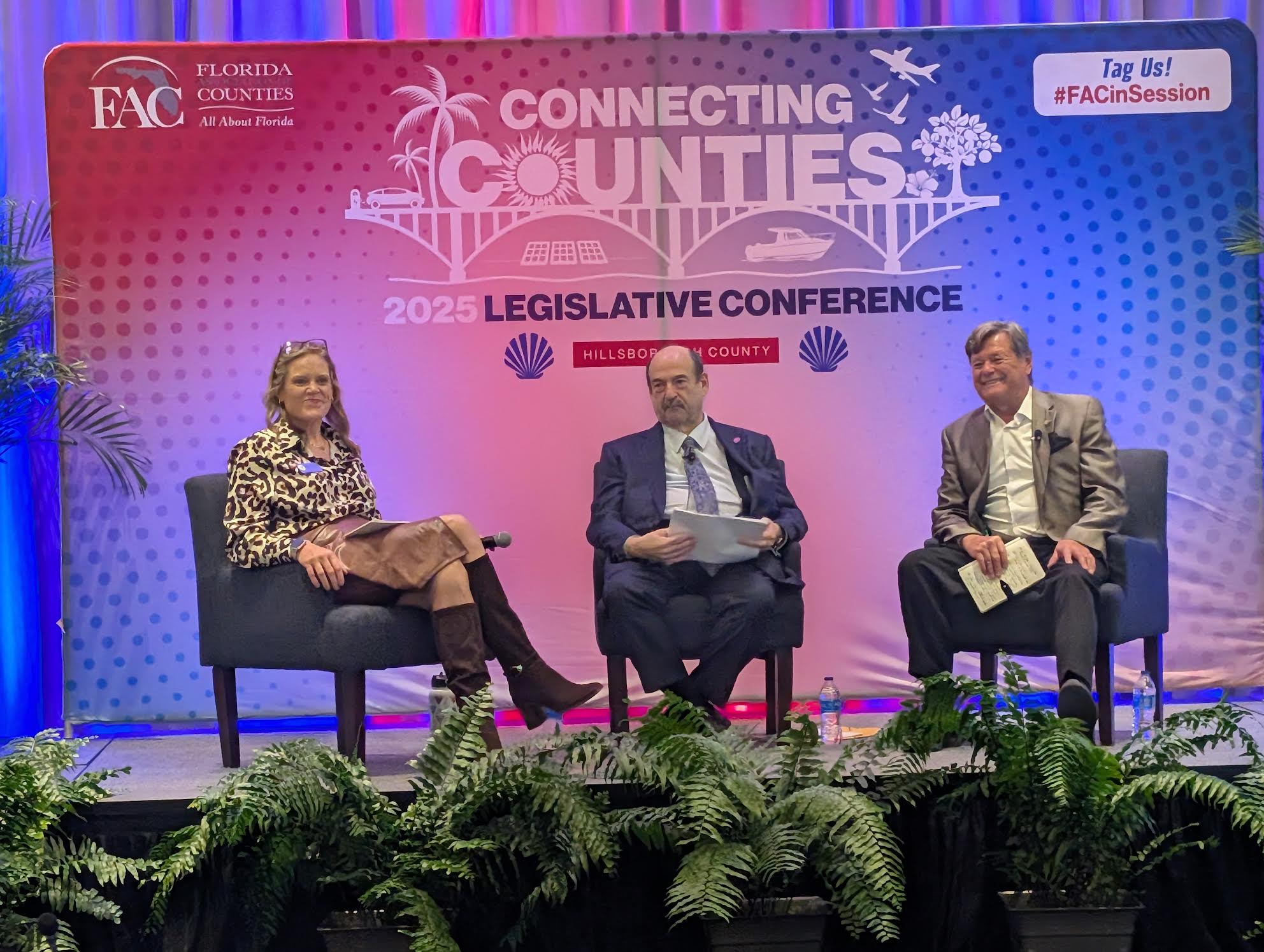
Two longtime former state lawmakers who now serve in local government don’t think much of the audits of their counties’ spending conducted by Florida Chief Financial Officer Blaise Ingoglia’s office in recent months.
Since being appointed by Gov. Ron DeSantis to the position in July, Ingoglia has held press conferences in some of the state’s cities and counties, where he has aggressively called out alleged overspending. It’s been a central feature of the state’s Department of Government Efficiency (DOGE) efforts, later rebranded by Ingoglia as the Florida Agency for Fiscal Oversight (FAFO).
The media events are also a way to plug a (still to be written) constitutional amendment for the 2026 ballot that will likely ask Floridians whether they support reducing or possibly eliminating property taxes on homestead properties.
“We’re not going away,” Ingoglia said during a press conference in Seminole County in September. “We’re going to continue beating this drum from now up until the time that we get actual property tax reform on the ballot in 2026.”
Seminole County Republican County Commissioner Lee Constantine isn’t impressed.
“This whole thing is a made-for-television event, and it’s specifically made for television for the CFO’s re-election,” he said Wednesday during the Florida Association of Counties 2025 legislative meeting. That’s where he and Broward County Democratic County Commissioner Steven Geller traded stories about their counties’ FAFO audits.
Geller, who served in both chambers of the Legislature for 20 years (1988-2018), criticized the calculations Ingoglia’s office derived to allege that Broward has indulged in $189 million in “wasteful spending” over the past five years.
“Check the numbers,” he said. “Because they are fictitious. Made-up. Phony. False.”
Constantine, too, questioned the accuracy of some of the CFO’s numbers for Seminole County. He found it telling that, when a local reporter asked Ingoglia to provide specific examples of alleged waste, “He couldn’t answer specifically where he got it, referring to the suggestion his county had indulged in $48 million in excessive and wasteful spending.”
“He also could not answer all this money we were overspending. Give us one example. Just one.”

Similar criticism has come from additional local governments that have received an FAFO audit. The CFO has said he will ultimately come forward with those details.
The Governor’s office released a statement on Oct. 1 with 10 specific examples of alleged overspending by local governments across the state, such as the city of Jacksonville spending $75,000 on a hologram of Mayor Donna Deegan greeting travelers at Jacksonville International Airport in multiple languages.
(Deegan responded in a written statement, “Mayors greet travelers at airports across the country and use multimedia platforms to promote their cities as tourist destinations. This is just a new and innovative way to do that.”)
The Seminole audit came shortly after the five-member Seminole County Commission — all Republicans — voted 4-1 to increase the base property tax rate by 0.5 mills in the face of a $35 million budget deficit, a 10% increase over the previous year.
Constantine defended the increase on Wednesday, saying it was the county’s first in 16 years. He went on to say that the Commission sent Ingoglia a letter immediately after he held his news conference, but didn’t receive an immediate response.
“Crickets,” he said.
Days later, Seminole County went public in a press release.
“On October 7, the CFO’s Florida Agency for Fiscal Oversight (FAFO) presentation alleged that County spending exceeds an index he created based on population growth and inflation,” part of the release said. “However, the CFO’s model ignores more than $120 million of state-imposed mandates and essential services that Seminole County is legally required to fund.”
Ingoglia then “started calling some of our prominent citizens … and asked if they would endorse him for CFO. And they all said, ‘Not until you make it right in Seminole County,’” Constantine continued.
That’s when the CFO sent a letter to the County Commissioners, thanking them for their efforts and saying that “no future action” was needed on their part, other than to “continue to look out for the taxpayers of Seminole County.”
Constantine is actually grateful for the whole exercise, because he says it allowed county officials to further inform their citizens about the need for the property tax increase. “The CFO did not move the needle in my county at all,” he said. “In fact, after our response, it was much more positive for the tax increase than it was before.”
Advice for other counties
When asked what advice they would give other counties facing similar scrutiny, Geller said it’s incumbent that “you get the information out to your voters.”
“We all know this is only being done as part of the Governor’s tax elimination package for ad valorem taxes, and you have to start attacking those numbers,” he added.
The answer is not to respond directly to the CFO’s office.
“They’re not going to apologize,” Constantine said. “They’re not going to change their mind. They’re not going to say, ‘Oh, we now studied the numbers and this county is doing great.’ So, your real response is to your citizens, and letting them know exactly where your money is being spent, and why it’s being spent, and that’s something that we have to do every day, anyway.”
The Phoenix reached out to CFO Ingoglia’s office for comment.
“The CFO’s message to these big government apologists is clear: Stop lying to the taxpayers and stop wasting money to the tune of tens of hundreds of millions of dollars each year,” said Sydney Booker, communications director for Ingoglia.
___
Mitch Perry reports via Florida Phoenix, a part of States Newsroom, a nonprofit news network supported by grants and a coalition of donors as a 501c(3) public charity. Florida Phoenix maintains editorial independence. Contact Editor Michael Moline for questions: [email protected].
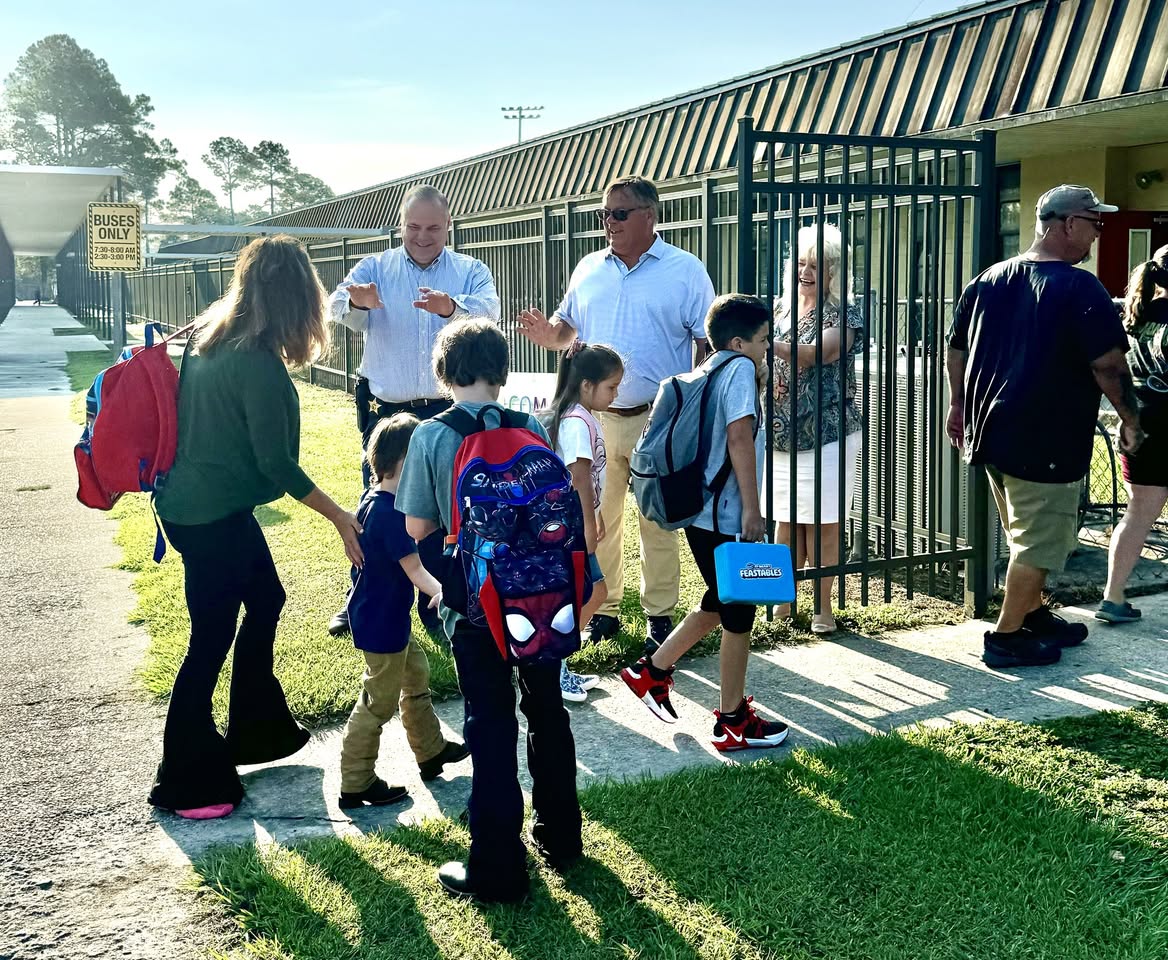

Tampa Bay Lightning fans, rejoice. Your home team will stay in Tampa until at least 2043 under a deal Hillsborough County Commissioners approved to extend by six years the team’s lease to play at Benchmark International Arena.
Under the agreement, the county is committing $250 million to pay for arena renovations, an amount that could increase and that will come from a portion of the county’s tourist development tax. The deal does not require any general fund revenue, Community Investment Tax proceeds or property tax revenue.
In return, the agreement calls for Lightning ownership to spend at least $75 million on renovations.
The agreement protects the county by requiring millions in repayment penalties should the team breach its contract by leaving early.
The deal increases the amount of county funds committed under the original agreement in 2008 for arena renovations from $108.5 million to $358.5 million, and the amount the Lightning spend on such renovations from $38.4 million to $113.4 million, which is where the $250 million and $75 million spend split comes from.
The Lightning, under the agreement, can spend its portion incrementally, but the expenditures must be made before the county’s portion of the split is required.
To date, the county has spent about $91 million under the original agreement.
Prior to this deal, the Lightning had been obligated to play hockey in Tampa at Benchmark International Arena (formerly Amalie Arena) until June 30, 2037. Now, they must remain in the arena until at least June 30, 2043.
The Tampa Sports Authority, which serves as the landlord for the arena, previously approved the deal on a 7-3 vote.
Commissioners made clear Wednesday that the new deal with the Lightning could set a tough precedent as the Tampa Bay Rays seek a new stadium at Hillsborough College’s Dale Mabry campus and the Tampa Bay Buccaneers work toward major upgrades to Raymond James Stadium directly across the street.

One Commissioner, Republican Chris Boles, said that would be “like comparing apples to rocks.”
Despite a failed amendment to the deal from Commissioner Joshua Wostal that would have increased the Lightning’s share of the cost split, which was seconded by Donna Cameron Cepeda, the new agreement cleared with unanimous support.
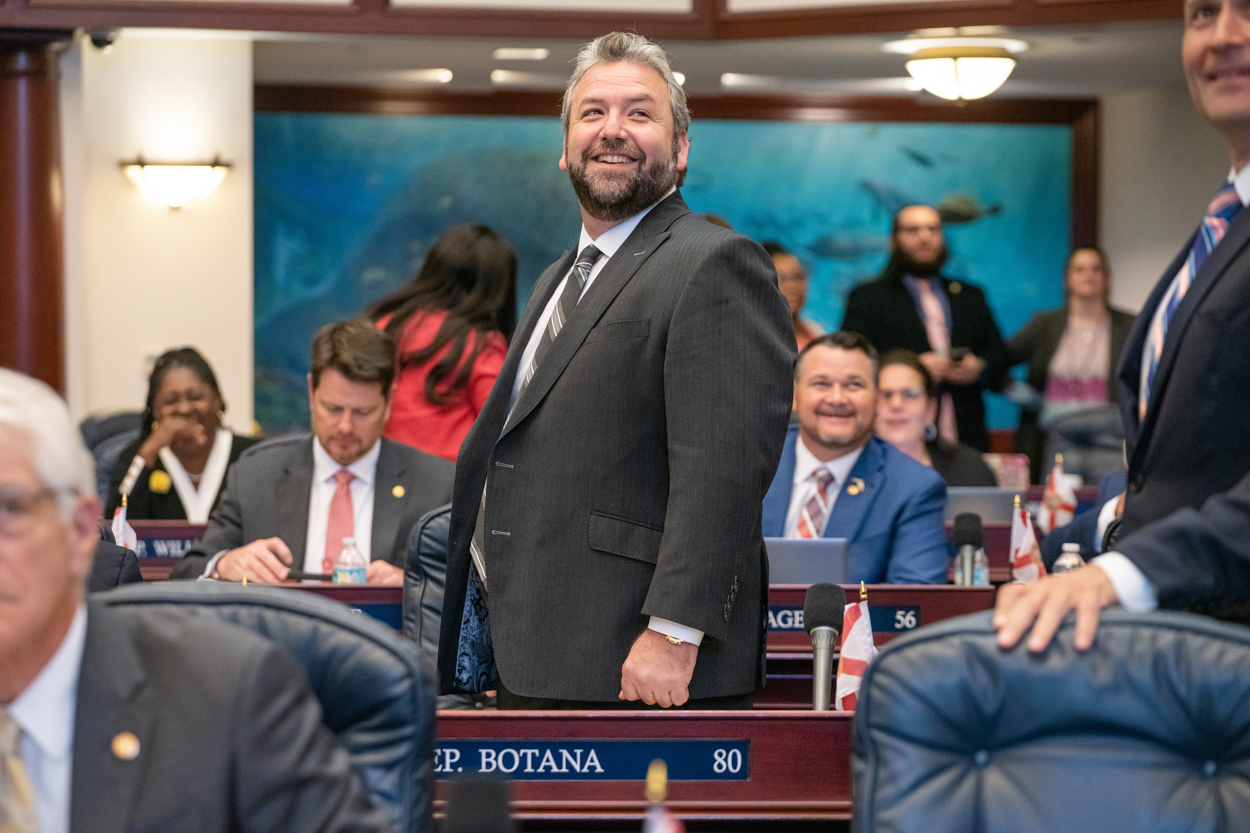
A proposal to turn the Naples Airport Authority into a board elected by voters, rather than appointed by the City Council, has advanced through its second House committee stop.
HB 4005, sponsored by Naples Republican Rep. Adam Botana, would transition the Airport Authority board away from appointments made by the Naples City Council to elections by Collier County voters beginning in the November election. If approved, the bill would cut short the terms of current board members unless they are elected.
The House Government Operations Subcommittee reported HB 4005 favorably after adopting an amendment that broadens eligibility requirements for Airport Authority board candidates.
The bill’s advance comes amid a clash between Naples city officials and members of the Collier County legislative delegation over the Naples Airport. Disagreements over board appointments, oversight authority and the airport’s future have strained relations between City Hall and the delegation — even leading into a heated email exchange between Naples Vice Mayor Terry Hutchison and Rep. Yvette Benarroch.
Botana told committee members Wednesday that the measure shifts decision-making power away from the City Council toward voters countywide, arguing the airport serves a regional function beyond city limits.
“We were having some discomfort with the City Council trying to move the airport,” Botana said. “This has been a fight a long time in the city of Naples. So we’re saying OK, instead of just having it appointed by the City Council we’re going to make these folks elected and give the power back to the people.”
The committee also adopted an amendment that revises candidate qualification requirements. The bill originally required candidates to have at least five years of experience in the aerospace industry, but the amendment expands that standard to allow candidates with backgrounds in financial management or small-business operations to qualify.
Opponents warned the revised bill still raises concerns. Jason Unger, speaking in opposition, said countywide elections could dilute the influence of Naples residents despite the airport being located within city boundaries.
“All of the seats will be controlled by votes coming from outside of the city of Naples,” Unger said.
The measure advanced without debate and cleared the subcommittee on a unanimous vote. HB 4005 now heads to its final of three House committee stops with the State Affairs Committee.



Trump finds a ‘solution’ to Greenland crisis, backs off on 10% tariff threats

Nicki Minaj Admits She Came to U.S. as ‘Illegal Immigrant’ in Facebook Post

Education consortium leaders will bring concerns of Florida’s rural schools to Tallahassee
-

 Politics9 years ago
Congress rolls out ‘Better Deal,’ new economic agenda
-
Entertainment9 years ago
New Season 8 Walking Dead trailer flashes forward in time
-
Politics9 years ago
Poll: Virginia governor’s race in dead heat
-
Politics9 years ago
Illinois’ financial crisis could bring the state to a halt
-
Entertainment9 years ago
The final 6 ‘Game of Thrones’ episodes might feel like a full season
-
Entertainment9 years ago
Meet Superman’s grandfather in new trailer for Krypton
-
Business9 years ago
6 Stunning new co-working spaces around the globe
-
Tech9 years ago
Hulu hires Google marketing veteran Kelly Campbell as CMO