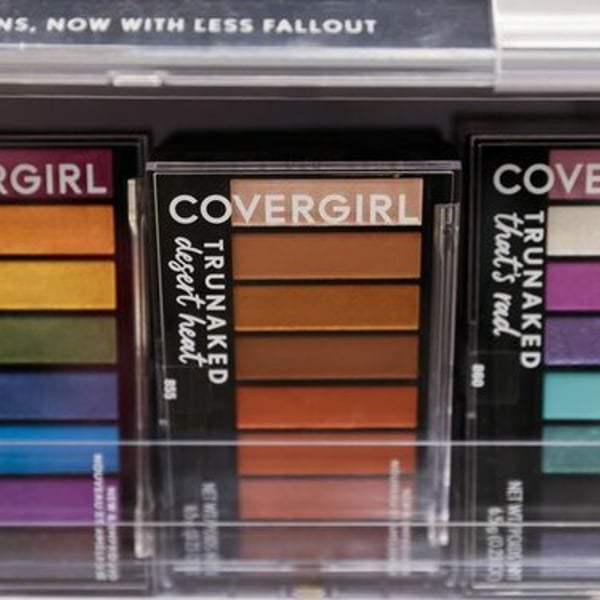
Coty said on Tuesday it had launched a strategic review of its consumer beauty business that could lead to the sale of brands such as CoverGirl and Rimmel, as the cosmetics maker plans to focus on its more profitable fragrances unit.
Reuters
The New York-based company had last month projected a quarterly sales decline as demand for its beauty products softened.
The firm invested heavily into its U.S. mass beauty business at the expense of fragrance, before shifting course as mass beauty struggled with rising competition from lower‑cost online rivals.
The move comes as the U.S. mass-market makeup segment faces pressure, with drugstores destocking products as cost-conscious consumers tighten spending and fierce competition from newer brands building a strong following online.
Anti-theft measures by U.S. retailers and recent changes in immigration policies have also hurt demand in the mass beauty category, company executives have said.
More than a decade ago, Coty paid $12.5 billion for some of these brands in a deal with Procter & Gamble.
“This new structure will… drive renewed momentum and sharper focus for consumer beauty, positioning it to compete more effectively in the evolving beauty landscape,” CEO Sue Nabi said, adding she aims to grow Coty’s prestige portfolio through blockbuster launches and brand elevation.
In 2024, the prestige fragrance market was the fastest growing category, up 12%, according to data firm Circana, while the mass-market makeup category declined 3% compared to 2023.
In the first half of 2025, prestige fragrance sales are up 6% in the U.S., the data showed.
“Coty is signaling it’s done playing drugstore beauty pageant and wants to sit exclusively at the prestige beauty table with LVMH and Estée Lauder as dinner companions, not competitors,” said Michael Ashley Schulman, partner and CIO at Running Point Capital Advisors.
Coty said its review would focus on its $1.2 billion revenue mass color cosmetics segment, which includes brands such as CoverGirl, Rimmel, Sally Hansen and Max Factor, as well as its $400 million standalone Brazil business.
“The review will assess a full range of alternatives including partnerships, divestitures, spin-offs and other potential strategic actions,” Coty said, adding that the aim was to bolster its balance sheet.
Coty’s consumer beauty division, which contributed $2.07 billion to annual sales, saw like-for-like sales drop 5% year-on-year for the 12 months ending June 30, it said last month. In the same period, its ultra-premium, prestige and consumer beauty fragrances grew between 2% and 9%.
Reduced profit has eaten into Coty’s free cash flow, which totaled $277.7 million for the year to June 30, while the company’s total debt was just over $4 billion.
Coty’s previous efforts saw it bring together hair and nail brands into professional beauty business Wella and sell a majority to stake to KKR.
Coty is still working to divest its remaining 26% stake in that business. Coty will bring all fragrance and scent brands under one business unit accounting for 69% of company sales, while aiming to maintain steady growth in cosmetics and skincare.
Shares of the company, which have lost nearly half of their value this year, were up nearly 3% in early trading on Tuesday.
Coty, which licences the fragrance brands of Gucci, Chloe and Burberry, has a market capitalization of about $3 billion, according to LSEG data.
The news was first reported by the Wall Street Journal earlier on Tuesday.
Specialist outdoor clothing producer Dryrobe has won a trademark case against a smaller label. The win for the business, which produces waterproof towel-lined robes used by cold water swimmers, means the offending rival must now stop selling items under the D-Robe brand within a week.
Image: Dryrobe
A judge at the high court in London ruled the company was guilty of passing off its D-Robe changing robes and other goods as Dryrobe products and knew it was infringing its bigger rival’s trademark reports, The Guardian newspaper.
The company said it has rigorously defended its brand against being used generically by publications and makers of similar clothing and is expected to seek compensation from D-Robe’s owners for trademark infringement.
Dryrobe was created by the former financier Gideon Bright as an outdoor changing robe for surfers in 2010 and became the signature brand of the wild swimming craze.
Sales increased from £1.3 million in 2017 to £20.3 million in 2021 and it made profits of £8 million. However, by 2023 sales had fallen back to £18 million as the passion for outdoor sports waned and the brand faced more competition.
Bright told the newspaper the legal win was a “great result” for Dryrobe as there were “quite a lot of copycat products and [the owners] immediately try to refer to them using our brand name”.
He said the company was now expanding overseas and moving into a broader range of products, adding that sales were similar to 2023 as “a lot of competition has come in”.
On Friday, France demanded a series of measures from Shein to demonstrate that the products sold on its website comply with the law, but dropped its initial request for a total three-month suspension of the online platform, which had been based on the sale of child-like sex dolls and prohibited weapons.
Shutterstock
At a hearing before the Paris court, a lawyer representing the state said that Shein must implement controls on its website, including age verification and filtering, to ensure that minors cannot access pornographic content. The state asked the court to impose a suspension of Shein’s marketplace until Shein has provided proof to Arcom, the French communications regulator, that these controls have been implemented.
Shein deactivated its marketplace- where third-party sellers offer their products- in France on November 5, after authorities discovered illegal items for sale, but its site selling Shein-branded clothing remains accessible. The state invoked Article 6.3 of France’s Digital Economy Act, which empowers judges to order measures to prevent or halt harm caused by online content.
“We don’t claim to be here to replace the European Commission,” the state’s lawyer said. “We are not here today to regulate; we are here to prevent harm, in the face of things that are unacceptable.” At the time of writing, the hearing is still ongoing.
In a statement issued last week, the Paris public prosecutor’s office said that a three-month suspension could be deemed “disproportionate” in light of European Court of Human Rights case law if Shein could prove that it had ceased all sales of illegal products. However, the public prosecutor’s office said it “fully supported” the government’s request that Shein provide evidence of the measures taken to stop such sales.
France’s decision comes against a backdrop of heightened scrutiny of Chinese giants such as Shein and Temu under the EU’s Digital Services Act, reflecting concerns about consumer safety, the sale of illegal products, and unfair competition. In the US, Texas Attorney General Ken Paxton said on Monday that he was investigating Shein to determine whether the fast-fashion retailer had violated state law relating to unethical labour practices and the sale of dangerous consumer products.
This article is an automatic translation. Click here to read the original article.
BasicNet’s Kappa turns back the sporting clock for its new AW25 collection, which celebrates “local heroes in football” with a community-focused campaign “honouring the places and people that inspire a lifelong love of the game”.
Image: Kappa
The campaign shines a light on local talent Tyrone Marsh in his hometown of Bedford, revisiting the streets, pitches and community spots “that shaped his football journey”.
Local photographer Simon Gill, who had pictured Marsh during many home and away games, not only “captures the Bedford Town player in the spaces that helped define his skill”, but also highlights the brand’s “rich football heritage with contemporary streetwear energy, creating visuals that pay tribute to community, culture and grassroots football”.
The journey includes Hartwell Drive, the early days of his after-school kickabouts, Hillgrounds Road, synonymous with Bedford football culture, and then onto Faraday Square, locally identified by the concrete pitches and community spirit.
To reflect that journey, the AW25 collection “offers a sense of nostalgia” with Kappa’s long-standing history in fashion and sports “seen through the Omini logo placements and 222 Banda strip”.
The campaign sees Marsh wearing Kappa styles including the Lyman and Uriah Track Tops paired with the Ulrich Track Pants in classic colourways including navy and light blue.
The wider collection includes track tops, track pants, shorts, polos, sweatshirts and T-shirts, available at select retailers across the UK including 80s Casual Classics, Terraces Menswear and RD1 Clothing.