Connect with us

Business

Companies pour millions into security as threats against executives surge

Published

on


Three back-to-back violent incidents in the space of 10 months have awakened a new reckoning in corporate security that is fundamentally altering the way companies protect their executives, data from a new Goldman Sachs Ayco report found. 

The shocking New York City murder of UnitedHealthcare CEO Brian Thompson in December 2024 was followed by a July Midtown Manhattan shooting that claimed the lives of two security guards and two executives at Blackstone and Rudin Management. Last month, a lone gunman allegedly shot and killed right-wing speaker Charlie Kirk at an event at a Utah college. The cascade effect of those events has led to a palpable shift in corporate security postures, with a flood of new independent threat assessments and protective measures. 

Companies are layering in additional home security, personal security, and cybersecurity protections for CEOs and high-profile executives and board members. Goldman Sachs Ayco, the financial planning and wealth management affiliate of the bank, found the most common personal security measures are at least one bodyguard when an executive travels for business or is at a public engagement with a controversial figure in attendance or other unusual risks, and an armed chauffeur for commuting and travel. Mandatory private jet travel has long been common among high-profile CEOs, and companies are also leaning in on first-class air travel for executive teams, the survey of compensation professionals from 291 public and private companies found.

“Companies want to make sure executives are safe,” Jonathan Barber, head of comp and benefits at Goldman Sachs Ayco, told Fortune. “We’re seeing this inching back in some cases this year to some of these benefits exceeding early 2000s levels.”

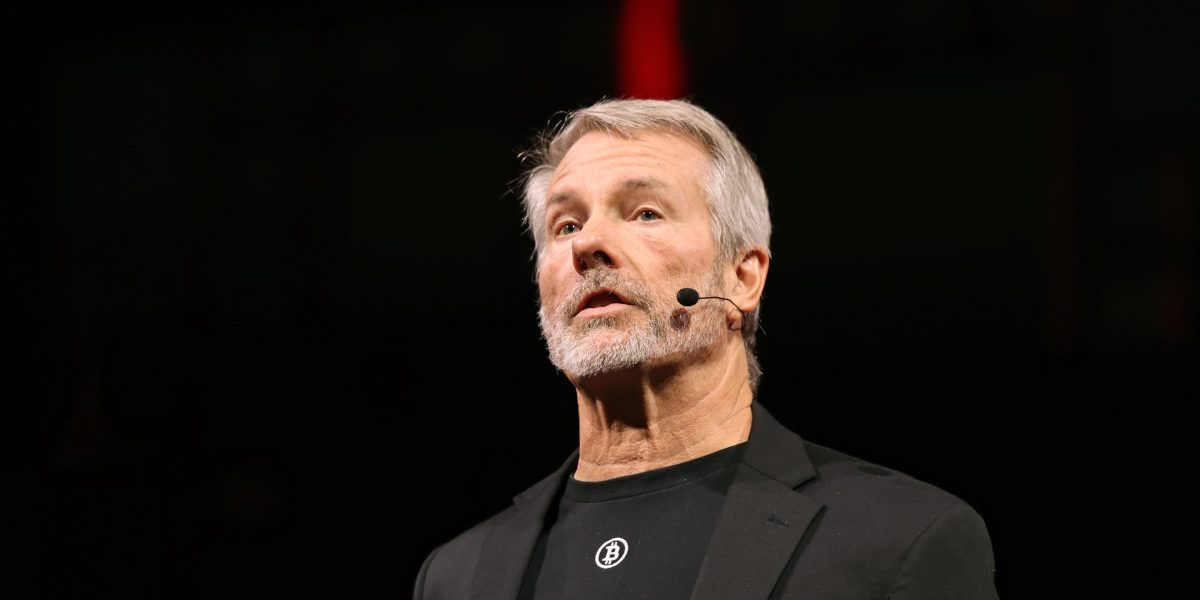
Strategy, formerly known as MicroStrategy, this month raised the annual cap on executive chairman Michael Saylor’s security program to $2 million from $1.4 million, the company told investors. Chipotle told investors this year that it provided personal security to CEO Scott Boatwright at the end of 2024 and early in 2025 “as a precautionary measure, in response to the highly publicized murder of a public company executive and generalized threatening public discourse,” the Chipotle board wrote in its most recent shareholder proxy report. Salesforce maintained a cap on CEO Marc Benioff’s security and aircraft perk amounts of $4.6 million for fiscal 2025 and 2026 to keep expenses level. Benioff covers costs above that amount, the company said. 

The 2025 Goldman survey, which polled 291 companies and is conducted every two years, found 27% of respondents now provide personal security for their CEOs, which represents a 59% increase in the share providing the benefit from two years ago. Cybersecurity protection more than tripled across all executive tiers since 2021, from 10% to more than 30% for CEOs. The survey marked an acceleration of these protective measures—technically considered perks—noting that 24% of the respondents added the new benefits in the past 24 months, which is triple the 20-year average of 8%. 

Personal security, added by 10% of respondents, was the second-most cited consideration for future additions. More than half of the companies surveyed cited security as the primary underlying reason for providing personal use of corporate jet and chauffeur services. Barber characterized the shift as a significant reversal from the cost-cutting approach that has dominated executive benefits and perquisites since the early 2000s and the 2008 financial crisis. Those periods were followed by regulatory changes that fueled more specific perquisite and pay disclosures by companies, and the advent of shareholder say-on-pay votes on executive comp programs. The combination led to what Barber said was the highest percentage of eliminations of security perks, but 2025 levels are clocking the early aughts, he said. Security is also a perquisite that is palatable to shareholders, he added.

“Security is an easy one—it’s an obvious safety issue,” said Barber.

In the two months after Thompson’s death, allegedly at the hands of accused shooter Luigi Mangione, protection company Allied Universal’s embedded security business—round-the-clock protection for execs by armed guards—grew 30%, said Glen Kucera, president of enhanced protection services. Meanwhile, ad hoc security when an executive travels skyrocketed 300%, Kucera told Fortune.

“The world for executive protection changed on December 4,” Kucera said, citing the date of Thompson’s assassination, allegedly at the hands of Mangione. In the weeks after, decks of cards spotlighting other CEOs and executives circulated on social media, which heightened the threat climate as did Mangione’s public reception as quasi vigilante, Kucera said.

Tech companies reported the highest threat levels in 2025, according to a September World Security Report from Allied Universal, based on a survey of 620 chief security officers. Some 66% of tech firms reported increased threats of violence toward executives compared with a 46% average in the U.S. among all firms. Kucera said these firms are facing a more acute threat landscape given the high-profile nature of the firms, and because they’re known to be significantly profitable. Plus, social media platforms are a “lifeline for a lot of people,” and removal from platforms or other actions creates strong animosity that can lead to greater agitation, he said. 

According to Allied’s findings, tech companies are tied with pharmaceutical firms in providing executive protection at 40%, while 31% also provide protection for executives’ families. Roughly 90% of chief security officers at tech firms say their companies were targeted by misinformation or disinformation campaigns, and 63% said misinformation influenced more than half of the threats lobbed at the companies. 

The difference now versus in past years isn’t just in the scale but the sophistication of threats pelted at companies and executives, said Matt Dumpert, a managing director who leads Kroll’s enterprise security risk practice. Artificial intelligence has made it easier for disgruntled customers, employees, and those wanting to do harm to target companies and spread potentially dangerous information about their location and activities and the personal lives of executives. 

“The tools to collect background information, to create targeting dossiers against executives, to learn about their habits, where their families vacation—all of these things are readily accessible to adversaries,” said Dumpert. “What used to require sophistication can now happen very quickly in a highly automated way.”

According to Kucera, the new playbook includes home security assessments, armored drivers and vehicles, trained dogs for explosives detection, and advanced cyber protective measures. 

“Each one of these events feeds the awareness that this could happen anywhere,” said Kucera.


Source link

Continue Reading

Business

Amazon’s new Alexa aims to detangle chaos in the household, like whether someone fed the dog

Published

on


It’s 10 p.m. after a long day when you walk in the door and wonder aloud: “Did anyone feed the dog? Who fed the dog,” Panos Panay says he calls out to his family of six.

Turns out, nobody fed the dog and so all the kids “scatter to their corners,” he told Fortune’s Brainstorm AI audience in San Francisco on Monday. 

The senior vice president of devices and services at Amazon says the new generative AI-powered Alexa+, which runs on Echo hardware and can integrate with other devices like Amazon’s Ring security cameras, aims to ease the constant mental load in a household: remembering whether the pets ate, restaurants each family member pitched and saw vetoed, and regular grocery orders. The idea is to have “ambient” artificial intelligence around your house so that devices can assist in tasks, chores, and other household command center issues, said Panay.

The new Alexa+ is much more conversational, Panay said, and you no longer have to pronounce everything perfectly and discretely in order for it (or her, as Panay refers to the virtual assistant) to understand you.

“She’s the best DJ on the planet, in my opinion,” said Panay. “You have a personal shopper, you have a butler, you have a personal assistant, you have your home manager. Different people use Alexa for different things, and now she’s pretty much supercharged,” Panay said.

In addition to confirming that the dogs have not been fed, Panay said he used Alexa+ on Sunday night to head off another age-old debate: where the family should go for dinner. Both dinner decisions and pet chores are “classic fight[s] in my house,” Panay told the Brainstorm AI audience.

His youngest had previously suggested a few restaurants she wanted to visit for a quick bite and hadn’t yet been to, and Panay asked Alexa to remind them which ones his daughter suggested specifically. It was a sushi joint and she enjoyed it, Panay said. That type of ambient listening and assistance with debate is the point, he said, and stops people needing to pull out their phones and start typing and scrolling for information.   

From there, Panay said Alexa can also take more concrete actions like making a reservation on dining platform OpenTable, ordering delivery on nights in, getting an Uber, and handling home issues such as telling you how many packages were delivered or the number of guests who stopped by. Panay said Amazon has more than 150 partners to aid in these integrations, although there is work ahead to get more partners on board, he added.  

Thus far, Alexa+ has been rolled out to early-access users and this week the product is available to those on a lengthy waitlist, said Panay, and it’s been boosted by Amazon’s advertising. This week, the product is being released to anyone with an Echo device. The business monetization model involves “flywheels” from Amazon’s $2.4 trillion retail ecosystem, particularly around shopping for clothes, groceries, and other consumer items. “If you’re shopping on the grocery list and order groceries often enough, Alexa knows what you’re doing, and ultimately, can just order ahead of time for you moving forward,” he said.

Ultimately, Panay envisions users wanting “your assistant everywhere you go” because “the more it understands about you, the more informed it is, the better it can serve your needs.” And while Panay said there will be continued innovation from Amazon in this space, he refused to reveal any specific products. He said Amazon has a “lab full of ideas,” but most won’t make it out of that lab. 


Source link

Continue Reading

Business

Australia will start banning kids from social media this week

Published

on


Starting this Wednesday, many Australian teens will find it near impossible to access social media. That’s because, as of Dec. 10, social media platforms like TikTok and Instagram must bar those under the age of 16, or face significant fines. Australian Prime Minister Anthony Albanese called the pending ban “one of the biggest social and cultural changes our nation has faced” in a statement.

Much is riding on this ban—and not just in Australia. Other countries in the region are watching Canberra’s ban closely. Malaysia, for example, said that it also plans to bar under-16s from accessing social media platforms starting next year. 

Other countries are considering less drastic ways to control teenagers’ social media use. On Nov. 30, Singapore said it would ban the use of smartphones on secondary school campuses. 

Yet, governments in Australia and Malaysia argue a full social media ban is necessary to protect youth from online harms such as cyberbullying, sexual exploitation and financial scams.

Tech companies have had varied responses to the social media ban. 

Some, like Meta, have been compliant, starting to remove Australian under-16s from Instagram, Threads and Facebook from Dec. 4, a week before the national ban kicks in. The social media giant reaffirmed their commitment to adhere to Australian law, but called for app stores to instead be held accountable for age verification.

“The government should require app stores to verify age and obtain parental approval whenever teens under 16 download apps, eliminating the need for teens to verify their age multiple times across different apps,” a Meta spokesperson said.

Others, like YouTube, sought to be excluded from the ban, with parent company Google even threatening to sue the Australian federal government in July 2025—to no avail.

However, experts told Fortune that these bans may, in fact, be harmful, denying young people the place to develop their own identities and the space to learn healthy digital habits.

“A healthy part of the development process and grappling with the human condition is the process of finding oneself. Consuming cultural material, connecting with others, and finding your community and identity is part of that human experience,” says Andrew Yee, an assistant professor at the Nanyang Technological University (NTU)’s Wee Kim Wee School of Communication and Information.

Social media “allows young people to derive information, gain affirmation and build community,” says Sun Sun Lim, a professor in communications and technology at the Singapore Management University (SMU), who also calls bans “a very rough tool.”

Yee, from NTU, also points out that young people can turn to platforms like YouTube to learn about hobbies that may not be available in their local communities. 

Forcing kids to go “cold turkey” off social media could also make for a difficult transition to the digital world once they are of age, argues Chew Han Ei, a senior research fellow at the Lee Kuan Yew School of Public Policy in the National University of Singapore (NUS).

“The sensible way is to slowly scaffold [social media use], since it’s not that healthy social media usage can be cultivated immediately,” Chew says.

Enforcement

Australia plans to enforce its social media ban by imposing a fine of 49.5 million Australian dollars (US$32.9 million) on social media companies which fail to take steps to ban those under 16 from having accounts on their platforms.

Malaysia has yet to explain how it might enforce its own social media ban, but communications minister Fahmi Fadzil suggested that social media platforms could verify users through government-issued documents like passports. 

Though young people may soon figure out how to maintain their access to social media. “Youths are savvy, and I am sure they will find ways to circumvent these,” says Yee of NTU. He also adds that young may migrate to platforms that aren’t traditionally defined as social media, such as gaming sites like Roblox. Other social media platforms, like YouTube, also don’t require accounts, thus limiting the efficacy of these bans, he adds.

Forcing social media platforms to collect huge amounts of personal data and government-issued identity documents could also lead to data privacy issues. “It’s very intimate personally identifiable information that’s being collected to verify age—from passports to digital IDs,” Chew, from NUS, says. “Somewhere along the line, a breach will happen.”

Moving towards healthy social media use

Ironically, some experts argue that a ban may absolve social media platforms of responsibility towards their younger users. 

“Social media bans impose an unfair burden on parents to closely supervise their children’s media use,” says Lim of SMU. “As for the tech platform, they can reduce child safety safeguards that make their platforms safer, since now the assumption is that young people are banned from them, and should not have been venturing [onto them] and opening themselves up to risks.”

And rather than allow digital harms to proliferate, social media platforms should be held responsible for ensuring they “contribute to intentional and purposeful use”, argues Yee.

This could mean regulating companies’ use of user interface features like auto-play and infinite scroll, or ensuring algorithmic recommendations are not pushing harmful content to users.

“Platforms profit—lucratively, if I may add—from people’s use, so they have a responsibility to ensure that the product is safe and beneficial for its users,” Yee explains. 

Finally, conversations on safe social media use should center the voices of young people, Yee adds.

“I think we need to come to a consensus as to what a safe and rights-respecting online space is,” he says. “This must include young people’s voices, as policy design should be done in consultation with the people the policy is affecting.”


Source link

Continue Reading

Business

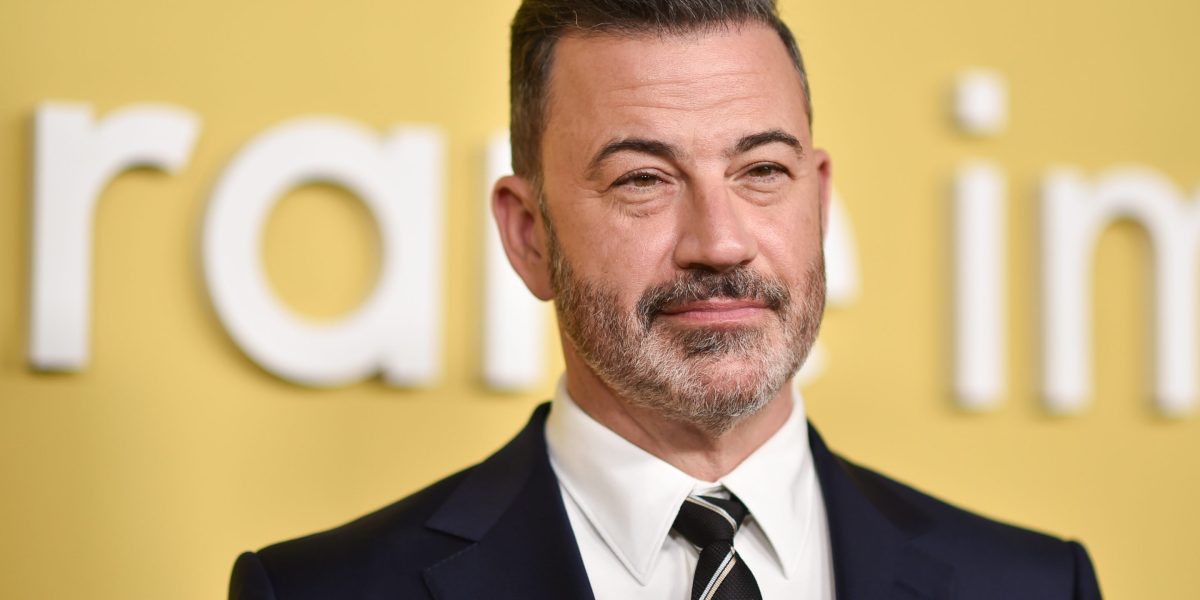
Jimmy Kimmel signs ABC extension through 2027

Published

on


Kimmel’s previous, multiyear contract had been set to expire next May, so the extension will keep him on the air until at least May 2027.

Kimmel’s future looked questionable in September, when ABC suspended “Jimmy Kimmel Live!” for remarks made following the assassination of conservative activist Charlie Kirk. Following a public outcry, ABC lifted the suspension, and Kimmel returned to the air with much stronger ratings than he had before.

He continued his relentless joking at the president’s expense, leading Trump to urge the network to “get the bum off the air” in a social media post last month. The post followed Kimmel’s nearly 10-minute monologue on Trump and the Jeffrey Epstein files.

Kimmel was even on Trump’s mind Sunday as the president hosted the Kennedy Center Honors in Washington.

“I’ve watched some of the people that host,” Trump said. “I’ve watched some of the people that host. Jimmy Kimmel was horrible, and some of these people, if I can’t beat out Jimmy Kimmel in terms of talent, then I don’t think I should be president.”

Kimmel has hosted the Oscars four times, but he’s never hosted the Kennedy Center show.

Just last week, Kimmel was needling Trump on the president’s approval ratings. “There are gas stations on Yelp with higher approval ratings than Trump right now,” he said.

Kimmel will be staying longer than late-night colleague Stephen Colbert at CBS. The network announced this summer it was ending Colbert’s show next May for economic reasons, even though it is the top-rated network show in late-night television.

ABC has aired Kimmel’s late-night show since 2003, during a time of upheaval in the industry. Like much of broadcast television, late-night ratings are down. Viewers increasingly turn to watching monologues online the day after they appear.

Most of Kimmel’s recent renewals have been multiyear extensions. There was no immediate word on whose choice it was to extend his current contract by one year.

Bill Carter, author of “The Late Shift” and veteran chronicler of late-night TV, cautioned against reading too much into the length of the extension. Kimmel, at age 58, knows he’s getting close to the end of the line, Carter said, but when he leaves, he doesn’t want it to appear under pressure from Trump or anyone.

“He wants to make sure that it’s on his terms,” Carter said.

Kimmel has become one of the leading voices resisting Trump. “I think it’s important for him and for ABC that they are standing up for him,” Carter said.

Following Kirk’s killing, Kimmel was criticized for saying that “the MAGA gang” was “desperately trying to characterize this kid who murdered Charlie Kirk as anything other than one of them and doing everything they can to score political points from it.” The Nexstar and Sinclair television ownership groups said it would take Kimmel off the air, leading to ABC’s suspension.

When he returned to the air, Kimmel did not apologize for his remarks, but he said he did not intend to blame any specific group for Kirk’s assassination. He said “it was never my intention to make the light of the murder of a young man.”


Source link

Continue Reading

Trending

Copyright © Miami Select.