Miami-Dade’s long-delayed plan to build a replacement waste-to-energy facility hit another obstacle this week, as County Commissioners balked at land costs tied to private development proposals and floated restarting the site search entirely.
Two companies competing for the project, Florida Power & Light (FPL) and Spain-headquartered FCC Environmental Services, recently agreed to submit a joint proposal for the incinerator, which would replace the one permanently shut down after a catastrophic fire in 2023.
They also narrowed their site recommendations to two locations near limestone rock quarries — one spanning 65 acres near the Broward County line, the other a 78-acre parcel a mile or so from Hialeah — that FPL or FCC, respectively, would buy.
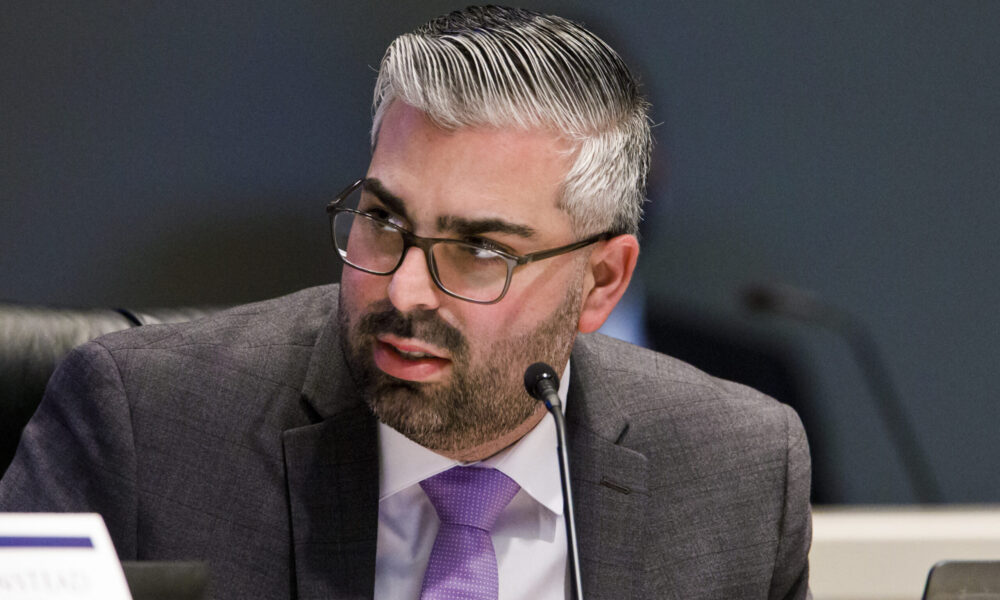
Both locales would avoid the residential proximity concerns that made previous options unappealing. But the costs associated with the two proposals drew rebukes from the dais, with Chair Anthony Rodriguez calling them “disrespectful” to Miami-Dade taxpayers.
FPL and FCC representatives told Commissioners that the land would cost the county about $1 million per acre, plus an annual royalty payment of roughly $3 million that would continue in perpetuity.
Several Commissioners slammed the proposed royalty structure Thursday. Danielle Cohen Higgins questioned the logic of purchasing private land when the county already owns potential sites, while Roberto Gonzalez called the request “completely unacceptable.”
Rodriguez, distilling widespread frustration with a protracted process now at an undesirable crossroads, recommended “going back to the drawing board” and reconsidering county-owned land for the facility.
Doing so could revive controversial debates over earlier locations, including the original Doral property, Medley, Sweetwater or the former Opa-locka West Airport site, which Commissioners abandoned last July amid fierce opposition from neighboring communities over concerns about pollution near residential areas.
Commissioners are expected to consider an item authorizing Miami-Dade Mayor Daniella Levine Cava to negotiate a preliminary agreement with FPL and FCC next week. If approved, developers would finalize a site selection and detailed proposal before a final Commission vote later this year.
Construction would tentatively begin in 2029, with the facility expected to become operational within five years.
State lawmakers may also influence the outcome. Twin bills (SB 1196, HB 1089) by Broward Democratic Sen. Barbara Sharief and Weston Democratic Rep. Robin Bartleman now advancing in Tallahassee would restrict construction of new incinerators within 2 miles of certain large water storage and conservation areas, limiting where such facilities can be built in populous counties like Miami-Dade.
The legislation would prohibit both local governments and the Florida Department of Environmental Protection from issuing permits for facilities located within those restricted zones, while exempting existing operations and smaller counties.
Miami-Dade is also exploring ways to offset costs and environmental impacts on residents once a facility is built.
In November, Commissioners unanimously approved a resolution by Juan-Carlos “J.C.” Bermudez — Doral’s founding Mayor — urging state regulators to expand permissible uses of incinerator ash, including incorporating it into road construction materials, an approach used in parts of Europe and supported by some engineering research under controlled conditions.