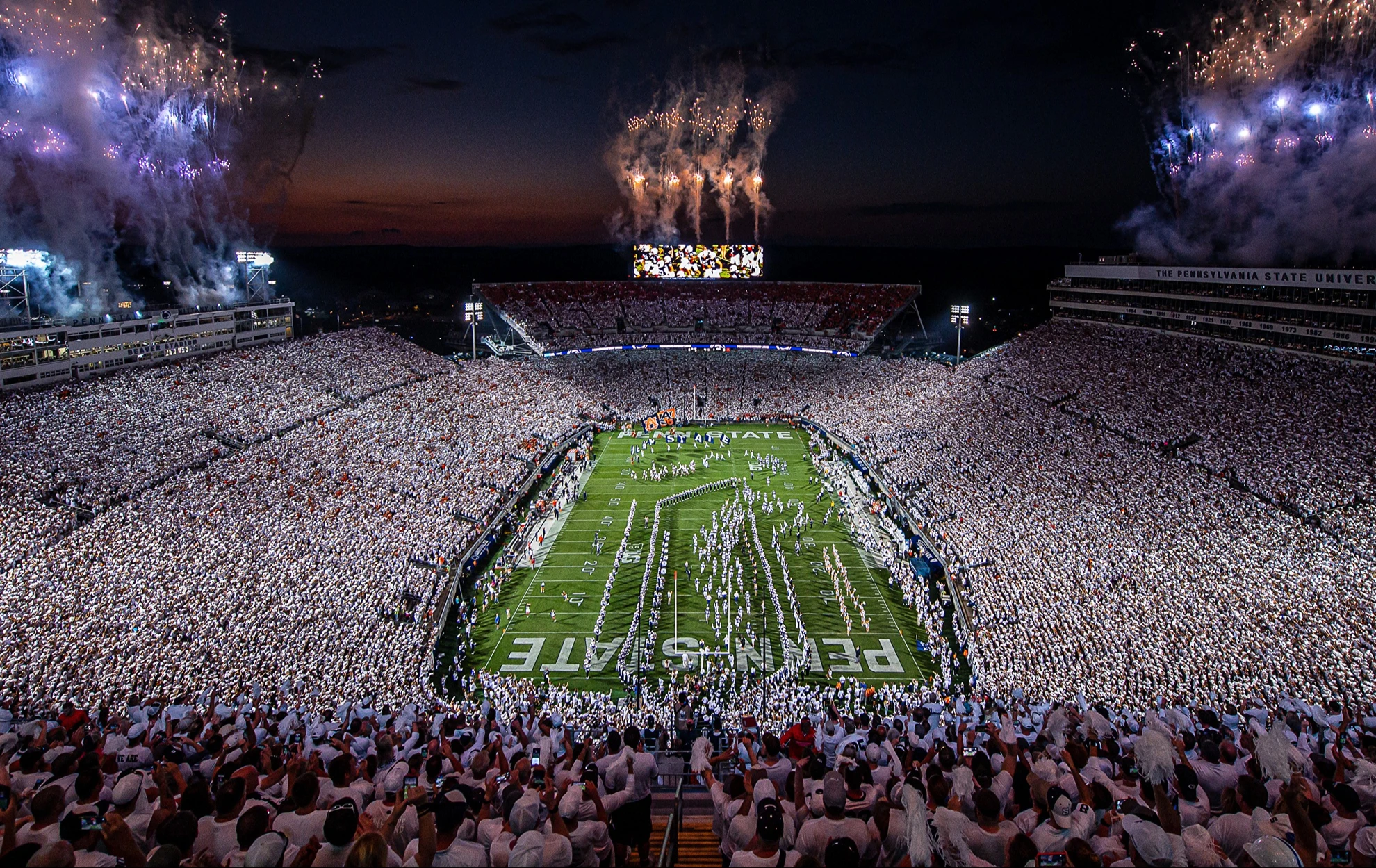
college football championship weekend The 2025 college football season kicks off with one of the most electrifying Week 1 slates in recent memory. With playoff contenders
I’ve been a college sports fan for more than sixty years, and I’ve spent a large part of my professional career covering football, basketball, and Olympic sports. But one myth that athletic departments from coast to coast have pushed for decades is the idea that athletics are what attract students to a university. And now, with TV deals bigger than ever, that myth has only grown louder — as if academics somehow take a back seat to king football.
Despite raking in tens of millions from TV contracts, ticket sales, sponsorships, and donations, the uncomfortable truth is that roughly 75–80% of Power Four athletic departments still operate in the red. The money may look enormous on paper, but expenses outpace revenues at most ACC and Big 12 institutions, and even several SEC and Big Ten schools outside the elite tier. Private schools don’t release full numbers, but the trend lines point the same way. The NCAA’s 2023–24 financial summary confirms it: median expenses exceed median revenues across the subdivision.
And when these deficits hit, they’re covered not by student fees or institutional subsidies — which remain minimal at the Power Four level — but by athletic department reserves, donor infusions, and internal budget maneuvers. In other words, even in the era of billion‑dollar media deals, most big‑conference athletic departments are still losing money. The NCAA’s own financial reporting backs this up, showing that a significant share of its member schools continues to operate in the red despite unprecedented revenue growth.
The Unsustainable Arms Race
The bigger issue is whether this model is even sustainable. The Power Four have spent a decade locked in an arms race of coaching salaries, facilities, support staffs, and now NIL infrastructure — all escalating faster than revenues can keep up. Media deals may be massive, but they’re already spoken for the moment they arrive, swallowed by guaranteed contracts and ever‑rising travel and operating costs.
Athletic departments can paper over the gaps with reserves and donor money for a while, but those are finite cushions, not long‑term solutions. At some point, the math stops bending. The system depends on perpetual growth, yet the expenses are growing faster than the revenue streams that supposedly justify them. That’s the real warning sign: even the richest leagues in college sports are burning cash to stay competitive.
What Happens When the Arms Race Breaks the System
The real question is what happens if the arms race keeps accelerating — and the early signs aren’t subtle. As coaching salaries climb past NFL levels, NIL collectives balloon, and facilities projects push into nine‑figure territory, even the wealthiest programs are approaching a breaking point.
At some stage, conferences will either need new revenue streams or they’ll be forced into hard choices: cutting sports, restructuring budgets, or finally confronting whether the current model is built to survive. The next wave of realignment, private‑equity flirtations, and athlete‑employment lawsuits will only intensify the pressure. If expenses keep outpacing revenues, the system won’t collapse overnight — but it will bend, and eventually something gives. The question isn’t if the model changes, but who gets reshaped by it first.
The Myth of the Front Porch: Why Academics, Not Athletics, Attract Students
For decades, athletic departments have sold the idea that football is the “front porch” of the university — the shiny entryway that draws students in. But the data tells a very different story.
Students don’t choose universities because the football team wins on Saturday. They choose them because of:
Academic reputation
Research strength
Professional programs
Career placement
Faculty excellence
Campus resources and student life
These are the engines that drive enrollment, tuition revenue, and long‑term institutional stability.
Meanwhile, the academic side of the university generates billions through:
Tuition and fees
Federal and state research grants
Philanthropy tied to academic success
Medical centers and research hospitals
Graduate and professional programs
Corporate partnerships and innovation labs
These revenue streams dwarf anything athletics can produce — even in the Big Ten and SEC.
Why Academics Outperform Athletics Every Time
Look at the numbers:
A major research university can generate hundreds of millions to billions annually in research funding alone.
Enrollment revenue — tuition, housing, fees — is the single largest financial engine of every Power Four institution.
Academic reputation drives applications, not football rankings.
Donors who give to athletics often made their wealth through the education the university provided — not through sports.
Football may be the front porch, but the porch doesn’t hold up the house. The classrooms, labs, libraries, and degree programs do.
The Real Story Universities Don’t Want to Tell
The myth that athletics “pay for themselves” or “fund the university” has always been convenient — and always false. The truth is simpler and more powerful:
Athletics provide entertainment, community, and tradition — all valuable. But they are not the financial foundation of modern higher education.
The sooner universities acknowledge that reality, the sooner they can build a model that is financially sustainable, academically focused, and honest about what truly drives their success.
SUPER BOWL SUNDAY: Where to watch and who to watch ON FOX stream free on the FOX app
The year 2026 is shaping up to be one of the most action‑packed sports years in recent memory starting with the Super Bowl. According to global sports‑calendar releases from This Sport Life, ENETPulse, Firstpost, and TopEndSports, fans will be treated to a nonstop lineup of world championships, iconic annual events, and the biggest international tournaments across football, tennis, cricket, motorsport, and multi‑sport competitions.
Below is a clean, month‑by‑month preview of the key dates every sports fan should circle now.
January 2026
Australian Open (Jan 12 – Feb 1) — Tennis’ first Grand Slam of the year in Melbourne.
United Cup (Jan 2–11) — Mixed‑team tennis event in Australia.
NHL Winter Classic (Jan 2) — Panthers vs. Rangers in Miami.
Winter X Games (Jan 23–25) — Aspen hosts the world’s top extreme athletes.
The year 2025 delivered one of the most dramatic, unpredictable, and star‑driven sports calendars in recent memory. According to CBS Sports’ annual ranking of the top 25 stories and year‑end rundowns from The Big Lead, NY Mag New York Magazine, and MSN, fans witnessed record audiences, breakthrough championships, seismic coaching changes, and the rise of new superstars across every major league.
Below is a comprehensive look at the top sports stories that defined 2025.
Super Bowl LIX Becomes the Most‑Watched Broadcast in U.S. History
The Philadelphia Eagles’ 40–22 win over the Kansas City Chiefs wasn’t just a championship — it became the most‑watched event in American television history, per NewsBreak and The Big Lead. Jalen Hurts and Nick Sirianni delivered a dominant performance that reshaped the NFL hierarchy and ended the Chiefs’ multi‑year dynasty run.
Shohei Ohtani and the Dodgers Deliver a Hollywood Ending
The Los Angeles Dodgers’ star‑studded roster — Ohtani, Yamamoto, Betts, Sasaki — delivered a World Series title that captivated the baseball world. The Big Lead and MSN highlighted the Dodgers’ championship as one of the defining sports moments of the year.
Rory McIlroy Finally Wins the Masters
CBS Sports ranked Rory McIlroy’s long‑awaited Masters victory among the year’s top stories. After years of heartbreak at Augusta, McIlroy completed one of the most emotional major wins in golf history.
Alex Ovechkin Makes NHL History
Ovechkin’s pursuit of Wayne Gretzky’s all‑time goals record remained a headline all year, with CBS Sports placing his historic milestones among 2025’s biggest stories.
College Football’s Coaching Carousel Turns Seismic
CBS Sports reported that 2025 delivered one of the wildest coaching cycles ever, with major programs flipping coaches, conferences shifting power, and playoff expansion reshaping the sport.
Oklahoma City Launches the NBA’s Next Dynasty
NY Mag identified the Thunder’s rise — powered by Shai Gilgeous‑Alexander and a deep young core — as one of the 10 most compelling stories of the year.
A Year Fans Will Never Forget
From record audiences to breakthrough champions, 2025 delivered a sports year packed with drama, emotion, and history. And with 2026 bringing the World Cup, Winter Olympics, and new media‑rights eras, the momentum isn’t slowing down.
The Tampa Bay Buccaneers enter Saturday’s Week 18 finale with a season defined by extremes. What began as a promising campaign — a fast start, a confident offense, and a defense that looked playoff‑ready — has unraveled into a stunning collapse. Tampa Bay has dropped four straight games, falling to 7–9, and missing multiple chances to wrap up what would have been their fifth straight NFC South title and a sixth consecutive postseason berth. As CBS Sports notes, the Bucs have repeatedly outgained opponents during this skid but have been undone by turnovers and late‑game breakdowns. Now, instead of coasting into January, Tampa Bay faces a must‑win scenario with everything on the line.
How Both Teams Reached This Winner‑Take‑All Finale
The Carolina Panthers arrive at 8–8, a team that has lived on the edge all season. Every one of their eight wins has come as an underdog, as USA Today highlighted, and their Week 17 loss to Seattle prevented them from clinching early. Tampa Bay, meanwhile, squandered its own opportunities, including a Week 17 defeat in Miami and a narrow loss to Carolina two weeks agoCBS Sports. NFL.com emphasizes that both teams limp into this matchup, but the stakes erase all previous struggles. The math is simple: Carolina wins the division with a victory; Tampa Bay must win and get help.
The Falcons Factor: Why Sunday Still Matters
Even if Tampa Bay wins on Saturday, the NFC South race isn’t over. As Panthers Wire reported, an Atlanta Falcons win on Sunday would create a three‑way tie at 8–9 — and in that scenario, Carolina wins the division thanks to head‑to‑head tiebreakers. That means the Buccaneers not only need to beat the Panthers, they must also scoreboard‑watch as the Falcons host the Saints. It’s a rare Week 18 twist: Tampa Bay could win and still go home.
Todd Bowles’ Future Hangs in the Balance
The stakes extend far beyond playoff positioning. Todd Bowles enters this game with his job very much in jeopardy. After a 1–7 stretch over the last eight weeks, pressure has mounted from fans and analysts across ESPN, Yahoo Sports, and local outlets. A loss — especially one that ends the season — could push Tampa Bay toward a coaching change. For Bowles, for Baker Mayfield, for the entire franchise, everything rides on Saturday.
Broadcast Information
Network: ESPN / ABC
Kickoff: Saturday, Jan. 3, 2026 — 4:30 p.m. ET
Location: Raymond James Stadium, Tampa, Florida
Radio Nationally: Westwood One
Much To BeDecided For Both Teams
In the end, everything about Saturday feels bigger than a single game. It’s a franchise at a crossroads, a coach fighting to keep his future, and a roster desperate to prove its early‑season promise wasn’t a mirage. Carolina has already shown it can punch above its weight, and Tampa Bay has shown it can collapse under pressure — which makes this winner‑take‑all showdown the purest form of NFL theater.
For the Buccaneers, a victory means survival, redemption, and one more week to chase the standard they’ve built over half a decade. A loss, though, could trigger sweeping change, starting with Todd Bowles. The stakes could not be higher, and when the final whistle blows at Raymond James Stadium, the 2025 Buccaneers will either extend their dynasty or watch it crumble in real time.