Connect with us

Business

Coinbase and Cruise alums raise $15 million for crypto compliance startup CipherOwl

Published

on


Banks and fintechs have long deployed a suite of tech to flag suspicious transactions and ensure they’re not catering to bad actors. Now, as crypto seeps into mainstream finance, these same institutions need software to monitor crypto transactions. A new startup called CipherOwl is helping to do just that, and, on Thursday, announced that it had raised $15 million to help businesses with crypto compliance.

The venture firms General Catalyst and Flourish Ventures led the seed round, with participation from investors like Coinbase Ventures and Enlight Capital, among others. Leo Liang, cofounder and CEO of CipherOwl, declined to disclose at what valuation his company raised its round.

“As we see a shift from a fiat ecosystem to a more on-chain payment infrastructure, there’s going to need to be the same—or if not even more sophisticated—compliance and fraud systems,” John Onwualu, principal at Flourish Ventures, told Fortune.

Crypto compliance—with AI

There is already a crowded field of firms that monitor transactions involving cryptocurrencies like Bitcoin and Solana, including long-established brands like Chainalysis, Elliptic, and TRM Labs. These companies have become even more in demand as big banks like JPMorgan Chase and Morgan Stanley, which are historically some of the most conservative financial institutions, dive even deeper into crypto.

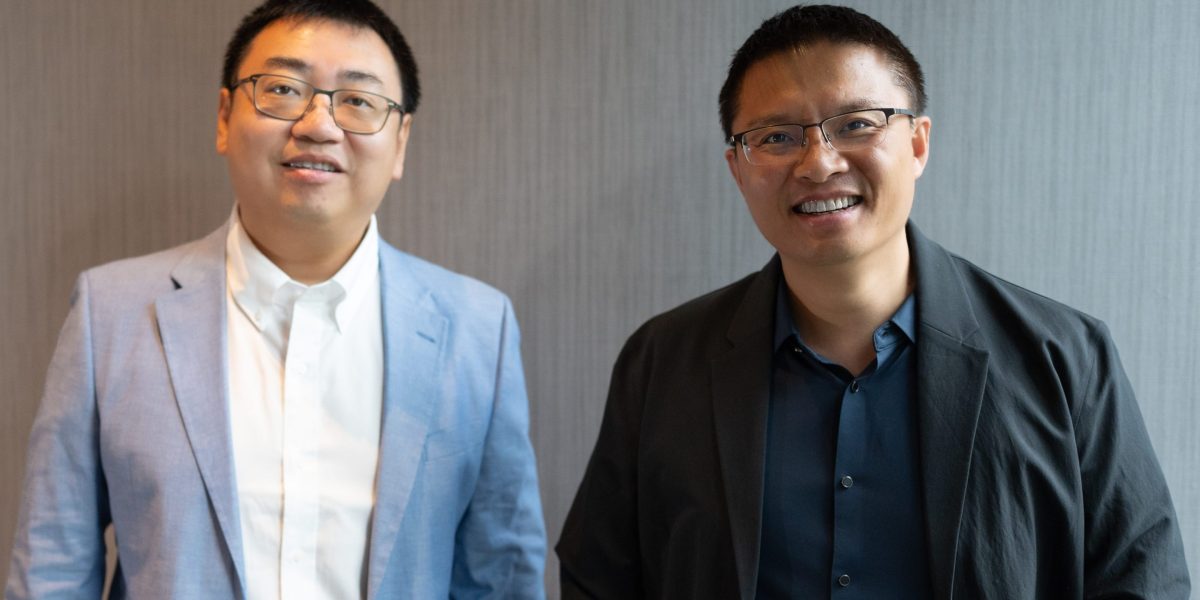
Still, Liang and his cofounder Ming Jiang believe they can carve out a niche in a competitive field. The duo are longtime colleagues who first worked together at Cruise, a self-driving car startup that General Motors bought in 2016 and then shut down in December. After Cruise, the two software developers went on to Coinbase, where they worked on building out the crypto exchange’s compliance software.

In 2024, Liang and Ming decided to leave Coinbase and found their own compliance startup. In what Liang calls the “dark forest” of crypto, where pseudonymous transactions race across obscure blockchains, the duo want their startup to be a sentry, or “owl,” looking out for their clients. (That’s how the two arrived at CipherOwl, their startup’s name.)

Since December, when the pair first began selling their software, they’ve attracted big name clients. They include Coinbase, the crypto exchange OKX, as well as public sector customers, including law enforcement, whose identities Liang and Ming said they couldn’t publicly disclose.

With only eight employees, CipherOwl’s edge over established incumbents is AI, said Liang and Ming. While all crypto compliance companies use generative AI to speed up their operations, CipherOwl has built it into their processes from the ground up, said Marc Bhargava, managing director at General Catalyst. 

“I would just expect that an AI-native team that’s implementing these improvements is most likely to benefit from all of this new technology rather than some of the incumbents,” he told Fortune.

For example, after CipherOwl flags a transaction, the startup uses AI to generate an easy-to-read report that explains why the transaction was likely flagged and gives human reviewers a headstart on diagnosing why a crypto transfer was suspicious.

“It’s less expensive and much more efficient,” said Miang.

On the new Fortune Crypto Playbook vodcast, Fortune’s senior crypto experts decode the biggest forces shaping crypto today. Watch or listen now


Source link

Continue Reading

Business

U.S. trade chief says China has complied with terms of trade deals

Published

on


Trade Representative Jamieson Greer said China has been complying with the terms of the bilateral trade agreements and that the US is constantly monitoring commitments made by China in a bid to maintain a stable trade relationship.

“With China, it’s always we verify and we monitor and we watch the commitments. The commitments are quite specific,” Greer said Sunday on Fox News’ The Sunday Briefing. “So all of these things that we’ve agreed to with the Chinese recently are very concrete, we can monitor them with some ease, and so far, we’re seeing that they’re in compliance.”

Greer said China has gotten approximately “a third” of the way through its soybean purchase commitment for this growing season.

Bloomberg previously reported that after a series of orders placed in late October — the first of this season — China’s purchases of American soybeans appeared to have stalled. 

President Donald Trump and Chinese President Xi Jinping in late October agreed to extend a tariff truce, roll back export controls and reduce other trade barriers. But some elements of the deal — including the soybean purchases, sale of social media app TikTok and an increase in licenses to export critical rare earths from China — remain in progress.

US Treasury Secretary Scott Bessent and Greer held a video call with Chinese Vice Premier He Lifeng on Friday, according to China’s state-run news agency Xinhua, during which the officials had an “in-depth and constructive” discussion in which they vowed to keep stable ties and address “respective concerns” on trade and the economy, the outlet said.

Read More: Top US, Chinese Officials Pledge Cooperation on Trade Deal

Bessent on Sunday told CBS News’ Face the Nation that China will not speed up purchases, but they are still expected to take place this crop season and said soybean prices are up 12% to 15% since the agreement with China. He also said he divested from a soybean farm to comply with an ethics agreement

The Trump administration is expected to release its long-awaited farm aid plan this week, US Agriculture Secretary Brooke Rollins said in a cabinet meeting last Tuesday.

Asked whether chipmakers like Nvidia should give China advanced chips or if doing so would pose a security risk to the US, Greer expressed a need for the US to be cautious.

“My own view is we need to be very cautious about this,” Greer said on Fox News. “We want companies’ bottom lines to do well, but as policymakers, we need to make sure that the national security is placed first and foremost, and that’s why you’ve heard President Trump talk about the types of chips that maybe would be restricted and there’s always an open discussion on where that threshold lies, and it changes over time.”


Source link

Continue Reading

Business

HP’s chief commercial officer predicts the future will include AI PCs that don’t use the cloud

Published

on


Increased focus on “privacy and security” may open the door for AI-enabled devices rather than rely entirely on cloud computing and remote data centers. 

“In a world where sovereign data retention matters, people want to know that if they input data to a model, the model won’t train on their data,” David McQuarrie, HP’s chief commercial officer, told Fortune in October. Using an AI locally provides that reassurance.

HP, like many of its devicemaking peers, is exploring the use of AI PCs, or devices that can use AI locally as opposed to in the cloud. “Longer term, it will be impossible not to buy an AI PC, simply because there’s so much power in them,” he said. 

More broadly, smaller companies might be served just as well by a smaller model running locally than a larger model running in the cloud. “A company, a small business, or an individual has significant amounts of data that need not be put in the cloud,” he said. 

Asian governments have often had stricter rules on data sovereignty. China, in particular, has significantly tightened its regulations on where Chinese user data can be stored. South Korea is another example of an Asian country that treats some locally sourced data as too sensitive to be housed overseas. 

Governments the world over, and particularly in Asia, are also investing in local sovereign AI capabilities, trying to avoid relying entirely on systems and platforms housed wholly overseas. South Korea, for example, is partnering with local tech companies like search giant Naver to build its own AI systems. Singapore is investing in projects like the Southeast Asian Languages in One Network (SEA-LION), which are better tailored to Southeast Asian countries. 

Asian AI adoption

Asia is HP’s smallest region, but also its fastest-growing. Revenue from Asia-Pacific and Japan grew by 7% over the company’s 2025 fiscal year, which ended in October, to hit $13.3 billion. That’s around a quarter of HP’s total revenue of $55.3 billion. (HP’s other two regions are the Americas; and Europe, the Middle East, and Africa.)

McQuarrie also suggested that there was an opportunity to be “disruptive” in Asia. While many business leaders have been eager to embrace AI, at least rhetorically, actual adoption is proving more difficult. A recent survey from McKinsey reports that two-thirds of companies are still in the experimentation phase of AI. 

But McQuarrie believed that AI adoption in Asia could be “just as quick, if not quicker,” than other regions. 

Asia seems to be more comfortable with the use of AI, at least when it comes to users. An October survey from Pew found that fewer people in countries like India, South Korea and Japan reported feeling “more concerned than excited” about AI compared to the U.S. 

When it comes to convincing more companies to adopt AI, let alone AI PCs, McQuarrie said the answer was to make AI functions as seamless as possible, so “that it doesn’t really matter whether you understand that you’re embracing AI or not.”

“What we’re doubling down on is the future of work,” McQuarrie said. “The future of work is a device that makes your experience better and your productivity greater.”

“The fact that we’re using AI in the background? They don’t need to know that.”


Source link

Continue Reading

Business

Trump administration waives part of a Biden-era fine against Southwest Air for canceled flights

Published

on


The U.S. Department of Transportation is waiving part of a fine assessed against Southwest Airlines after the company canceled thousands of flights during a winter storm in 2022.

Under a 2023 settlement reached by the Biden administration, Southwest agreed to a $140 million civil penalty. The government said at the time that the penalty was the largest it had ever imposed on an airline for violating consumer protection laws.

Most of the money went toward compensation for travelers. But Southwest agreed to pay $35 million to the U.S. Treasury. Southwest made a $12 million payment in 2024 and a second $12 million payment earlier this year. But the Transportation Department issued an order Friday waiving the final $11 million payment, which was due Jan. 31, 2026.

The department said Southwest should get credit for significantly improving its on-time performance and investing in network operations.

“DOT believes that this approach is in the public interest as it incentivizes airlines to invest in improving their operations and resiliency, which benefits consumers directly,” the department said in a statement. “This credit structure allows for the benefits of the airline’s investment to be realized by the public, rather than resulting in a government monetary penalty.”

The fine stemmed from a winter storm in December 2022 that paralyzed Southwest’s operations in Denver and Chicago and then snowballed when a crew-rescheduling system couldn’t keep up with the chaos. Ultimately the airline canceled 17,000 flights and stranded more than 2 million travelers.

The Biden administration determined that Southwest had violated the law by failing to help customers who were stranded in airports and hotels, leaving many of them to scramble for other flights. Many who called the airline’s overwhelmed customer service center got busy signals or were stuck on hold for hours.

Even before the settlement, the nation’s fourth-biggest airline by revenue said the meltdown cost it more than $1.1 billion in refunds and reimbursements, extra costs and lost ticket sales over several months.


Source link

Continue Reading

Trending

Copyright © Miami Select.