
Business
Coco Gauff loves a $2 subscription, cooks TikTok recipes, and splurges on $3,000 shopping sprees
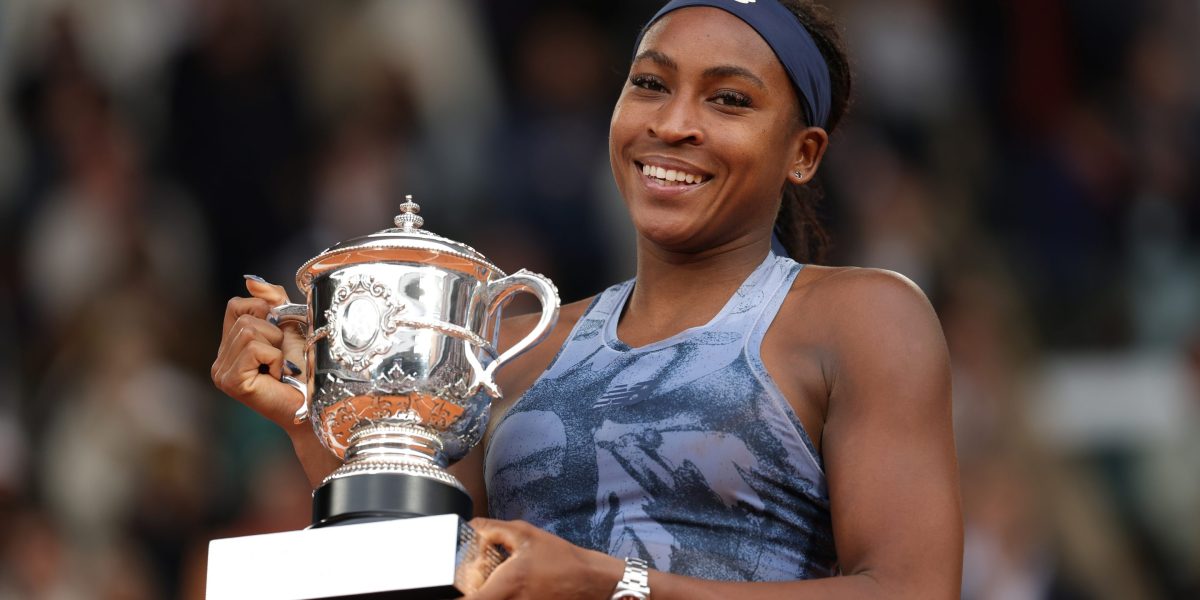
Being in the C-suite is a high-pressure job with long hours, responsibilities to the board, and intense scrutiny. But what is it like to be a top executive when you’re off the clock?
Fortune’s series, The Good Life, shows how up-and-coming leaders spend their time and money outside of work.
Today we meet the two-time Grand Slam tennis champion, Coco Gauff.
Whether you’ve watched her recently shred the courts in the U.S. Open, or you’ve been following her string of career achievements for years, Gauff is one of the biggest names in tennis. The world tuned into her talent when she was only 15 years old—one year into her professional career—as Gauff made history as the youngest to qualify for Wimbledon’s main draw.
Now at the age of 21, the professional athlete hasn’t quit breaking records and taking names. In 2023, she became the youngest American to win the U.S. Open singles title since Serena Williams in 1999; she’d go on to claim the 2025 French Open singles title, her second Grand Slam singles victory. Gauff has also been crowned the world number one ranking in doubles, and world number two ranking in singles, according to the Women’s Tennis Association. Not to mention the honor of being the U.S. flag bearer for the Paris 2024 Olympics—making Gauff the youngest American flag bearer in U.S. Olympic history.
But beyond the court, the Florida native has expanded her empire into business. The Gen Z tennis star and entrepreneur has her own company, Coco Gauff Enterprise, to manage her business partnerships.
This April, Gauff announced her venture on Instagram, saying how it would mirror “[her] passion for making an impact—not just in tennis but in business, philanthropy and beyond.” The business is powered by WME, a talent representation entity that controls IMG and represents sports icons like Carlos Alcaraz, Iga Świątek, and Gauff’s childhood role model Serena Williams. Some of her main brand sponsors include New Balance, Rolex, and sports equipment business Head.
I’ve actually never been on a real holiday since I was probably 16…My dream holiday would be somewhere tropical, just sitting around doing nothing but drinking piña coladas and doing water sports.
Just in time for the U.S. Open this year, Gauff also launched her own signature protein smoothie with $3.3 billion Naked Juices, Coco’s Protein Pineapple Orange smoothie, inspired by her fruit salad that went viral at the competition two years ago.
To wind down from her electric tennis career and business forays, Gauff journals and treats herself with $3,000 shopping sprees. The multimillionaire also likes to balance luxury with the simple pleasures; she can’t live without her $2 monthly subscription to Trivia Crack and loves to shop on second-hand clothes website Depop. Gauff hasn’t taken a real vacation since she was 16—but dreams of sipping piña coladas and playing water sports.
This interview has been condensed for clarity.
The finances
Fortune: What’s been the best investment you’ve ever bought?
My house was probably the best investment because I feel like that’s something that will only appreciate in value and it’s in my hometown. I can see myself living there for the rest of my life—but who knows. If I don’t end up there forever, I can pass it down to my future kids, my brothers, or someone in my family.
What are your living arrangements like: Swanky apartment in the city or suburban sprawling?
When I’m not traveling for tournaments, I’m back home in Delray Beach, Florida. It’s where I grew up, and I’ve always loved the laid-back vibe—sunshine, palm trees, and space to just breathe. My house is close to my family, which means everything to me. I don’t have a traditional office unless you count the tennis court, but being home gives me time to recharge, stay grounded, and catch up with friends and family.
How do you commute to work?
When I’m home, I usually practice at the court at my parents house which isn’t too far away, so after I wake up I usually grab my kit and a Naked smoothie and drive to their house, listen to music in the car, and eat something small there before I get going.
Do you invest in shares?
In the investing world, I’m still very new. I really just go off the recommendation of my dad. He has a financial advisor he talks to, and then he’ll ask for my input, but I’m very much in the learning phase. If it’s something I absolutely don’t believe in—like a specific company—then I’m like, “Yeah… no thanks.” But most of the time, I trust him. He had a lot of experience at his job when he was working and learned a lot about the market, so I trust his opinion.
What personal finance advice would you give your 20-year-old self?
Well, 20 was only a year ago for me, so I’m still figuring it out! But if I had to give myself advice, I’d say don’t be afraid to ask questions and make sure you’re intentional about collaborating with people and brands that truly align with who you are—it makes everything feel more meaningful, authentic and way more fun.
I’ve actually never been on a real holiday since I was probably 16…My dream holiday would be somewhere tropical, just sitting around doing nothing but drinking piña coladas and doing water sports.
The necessities
What’s the one subscription you can’t live without?
I would say Netflix, but I actually don’t pay for my Netflix subscription—I still use my parents’ account. One that I do pay for is a game called Trivia Crack. I can’t stand when there are ads popping up while I’m trying to play, so it probably costs me like $2 a month which doesn’t quite set me back.
Where’s your go-to wristwatch from?
It’s a Rolex—the Oyster Perpetual. I’ve had it since I was 15 years old, and I love it. It’s my everyday watch. It has some wear and tear, but I like to think of it as being loved.
What about eating on the go?
I don’t really ever eat out for lunch. When I do, I just Uber Eats and order lunch. I practice at my parents’ house because that’s where the court is, and my parents will often cook lunch. I don’t really eat much during practice unless it’s a Naked smoothie, fruit, or a protein bar. I usually try to get a lot of protein—I like my lunches to be protein, starch, and vegetables. Typically, it’s chicken, rice, and vegetables; chicken, pasta, and vegetables; or fish, potatoes, and vegetables. It’s always some variation of that.
How often in a week do you dine out versus cook at home?
When I’m home, I order delivery for lunch. For dinner, either my grandparents—who live 15 minutes away—are cooking, or my parents are. When nobody’s cooking, I’ll try a TikTok recipe and cook for myself. I’m not a cook—my dad and grandparents are expert cooks—but I’m learning as I go.
Where do you shop for your work wardrobe?
My work wardrobe consists of basically only tennis clothes—so New Balance. My favorite brands right now are definitely New Balance, MiuMiu, and honestly, Depop. It’s not a brand, but it’s an app where people can resell things, kind of like an online thrift store. You can find some really unique pieces on there.
What would be a typical work outfit for you?
Depends on the day! If I’m practicing or playing, I love my New Balance gear—it’s comfortable, performance-driven, and really aligns with the essence of my street style. For meetings or when I’m filming brand content like with Naked, I like to mix sporty and chic like New Balance sneakers paired with cargo pants or something elevated, like a Miu Miu blazer or cropped jacket. I love blending sporty vibes with high-fashion touches that show off my personality, whether it’s bold colors or fun accessories.
The treats
Are you the proud owner of any futuristic gadgets?
I own the Meta glasses, and I was able to try them before they were ever out because I did a brand shoot for Ray-Ban and they gave me some glasses. I don’t use them that much because I don’t content-create often, but when I do, it’s really cool to get that perspective. I can also play music in them, which is the reason I liked them the most.
I also own an Oculus—the virtual reality headset. I don’t use it a lot because I don’t travel with it, but when I’m home, sometimes I’ll pop in and play a game just to do something different.
How do you unwind from the top job?
I prioritize journaling and have been trying to add more mindfulness habits to my repertoire so that I continue to be at my best. I’ve been journaling since I was little, so I find it helps me get my thoughts out especially when things get overwhelming.
What’s the best bonus treat you’ve bought yourself?
Ooh, that’s a good question. Honestly, just clothes. I’ll give myself like a $3,000 limit and online shop until my fingers fall off. So I would say clothes or a bag. I think bags are a good thing to invest in—although when they’re worn, they depreciate a little, it’s never to the point where you can’t get some of your money back if you decide to resell them.
Take us on holiday with you, what’s next on your vacation list?
I’ve actually never been on a real holiday since I was probably 16. I went to the Bahamas with my best friend and my parents, and that was the last time. Usually when the off-season rolls around, I’m so tired of traveling that I just want to lay in bed. My dream holiday would be somewhere tropical, just sitting around doing nothing but drinking piña coladas and doing water sports. I’d probably want to go to Jamaica.
How many days of annual leave do you take a year?
That’s a tough question—I don’t have a number. If I do well in a tournament, I’ll take maybe 5–7 days off. If I do a big tournament like a Grand Slam and win, I’ll take a week off. Sometimes I go three or four weeks without taking a day off, and sometimes I get one or two days off per week for three or four weeks. It’s very results-dependent in tennis.
Fortune wants to hear from business leaders on what their “Good Life” looks like. Get in touch: emma.burleigh@fortune.com or orianna.royle@fortune.com for the U.K. and Europe.