Connect with us

Business

Clintons refuse to comply with congressional subpoena to testify in Epstein probe: ‘We will forcefully defend ourselves’

Published

on


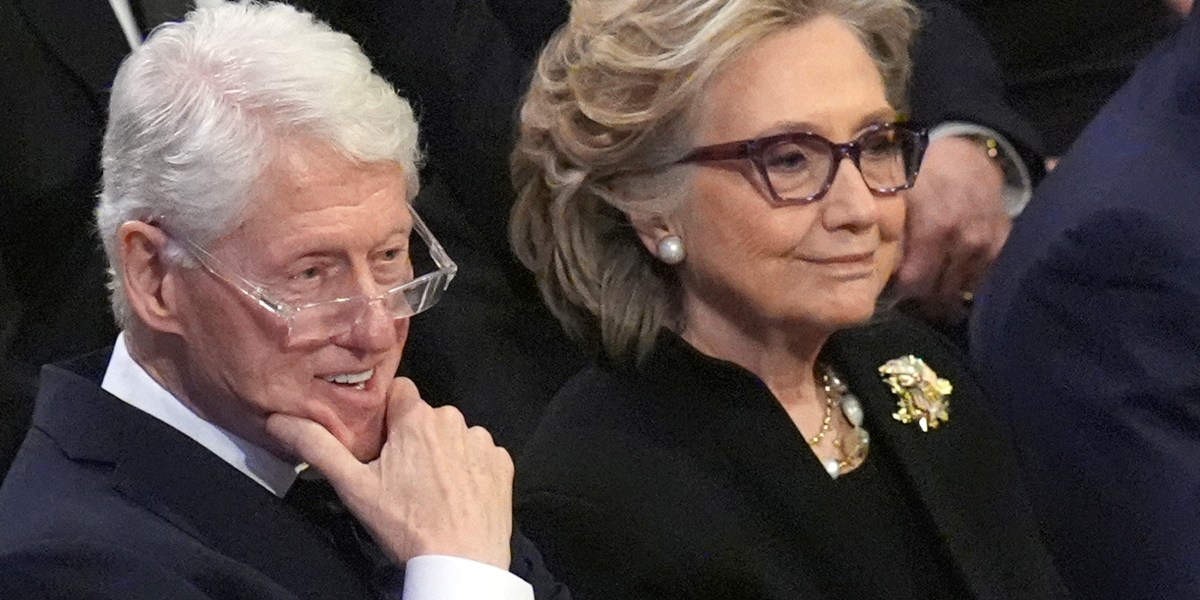
Former President Bill Clinton and former Secretary of State Hillary Clinton said Tuesday that they will refuse to comply with a congressional subpoena to testify in a House committee’s investigation of Jeffrey Epstein even as Republican lawmakers prepare contempt of Congress proceedings against them.

The Clintons, in a letter released on social media, slammed the House Oversight probe as “legally invalid” and wrote that the chair of the House Oversight Committee, Republican Rep. James Comer, is on the cusp of a process “literally designed to result in our imprisonment.”

“We will forcefully defend ourselves,” wrote the Clintons, who are Democrats. They accused Comer of allowing other former officials to provide written statements about Epstein to the committee, while selectively enforcing subpoenas against them.

The intensifying clash adds another dimension to the fight over Epstein, raising new questions about the limits of congressional power to compel testimony. It also comes when Republicans are grappling with the Justice Department’s delayed release of the Epstein files after a bipartisan push for their release.

Possible contempt of Congress proceedings

Comer said he’ll begin contempt of Congress proceedings next week. It potentially starts a complicated and politically messy process that Congress has rarely reached for and could result in prosecution from the Justice Department.

“No one’s accusing the Clintons of any wrongdoing. We just have questions,” Comer told reporters after Bill Clinton, a onetime Epstein friend, did not show up for a scheduled deposition at House offices Tuesday.

He added, “Anyone would admit they spent a lot of time together.”

Clinton has never been accused of wrongdoing in connection with Epstein but had a well-documented friendship with the wealthy financier throughout the 1990s and early 2000s. Republicans have zeroed in on that relationship as they wrestle with demands for a full accounting of Epstein’s wrongdoing.

“We have tried to give you the little information we have. We’ve done so because Mr. Epstein’s crimes were horrific,” the Clintons wrote in the letter.

Epstein was arrested in 2019 on federal sex trafficking and conspiracy charges. He killed himself in a New York jail cell while awaiting trial.

Subpoenas for former presidents

Multiple former presidents have voluntarily testified before Congress, but none has been compelled to do so. That history was invoked by President Donald Trump in 2022, between his first and second terms, when he faced a subpoena by the House committee investigating the deadly Jan. 6, 2021, riot by a mob of his supporters at the U.S. Capitol.

Trump’s lawyers cited decades of legal precedent they said shielded an ex-president from being ordered to appear before Congress. The committee ultimately withdrew its subpoena.

Comer also indicated that the Oversight committee would not attempt to compel testimony from Trump about Epstein, saying that it could not force a sitting president to testify.

Trump, a Republican, was also friends with Epstein. He has said he cut off that relationship before Epstein was accused of sexual abuse.

Comer cast the subpoena for the Clintons as a bipartisan effort. But when a subcommittee of the Oversight panel initiated its overall investigation into Epstein in August, it adopted the subpoenas for the Clintons without allowing Democrats to cast individual votes.

The Justice Department also has not completely fulfilled the committee’s subpoena for its files on Epstein.

Lawmakers want the Epstein files

Meanwhile, the congressional co-sponsors of legislation that forced the public release of investigative documents in the sex trafficking probe of Epstein and British socialite Ghislaine Maxwell asked a New York judge in a letter to appoint a neutral expert to oversee release of the materials. The letter, dated Jan. 8, was delivered to the judge Monday night.

U.S. Rep. Ro Khanna, a California Democrat, and Rep. Thomas Massie, a Kentucky Republican, told U.S. District Judge Paul A. Engelmayer they had “urgent and grave concerns” that the Justice Department has failed to comply with the Epstein Files Transparency Act, which required the files to be released last month. They said they believed “criminal violations have taken place” in the release process.

Engelmayer presides over the Maxwell case. Maxwell, a former Epstein girlfriend, is serving a 20-year prison sentence after her 2021 sex trafficking conviction for recruiting girls and women to be abused by Epstein and for sometimes joining in the abuse. Last month, Maxwell sought to set aside her conviction, saying new evidence had emerged proving constitutional violations spoiled her trial.

Justice Department officials, who did not immediately respond to a request for comment Tuesday, have said the files’ release was slowed by redactions required to protect the identities of abuse victims.

In their letter, Khanna and Massie wrote that the Department of Justice’s release of 12,000 documents out of more than 2 million documents being reviewed was a “flagrant violation” of the law’s release requirements and had caused “serious trauma to survivors.”

“Put simply, the DOJ cannot be trusted with making mandatory disclosures under the Act,” the congressmen said as they asked for the appointment of an independent monitor to ensure all documents and electronically stored information are immediately made public.

They also recommended that a court-appointed monitor be given authority to notify and prepare reports about the true nature and extent of the document production and whether improper redactions or conduct have taken place.

Engelmayer directed the Justice Department and Maxwell, if she wishes, to respond to the allegations from the congressmen by Friday.

___

Associated Press writers Michael R. Sisak and Larry Neumeister in New York contributed to this report.


Source link

Continue Reading

Business

Whole Foods cofounder John Mackey’s hardest ever decision was firing his dad from his company board

Published

on


Whole Foods cofounder John Mackey knew the exact moment he came of age in the business world.

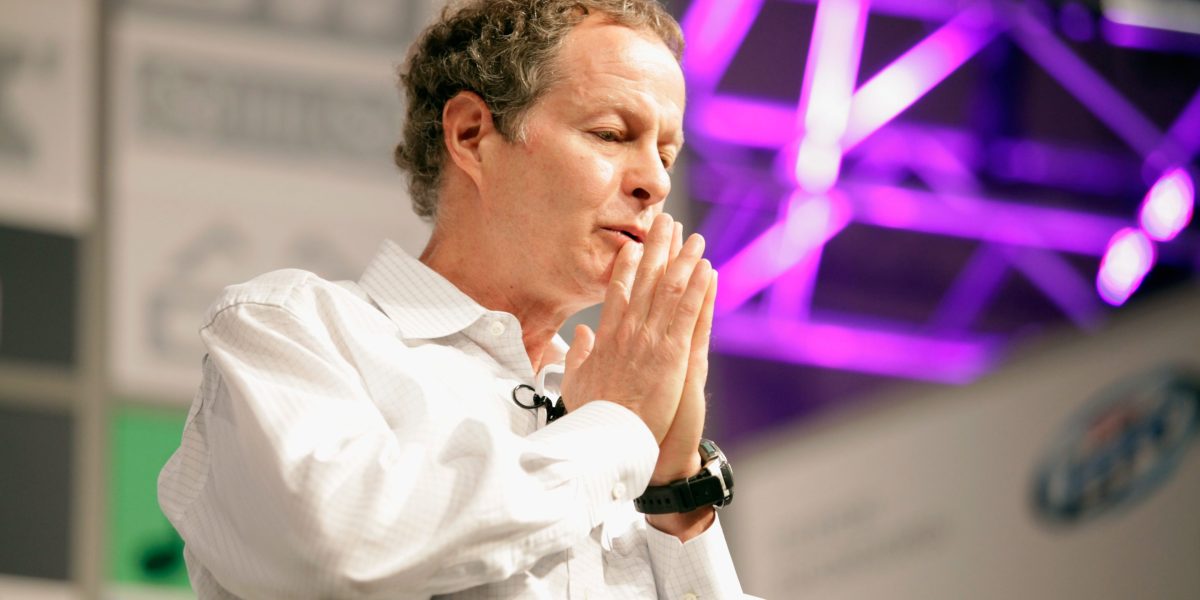
In a recent podcast interview with David Senra, Mackey recalled one of his most challenging moments: firing his father from the Whole Foods board in 1994 after nearly 15 years of advising Mackey on the direction of the company.

“That was the most difficult thing I ever did was firing my dad from that board,” Mackey said. “It took all the courage I had. I love my dad so much, and it hurt him so badly. It was so hard to do, but it was also a pivotal event in my own evolution.”

Mackey, who served as co-CEO of Whole Foods from its 1980 founding until his 2022 retirement, described his younger self as a “shirtless hitchhiking hippie” who dropped out of college. A man of contradictions, Mackey has called for marriage equality and claimed that taking psychedelics helps him find business inspiration, and in the same breath, has touted capitalism as humankind’s greatest invention while ripped labor unions, once comparing them to herpes (“It won’t kill you,” Mackey told the New Yorker in 2010, “but it’s very unpleasant, and will make a lot of people not want to be your lover.”)

In 2022, the business leader claimed “socialists are taking over,” and that young people weren’t willing to work anymore because they want to find meaningful work, something that eludes most people in the early stages of their careers.

His relationship with his father, as it relates to business, is no less complicated. As a younger man, the free-market vegan was looking to take risks to grow his wealth, even if it meant breaking from the guidance of his father, an original investor in Whole Foods. Mackey described his father as always being a man who preferred to conserve his cash, even if it meant sacrificing the growth of his wealth. As he aged, Mackey’s father became more rigid in his beliefs, which Mackey attributed in part to an Alzheimer’s diagnosis, made a couple years after his father’s departure from the board.

These diverging philosophies were most salient during the grocery chain’s 1992 IPO, when Mackey’s father encouraged the cofounder to sell company stock. Mackey, trusting his father, obliged, but later regretted it. He said the growing differences in doctrines around money fractured their relationship, leading Mackey to seek out independence from his father.

“That was when my mentorship was over,” he said. “He still advised me but from that point onward, really I was on my own. I was not going to follow him any longer. Before then, I pretty much did whatever my dad suggested.”

Mackey was largely responsible for transforming a single boutique health food store into a grocery giant. Founded in Austin in 1980, Whole Foods soon expanded across Texas and grew nationally, with 12 locations coast-to-coast at the time of its IPO, when the company was valued at $100 million. In 2017, Mackey sold the grocery giant to Amazon for a cool $13.7 billion. Whole Foods now has more than 500 locations across the U.S. and UK.

Mackey’s evolving business philosophy

At the core of Mackey’s businessperson identity is his doctrine of “conscious capitalism,” the flavor of free enterprise he said should operate with strong ethical foundations with the goal to create more than just profit in service of all business stakeholders, from customers to employees. Mackey first identified this value in 1981, when only a year after opening the first Whole Foods, the store flooded, severely damaging nearly everything inside. He recounted getting help from friends, customers, and suppliers, and was able to operate the business again 28 days after the flood.

Mackey said he internalized some value in making conservative financial decisions from his father, whom he said was a child of the Great Depression. Mackey’s father reached adulthood in the midst of World War II and operated under fear of another financial disaster for most of his life.

“He was always thinking there was going to be another Great Depression,” Mackey said. “So he was always trying to protect himself from that because it was such a traumatic experience for him.”

Mackey himself has admitted that making money isn’t everything. In 2007, the CEO said he felt financially secure and slashed his own salary to $1. (According to Forbes, he has a net worth of more than $75 million.)

However, the cofounder’s “expansive” philosophy of business increasingly diverged from his father, particularly in the way he kept shares of the business. When Mackey asked his father to step away from the board, he encouraged him to sell half his company shares and watch what happens to the other half. Whole Foods doubled in stock price over the next year.

While Mackey and his father were able to reconcile their differences, he recalled 1994 as the moment in which he prioritized his own business tactics over his mentor’s.

“I’m not going to do what you tell me to do any longer, particularly when it comes to growth,”  Mackey recalled telling his father. “We’re going to grow this business.”


Source link

Continue Reading

Business

McKinsey challenges graduates to master AI tools as it shifts hiring hunt toward liberal arts majors

Published

on


A year-and-a-half ago, management consulting firm McKinsey had just 3,000 AI agents in its possession, with its 40,000 employees far outnumbering its agentic fleet. But in just 18 months, that number has grown more than 500% to about 20,000 AI agents supporting the company’s work, CEO Bob Sternfels said on Harvard Business Review’s Ideacast. Now, the company is evaluating how well job candidates can work with its AI tool as part of the interview process.

The consulting firm is asking candidates to use its internal AI tool Lilli in a test during its hiring process, according to consulting interview preparation company CaseBasix, which helps candidates solve McKinsey, BCG, and Bain cases. In a blog post, CaseBasix says it gathered information from internal sources who say some candidates would be asked to work with the company’s AI tool as part of a final round AI interview. The Financial Times also reported on McKinsey’s focus on business school students using Lilli, citing people familiar with the matter.

The move comes as the blue-chip company seeks to further implement AI into its operations, pursuing skills that extend beyond the interpersonal and problem-solving traits usually required of a consultant. Companies like McKinsey are looking for candidates who can be AI-ready on day one as the technology becomes essential to job functions.

In his interview with HBR, Sternfels said AI models have developed an expertise in problem-solving, and that the company would be “looking more at liberal arts majors, whom we had deprioritized,” for potential sources of creativity as the firm moves to find creative solutions beyond “logical next steps.” It’s not just McKinsey, other leaders are looking to hire liberal arts graduates like CEO of IT firm Cognizant Technology Solutions Ravi Kumar S, who says he’s recruiting candidates with liberal arts degrees. 

Putting AI skills to the test

McKinsey hasn’t shied away from AI in the hiring process. The company encourages AI use in the application process on its career page, saying that candidates can use the technology to refine résumés and practice interview questions. Though it cautions candidates to use the technology responsibly, saying use of the technology during assessments and for generating interview responses, as well as embellishment, is not permitted. 

“We welcome those who share our curiosity about AI and its potential,” the company’s career page says.

But the pilot program goes a step further. According to Casebasix, the AI interview may be an additional step in the application process, alongside the case interview and a personal experience interview for candidates in the U.S. and North America.

“In the McKinsey AI Interview, you are expected to prompt the AI, review its output, and apply judgment to produce a clear and structured response,” the Casebasix post said. The post says that McKinsey is looking to test soft skills essential to working at the consulting firm—and for working with the company’s AI—including collaboration and reasoning.

A McKinsey spokesperson did not immediately respond to Fortune’s request for comment.

An agentic workforce reshaping the nature of consulting work

Sternfels predicted the company will adopt AI aggressively within the following months. “In another 18 months I think every employee will be enabled by one or more agents,” Sternfels said on HBR’s Ideacast. “We’ll have a workforce that is human and agentic, and we’re going to have to navigate that.”

That change could dramatically shift the work that McKinsey performs. With AI agents making the company’s employees more productive, Sternfels says that the AI adoption could fundamentally change McKinsey’s model. 

“We’re migrating away from pure advisory work, away from the fee-for-service model,” Sternfels said. “We’re moving to more of an outcomes-based model, where we identify a joint business case with our clients, and we underwrite the outcome by tying our fees to the impact our work delivers for them”

But the human skills that Sternfels says AI can’t replace: creativity, aspiration, and judgment. “There isn’t truth in AI models; there isn’t judgment,” Sternfel said. “Humans need to impose those parameters.”

This story was originally featured on Fortune.com


Source link

Continue Reading

Business

Citigroup CEO Jane Fraser warns of job cuts and says it’s time to raise the bar in memo to staff

Published

on


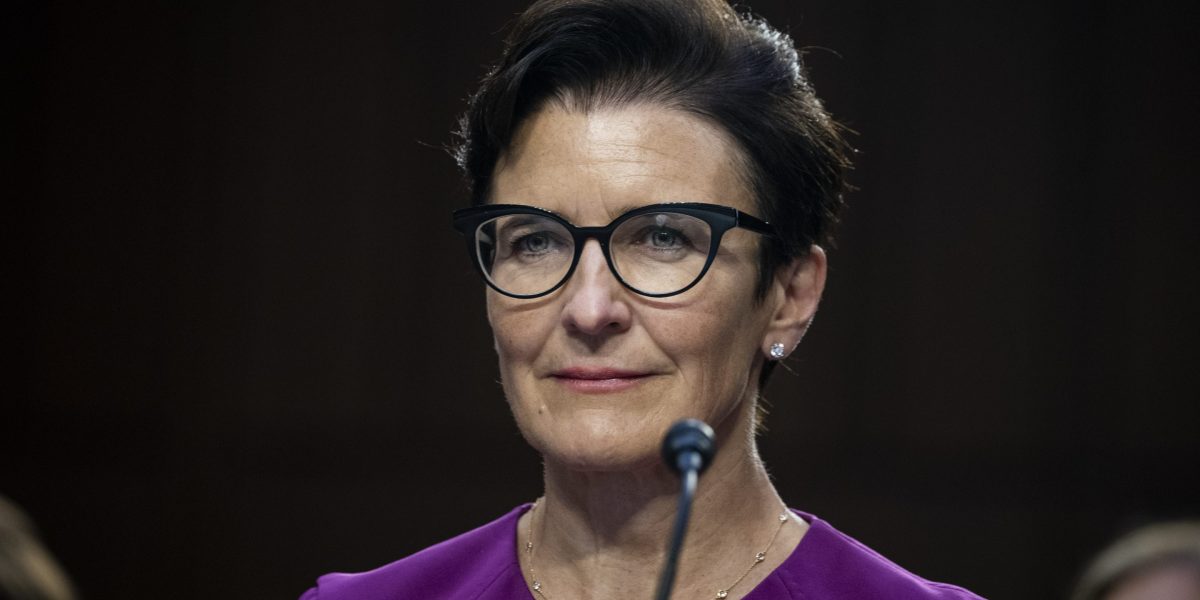
Citigroup CEO Jane Fraser, one of Fortune‘s Most Powerful Women—and the top female executive on Wall Street—is pushing ahead with about 1,000 job cuts and has warned staff that “we are not graded on effort” in a fiery internal memo setting a tougher tone for 2026. The cuts are part of a multiyear overhaul that could ultimately eliminate up to 20,000 roles as Fraser demands hard results and an end to what she calls the bank’s “old, bad habits.”​

In the memo, previously reported by Bloomberg, Fraser told Citi’s roughly 200,000‑plus employees “the bar is raised” and stressed performance will be judged on outcomes rather than intentions or long hours.

“We are not graded on effort. We are judged on our results,” she wrote, adding she expects “the last vestiges of old, bad habits” to disappear as the bank pursues a leaner, more commercially aggressive culture in 2026. The language marks one of her sharpest internal messages since she took over in 2021, underscoring a shift from transformation planning to execution.​

Fraser’s approach also demonstrates why Fortune contributor Jeffrey Sonnenfeld, the Lester Crown professor of leadership practice at the Yale School of Management, chose the Citi CEO as one of his top performers of 2025. Fraser’s “Project Bora Bora” restructuring resulted in full-year revenues tracking toward $84 billion in 2025, the highest since 2010, with records for all five business segments in the last quarter. The latest earnings quarter saw all five business segments hit quarterly records. The stock’s performance ranking, up 67% in 2025, made it the best among major U.S. banks, in a year when Fraser was elected Chair of the Citigroup Board of Directors and was named Euromoney “Banker of the Year 2025.”

1,000 jobs now, 20,000 over time

Citigroup is poised to eliminate about 1,000 positions this week, as previously reported by Bloomberg, a move that follows earlier rounds of layoffs and brings the bank closer to a broader plan to cut roughly 20,000 jobs by 2026, or about 8% of its global workforce, according to people familiar with the matter. The reductions are tied to a sweeping restructuring unveiled in early 2024 that aims to simplify management layers, streamline businesses, and deliver up to $2.5 billion in cost savings. Citi has already shed more than 10,000 roles under Fraser’s overhaul.​

Culture reset on Wall Street

Fraser’s memo signals a cultural reset at a bank long criticized for lagging behind rivals on profitability and efficiency, and she explicitly called time on what she describes as legacy behaviors that dulled Citi’s competitive edge. She urged bankers to adopt a more “commercial mindset,” telling staff to “ask for the business,” fight for a “full wallet” with clients, and stop settling for secondary roles or missed opportunities.

Automation, AI, and ‘roles no longer required’

The job cuts are being accelerated by investments in automation and artificial intelligence that are changing how work is done across the bank. Fraser told employees and investors as Citi completes more than 80% of its massive “Transformation” program, technology and process simplification will mean some roles evolve, new positions appear and “others will no longer be required.” Outgoing CFO Mark Mason said he expects headcount to keep falling this year as AI tools and streamlined processes take hold, even as Citi continues to hire top talent in key areas like investment banking.​

High stakes for 2026

Fraser has framed 2026 as the year a “more disciplined, more confident, winning Citi” must fully emerge, arguing the transformation and painful cuts are laying the foundation for stronger, more consistent returns. But the strategy carries high stakes: Citi must prove to investors the layoffs, technology spending, and cultural shake‑up can close its long‑standing performance gap with Wall Street rivals while maintaining morale among the staff she is now bluntly reminding that effort alone will not be enough.

For this story, Fortune journalists used generative AI as a research tool. An editor verified the accuracy of the information before publishing.


Source link

Continue Reading

Trending

Copyright © Miami Select.